Digital Twins of Life: How Computational Biology and Whole-Cell Simulations Are Rewriting the Future of Human Aging


The pursuit of human longevity has long relied on physical experimentation—testing countless compounds in petri dishes, observing cellular decline under microscopes, and analyzing biological responses through trial and error. Today, that paradigm is undergoing a profound transformation. At the Buck Institute for Research on Aging, scientists are building the foundational framework for a future where biological aging can be simulated, predicted, and ultimately intercepted on a computer screen.
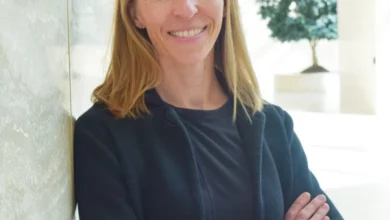
At the forefront of this digital revolution is Dr. Emma Glass, a research scientist in James Yurkovich’s laboratory at the Buck Institute. Joining the renowned research center in Novato, California, just over a year ago, Glass has dedicated her computational expertise to developing whole-cell simulation software and driving data analysis for the TIME clinical trial. Merging her background in applied mathematics from the College of William and Mary with a PhD in biomedical engineering from the University of Virginia, Glass represents a new generation of scientists who view biology through the lens of big data, artificial intelligence, and mathematical precision.
Bridging Computational Microbiology and Aging Science
Glass’s path to the Buck Institute was forged by a lifelong fascination with wellness and longevity science. Having spent her doctoral studies immersed in computational microbiology, she recognized a critical convergence point between her technical skill set and the overarching mission of the Buck Institute: understanding the fundamental mechanisms of human aging.

While microbiology and aging science might initially appear distinct, Glass notes that the underlying principles governing cellular behavior remain consistent. By mastering the simulation of simple organisms today, researchers are laying the groundwork for complex biological modeling tomorrow.
The urgency of this research cannot be overstated. As global populations age, the socioeconomic and healthcare burdens of age-related chronic illnesses—such as cardiovascular disease, neurodegeneration, and metabolic disorders—continue to escalate. Traditional pharmaceutical development is notoriously slow, taking over a decade and billions of dollars to bring a single drug from concept to market. Whole-cell simulations offer an unprecedented shortcut, allowing researchers to screen interventions digitally before stepping foot into a wet lab.
The DARPA Initiative: Predicting Bacterial Behavior Without a Petri Dish
A significant portion of Glass’s current research is backed by funding from the Defense Advanced Research Projects Agency (DARPA). Her work centers on creating a sophisticated computational model capable of accurately predicting the physiological behavior of E. coli when exposed to varying environmental stressors and pharmaceutical agents.
By simulating these bacterial responses digitally, Glass and her team can calculate the precise concentration of an antibiotic required to inhibit bacterial growth without physically conducting a laboratory test. This capability has immediate clinical applications, enabling healthcare providers to rapidly determine the most effective treatments for specific bacterial infections.

However, the broader implications extend far beyond infectious disease management. For the Buck Institute, the E. coli whole-cell simulator serves as an indispensable proof-of-concept and a structural blueprint. The mathematical frameworks, software architectures, and validation pipelines developed for bacterial simulations are designed to be scalable. Mastering single-cell bacterial models is the necessary first step toward the ultimate objective: simulating human cells, tissues, and eventually entire physiological systems.
The Power of Team Science and Interdisciplinary Collaboration
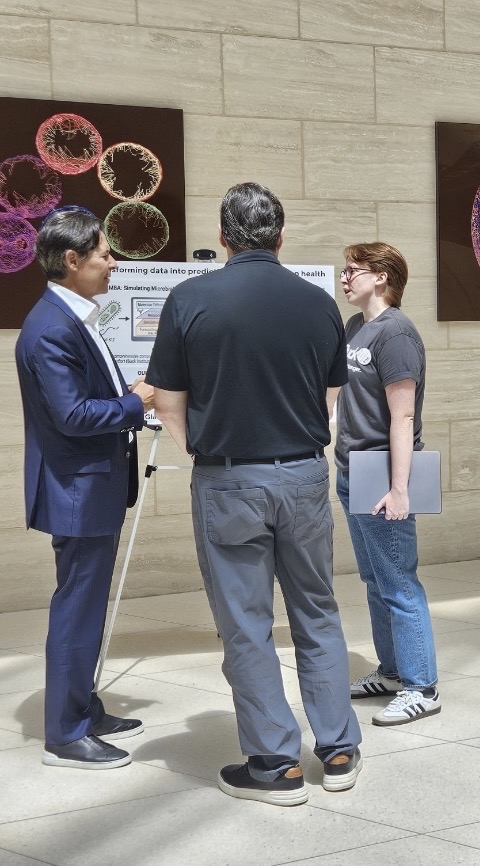
Tackling a scientific challenge as vast as whole-cell simulation requires an ecosystem built on collaboration. At the Buck Institute, Glass’s work operates within a framework known as "team science," which bridges distinct academic disciplines and industry partnerships.
The DARPA-funded project is structured around two core pillars: "Measure and Inform," which focuses on generating empirical biological data, and "Simulate and Predict," which centers on computational modeling. To fuel these pillars, Glass collaborates closely with faculty members across the Buck Institute who generate massive, high-resolution experimental datasets. These datasets are essential for grounding digital models in biological reality, ensuring that computer simulations accurately reflect living systems.
Furthermore, the initiative relies on external partnerships with industry leaders who provide specialized infrastructure capable of scaling complex software technologies. The Buck Institute’s strategic integration of artificial intelligence and machine learning into healthspan research has cultivated a unique environment where computational scientists, biologists, and data engineers can collaborate seamlessly.
Demystifying Digital Biology: How Whole-Cell Modeling Works
For the general public, the concept of a "digital cell" can sound like science fiction. Yet, the underlying methodology is rooted in established computer science and systems biology.
In conventional biological research, observing a cell’s reaction to a new drug requires thousands of physical iterations, making the process time-consuming and resource-intensive. Glass’s computational approach digitizes the cumulative biochemical knowledge of a cell. By inputting genetic, metabolic, and environmental parameters into a software program, researchers can execute simulations at the touch of a button.
The software models the intricate network of chemical reactions, gene expressions, and protein interactions occurring inside the cell simultaneously. Researchers can introduce a pharmaceutical compound into the digital environment and instantly observe the outcome: Does the cell metabolize the drug? Does its growth accelerate, or does it undergo apoptosis (programmed cell death)?
Scaling this methodology from a single bacterium to a human cell introduces exponential complexity. Human cells contain vastly more genes, regulatory pathways, and structural components than bacteria. Yet, the fundamental logic remains identical. By mapping these pathways digitally, scientists aim to pinpoint the precise molecular damage that accumulates over time, identifying the root causes of cellular aging.
Transforming Healthcare: From Reactive Treatment to Personalized Longevity
The practical implications of whole-cell simulation software span both immediate medical needs and long-term preventative care.
In the short term, predictive modeling stands to revolutionize pharmacology and infectious disease management. Clinicians could soon utilize simulation tools to evaluate how a patient’s specific infection profile reacts to various pharmaceutical combinations, significantly reducing the trial-and-error approach currently prevalent in prescribing antibiotics. This efficiency also holds promise for combating antimicrobial resistance—a growing global health threat.
Over the next decade, however, the expansion of this technology into human cellular modeling promises to reshape preventive medicine. Glass envisions a future characterized by personalized longevity simulations. Rather than relying on generalized health guidelines or one-size-fits-all therapeutics, physicians could leverage digital twins of patient tissues to test how specific dietary modifications, lifestyle interventions, or pharmacological treatments impact individual aging trajectories.
This shift moves modern medicine from a reactive model—treating diseases only after symptoms manifest—to a proactive model capable of managing human healthspan with mathematical precision.

The Next Decade: Moving Toward System-Level Simulations
As the scientific community looks toward the horizon, the momentum behind computational biology is accelerating. Programs like the DARPA-backed initiatives are actively pushing the boundaries of what is computationally and biologically possible, targeting tenfold increases in system complexity over coming years.
For researchers at the Buck Institute, the next five to ten years represent a critical window of discovery. Industry experts anticipate the emergence of the first high-fidelity digital models of human cells, enabling scientists to interrogate the mechanisms of biological aging at a molecular depth previously unimaginable.
For Dr. Emma Glass and her colleagues, the motivation remains clear. By transforming biological observation into predictive computation, the scientific community is moving closer to an era where the decline of age is no longer accepted as an inevitable outcome, but rather a solvable engineering challenge. Through the synergy of people, data, and technology, the Buck Institute continues to pave the way toward a future where living better longer is grounded in mathematical certainty.