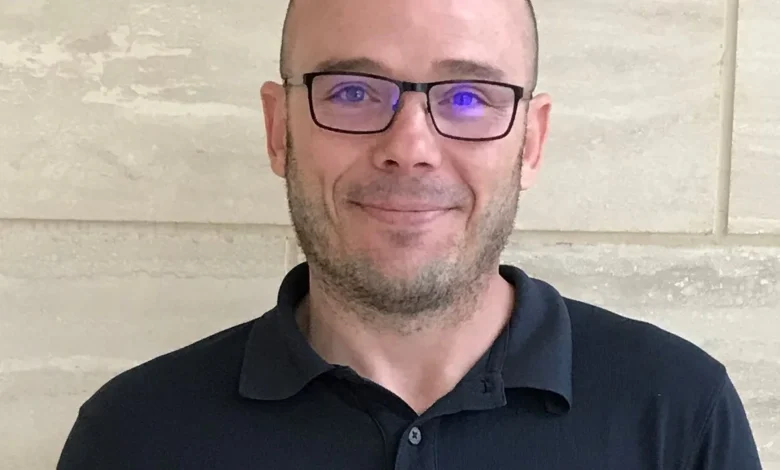
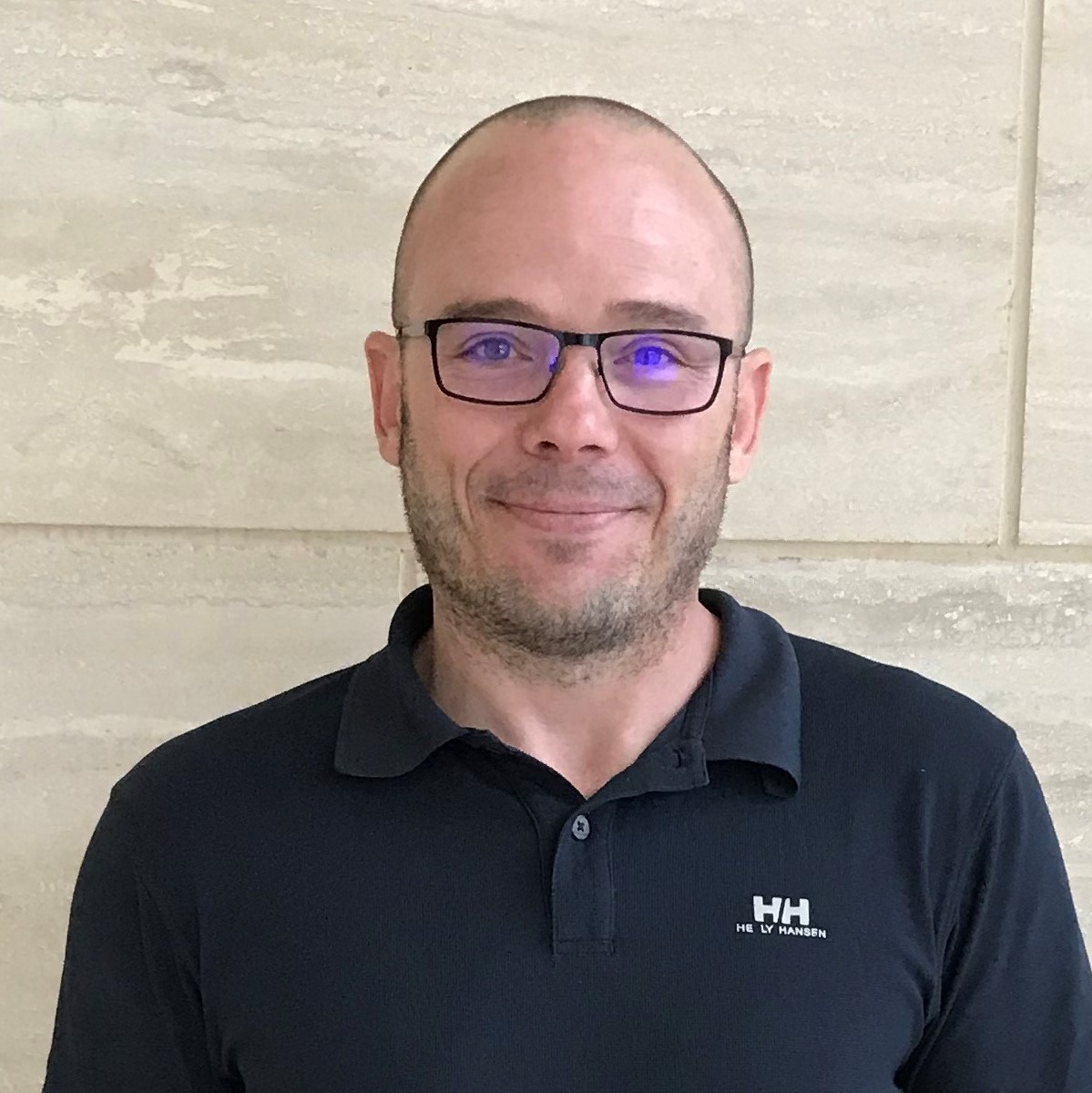
The Buck Institute’s commitment to advancing human longevity and health is prominently showcased through its "Faces of Discovery" series, a monthly feature highlighting the pioneering scientists dedicated to unraveling the complexities of aging and disease. This installment introduces Dr. Chaska Walton, a researcher whose innovative work in developing intelligent therapeutic delivery systems for Alzheimer’s disease has garnered significant national recognition. Dr. Walton, a member of Dr. Julie Andersen’s laboratory, has been awarded a prestigious $2.4 million NIH Transformative Research Award, a testament to the groundbreaking nature of his research. The National Institutes of Health (NIH) bestows this award upon a select few, recognizing projects with the potential to fundamentally alter current scientific understanding and clinical practice. In this first part of a two-part interview, Dr. Walton shares insights into his remarkable scientific journey and his profound vision for the future of medicine.
Dr. Walton’s academic and research trajectory is marked by a consistent curiosity about the brain and its intricate functions. His journey began in Spain, where he pursued foundational studies in psychology and neuroscience at the Autonomous University of Barcelona. This was followed by doctoral research at the renowned Cajal Institute in Madrid. It was during his time at the Cajal Institute that Dr. Walton challenged a long-held tenet of neuroscience: the idea that mature neurons, once differentiated, could not re-enter the cell cycle. His research provided compelling evidence to the contrary, demonstrating that these specialized cells possess a latent capacity for division. This discovery was partly inspired by the visionary work of Santiago Ramón y Cajal, the father of modern neuroscience, who himself speculated that future scientific advancements might overturn even his most definitive conclusions about the brain. This spirit of re-examining established biological paradigms has continued to fuel Dr. Walton’s research.
Upon relocating to the Buck Institute for Research on Aging in California, Dr. Walton’s focus evolved. While his earlier work delved into the fundamental mechanisms underlying neuronal vulnerability and the aging process, his current research is geared towards engineering novel therapeutic interventions for neurodegenerative diseases, particularly Alzheimer’s. He is at the forefront of developing synthetic immune-cell therapies, including programmable CAR-Treg (Chimeric Antigen Receptor-T regulatory) cells and sophisticated smart cell delivery platforms. Dr. Walton’s research is underpinned by a strong conviction: that neurodegeneration is not an immutable consequence of aging but rather a biological process that can be understood, manipulated, and ultimately altered. His work sits at a dynamic intersection of neuroscience, synthetic biology, and translational medicine, driven by a philosophy that emphasizes boundless potential and the absence of inherent limitations.
The Unfettered Mind: Embracing Biological Editability
Dr. Walton’s perspective on biological possibility is remarkably expansive, rooted in the idea that living organisms are, in essence, "editable code." He challenges the notion that humans are inherently incapable of self-modification, arguing that limitations are often technological rather than fundamental. "In the Stone Age, humans could not fly," Dr. Walton explains, "yet flight was never forbidden by physics. The limitation was technological, not fundamental. Likewise, biology does not forbid rewriting ourselves. We are editable code. It did not have to be that way, but it is." This perspective underscores his belief that the current absence of certain capabilities does not preclude their future realization. "Whether we possess the tools today is irrelevant to what is possible in principle. One day we will have the tools. I can guarantee that."
This conviction fuels his excitement for daily research. He envisions a future where scientists will be able to "design proteins that evolution would never produce and express them in our cells. We will make new cell types with new functions. We will make new organs and duplicate others." For Dr. Walton, the question of immediate feasibility is secondary to the exploration of what is biologically possible. "It will happen because we are editable. It is not forbidden by biology. There are no rules. We are just code. THERE. ARE. NO. LIMITS." This unbridled optimism and philosophical approach to biology are central to his innovative research.
Engineering Cellular Physicians for Alzheimer’s Disease
The central challenge that Dr. Walton’s research aims to address is the development of effective treatments for complex diseases like Alzheimer’s. He draws a compelling analogy to science fiction narratives, where microscopic robots, or nanobots, patrol the body, identifying and repairing damaged tissues. His team is working to realize this concept, but with a biological twist: instead of mechanical nanobots, they are engineering living cells, specifically immune cells, to perform these therapeutic functions.
"We are engineering these immune cells to give them the ability to detect specific forms of pathology found in Alzheimer’s disease and, in response, synthesize and deliver therapeutic drugs," Dr. Walton states. This approach represents a paradigm shift from conventional treatment strategies.
The Multi-Faceted Nature of Alzheimer’s Disease: A Call for Integrated Therapies
Dr. Walton’s profound concern stems from the current limitations of modern medicine in tackling complex diseases. He illustrates this with the analogy of a car experiencing a cascade of failures: "Say the disease starts with a flat tire. We keep driving the car with the flat tire and this affects the wheel itself, which is grinding against the asphalt. Now the wheel is damaged and the shaft holding the wheel is strained. The shaft breaks and the car grinds against the road, leaking oil and ultimately damaging the engine." He criticizes the prevailing medical approach, which often focuses on addressing only one of these interconnected issues. "The approach of modern medicine is to fix one of those things only. We either fix the flat tire, or the wheel, or the shaft, or the engine. We never fix all of them at the same time. The crazy thing is that we expect the car to work by fixing just one thing."
Alzheimer’s disease, in particular, is characterized by a complex interplay of pathological hallmarks. These include the accumulation of toxic amyloid-beta and tau protein aggregates, chronic inflammation, dysregulated microglial activity (the brain’s immune cells), and synaptic dysfunction. Dr. Walton points out a critical gap in current research and clinical trials: "Our research and clinical trials literally assess interventions that tackle only one of those aspects. We have zero clinical trials trying to fix all of these pathological hallmarks of Alzheimer’s at the same time. Still, we expect Alzheimer’s to be cured very much like we expect the broken engine in the car to work by fixing the flat tire. This is not rhetoric. This is a fact. This is how modern medicine thinks."
A Vision for Integrated Cellular Therapies
Driven by this critical observation, Dr. Walton’s team is committed to developing a system capable of addressing multiple pathological aspects simultaneously. "We are trying to change this by building a system capable of fixing all of the car parts at the same time," he explains. This is where their engineered cellular approach becomes paramount.
The engineered cells are designed to function in a coordinated manner, much like the body’s natural immune system. They will be capable of precisely delivering multiple therapeutic agents with micrometer accuracy. Crucially, these cellular therapies will also possess a built-in mechanism to cease their activity once the therapeutic need has been met, minimizing potential side effects.
"We believe this type of approach can cure Alzheimer’s and many other complex diseases," Dr. Walton asserts. "Diseases that we have long considered incurable will become treatable." This ambitious goal underscores the transformative potential of his research, offering a beacon of hope for patients and families affected by neurodegenerative conditions.
The implications of Dr. Walton’s work extend far beyond Alzheimer’s disease. If successful, his engineered cellular therapy platform could serve as a blueprint for treating a wide range of complex, multi-factorial diseases. The ability to precisely target and simultaneously address multiple pathological pathways represents a significant leap forward in medical science, moving away from single-target interventions towards a more holistic and integrated approach to disease management. This research not only pushes the boundaries of what is currently possible but also redefines the very concept of therapeutic intervention for chronic and debilitating conditions.
Dr. Walton’s commitment to this groundbreaking research, supported by the significant NIH Transformative Research Award, positions him as a leading figure in the quest for innovative solutions to some of the most pressing health challenges of our time. His unique blend of scientific rigor, philosophical inquiry, and unwavering optimism promises to drive significant advancements in the field of regenerative medicine and beyond.
Read Part 2 where Walton takes us into his work in the lab, and where he sees the field headed in the next 5-10 years.
Related posts: