Digital Twins of Life: How Computational Biology and Whole-Cell Simulation Are Rewriting the Future of Human Aging


The pursuit of human longevity is rapidly shifting from the realm of speculative fiction to the disciplined domain of computational science. At the forefront of this transformation is the Buck Institute for Research on Aging, an independent, nonprofit biomedical research facility in Novato, California, dedicated solely to extending the healthy years of human life. Within this pioneering ecosystem, a new wave of researchers is combining big data, artificial intelligence, and microbiology to construct what may become the ultimate medical blueprint: the whole-cell digital simulation.
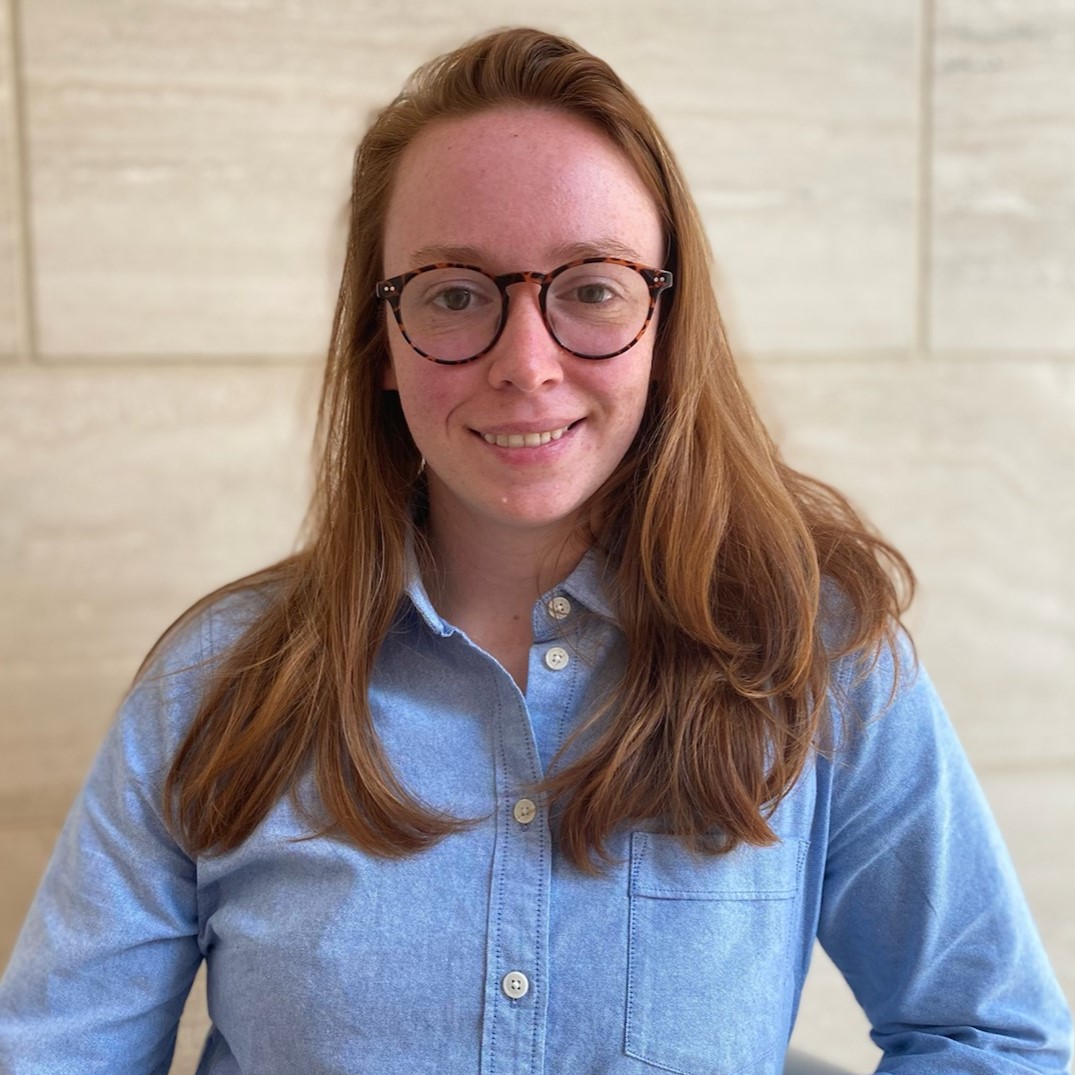
Among the scientists driving this paradigm shift is Dr. Emma Glass, a research scientist in the laboratory of James Yurkovich at the Buck Institute. Glass, whose academic journey bridges applied mathematics and biomedical engineering, is helping construct the computational architectures designed to simulate living cells with absolute mathematical precision. Funded in part by the Defense Advanced Research Projects Agency (DARPA), her work represents a critical stepping stone toward a future where healthcare is no longer reactive, but predictive, personalized, and mathematically calculated before a single pill is ever swallowed.
The Rise of Computational Gerontology: Bridging Math and Biology
For generations, the study of aging and disease was defined by physical observation—cultivating cells in petri dishes, administering chemical compounds, and measuring outcomes through slow, iterative laboratory experiments. While this traditional methodology remains foundational, it faces severe limitations when scaled against the profound complexity of human biology. Biological systems are intricate networks of thousands of interacting proteins, genes, and metabolites. When a human body ages, it does not suffer from a single mechanical failure; rather, it undergoes a systemic, multi-layered decline across cells, tissues, and organs.
To crack this complexity, modern researchers are turning to computational biology. By translating biological components into computational code, scientists can build virtual models—often referred to as "digital twins"—of cellular organisms. Glass arrived at the Buck Institute just over a year ago with a unique toolkit suited for this exact challenge. A native of Virginia, she earned her Bachelor of Science in Applied Math from the College of William & Mary before pursuing a Ph.D. in Biomedical Engineering at the University of Virginia, where she specialized in computational microbiology.
When the opportunity arose to join the Buck Institute, Glass saw an ideal intersection for her skills. Her current research focuses on developing whole-cell simulation software and managing data analysis for the TIME clinical trial. By merging her doctoral background in computational modeling with the institute’s overarching mission of extending human healthspan, she has positioned herself at the cutting edge of a multidisciplinary revolution that blends biology with computer science.
DARPA and the Blueprint of Bacterial Simulation
The financial and strategic backing for much of this advanced modeling comes from federal innovation initiatives, specifically DARPA. The agency has increasingly invested in predictive biological programs designed to understand and preempt cellular vulnerabilities. At the Buck Institute, Glass’s research specifically targets the bacterium Escherichia coli (E. coli), utilizing it as a foundational model organism to test the limits of predictive simulation.
The objective of the project is to create a computational simulation capable of predicting, with absolute fidelity, how E. coli will behave when exposed to varied environmental stressors and chemical agents. By running these simulations, researchers can calculate the exact concentration of an antibiotic required to arrest bacterial growth—all without ever touching a physical petri dish or running a traditional wet-lab assay.
While the immediate application of this technology holds profound value for infectious disease treatment, its broader implications are uniquely tailored to the Buck Institute’s anti-aging mission. A bacterium, though single-celled and prokaryotic, operates under many of the same fundamental biochemical principles that govern higher organisms. Mastering the simulation of E. coli provides researchers with a scalable framework, proving that complex cellular interactions can be accurately represented in digital space. This bacterial blueprint serves as the proof-of-concept necessary to eventually tackle the vastly more complicated architecture of eukaryotic and human cells.
Team Science: A Collaborative Ecosystem at the Buck Institute
Tackling a problem as ambitious as whole-cell simulation requires dismantling traditional academic silos. Modern biological breakthroughs are rarely achieved by isolated researchers working independently in a laboratory; instead, they rely on a collaborative model often termed "team science."
At the Buck Institute, Glass’s work is organized around two primary operational thrusts established under the DARPA project: "Measure and Inform," which focuses on the rigorous generation of biological data, and "Simulate and Predict," which centers on the construction and refinement of the computational models. Achieving equilibrium between these two forces demands deep, cross-functional collaboration.
Glass and her colleagues in the Yurkovich lab do not work in a vacuum. They coordinate closely with other faculty members across the Buck Institute to design and execute experiments that generate the massive, high-dimensional datasets required to ground their computational models in biological reality. Furthermore, the project extends beyond academic walls through strategic partnerships with industry leaders who provide specialized software and hardware infrastructure necessary to scale these complex technologies.
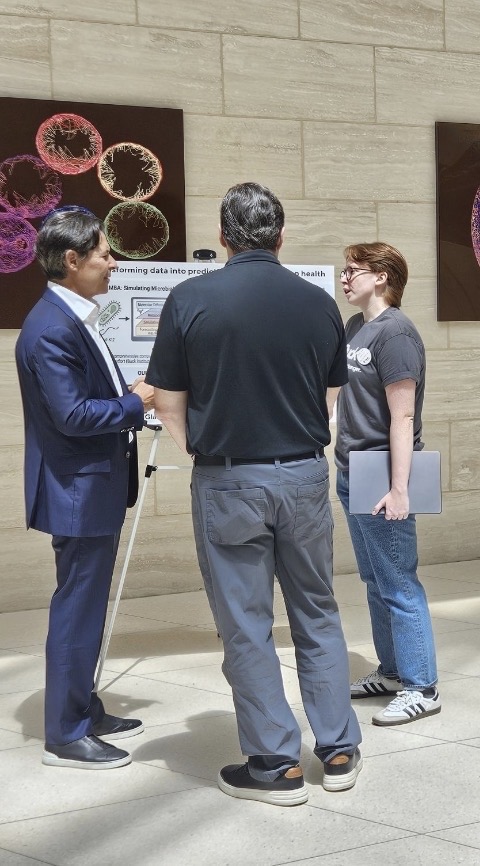
This collaborative synergy is further amplified by the Buck Institute’s institutional focus on applying artificial intelligence and machine learning to the biology of aging. By placing computational scientists side-by-side with experts in big data, biogerontology, and clinical trials, the institute has cultivated an environment where mathematical theory can be rapidly tested, refined, and deployed against real-world biological problems.
Translating Complexity: From High School Biology to Digital Twins
Explaining the nuances of whole-cell simulation to a lay audience requires stepping back from the dense jargon of bioinformatics. To someone whose familiarity with biology ended in a high-school classroom, the traditional drug-discovery process can seem straightforward: identify a disease, test thousands of chemical compounds in a laboratory, and observe which ones work. In reality, this trial-and-error approach is extraordinarily time-consuming, expensive, and limited by the physical constraints of laboratory testing.
Glass describes her research through a much more intuitive lens. Rather than running thousands of physical experiments to see how a cell reacts to a new medicine, her team extracts everything known about a cell’s internal machinery and translates it into computer code. This digital replica allows researchers to press a button and instantly observe how the cell responds to different drugs—whether it accelerates its growth, mutates, or dies.
The ultimate goal of this digital-twin approach is extrapolation. Once scientists can accurately simulate a single bacterium on a computer screen, the methodology can be scaled upward. By building a digital version of a human cell, researchers gain the unprecedented ability to observe, in real-time, how human cellular structures alter and degrade as they age. Armed with this visibility, medical science can move from merely observing the physical toll of aging to pinpointing the exact molecular triggers of cellular damage and testing interventions designed to halt them.
Short-Term Medical Utility and Long-Term Longevity Implications
The implications of whole-cell simulation extend across a vast temporal horizon, offering immediate clinical applications today while promising a total transformation of healthcare decades into the future.
In the short term, simulation software provides clinicians and pharmacologists with predictive tools to combat infections with pinpoint accuracy. By running digital simulations of pathogen responses, medical professionals can rapidly forecast which specific antibiotics will prove most effective against a drug-resistant infection, reducing the reliance on broad-spectrum guesswork and accelerating patient recovery times.
However, the transformative societal impact lies in the extensibility of the technology. As the computational frameworks mature from single-celled prokaryotes to complex human tissues and organs, the potential for personalized medicine becomes boundless. Experts envision a future where longevity simulations are tailored to individual patients. In this paradigm, physicians could use a patient’s unique genetic and metabolic data to simulate how specific diets, lifestyle modifications, or preventative pharmaceuticals would impact their cellular aging trajectory over decades.
This capability represents a fundamental departure from the traditional, reactive model of medicine—which treats diseases only after symptoms manifest—toward a proactive, preventative framework where human healthspan is managed with mathematical precision.

Looking Ahead: The Next Decade of Cellular Simulation
As the scientific community looks toward the next five to ten years, the momentum behind computational biogerontology is accelerating exponentially. Programs like the DARPA SMS (Automated Molecular Synthesis / System Modeling and Simulation) initiative are establishing baseline standards for what is possible in digital biology, pushing researchers to develop models that are orders of magnitude more complex than those available today.
For researchers at the Buck Institute, the coming decade holds the promise of achieving the first high-fidelity digital models of human cells. Such a milestone would fundamentally alter the landscape of biomedical science. Mechanisms of biological aging that were once hidden behind the veil of cellular complexity will become observable at unprecedented depths.
By transitioning from the passive observation of age-related physical decline to the active prediction and prevention of cellular degradation, computational scientists like Emma Glass are helping lay the groundwork for a future where extended human healthspan is not merely a medical aspiration, but a mathematically achievable reality.
Related posts: