WHO Director-General Concludes High-Level Visit to Jordan Highlighting Universal Health Coverage, Refugee Support, and Humanitarian Innovation

World Health Organization (WHO) Director-General Dr. Tedros Adhanom Ghebreyesus successfully wrapped up the first day of his high-profile, two-day state visit to the Hashemite Kingdom of Jordan. The visit serves as a powerful testament to the longstanding and robust partnership between the global health body and the Jordanian government. Discussions centered heavily on advancing universal health coverage (UHC), bolstering mental health infrastructure, and spearheading vital humanitarian health interventions across a volatile Middle Eastern landscape.
The cornerstone of the opening day was a strategic audience with His Majesty King Abdullah II. This high-level dialogue underscored Jordan’s prominent role as a regional leader in prioritizing public health amidst cascading geopolitical crises. The leaders engaged in substantive talks regarding the fortification of domestic health systems, the broadening of healthcare accessibility, and the imperative to sustain emergency medical operations. Particular emphasis was placed on the plight of the Palestinian population, specialized medical evacuees arriving from Gaza, and the millions of refugees currently sheltered within Jordan’s borders.
Recognizing the Kingdom’s extraordinary burden and humanitarian footprint, Dr. Tedros expressed deep gratitude to the Jordanian monarch. “I wish to express my appreciation to His Majesty King Abdullah II for his commitment to advancing universal health coverage,” Dr. Tedros stated. “I also extend my thanks to His Majesty and the people of Jordan for their solidarity and generosity in providing health services to more than three million refugees, primarily from Gaza and Syria, who are living in the country.”
Dr. Tedros further lauded Jordan’s pioneering humanitarian framework, specifically highlighting the monarch’s visionary Medical Corridor initiative. This critical logistical and medical lifeline facilitates the transfer and specialized treatment of critically ill and injured children from the besieged Gaza Strip. Through such measures, Jordan continues to demonstrate an unwavering global standard for placing health and human dignity above all else.
On-the-Ground Realities: Visiting Gaza Evacuees and Pediatric Care Centers
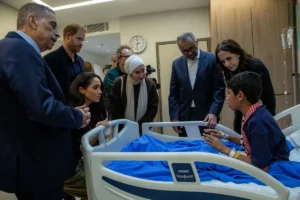
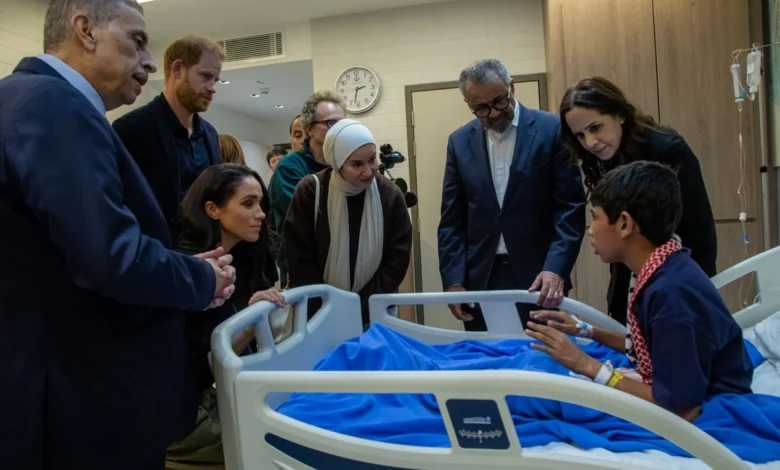
Moving beyond high-level diplomatic exchanges, Dr. Tedros immersed himself in the operational realities of Jordan’s healthcare infrastructure. He undertook a vital field visit to a specialized, WHO-supported hospital tasked with providing intensive, multidisciplinary care to pediatric patients evacuated directly from Gaza.
During the hospital tour, the WHO Director-General walked the wards to meet young patients, their families, and the resilient frontline health workers. These medical professionals deliver life-saving interventions daily for severe traumatic injuries, advanced-stage cancers, and other complex, life-threatening conditions. The visit served to amplify the indispensable nature of the Jordan-facilitated medical evacuation corridor. It simultaneously sounded a clarion call for sustained, predictable international donor support to ensure that vulnerable children and other critical patients continue to receive unimpeded access to specialized healthcare.
Mobilizing Resources: High-Level Consultations with International Partners
In alignment with the operational needs observed on the ground, Dr. Tedros convened a strategic, high-level roundtable meeting later in the day. The gathering brought together key health partners, international donor governments, United Nations agencies, and prominent philanthropic organizations.
The primary objective of the consultation was to align financial priorities for fortifying Jordan’s domestic health system and underwriting ongoing humanitarian health actions. Discussions specifically targeted the scaling up of integrated mental health services and the provision of adequate fiscal support for host nations bearing the immense socioeconomic and infrastructural weight of large refugee populations. Dr. Tedros welcomed the robust collaboration and reaffirmed commitments from international stakeholders to invest strategically in the health architecture of Jordan and the wider region.
Parallel to the partner roundtable, the WHO chief held substantive bilateral consultations with Jordan’s Minister of Health. These talks drilled down into structural strategies for cementing UHC through the institutionalization of primary healthcare models. Jordan has emerged as a global frontrunner in successfully integrating mental health services directly into routine primary care settings—ensuring that psychological support is treated as an indivisible component of overall physical well-being. This ongoing systemic reform receives continuous technical backing from the WHO Director-General’s Special Initiative for Mental Health.
High-Profile Solidarity: The Involvement of Archewell Philanthropies
Adding a prominent international dimension to the itinerary, Dr. Tedros was accompanied throughout several key engagements by Prince Harry, the Duke of Sussex, and Meghan, the Duchess of Sussex. The royal couple participated in their official capacities as founders of Archewell Philanthropies and long-standing, active supporters of the World Health Organization’s global mandate.
Archewell Philanthropies has a demonstrated history of backing pivotal WHO initiatives, spanning from the equitable global distribution of COVID-19 vaccines to complex medical evacuation protocols and mental health advocacy programs. During the Jordan visit, Prince Harry participated actively as a dedicated ally of the WHO’s mental health initiatives. He emphasized the urgent necessity of prioritizing psychological resilience across communities and emergency settings alike, directing specific focus toward the mental health needs of men, youth, and children caught in the crosshairs of conflict.
Expressing his appreciation for their continued advocacy, Dr. Tedros remarked, “I want to thank our partners, including Prince Harry, Duke of Sussex and Meghan, Duchess of Sussex, whose commitment to mental health and humanitarian action has helped bring visibility, resources and hope to some of the world’s most vulnerable communities. Their collaboration is helping to advance WHO’s mission to ensure health for all.”
Reflecting on the significance of the joint mission, Prince Harry shared his firsthand observations from the field. “It is an honour to join the Director-General of the World Health Organization in Jordan, a country that is leading by example in compassion, resilience and innovation,” the Duke of Sussex stated. “Through our work with Archewell Philanthropies, my wife and I have seen first-firsthand the impact of WHO’s efforts to support mental health and deliver life-saving care in emergencies. We remain deeply committed to advancing awareness, reducing stigma and expanding access to mental health support for all those affected by conflict and crisis. Mental health is fundamental to recovery, dignity and long-term peace, and we are proud to stand with WHO and partners around the world to make it a global priority.”
Day Two Itinerary: Rehabilitation, Community Resilience, and Advanced Oncology
As the state visit transitions into its second and final day, Dr. Tedros maintains a rigorous schedule designed to evaluate comprehensive health and social support frameworks across Jordan.
The itinerary features a scheduled visit to Jordan’s National Center for Rehabilitation of Addicts. Supported technically by the WHO, the facility represents a progressive model of care by delivering fully integrated medical, psychological, and social rehabilitation services to individuals struggling with substance use disorders.
Furthermore, the Director-General is slated to engage directly with grassroots community leaders and prominent women’s organizations, including a high-level briefing with the Jordanian Hashemite Fund for Human Development (JOHUD). These sessions will explore community-led resilience, maternal and child welfare, and participatory social development.
The state visit will culminate with a tour of the internationally renowned King Hussein Cancer Center. Discussions here will center on cutting-edge advancements in oncology, regional clinical collaboration, and strategies for expanding equitable access to specialized cancer treatments for patients from across the Middle East.
Broader Implications and Strategic Outlook for Regional Health
Public health analysts and humanitarian experts view Dr. Tedros’s state visit to Jordan as a critically timed intervention in a region reeling from overlapping humanitarian emergencies. By elevating Jordan’s exemplary status as a stabilizing healthcare hub, the WHO is signaling to the international community that localized resilience must be met with robust, long-term multilateral investment.
The implications of the visit extend far beyond Jordanian borders. As displacement crises persist in Syria, Gaza, and neighboring conflict zones, the sustainability of host-country health systems is a matter of international security and human rights. Jordan’s integration of refugees into national health infrastructure, combined with its innovative primary healthcare and mental health integration models, provides a scalable blueprint for low- and middle-income countries grappling with mass displacement.
Ultimately, the high-level dialogue between WHO leadership, the Jordanian monarchy, international donors, and philanthropic advocates establishes a renewed framework for action. By bridging immediate humanitarian triage with long-term health system strengthening, the visit reinforces the foundational truth that health is not merely a byproduct of peace, but an essential prerequisite for its realization.
Related posts: