WHO Chief Dr Tedros Praises Jordan for Humanitarian Leadership and Universal Health Coverage During High-Profile Visit

World Health Organization (WHO) Director-General Dr Tedros Adhanom Ghebreyesus successfully wrapped up the first day of his high-stakes, two-day state visit to the Hashemite Kingdom of Jordan today, shining a global spotlight on the nation’s extraordinary resilience, progressive healthcare policies, and enduring commitment to humanitarian aid. The visit, designed to fortify the deep-seated strategic partnership between the WHO and Jordanian authorities, focused extensively on universal health coverage (UHC), cutting-edge mental health integration, and crisis-driven medical responses across the Middle East.
The cornerstone of the day’s diplomatic engagements was a high-level audience with His Majesty King Abdullah II. The meeting served as a powerful testament to Jordan’s proactive stance in positioning healthcare as both a vital national security interest and a foundational global priority. Discussions in the royal palace centered on actionable strategies for fortifying regional health infrastructure, dramatically expanding clinical access for vulnerable populations, and securing long-term international funding for ongoing humanitarian interventions. Particular emphasis was placed on the plight of the Palestinian people, critically ill and injured patients medically evacuated from Gaza, and the millions of refugees who have found sanctuary within Jordan’s borders over successive decades of regional turmoil.
"I wish to express my appreciation to His Majesty King Abdullah II for his commitment to advancing universal health coverage," Dr Tedros stated following the bilateral talks. "I also extend my thanks to His Majesty and the people of Jordan for their solidarity and generosity in providing health services to more than three million refugees, primarily from Gaza and Syria, who are living in the country."
Dr Tedros further commended Jordan’s visionary humanitarian architecture, singling out the King’s pioneering Medical Corridor initiative. This vital logistical channel has successfully bypassed traditional bureaucratic and physical blockades to deliver specialized, life-saving care to critically ill and injured children evacuated directly from the Gaza Strip. Through these actions, Jordan continues to demonstrate to the international community what it genuinely means to prioritize human life and dignity above all political divides.
On the Ground: Witnessing Pediatric Medical Evacuations
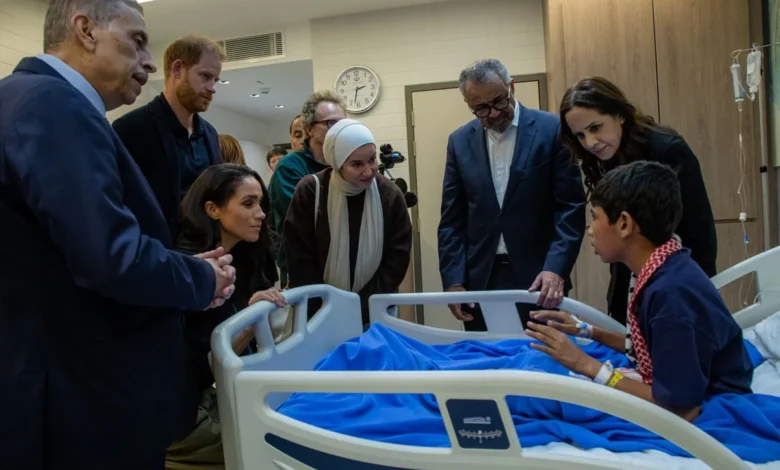
Moving beyond diplomatic chambers and high-level policy discussions, Dr Tedros transitioned to the field to witness the tangible realities of Jordan’s humanitarian operations. The WHO chief visited a specialized, WHO-supported medical facility dedicated to treating pediatric patients who have been successfully evacuated from Gaza.
During the hospital walkthrough, Dr Tedros engaged directly with young patients, their anxious families, and the exhausted yet resolute frontline medical professionals. These healthcare workers operate around the clock, delivering complex, life-saving treatments for severe traumatic injuries, pediatric cancers, and other life-threatening conditions exacerbated by the collapse of medical infrastructure in conflict zones.
The poignant field visit underscored the irreplaceable utility of the Jordan-facilitated medical evacuation corridor. Furthermore, it served as an urgent, real-time appeal to the international donor community for sustained, predictable financial backing. Without robust external support, maintaining these specialized care pathways for children and other critical casualties remains perpetually vulnerable to funding deficits.
High-Level Financing and Regional Partnership Summit
To address the severe economic pressures associated with prolonged regional instability and massive refugee hosting responsibilities, Dr Tedros convened a high-level strategic roundtable. The summit brought together key international health partners, major donor nations, United Nations agencies, and prominent philanthropic organizations.
The primary objective of the gathering was to map out sustainable financing priorities aimed at reinforcing Jordan’s national health system. Discussions specifically targeted the scale-up of comprehensive mental health services—an area where Jordan has made commendable strides—and the development of equitable burden-sharing models for countries hosting disproportionately large refugee populations.
Participants at the roundtable praised Jordan’s macro-level economic resilience and welcomed the opportunity to deepen multi-sectoral investments. Experts note that strengthening Jordan’s health architecture acts as a stabilizing force for the entire Levant region, mitigating the risk of communicable disease outbreaks and preventing the total collapse of health safety nets for displaced persons.
Advancing Universal Health Coverage and Mental Health Integration
Earlier in the day, the WHO Director-General held intensive bilateral consultations with Jordan’s Minister of Health. The talks focused heavily on structural reforms required to accelerate progress toward comprehensive universal health coverage.
Public health analysts have frequently cited Jordan as a regional leader in adopting and refining a primary healthcare-oriented model. Notably, the Hashemite Kingdom has made significant headway in the de-institutionalization and integration of mental health services into routine, community-level primary care clinics. This progressive approach ensures that psychological support is treated with the same urgency and accessibility as physical ailments, thereby dismantling deep-seated societal stigmas.
This work is closely aligned with the WHO Director-General’s Special Initiative for Mental Health, which provides technical guidance and strategic frameworks to countries striving to rebuild psychological resilience in post-conflict and crisis-affected settings.
High-Profile Advocacy: The Role of Archewell Philanthropies
Adding a distinct layer of global advocacy and public visibility to the itinerary, Dr Tedros was accompanied throughout several key engagements by Prince Harry, the Duke of Sussex, and Meghan, the Duchess of Sussex. Participating in their official capacities as co-founders of Archewell Philanthropies, the couple represents long-standing, active allies of the World Health Organization.
Archewell Philanthropies has previously partnered with the WHO on critical global health campaigns, ranging from the equitable distribution of COVID-19 vaccines in marginalized regions to targeted medical evacuation and mental health support programs. During the Jordan visit, Prince Harry participated actively as a leading global advocate for mental health reform, emphasizing the absolute necessity of embedding psychological support into all humanitarian response frameworks. His advocacy specifically highlighted the acute vulnerabilities facing men, adolescents, and children caught in the crosshairs of modern warfare.
"I want to thank our partners, including Prince Harry, Duke of Sussex and Meghan, Duchess of Sussex, whose commitment to mental health and humanitarian action has helped bring visibility, resources and hope to some of the world’s most vulnerable communities," Dr Tedros remarked. "Their collaboration is helping to advance WHO’s mission to ensure health for all."
Echoing these sentiments, Prince Harry underscored the profound impact of witnessing humanitarian resilience firsthand: "It is an honour to join the Director-General of the World Health Organization in Jordan, a country that is leading by example in compassion, resilience and innovation. Through our work with Archewell Philanthropies, my wife and I have seen first-hand the impact of WHO’s efforts to support mental health and deliver life-saving care in emergencies."
"We remain deeply committed to advancing awareness, reducing stigma and expanding access to mental health support for all those affected by conflict and crisis," Prince Harry continued. "Mental health is fundamental to recovery, dignity and long-term peace, and we are proud to stand with WHO and partners around the world to make it a global priority."
Chronology and Agenda for Day Two
As the first day of the state visit drew to a close, organizers released the comprehensive itinerary for the second and final day of Dr Tedros’s mission in Jordan.
The schedule for tomorrow includes a high-profile inspection of Jordan’s National Center for Rehabilitation of Addicts. Supported technically by the WHO, this specialized facility provides holistic, integrated medical, psychological, and social intervention services to individuals struggling with substance dependency—a growing public health challenge exacerbated by regional instability and socioeconomic stressors.
Following the center visit, Dr Tedros is slated to participate in a series of community-level dialogues with grassroots leaders and prominent women’s organizations. This will include formal consultations with representatives from the Jordanian Hashemite Fund for Human Development (JOHUD), an institution renowned for empowering marginalized communities and fostering grassroots socioeconomic resilience.
The final leg of the Director-General’s mission will feature a strategic site visit to the internationally acclaimed King Hussein Cancer Center. Discussions there will focus on pioneering advances in oncology care, the expansion of specialized treatment pipelines, and the facilitation of cross-border regional medical collaborations.
The state visit will officially conclude with final debriefings involving international humanitarian operators and diplomatic missions. These closing sessions are intended to cement Jordan’s undisputed status as an indispensable logistical hub for emergency medical evacuations, disaster response coordination, and long-term health system resilience across the Middle East.
Broader Implications and Analytical Outlook
Public health experts and geopolitical analysts alike are viewing Dr Tedros’s visit to Jordan through a lens of strategic necessity. In a region continually roiled by geopolitical volatility, protracted civil conflicts, and massive displacement crises, Jordan has consistently punched above its weight class in maintaining social cohesion and public health stability.
By hosting millions of refugees from neighboring Syria, Iraq, and more recently, displaced populations from Gaza, Jordan’s public infrastructure—particularly its water, sanitation, and healthcare grids—has faced unprecedented systemic strain. Despite these immense economic headwinds, the Hashemite Kingdom has refused to compromise its humanitarian obligations, effectively acting as an anchor of stability in an otherwise fragile region.
The active involvement of global health leaders and high-profile philanthropists such as Archewell serves a dual purpose. Beyond generating immediate financial pledges and material resources, high-level diplomatic missions of this nature prevent donor fatigue. By keeping the spotlight fixed on protracted crises and structural health deficits, the WHO ensures that marginalized populations do not fade from international consciousness as new global emergencies erupt elsewhere.
Ultimately, the outcomes of this state visit are expected to translate into more robust multi-year funding agreements, enhanced technical cooperation between the WHO and the Jordanian Ministry of Health, and an expanded operational capacity for regional medical evacuation corridors. As the international community grapples with compounding humanitarian emergencies worldwide, the Jordanian model of resilience, compassion, and systematic health integration offers a compelling blueprint for sustainable crisis management.
Related posts: