State Budgets Face Mounting Pressure as Slowing Revenues and Federal Medicaid Cuts Threaten Health Programs

State governments across the United States are navigating an increasingly precarious fiscal environment, marked by decelerating revenue growth, depleted pandemic-era cash reserves, and looming federal policy shifts. According to recent data from the National Association of State Budget Officers (NASBO) and health policy research from organizations like KFF, these converging economic pressures are forcing state legislatures to make difficult choices regarding public services. At the center of this budgetary squeeze is Medicaid, the foundational health and long-term care program that covers one in five Americans and accounts for nearly 20% of all national health care expenditures. As states grapple with tighter general fund budgets and the implementation of significant federal funding reductions under the 2025 reconciliation law, policymakers face difficult decisions that could directly impact Medicaid eligibility, benefits, and provider payment structures nationwide.
The fiscal architecture of Medicaid relies on a unique federal-state partnership. Administered by individual states within broad federal guidelines, the program is jointly funded through an open-ended matching program. Historically, the federal government covers approximately two-thirds of total Medicaid costs, while states finance the remaining third, though the exact federal matching rate varies by jurisdiction. Because states maintain administrative and financing flexibility—including how they generate their non-federal share through provider taxes and state-directed payments—program structures, benefits, and reimbursement rates vary significantly from state to state. For state legislatures, Medicaid represents both a massive budgetary obligation and a vital fiscal lifeline. NASBO data indicates that Medicaid constitutes roughly 31 percent of total state spending across all budget items. While it accounts for a modest 17 percent of expenditures drawn strictly from state funds, it commands a staggering 57 percent of all expenditures derived from federal funds, making any federal policy alteration profoundly impactful to state fiscal health.
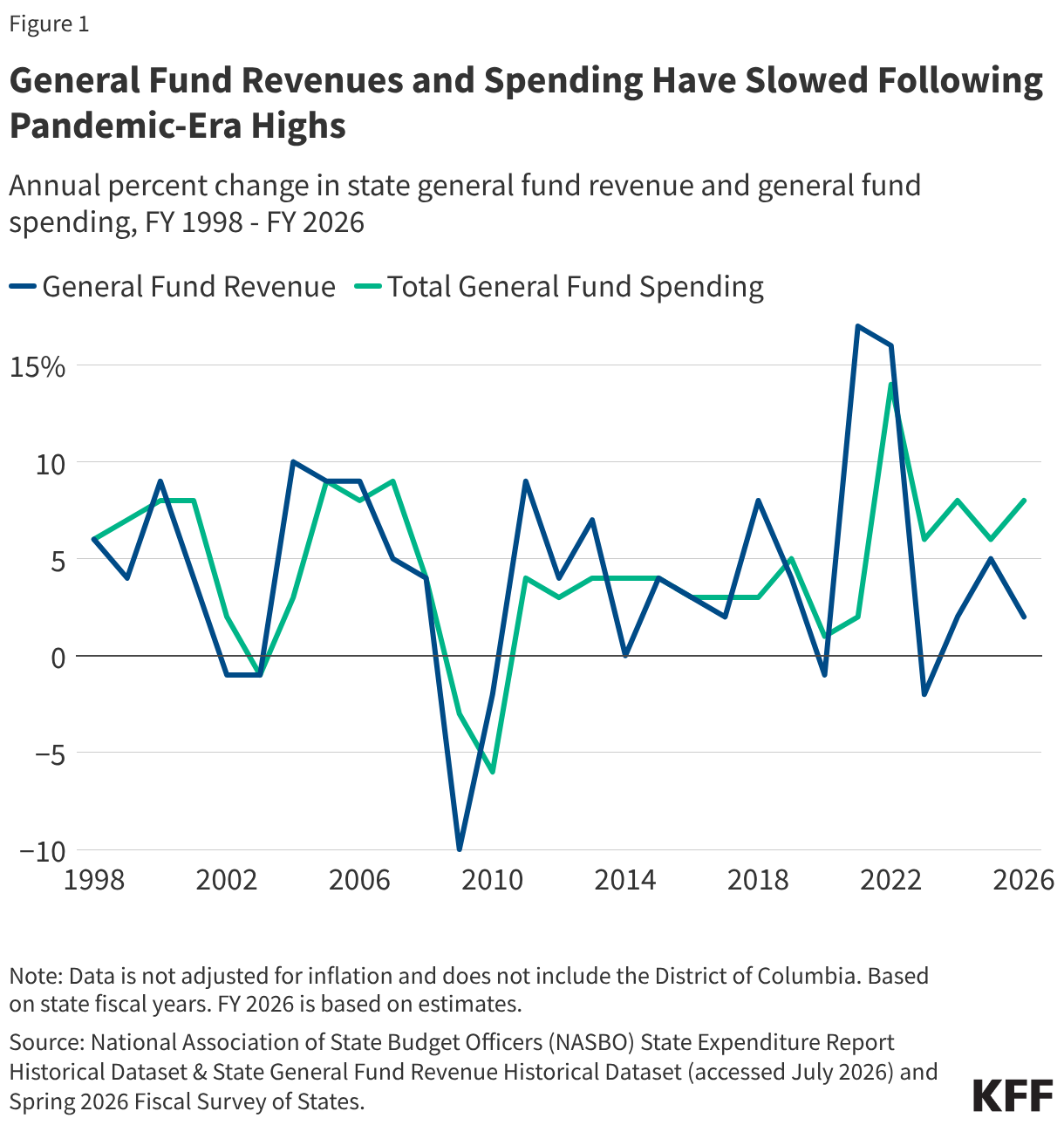
The current budgetary strain follows a dramatic economic trajectory over the past several years. When the COVID-19 pandemic struck, state economic conditions deteriorated rapidly before rebounding at an unprecedented pace. This swift recovery triggered a historic period of revenue and spending growth, providing states with massive budget surpluses. Legislators used these windfalls to bolster rainy day funds to record-breaking levels and enact various one-time expenditures and tax cuts. However, this period of abundance has definitively given way to normalization and tightening constraints. A combination of structural tax cuts, persistent inflationary pressures, stock market volatility, and shifting consumer behavior has caused state revenue growth to slow significantly from fiscal year (FY) 2023 through FY 2026.
By FY 2026, the deceleration was stark. Although many states managed to collect revenues exceeding initial projections, estimated total revenue growth dropped to just 2 percent, down sharply from the 5 percent growth seen in FY 2025. Numerous states actually experienced outright declines in revenue collections. Looking ahead, state budgets enacted for FY 2027 project similarly sluggish revenue growth of only 2 to 3 percent. General fund spending growth has mirrored this downward trend. After peaking at an unsustainable 14 percent in FY 2022, general fund spending growth moderated steadily, hitting an estimated 8 percent in FY 2026, with FY 2027 enacted budgets projecting average growth capped between 2 and 3 percent. Consequently, state legislatures have largely abandoned service expansions in favor of funding core obligations and executing targeted adjustments to maintain structural balance.
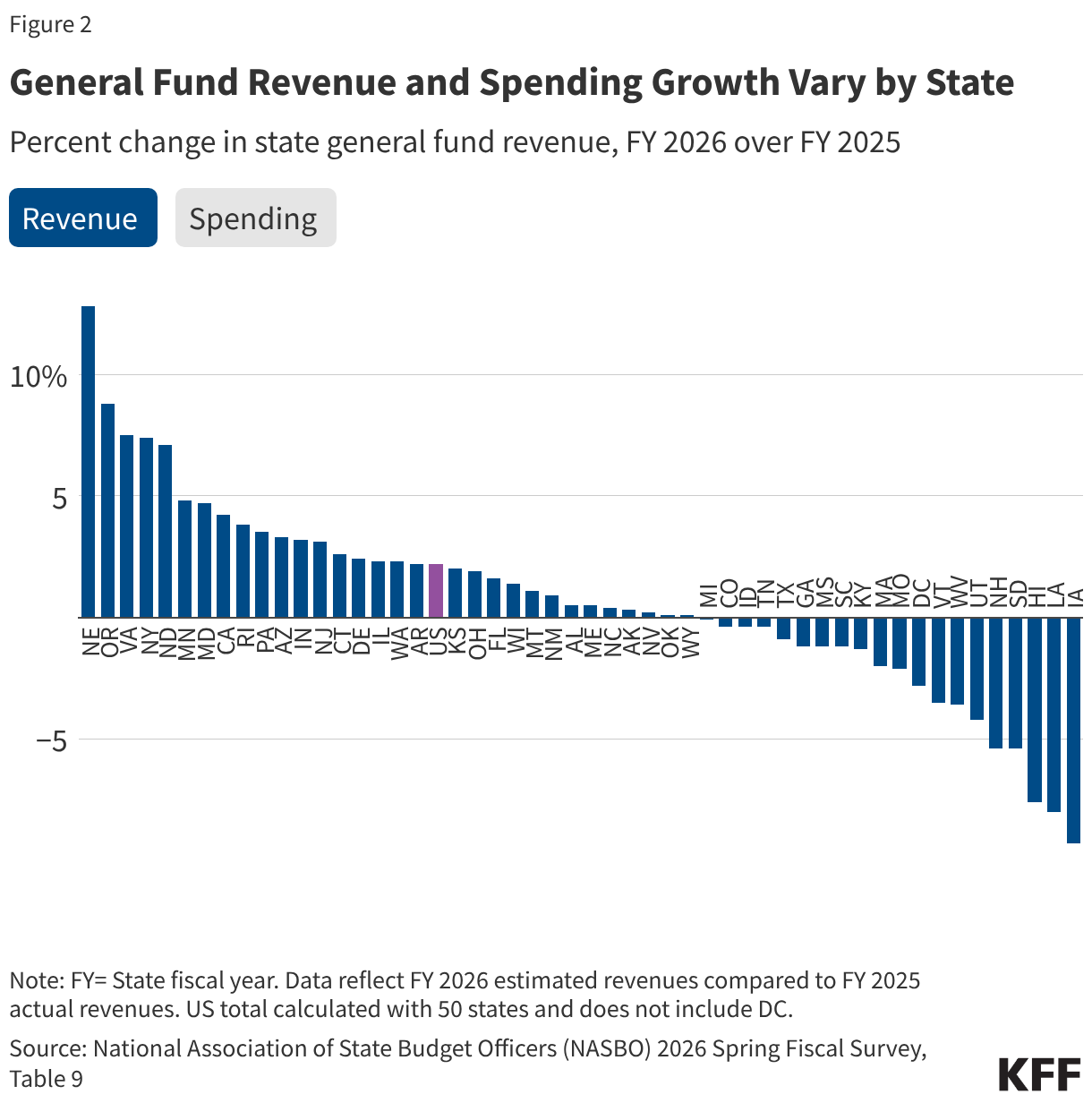
These national averages mask considerable divergence at the state level. Fiscal conditions varied widely across the country in FY 2026, with 20 states reporting absolute declines in general fund revenues. Conversely, 30 states experienced modest revenue growth between zero and 10 percent, and only one state saw growth exceeding 10 percent. Because state general funds rely heavily on personal income, corporate income, and sales taxes, revenue trajectories are heavily influenced by individual tax policy choices and economic structures. While personal income tax collections provided some ballast in recent years, newly enacted income tax rate reductions in several states threaten to constrain future revenue generation further.
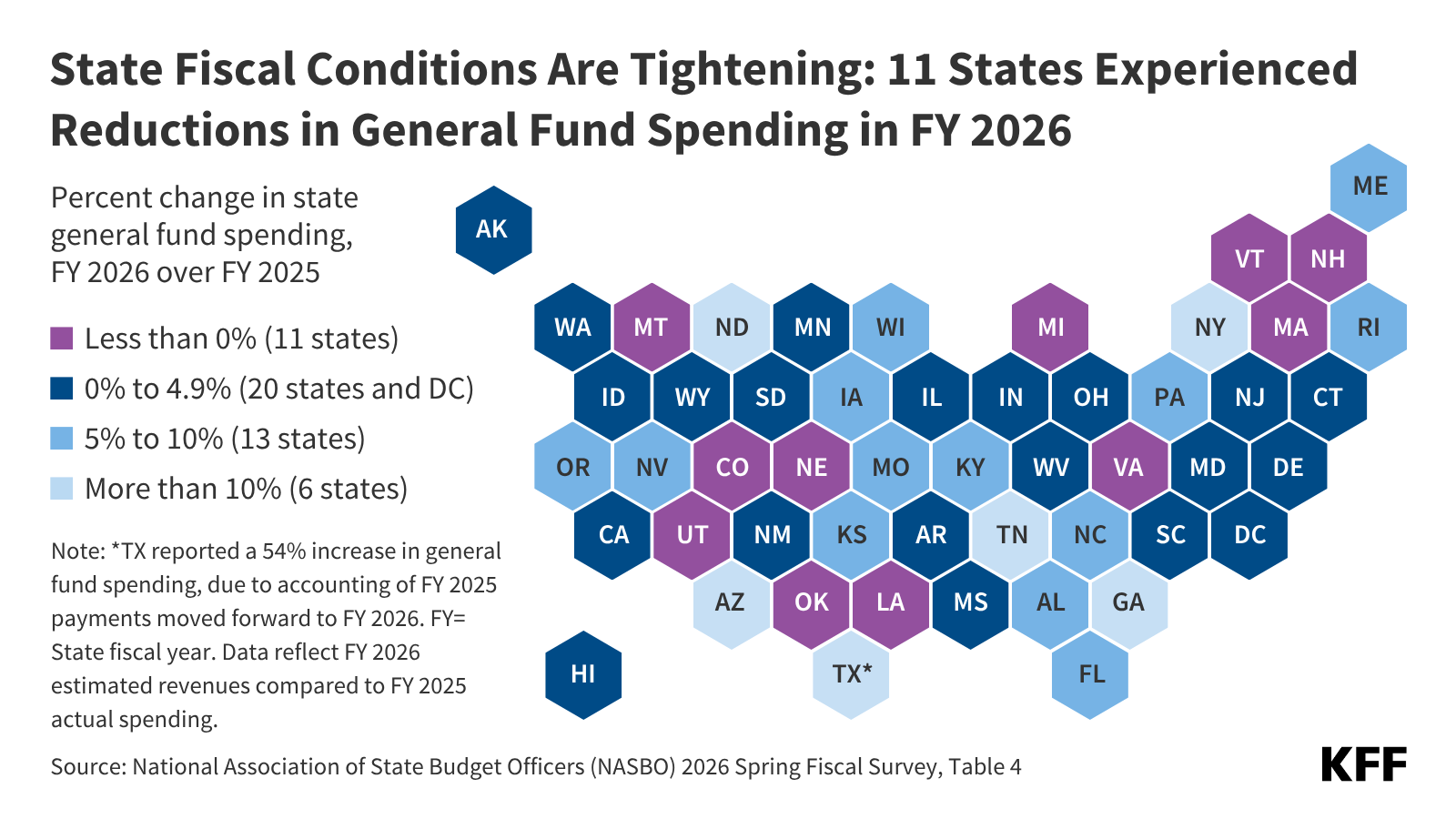
Spending patterns exhibited similar polarization. In FY 2026, 11 states enacted outright reductions in general fund spending—a notable phenomenon during a period of high inflation, where maintaining purchasing power typically requires increased outlays. Furthermore, five states were forced to implement mid-year budget cuts to avert end-of-year shortfalls, representing the highest frequency of mid-term corrections since FY 2021. While the majority of states maintained modest spending growth below 10 percent, the overall trend points toward aggressive cost containment. Enacted budgets for FY 2027 reflect an increasing reliance on spending cuts, freezes, and administrative efficiencies to manage structural imbalances.
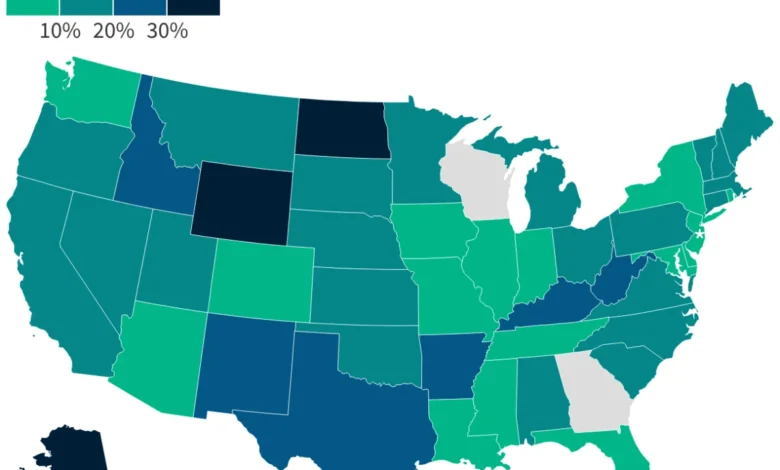
State fiscal buffers, while still present, have also eroded from their pandemic-era peaks. Rainy day funds, which absorbed much of the surplus revenue from previous years, remained relatively high heading into FY 2026 but saw general declines as states utilized them to balance budgets amid slowing revenues. Currently, rainy day fund balances range widely, accounting for less than 10 percent of general fund spending in 17 states while exceeding 30 percent in just three states. Total balances and general fund ending balances have likewise diminished, leaving state treasuries with fewer cushions to absorb economic shocks. Although most states plan to maintain or modestly replenish their rainy day reserves in FY 2027, the depletion of prior-year surpluses means states will have significantly less fiscal flexibility moving forward.
Beyond internal revenue and spending dynamics, external pressures are compounding state budget uncertainty. The political landscape introduces another layer of volatility; following the 2026 midterm elections, 37 states held gubernatorial or major mayoral contests, with 19 seats featuring open races where incumbent governors are not running. New executive administrations typically bring fresh policy priorities, administrative approaches, and agency leadership, which can rapidly alter state budgetary trajectories.
Compounding these political shifts are broader macroeconomic headwinds and sweeping federal policy changes. Persistent inflationary pressures, cooling consumer spending, fluctuating labor markets, and the national debt debate continue to weigh on public finances. Most notably, the implementation of the 2025 federal reconciliation law has introduced profound disruptions. The legislation encompasses significant structural changes to the tax code alongside deep federal funding cuts to vital safety-net programs, including Medicaid and the Supplemental Nutrition Assistance Program (SNAP). Furthermore, translating these federal statutory changes into operational reality requires complex, costly administrative and technological system updates for state agencies already operating under constrained resources.
The convergence of tighter state fiscal conditions, slowing economic momentum, and the federal spending cuts mandated by the 2025 reconciliation law creates a high-pressure environment for Medicaid financing. The severity of these federal cuts will impact states unevenly, depending heavily on their Medicaid expansion status, reliance on provider taxes, and utilization of state-directed payments for hospital services. Because states are legally bound to balance their budgets, their capacity to offset federal funding losses through alternative state revenues is severely restricted. Raising broad-based taxes or slashing funding for other foundational areas like education, infrastructure, and public safety presents immense political and economic hurdles.
Consequently, policy experts warn that states may increasingly turn to direct restrictions within their Medicaid programs to achieve necessary savings. To reduce state-level expenditures, legislatures may consider curtailing optional benefits, tightening eligibility standards, or scaling back provider reimbursement rates. While a small number of states preemptively implemented targeted Medicaid spending cuts for FY 2026 and proposed further reductions for FY 2027, analysts anticipate that these restrictive measures could accelerate as the full financial impact of the 2025 reconciliation law materializes. As states navigate this difficult fiscal crossroads, the decisions made in legislative chambers over the coming cycles will directly test the resilience of the nation’s healthcare safety net.
Related posts: