Navigating the $50 Billion Rural Health Transformation Program: Structure, State Allocations, and the Shadow of Medicaid Reductions

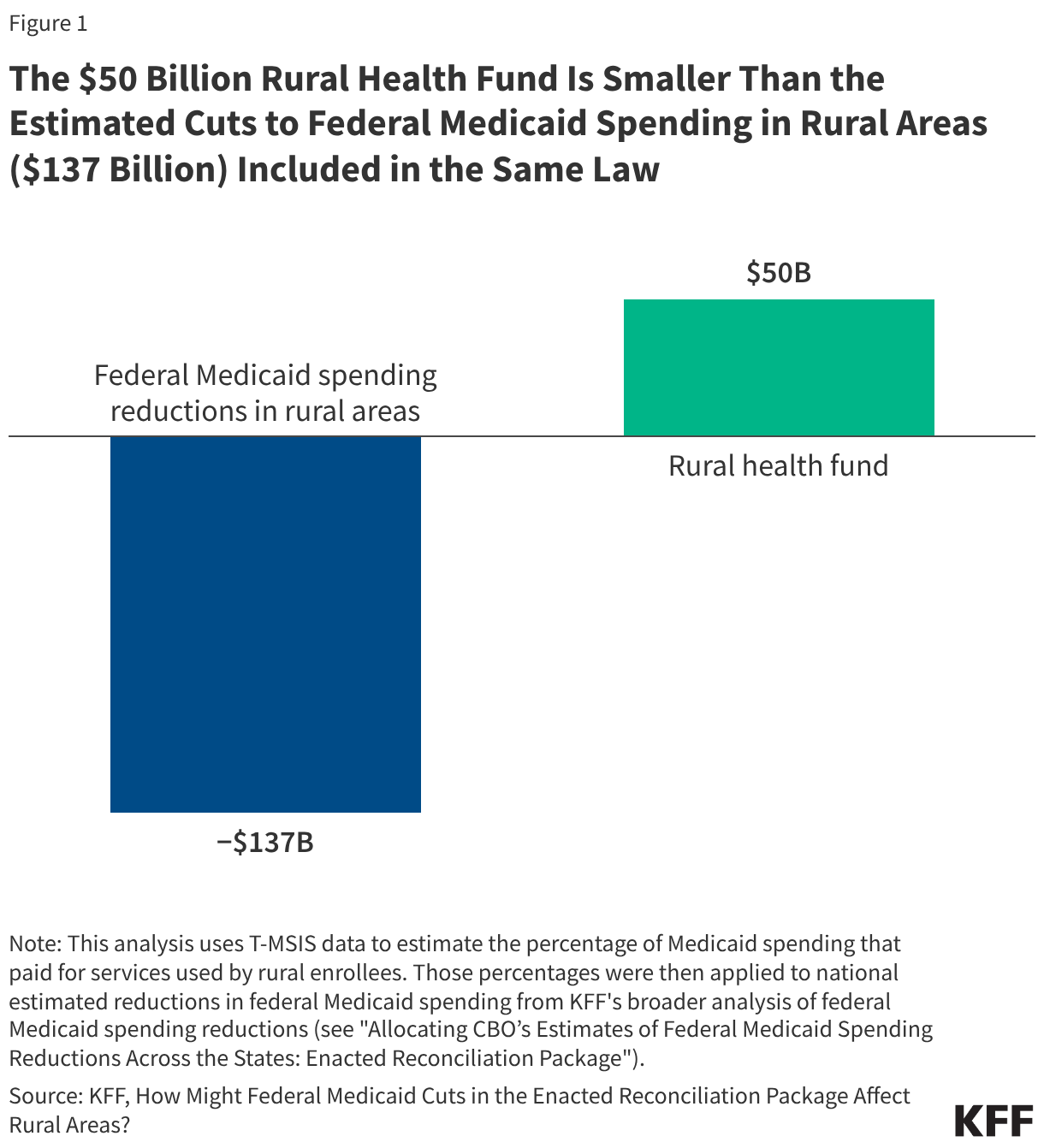
The passage of the federal budget reconciliation bill on July 4, 2025—signed into law by President Trump—fundamentally reshaped the landscape of American healthcare funding. While the landmark legislation introduced sweeping tax cuts and substantial reductions in federal healthcare spending, it also sparked acute anxieties regarding the survival of America’s fragile healthcare infrastructure. Foremost among these concerns was the projected $911 billion reduction in federal Medicaid spending over a ten-year period, with an estimated $137 billion of those cuts concentrated directly in rural communities. To soften the blow to these medically underserved populations, lawmakers instituted a political compromise in the eleventh hour: the Rural Health Transformation Program. Commonly referred to as the rural health fund, this initiative injects $50 billion in federal grants into state healthcare systems from fiscal years 2026 through 2030. Administered by the Centers for Medicare & Medicaid Services (CMS) through its newly established Office of Rural Health Transformation, the program represents a massive, albeit temporary, effort to overhaul rural healthcare delivery, improve patient outcomes, and help providers adapt to a dramatically shifting financial reality.
Origins, Structure, and Governance of the Rural Health Fund
The creation of the rural health fund was born out of intense legislative negotiations in the Senate during June 2025. As Republican leadership weighed deep reductions to federal health programs, lawmakers representing rural states raised alarms that local hospitals and clinics would face imminent insolvency due to compounding revenue losses. In response, a $50 billion carve-out was added to the reconciliation package just prior to enactment.
Under the statutory framework established by the law, CMS is tasked with distributing exactly $10 billion annually to approved states across a five-year window spanning fiscal years 2026 through 2030. States are granted flexibility to spend awarded funds through the end of the subsequent fiscal year, while CMS retains the authority to redistribute unallocated money over time. However, the clock is ticking: all program funds must be completely expended by the conclusion of fiscal year 2032, after which the program terminates permanently unless reauthorized by Congress.
Unlike standard federal block grants, the rural health fund is administered through cooperative agreements. This funding mechanism requires substantial, ongoing CMS project involvement after awards are finalized. Furthermore, CMS wields sweeping oversight authority. While all 50 states successfully applied and secured approval during the initial one-time application window, CMS retains the unilateral right to withhold, reduce, eliminate, or recover funds if it determines a state is failing to demonstrate satisfactory progress, violating program rules, or acting contrary to the best interests of the federal government. Crucially, the legislation explicitly bars administrative or judicial review of these CMS funding decisions, placing immense power directly in the hands of federal regulators.
A Fast-Paced Implementation Timeline and Critical Dates
The operational rollout of the rural health fund has adhered to a remarkably accelerated timeline, putting state administrative agencies under intense pressure. CMS issued its official Notice of Funding Opportunity in September 2025, giving states less than two months to craft and submit comprehensive multi-year applications. These initial applications established the foundational scope of state activities and dictated baseline funding allocations for the life of the program.
By December 2025, CMS announced the first-year awards for fiscal year 2026. States were subsequently given less than a year to operationalize their strategies: finalizing discussions with CMS, establishing internal application pipelines for local sub-recipients, obligating funds, and submitting initial annual progress reports that directly influence second-year funding distributions. Because states vary wildly in administrative capacity, the speed at which funds have reached local healthcare providers has been highly uneven across the country.
The chronological roadmap of the program highlights several milestones:
- July 4, 2025: President Trump signs the budget reconciliation bill into law, authorizing the $50 billion rural health fund.
- September 2025: CMS releases the Notice of Funding Opportunity, initiating the state application window.
- December 2025: CMS announces first-year (FY 2026) grant awards for all 50 approved states.
- Fiscal Years 2027–2030: Annual distribution of $10 billion per year, subject to ongoing performance reviews and state progress reporting.
- End of Fiscal Year 2032: Ultimate statutory deadline for the complete expenditure of all allocated program funds.
Permitted Uses, Strategic Goals, and Hospital Realities
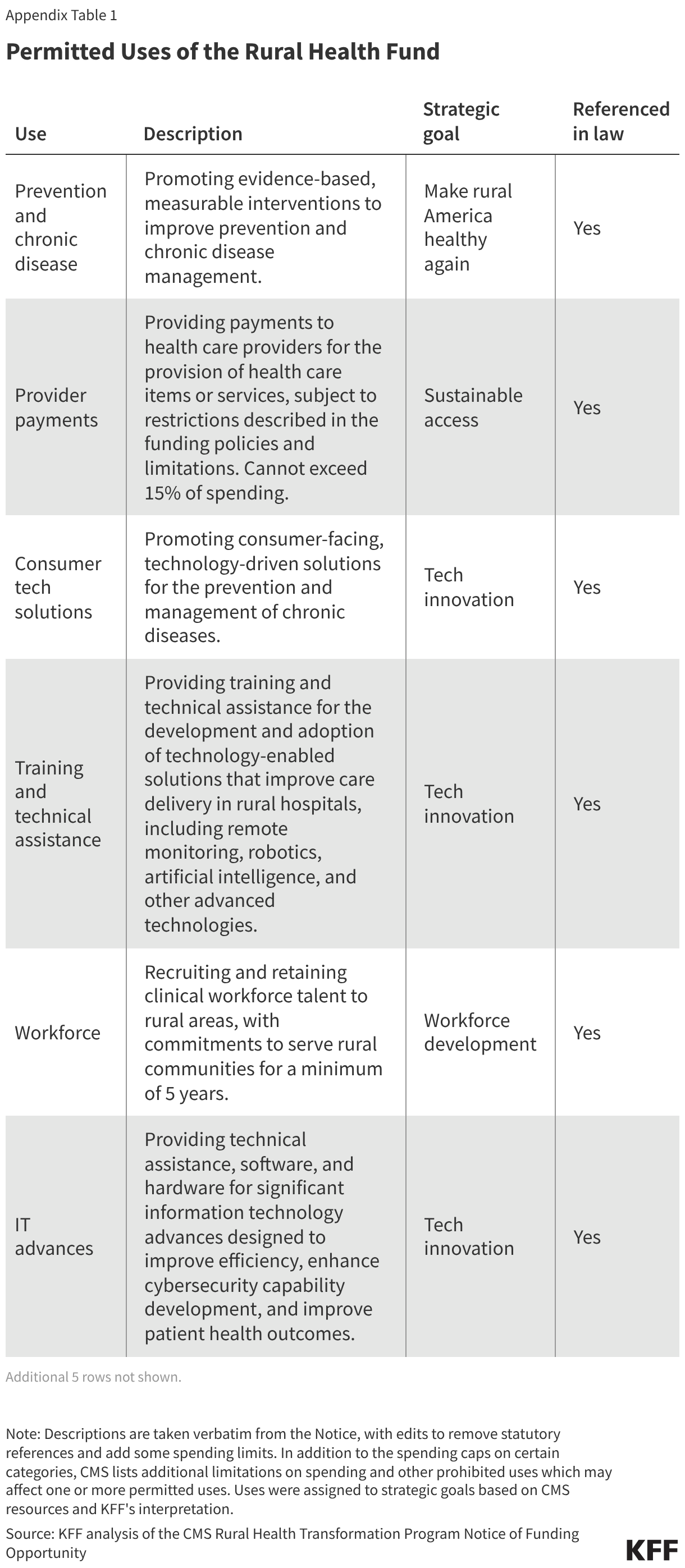
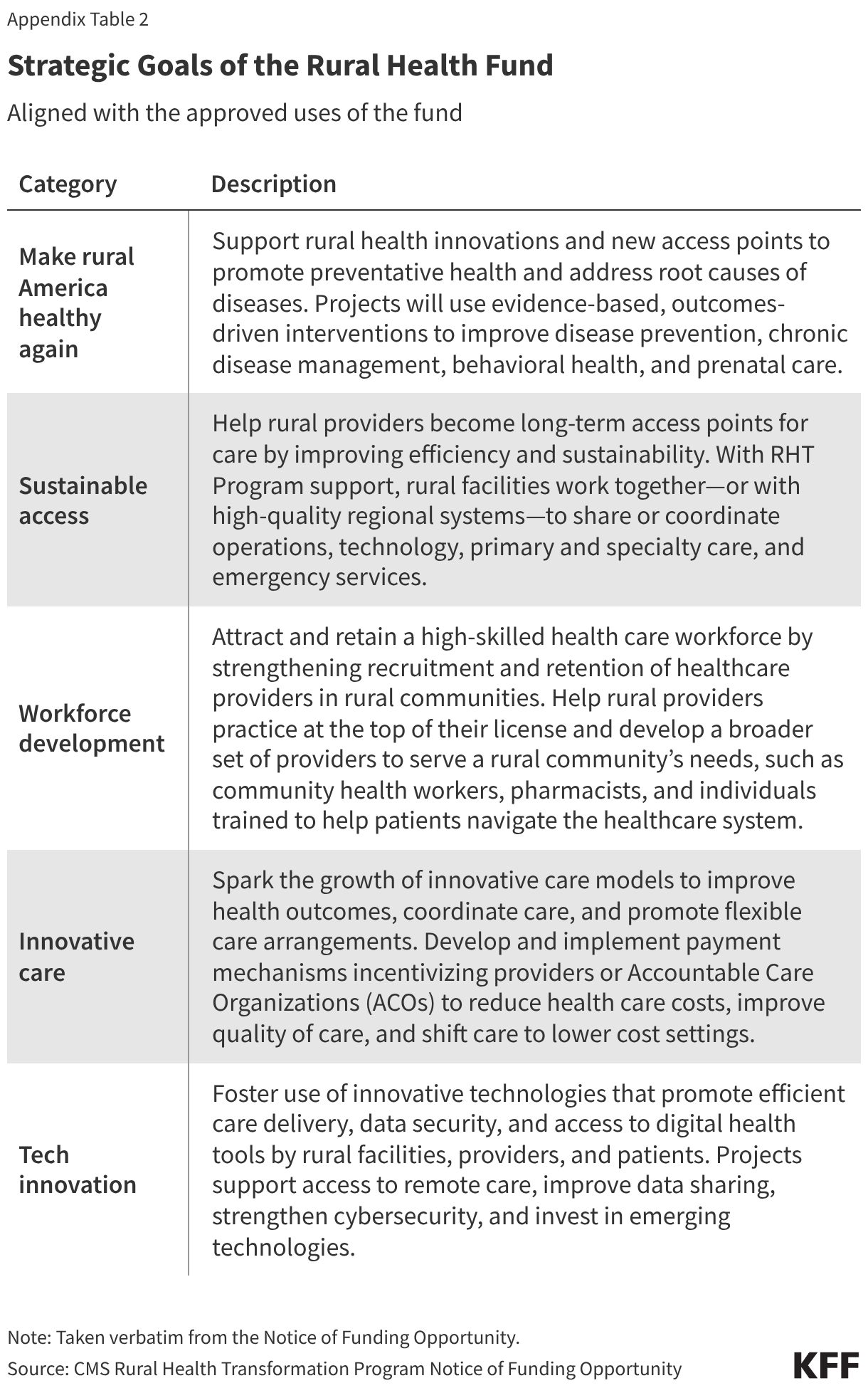
The statutory intent behind the rural health fund is broad: rather than serving as a simple financial bailout for struggling balance sheets, the program is designed to drive systemic healthcare transformation in rural communities. CMS guidelines dictate that states must invest in long-term, sustainable improvements rather than temporary operational fixes or perpetual expense subsidies.
To achieve this, states are required to direct their funding toward at least three of eleven statutorily permitted uses. These include promoting chronic disease prevention, facilitating administrative and clinical collaboration among rural facilities, recruiting and retaining rural healthcare workforce talent, expanding technological infrastructure such as telehealth and artificial intelligence diagnostic tools, modernizing aging physical plant facilities, and supporting the transition toward value-based care and alternative payment models. Additionally, states are permitted to allocate up to 10% of their total awards toward administrative oversight and program management.
Despite the program’s origins as a shield for rural hospitals facing Medicaid cuts, the actual flow of money to hospitals remains complicated and uncertain. Hospitals are not the exclusive beneficiaries of the fund; states are dividing resources among a wide array of entities, including academic institutions managing workforce pipelines, regional health systems providing technical assistance, local government agencies, and health IT vendors. Moreover, while hospitals can utilize funds for permitted capital investments or collaborative care networks, strict federal guidelines prohibit using the money for direct operating expense subsidies, debt retirement, or certain profit-generating ventures.
This dynamic has left healthcare industry leaders expressing caution. Representatives from the American Hospital Association (AHA) and the Federation of American Hospitals (FAH) have formally argued that the program places insufficient priority on direct hospital relief. Industry groups and a bipartisan coalition of senators have urged CMS to grant greater flexibility, warning that small, isolated rural providers often struggle to compete against large academic and regional health systems during state-level procurement and grant-awarding processes.
State Allocations and Distribution Methodology
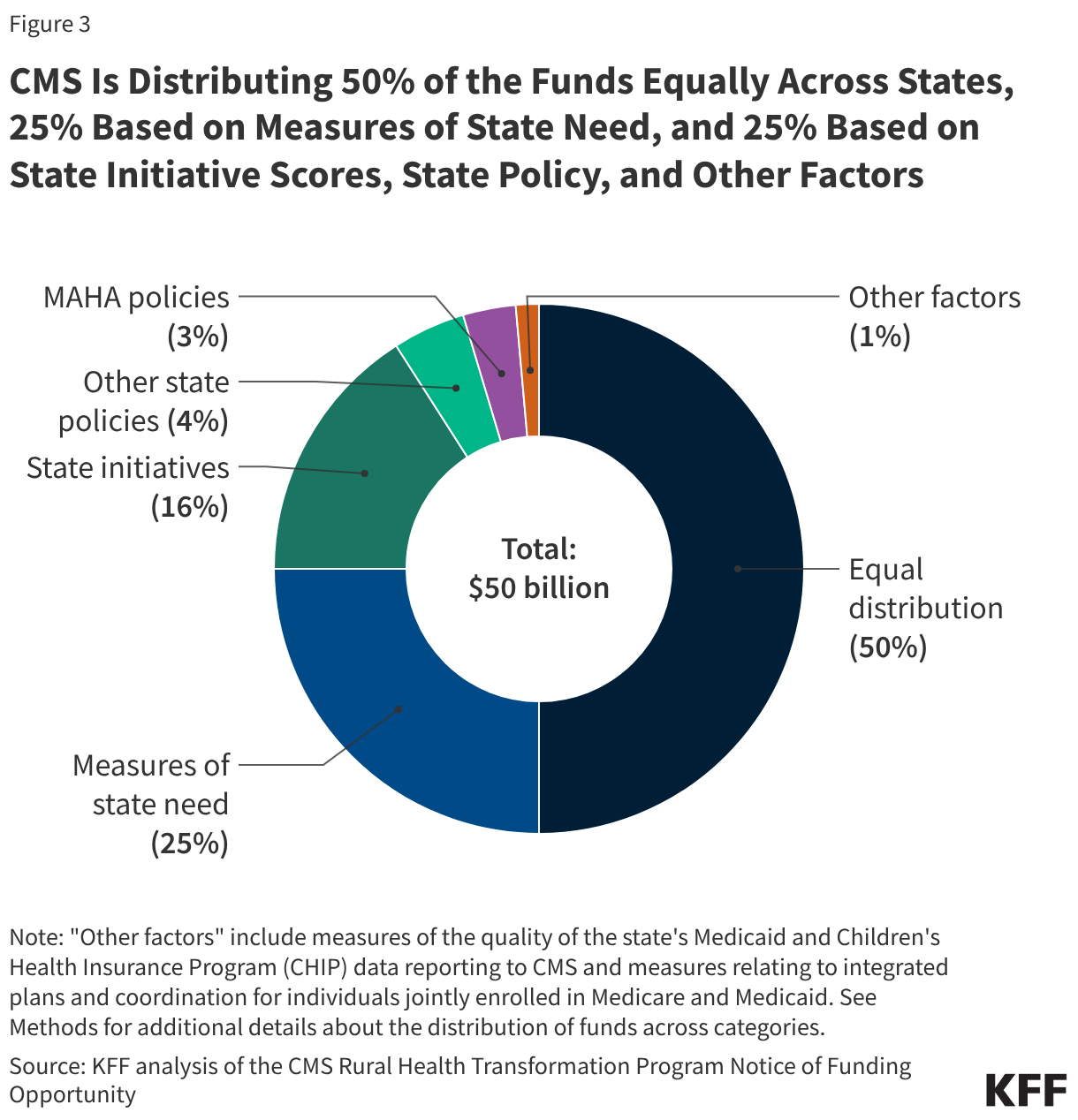
The mechanics of how CMS distributes the $50 billion fund are divided into two distinct halves, each totaling $25 billion. Half of the program is designated as "baseline funding," distributed equally among all 50 approved states regardless of size or specific healthcare needs. Consequently, every approved state receives a guaranteed baseline amount of $100 million annually from this pool across the program’s lifespan.
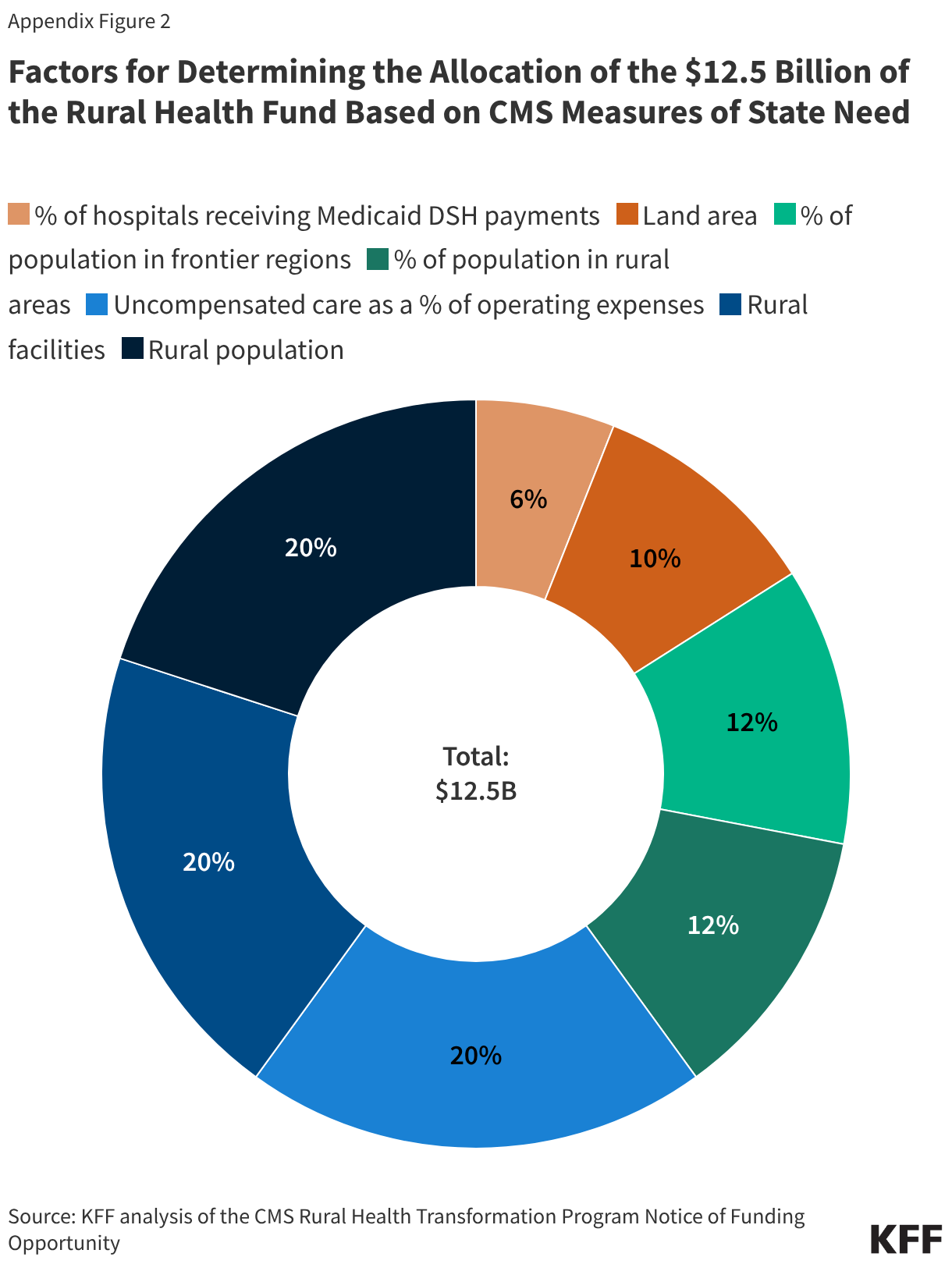
The remaining $25 billion is classified as "workload funding," which CMS allocates using a complex matrix of 23 weighted factors. These factors are grouped into broader categories, including objective measures of state need (such as rural population size, uninsured rates, and health professional shortage areas), state policy environments, and the quality of proposed state initiatives. Because land area is factored into the workload calculations, the five largest states by geography—Texas, California, New Mexico, Montana, and Alaska—receive notably higher allocations from the need-based pool, averaging between $88 million and $105 million each in the first year.
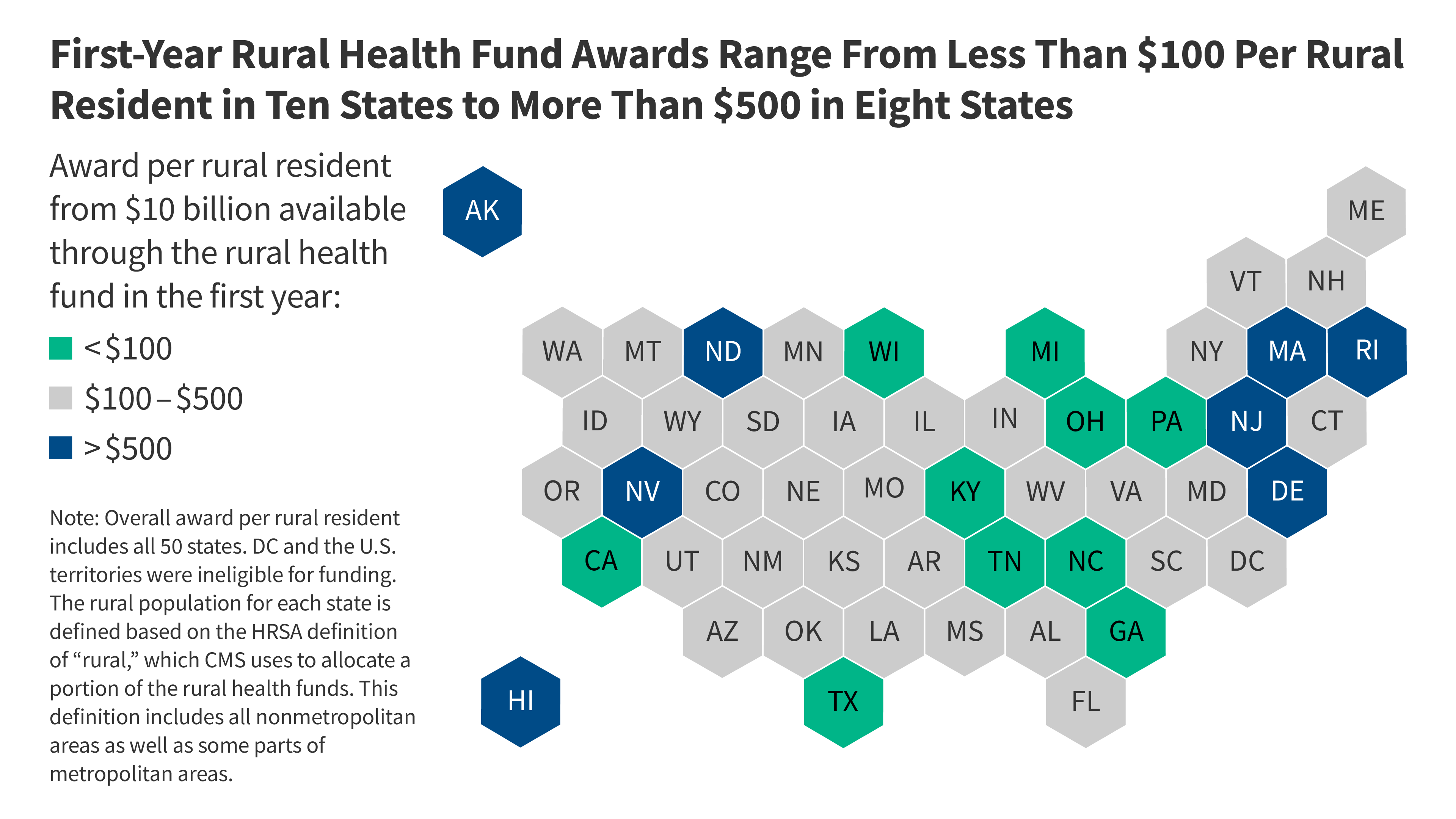
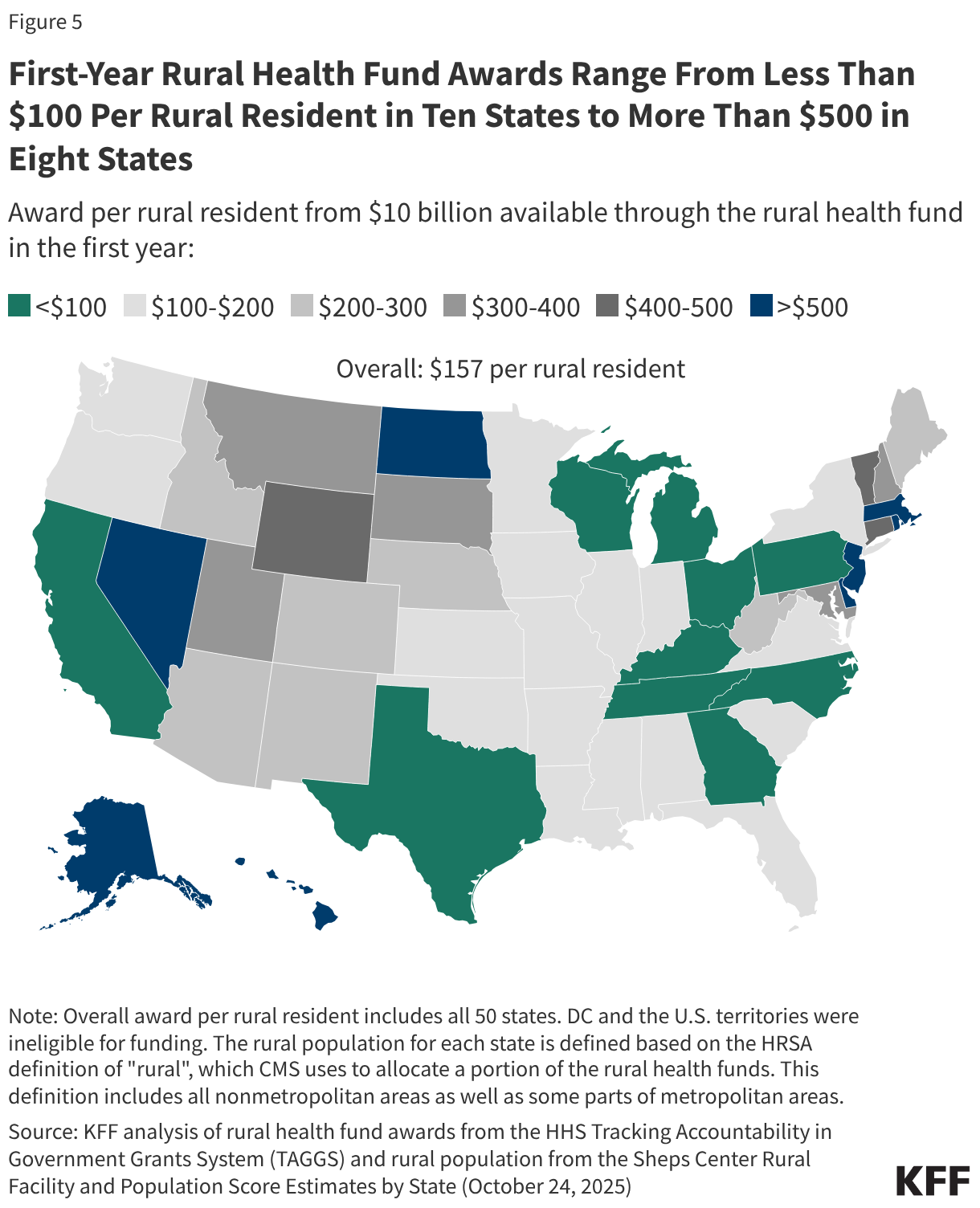
First-year state awards for fiscal year 2026 averaged $200 million nationally, spanning a wide range from $147 million for New Jersey to $281 million for Texas. However, when evaluated on a per-capita basis relative to rural populations, the distribution reveals stark disparities. States with massive rural populations often receive remarkably low funding per resident. For instance, Texas, which boasts the nation’s largest rural population at approximately 4.3 million residents, received the lowest first-year award per rural resident at just $66. Conversely, states with very small rural populations, such as Rhode Island, New Jersey, and Alaska, saw substantially higher per-capita figures, with Rhode Island emerging as an extreme outlier at over $6,000 per rural resident due to the equal baseline distribution intersecting with its small rural denominator.
Weighing the Fund Against Broader Medicaid Reductions
A critical analytical question surrounding the Rural Health Transformation Program is whether its financial injection is sufficient to counteract the broader fiscal shocks introduced by the very same legislation that created it. At $50 billion over five years, the rural health fund offsets roughly 37% of the estimated $137 billion in federal Medicaid spending cuts projected to hit rural areas over a ten-year span. When measured against the total $911 billion federal Medicaid reduction package, the rural health fund represents a mere 5% of the aggregate total.
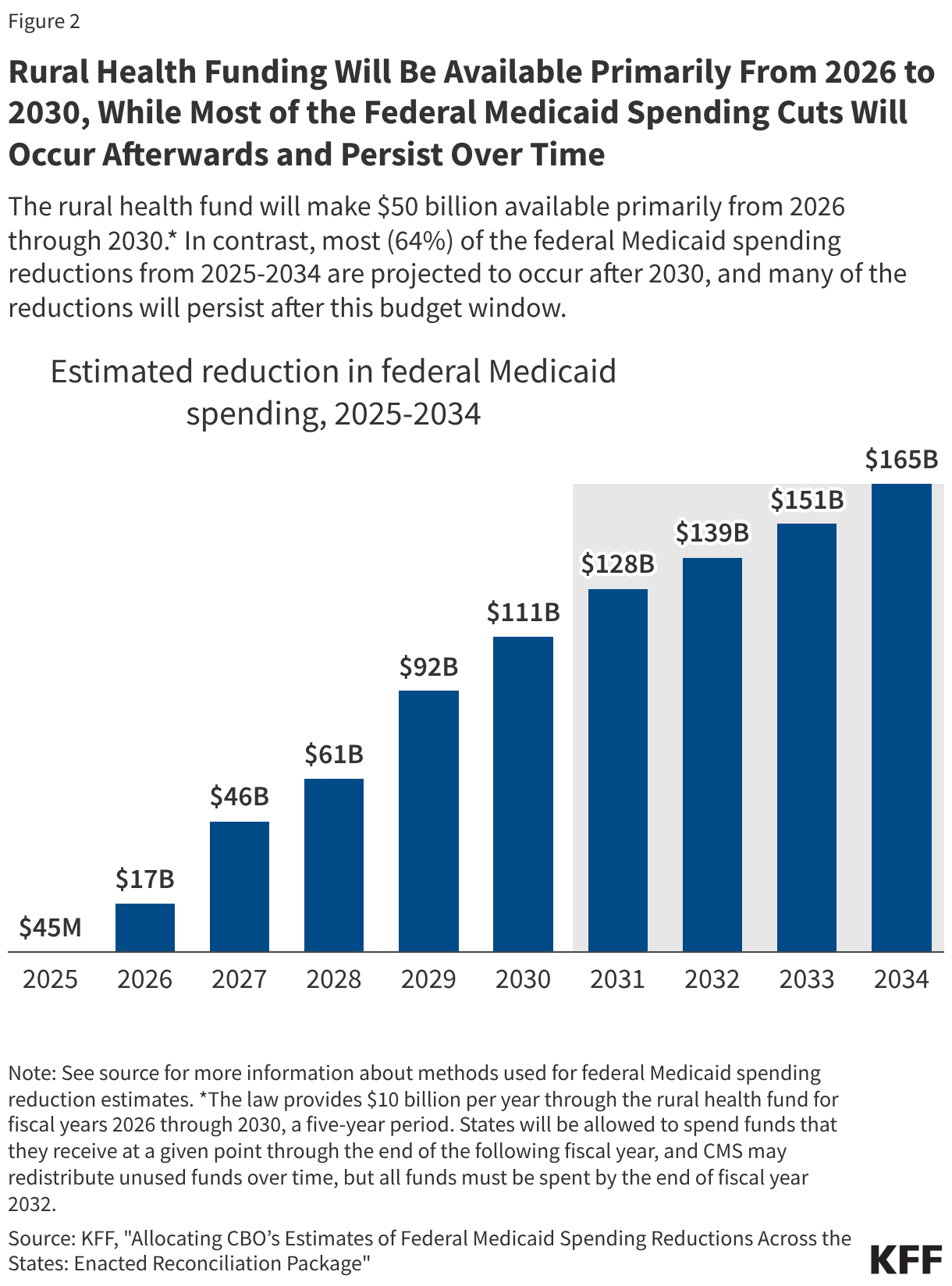
Furthermore, the structural timing of these fiscal shifts creates a significant policy mismatch. The rural health fund is front-loaded, distributing its resources rapidly between 2026 and 2030 to help communities prepare for upcoming changes. In contrast, the Congressional Budget Office (CBO) projections indicate that nearly two-thirds (64%) of the ten-year Medicaid spending reductions will materialize after fiscal year 2030 and persist indefinitely. This means that rural healthcare providers will experience the peak pressure of federal funding cuts long after the temporary rural health fund has expired. Additional revenue pressures stemming from the expiration of enhanced Affordable Care Act (ACA) marketplace subsidies and rising uninsured rates further complicate the financial stability of rural safety-net providers.
Implications, Transparency, and Future Outlook
As the Rural Health Transformation Program progresses through its operational phases, policymakers, researchers, and healthcare advocates are calling for heightened transparency regarding how states distribute funds downstream. While CMS requires states to categorize sub-recipients—such as hospitals, clinics, and technology vendors—in quarterly and annual reporting, the agency has opted not to publish these detailed progress reports proactively. Stakeholders seeking granular insight into fund flows must rely on formal requests, spurring calls from policy organizations like the Bipartisan Policy Center for an accessible public online tracking dashboard.
Ultimately, the long-term success of the Rural Health Transformation Program hinges on its ability to catalyze permanent systemic improvements before its temporary funding streams run dry. Whether state-led initiatives can successfully modernize rural care delivery, stem the tide of hospital closures, and absorb the shock of permanent federal Medicaid reductions remains one of the most significant and closely watched developments in modern American health policy.
Related posts: