Sharon Stone Reveals Mysterious Visions and Life-Altering Orbs Following Her 2001 Stroke

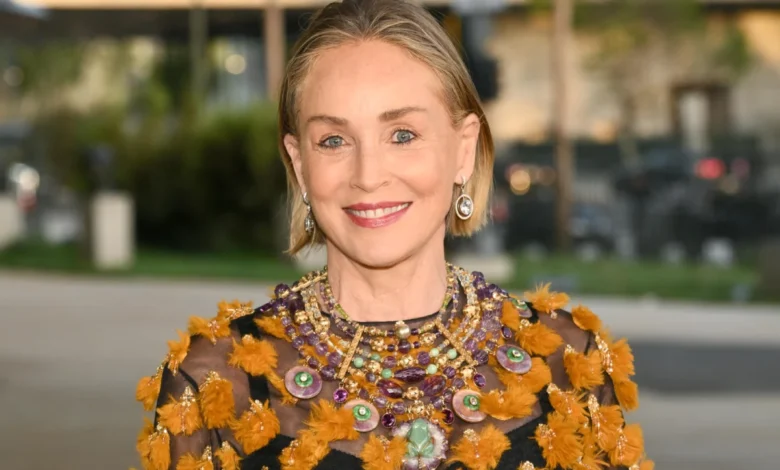
The intersection of extreme medical trauma and the metaphysical remains a subject of intense scientific and anecdotal fascination. Sharon Stone, the 68-year-old Academy Award-nominated actress and cultural icon, recently provided a rare, candid account of the near-death experience she endured following a catastrophic brain hemorrhage in 2001. In a detailed conversation on Mayim Bialik’s podcast, Breakdown, Stone disclosed that her recovery was marked by profound, inexplicable visions—specifically, the appearance of five luminous “orbs” that she claims communicated with her in a digital language. While these experiences remained private for over two decades, their revelation offers a window into the long-term psychological and cognitive impact of surviving a life-threatening cerebrovascular event.
The Medical Crisis: A Retrospective on the 2001 Hemorrhage
To understand the weight of Stone’s recent revelations, one must examine the severity of the medical event that served as the catalyst. In September 2001, at the zenith of her professional career, Stone suffered a ruptured vertebral artery aneurysm, leading to a subarachnoid hemorrhage that lasted for nine days. The survival rate for such a severe medical emergency is statistically low, and the recovery process for survivors is often grueling, characterized by significant neurological deficits.
Stone’s recovery timeline was extensive. She remained bedridden for eight months as her brain struggled to heal from the trauma. The physiological consequences were profound: she experienced significant memory loss, the loss of hearing in her left ear, and severe facial paralysis. Her path to rehabilitation spanned seven years, during which she had to relearn fundamental motor skills and cognitive processes. This prolonged period of vulnerability, characterized by isolation and physical limitation, serves as the clinical context for the visions she described to Bialik.
The Phenomenology of the Orbs
According to Stone’s account, the visions occurred shortly after she returned home from the hospital. While reclining on her sofa—existing in a state between wakefulness and sleep—she perceived five glowing spheres. These entities, she noted, did not communicate via human speech but through what she characterized as a “digital language.”
The psychological community often categorizes experiences of this nature as “near-death hallucinations” or “complex visual hallucinations.” Scientific literature suggests that during severe neurological distress, the brain may process sensory data in atypical ways. However, for the survivor, these experiences often possess a vivid, subjective reality that defies clinical reductionism. Stone’s description of a “digital language” suggests a highly organized, non-verbal cognitive processing, which she interpreted as a directive regarding her own survival.
When Stone asked these entities if she was destined to die or remain, the response was definitive: “You’re supposed to stay.” This moment of perceived clarity became a psychological anchor for the actress, providing a sense of purpose during a period of profound physical and professional upheaval.
Premonition and the Custody Battle
Perhaps the most poignant aspect of Stone’s narrative involves her maternal concerns during her convalescence. At the time of her stroke, Stone was the mother of her infant son, Roan, whom she had adopted with her then-husband, Phil Bronstein. Driven by a primal fear that her medical frailty would lead to a permanent separation from her child, Stone claims she negotiated with the orbs.
She recounted an internal dialogue in which she requested that two of the spheres remain with her son to provide protection. “I said, ‘I can only stay if two of you will stay with my son. Because I don’t want him to be alone, and I think he’s gonna get taken from me,’” she recalled. The orbs purportedly agreed to this condition, though they emphasized that her own destiny required them to remain with her.

This internal narrative materialized in a stark, documented reality in 2008. Seven years after the stroke, a judge awarded primary physical custody of Roan to Phil Bronstein. Stone has been vocal in the years since about the systemic bias she faced during those proceedings. She has frequently cited that her medical history and her public persona—specifically her roles in films like Basic Instinct—were utilized as leverage to undermine her fitness as a parent. The legal loss of custody was, by all accounts, one of the most devastating chapters of her post-stroke life.
The Broader Implications of Stroke Survivorship
Stone’s narrative brings to the forefront the often-overlooked psychological dimension of stroke survivorship. Beyond the physical rehabilitation of speech, mobility, and cognitive function, patients often undergo significant shifts in their spiritual and metaphysical outlooks.
Medical experts acknowledge that the trauma of a stroke can lead to “neuro-theological” experiences. As the brain struggles to re-establish neural pathways, the boundaries of perception can shift, sometimes resulting in vivid, dream-like states that are deeply meaningful to the patient. Stone’s willingness to discuss these experiences after 20 years reflects a growing trend among public figures to destigmatize the mental and emotional aftermath of catastrophic health crises.
Furthermore, her experience underscores the intersection of disability and legal rights. The fact that her 2001 medical emergency was reportedly weaponized against her in a 2008 custody dispute highlights the systemic challenges individuals with chronic health conditions face when navigating family law. Stone’s resilience, however, is evidenced by her continued commitment to motherhood. Following the 2008 ruling, she went on to adopt two more sons, Laird and Quinn, and has maintained a stable, nurturing relationship with all three of her children.
Fact-Based Analysis of the Narrative
When analyzing Stone’s account, it is essential to distinguish between the objective medical facts of her 2001 hemorrhage and the subjective interpretation of her visions. The medical reality—a nine-day hemorrhage and a seven-year recovery—is a matter of public record. The visions are, by their nature, non-verifiable. However, from a narrative perspective, the orbs serve as a psychological mechanism through which Stone processed the trauma of her life-altering event.
The “digital language” reported by Stone may be interpreted by some as a metaphor for the way a damaged brain attempts to organize information. For others, it represents a genuine encounter with the unknown. Regardless of one’s interpretation, the consistency of the story across two decades and the emotional weight she places on it suggest that the experience was a pivotal component of her psychological healing process.
Conclusion: A Legacy of Resilience
Sharon Stone’s journey from the brink of death to a renewed life is a testament to both modern medical intervention and the internal strength of the human spirit. While her discussion of “orbs” and “digital language” may invite skepticism from a purely materialistic standpoint, it offers a rare glimpse into the complex landscape of post-traumatic recovery.
By sharing these experiences, Stone has contributed to a broader discourse on what it means to survive. Her story serves as a reminder that the trauma of a stroke is not merely a physiological event; it is a profound existential shift that reshapes a person’s world, their perception of destiny, and their relationships with those they love most. Whether viewed as a medical curiosity or a spiritual journey, Stone’s narrative remains a significant chapter in the public life of an actress who has spent the last 25 years redefining her role as an artist, a survivor, and a mother.