
By Eric Verdin, MD, President & CEO, Buck Institute
People often approach conversations about health with a degree of apprehension, anticipating a stern list of prohibitions and demanding lifestyle changes. They brace themselves for an onslaught of "do’s" and "don’ts" that feel overwhelming. However, the path to a significantly improved health trajectory doesn’t always necessitate drastic overhauls. In many instances, profound positive shifts can be initiated through remarkably simple dietary adjustments, leveraging ingredients readily available in most kitchens. Nuts, a staple in pantries worldwide, stand out as one such powerful, yet often underestimated, ally in the pursuit of better health and extended longevity. Far from being a fleeting wellness trend or a concept built on tenuous evidence, the benefits of daily nut consumption are consistently validated by a robust body of modern nutrition science.
Groundbreaking Research Highlights Lifespan Benefits
A landmark scientific review, meticulously published in the esteemed journal BMC Medicine, offers compelling evidence for the life-extending properties of nuts. This comprehensive analysis synthesized data from a multitude of long-term prospective studies, collectively tracking the health outcomes of hundreds of thousands of individuals over extended periods. The findings were unequivocal: participants who incorporated approximately one ounce of nuts into their daily diet – a quantity roughly equivalent to the size of a golf ball – exhibited a remarkable 22% lower risk of mortality from all causes when compared to individuals who consumed nuts infrequently. This translates directly to an increased lifespan for regular nut consumers. Crucially, this protective effect was observed consistently across diverse demographic groups, varied age ranges, and different dietary patterns, underscoring the universality of this health benefit.
The Nutritional Arsenal of Nuts
The broad-ranging health advantages conferred by nuts can be attributed to their exceptional and multifaceted nutritional profile. While nuts are indeed calorie-dense, these calories are delivered in a package rich with beneficial unsaturated fats, which are instrumental in supporting cardiovascular and cognitive health. Beyond healthy fats, nuts provide a valuable source of plant-based protein, essential for muscle maintenance and repair, and dietary fiber, which plays a critical role in digestive health and satiety. Furthermore, they are replete with a diverse array of micronutrients, including vital minerals such as magnesium, potassium, and selenium, as well as a spectrum of vitamins.
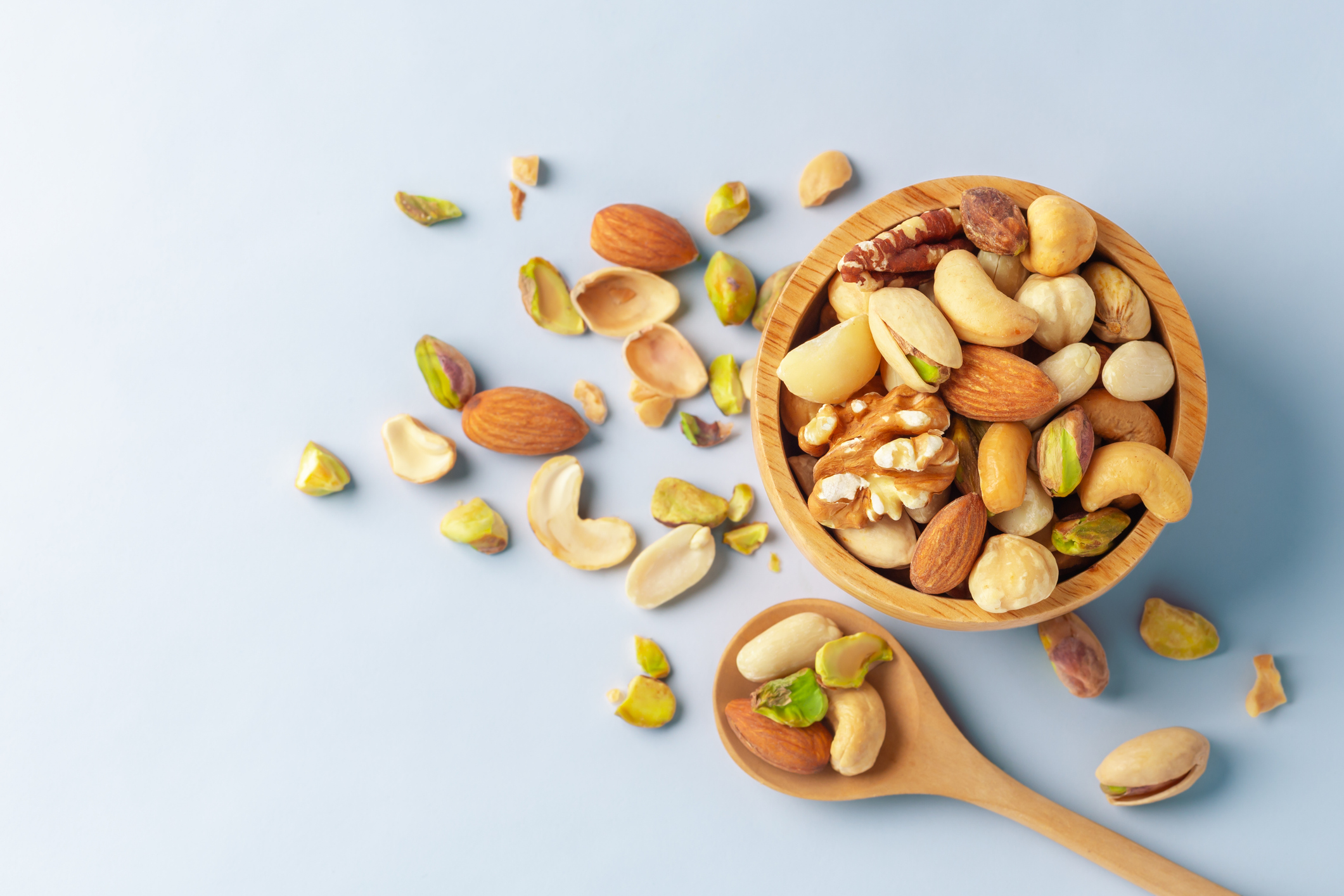
Perhaps most significantly, nuts are powerhouses of polyphenols and other potent antioxidants. These compounds are essential in the body’s defense against inflammation and oxidative stress. Oxidative stress, often exacerbated by environmental factors and metabolic processes, is a primary driver of cellular damage that accelerates the aging process and underpins the development of numerous chronic diseases over time. By neutralizing harmful free radicals, the antioxidants in nuts act as a protective shield for cellular integrity, thereby contributing to a slower aging process and a reduced risk of age-related ailments.
A Shield for Cardiovascular Health
The impact of nut consumption on heart health is particularly striking. The aforementioned BMC Medicine meta-analysis revealed that individuals who included nuts in their daily diet experienced a significant 21% reduction in their overall risk of cardiovascular disease. Even more pronounced were the findings related to coronary heart disease, the most common cause of heart attacks; these individuals demonstrated a 25% to 29% lower risk. It is important to reiterate that these robust conclusions are not the product of a single, isolated study but rather the aggregated evidence from numerous well-designed research endeavors, lending substantial weight and reliability to these assertions.
Further strengthening the evidence base, the PREDIMED (Prevención con Dieta Mediterránea) study, a large-scale randomized clinical trial, provided even more compelling insights. This trial investigated the efficacy of the Mediterranean diet, specifically in individuals identified as being at high risk for cardiovascular disease. A significant arm of the study involved supplementing the Mediterranean diet with a daily portion of mixed nuts. The results were profound: participants in this group experienced approximately a 30% reduction in major cardiovascular events. In one specific cohort, the reduction in stroke risk was nearly 50%. Unlike observational studies, randomized controlled trials are considered the gold standard for establishing cause-and-effect relationships, making the outcomes of PREDIMED exceptionally impactful in demonstrating the direct benefits of nut consumption on cardiovascular well-being.
Beyond the Heart: Cancer Prevention and Weight Management
The positive health effects of nuts extend well beyond the realm of cardiovascular health. The BMC Medicine review also identified an 11% lower risk of mortality from cancer among regular nut consumers. Certain types of cancer exhibited even stronger associations with nut intake. For instance, colon cancer appeared to be significantly less prevalent in individuals who frequently ate nuts. Scientists hypothesize that this protective effect stems from the synergistic action of the diverse components found in nuts, including their antioxidant, fiber, and anti-inflammatory compounds. These elements collectively support optimal cellular function and aid the body in effectively managing the burden of oxidative stress.
A common concern regarding nuts is their perceived high calorie content, leading some to believe that their inclusion in the diet might contribute to weight gain. However, a consistent body of research has debunked this notion. Study after study has demonstrated that incorporating nuts into one’s diet does not lead to an increase in body weight. In fact, many studies suggest that nuts can contribute to weight management and may even lead to a reduction in overall caloric intake. This phenomenon is largely due to nuts’ ability to promote satiety, meaning they help individuals feel fuller for longer. The slow digestion of nuts, coupled with the fact that not all of their fat content is fully absorbed by the body, contributes to this effect. Consequently, individuals consuming nuts tend to experience greater satisfaction from their meals and are less likely to overeat, fostering a more mindful and controlled approach to eating without feelings of deprivation.

A Timeline of Scientific Discovery
The scientific understanding of nuts’ health benefits has evolved over decades, building from initial observations to robust clinical trials.
- Mid-20th Century Onwards: Early epidemiological studies began to note correlations between dietary patterns rich in certain foods, including nuts, and lower rates of chronic diseases, particularly heart disease. These observations, while suggestive, lacked definitive causal links.
- Late 20th Century: Nutritional science advanced, leading to a deeper understanding of the specific macronutrient and micronutrient profiles of various nuts. Research began to focus on the roles of unsaturated fats, fiber, and antioxidants.
- Early 2000s: Large-scale observational studies, such as those that informed the BMC Medicine review, became more prevalent, gathering extensive data on dietary habits and long-term health outcomes across vast populations. These studies consistently pointed towards a significant association between nut consumption and reduced mortality.
- 2010s: The PREDIMED trial, initiated in the early 2000s and with significant findings emerging in the 2010s, provided crucial randomized controlled trial evidence, moving beyond correlation to establish a stronger case for causality in cardiovascular disease prevention. The BMC Medicine review, published in 2016, consolidated many of these findings.
- Present Day: Ongoing research continues to explore the nuanced mechanisms by which nuts exert their health benefits, including their impact on the gut microbiome, inflammation pathways, and cellular aging processes.
Broader Impact and Implications
The implications of this scientifically validated, yet simple, dietary recommendation are far-reaching. For individuals seeking to proactively manage their health and mitigate the risks associated with chronic diseases, the integration of a small daily portion of nuts offers a highly accessible and enjoyable strategy. This approach democratizes healthy eating, requiring no specialized knowledge or expensive ingredients. It empowers individuals to take meaningful control of their well-being through a single, actionable change.
Furthermore, the widespread adoption of such a habit could have significant public health implications, potentially reducing the burden of diet-related chronic diseases on healthcare systems. From a food industry perspective, the continued scientific validation of nuts reinforces their value as a healthy food product and encourages further innovation in their cultivation, processing, and marketing.
For healthcare professionals, this evidence provides a concrete, science-backed recommendation that is easy for patients to understand and implement. It offers a positive and empowering message, shifting the focus from restrictive diets to the inclusion of beneficial foods.
Conclusion: A Delicious Prescription for Wellness
In conclusion, the scientific consensus is clear: a daily handful of nuts is not merely a tasty snack but a powerful dietary intervention with profound benefits for overall health and longevity. Supported by rigorous scientific inquiry and a growing body of evidence, this simple habit offers a tangible pathway to reduced risk of cardiovascular disease, cancer, and premature mortality. It is a rare health recommendation that is both scientifically robust, remarkably easy to adopt, and, most importantly, genuinely enjoyable. As Dr. Verdin aptly concludes, it’s time to embrace this delicious prescription for a healthier, longer life. Bon appétit!
Related posts: