The Secret to Healthy Aging: How High-Intensity Interval Training Preserves Muscle While Shedding Fat

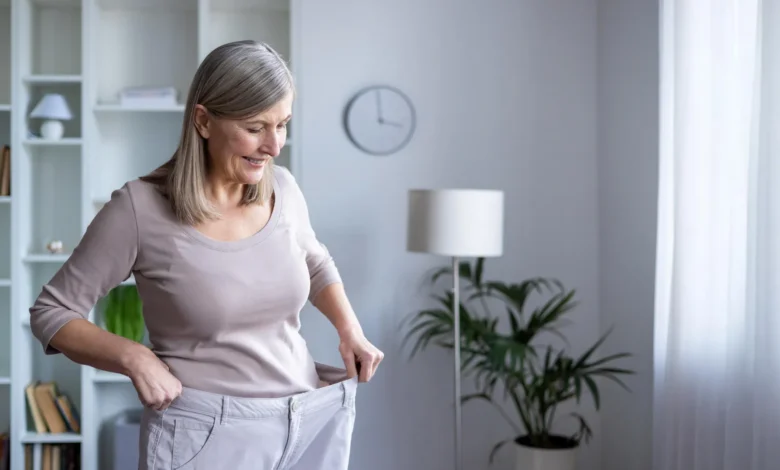
For older adults, the objective of weight management is frequently misunderstood. While the number on the scale is a common metric for success, the true indicator of long-term health and physical independence is body composition—the specific ratio of fat to lean muscle mass. As the global population ages, researchers are increasingly focused on identifying exercise modalities that allow individuals to reduce body fat without triggering the loss of muscle tissue, a condition that can lead to frailty and loss of autonomy. Recent evidence suggests that High-Intensity Interval Training (HIIT) may offer a distinct physiological advantage in this delicate balancing act.
A pivotal six-month study conducted by the University of the Sunshine Coast in Australia, published in the journal Maturitas, has provided a rigorous look at how varying levels of exercise intensity influence body composition in adults over the age of 65. The study, which followed 123 healthy older adults from the Greater Brisbane region, aimed to move beyond the simplistic view of weight loss and address the nuanced reality of preserving functional tissue during a caloric or exercise-induced deficit.
The Methodology of the Australian Trial
The study participants, who had an average age of 72 and a body mass index (BMI) of 26, were divided into three distinct groups: a high-intensity interval training group, a moderate-intensity group, and a low-intensity comparison group. Each participant engaged in three supervised 45-minute gym sessions per week. To ensure precision, researchers utilized advanced body composition scanning techniques at the beginning of the study, at the three-month mark, and again at the six-month conclusion.
The high-intensity protocol involved repeated, demanding intervals that elevated the heart rate to a level where conversation became difficult, followed by periods of active recovery. The moderate and low-intensity groups maintained steadier, less taxing levels of exertion. While all three groups demonstrated some degree of fat loss, the divergence in their body composition outcomes was striking.
Lead author and exercise physiologist Dr. Grace Rose noted that while all intensity levels contributed to modest fat loss, only the HIIT group managed to retain their lean muscle mass throughout the duration of the trial. In contrast, those in the moderate-intensity group, while successful in shedding fat, experienced a statistically significant, albeit small, decline in lean muscle. This finding is critical because it suggests that the stimulus provided by high-intensity intervals serves as a protective signal to the body, signaling that muscle tissue is essential and should be preserved despite the metabolic demands of the exercise.
Physiological Mechanisms and Muscle Preservation
The physiological rationale for why HIIT might outperform steady-state moderate exercise in this context lies in the concept of adaptive stress. Muscles are highly responsive to the specific demands placed upon them. When an individual engages in short, intense bursts of effort, they place a high mechanical and metabolic load on the muscle fibers. This "high-stress" stimulus effectively signals the body to prioritize the maintenance—or even the synthesis—of muscle proteins.
Associate Professor of Physiology and study co-author Mia Schaumberg explained that HIIT’s efficacy stems from its intermittent nature. By forcing the cardiovascular system and the musculoskeletal system to pivot between peak exertion and recovery, the body is compelled to adapt to the intensity. As aging is inherently associated with a gradual decline in muscle mass—a process known as sarcopenia—the ability to provide a stimulus that mitigates this decline while simultaneously burning fat is a significant finding for public health.
Broader Implications for Chronic Disease
The study also shed light on the reduction of visceral adipose tissue, which is the deep-seated fat that surrounds internal organs such as the liver and intestines. Unlike subcutaneous fat, which lies directly beneath the skin, visceral fat is metabolically active and highly inflammatory. It is a well-documented risk factor for cardiovascular disease, insulin resistance, and various metabolic disorders.
The researchers observed that both high- and moderate-intensity training led to improvements in visceral fat markers. This is particularly important because, as Dr. Rose emphasized, body composition is a primary driver in the progression of chronic diseases. For the aging population, shifting the focus from total body weight to the quality of body mass—specifically the retention of muscle and the reduction of visceral fat—could be a transformative approach to preventative medicine.
Evolving Perspectives in 2026
The discourse around exercise intensity has expanded significantly in 2026. While the University of the Sunshine Coast study provides a compelling case for HIIT, subsequent research has added layers of nuance. A study published in Medicine & Science in Sports & Exercise examined the feasibility of home-based, remotely supervised HIIT for 20 older adults aged 61 to 74. Utilizing specialized equipment that allowed for non-weight-bearing exercises, participants saw an average fat loss of 1.4 kilograms (approximately 3 pounds) over eight weeks. Importantly, the adherence rate was 96 percent, suggesting that HIIT is not only effective but also highly sustainable for older populations when properly managed.
However, the field remains cautious about declaring any single modality as the "best." A randomized trial published in The Journals of Gerontology, Series A highlighted that when HIIT is paired with dedicated resistance training, the benefits of muscle preservation become more accessible across different intensity groups. In studies of older adults living with HIV, for example, the combination of resistance training and exercise led to muscle gains regardless of whether the aerobic component was HIIT or moderate-intensity, indicating that resistance training acts as a powerful equalizer.
Clinical Guidance and Future Recommendations
A comprehensive review published in the Journal of Clinical Medicine in August 2026, which synthesized data from 25 studies and 2,818 participants, serves as a sobering reminder of the complexity of exercise science. While the review confirmed that HIIT is an exceptional tool for improving cardiovascular fitness and VO2 max, it did not definitively prove that HIIT is superior to moderate-intensity training in all body composition scenarios. The variance in participant health status, the specific design of the training programs, and the duration of the studies mean that "one size fits all" recommendations are insufficient.
For the general population of adults over 65, current health guidelines from organizations like the CDC continue to emphasize a balanced approach. This includes a combination of aerobic conditioning, targeted resistance training, and balance-focused exercises. HIIT is increasingly viewed as a high-value tool within that broader framework, particularly for those looking to optimize their body composition.
Conclusion: A Strategic Approach to Longevity
The findings from the University of the Sunshine Coast represent a significant step forward in our understanding of how to age gracefully. By highlighting the necessity of preserving muscle mass while managing fat, the research provides a clear roadmap for older adults to maintain their independence. Strong muscles are the foundation for the activities of daily living: climbing stairs, maintaining balance, and performing household tasks.
While the researchers cautioned that the improvements observed in their study were relatively small and should be viewed with an understanding of measurement uncertainty, the implication is clear: the way one exercises matters just as much as the amount of time spent doing it. As we move through 2026 and beyond, the integration of high-intensity intervals into a well-rounded fitness regimen, ideally supervised by health professionals, offers a scientifically backed path to achieving not just a healthier weight, but a more resilient and functional body. For those planning their health goals, the consensus is shifting toward a model of "intelligent movement"—exercise that challenges the body enough to trigger positive adaptation, while respecting the physiological needs of the aging system.