Tracing the Sacred Peaks: Makkah’s Mountains, Eternal Guardians of Islamic History

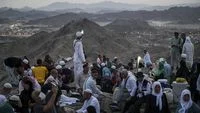
Makkah, Saudi Arabia, a city revered as the spiritual heart of Islam, is cradled by a formidable amphitheater of rocky mountains. These seemingly silent sentinels, rising majestically from the arid landscape, are far more than mere geological formations; they are living monuments, etched with the indelible narratives of Islam’s profound journey over millennia. From the outside, the city may appear tranquil, but within its mountainous embrace lies a rich tapestry of history, prophecy, and unwavering faith, silently testifying to events that shaped the world.
As the holiest city in Islam, Makkah’s unique geographical position in a barren valley, with the sacred Ka’bah at its epicenter within the Grand Mosque (Masjid al-Haram), draws millions of Muslims annually for the pilgrimages of Hajj and Umrah. These journeys are not merely rituals but profound spiritual odysseys, often including visits to the surrounding mountains, each imbued with unique historical significance. These peaks offer a tangible connection to the early days of Islam, inviting pilgrims to walk in the footsteps of prophets and companions, deepening their understanding and faith. This article delves into the profound history and enduring legacy of Makkah’s most significant mountains, offering insights into their spiritual importance and practical considerations for those wishing to visit these hallowed sites.
The Historical Tapestry of Makkah’s Mountains
The city of Makkah itself boasts a history predating Islam, a history entwined with the Abrahamic traditions. Its existence is linked to Prophet Ibrahim (Abraham), his wife Hagar, and their son Prophet Ismail (Ishmael), who settled in the valley and built the Ka’bah. The mountains surrounding Makkah have been silent witnesses to these ancient beginnings, through the rise of various tribes, and ultimately, to the birth and propagation of Islam. These geological features are not just backdrops but active participants in the unfolding drama of revelation and resilience.
Jabal Abu Qubais: The Ancient Pillar Facing the Ka’bah
Foremost among Makkah’s revered mountains is Jabal Abu Qubais, often referred to as a foundational pillar of the city due to its direct eastward gaze upon the Ka’bah. Standing as a natural guardian, its proximity to the Grand Mosque makes it one of the most visible and historically significant peaks. Some early Islamic scholars and researchers have even posited that Jabal Abu Qubais might be the first mountain ever to be placed on Earth, a testament to its ancient and profound status within Islamic cosmology.
The mountain’s historical narrative is particularly rich. It is traditionally believed to be the place where the sacred Black Stone (Hajar Aswad) was rediscovered by Prophet Ibrahim (Abraham) after it had been lost during the devastating flood in the era of Prophet Nuh (Noah). The Black Stone, a celestial object venerated by Muslims and incorporated into the Ka’bah, holds immense spiritual significance, and its re-emergence on Jabal Abu Qubais underscores the mountain’s role in divine providence. Furthermore, some historical accounts suggest that the grave of Prophet Adam (Adam), the first human and prophet, is located on the slopes of Jabal Abu Qubais, adding another layer of ancient reverence to its stature.
Strategically positioned on the eastern flank of Masjid al-Haram, Jabal Abu Qubais is now largely integrated into the urban fabric of Makkah, with modern structures and developments on its lower slopes. For pilgrims seeking to experience its historical aura, visiting during less crowded times, such as late evenings or the tranquil hours of Duha (mid-morning), allows for a more reflective and personal connection to this ancient landmark. While direct access to historical points might be limited by urban development, the sheer presence of this mountain, overlooking the Ka’bah, provides a powerful visual and spiritual reminder of Makkah’s enduring history.
Jabal Nur: The Mountain of Light and First Revelation
Located approximately 7 kilometers northeast of Masjid al-Haram, Jabal Nur, or the "Mountain of Light," stands as one of the most profoundly sacred sites in Islam. Rising to an elevation of approximately 642 meters, its distinctive peak, resembling a camel’s hump, is instantly recognizable. However, its physical appearance pales in comparison to the monumental spiritual event it witnessed.
Jabal Nur is home to Ghar Hira (Cave of Hira), a small cave nestled near its summit. This secluded grotto became the sanctuary for Prophet Muhammad (peace be upon him) as he sought solitude and contemplation away from the bustling life of Makkah. It was within the depths of this cave, during one of his retreats, that the Archangel Jibreel (Gabriel) first appeared to him, delivering the inaugural verses of the Holy Qur’an: "Read! In the Name of your Lord Who created." (Surah Al-Alaq, 96:1-5). This moment, marking the beginning of prophetic revelation, irrevocably altered the course of human history, establishing Jabal Nur as the very cradle of Islam.
The ascent to Ghar Hira is a challenging but deeply rewarding pilgrimage. It typically takes between 1.5 to 2 hours to climb the steep, rocky paths. Pilgrims often describe a profound sense of awe and humility upon reaching the cave, imagining the Prophet’s spiritual intensity in that very spot. To undertake this spiritual journey comfortably, it is highly recommended to visit during the cooler parts of the day, either early morning or late afternoon, to avoid the intense desert heat. Proper hiking shoes and ample water are essential for this strenuous but spiritually enriching trek, which offers not only a glimpse into history but also panoramic views of Makkah.
Jabal Thawr: The Sanctuary of Migration
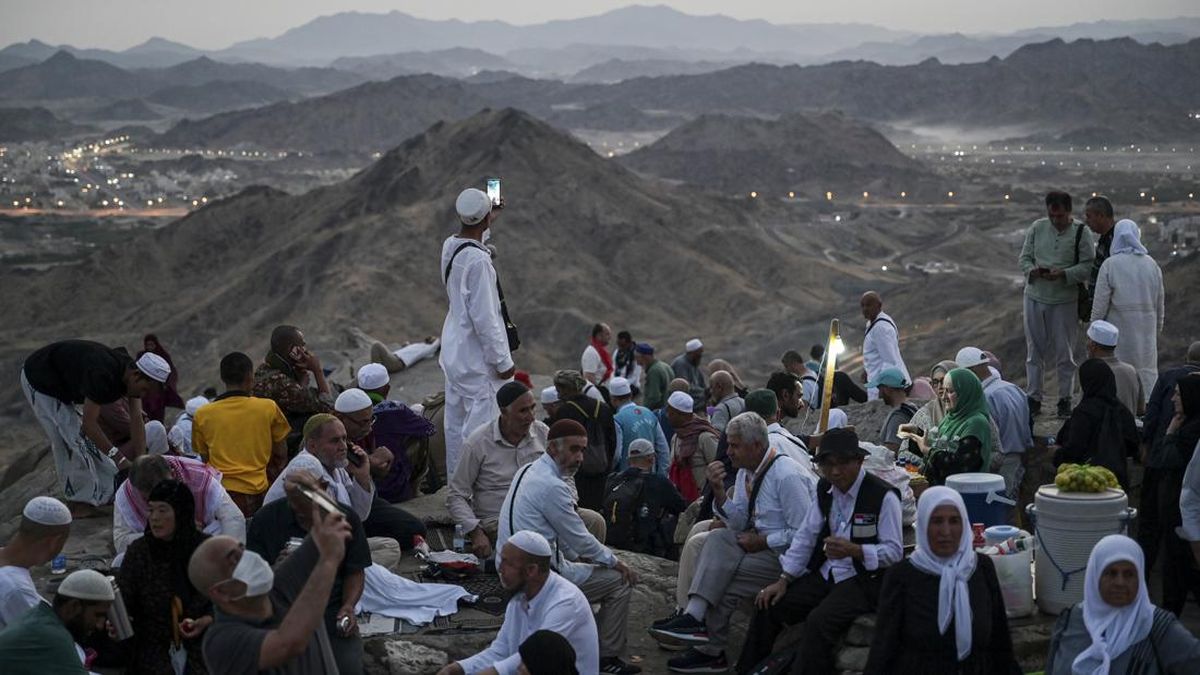
South of Makkah, approximately 4-5 kilometers from Masjid al-Haram, stands Jabal Thawr (also known as Jabal Tsur), a mountain characterized by its ten rugged, pointed peaks, reaching a height of around 775 meters. Historically, it was known as Jabal Athal before it gained its eternal fame as the sanctuary for Prophet Muhammad (peace be upon him) and his closest companion, Abu Bakar as-Siddiq, during the momentous Hijra (migration) from Makkah to Madinah.
The Hijra, which occurred in 622 CE, was a pivotal event in Islamic history, marking the transition from persecution in Makkah to the establishment of the first Islamic state in Madinah. As Prophet Muhammad and Abu Bakar embarked on their perilous journey, they were pursued relentlessly by the Quraish polytheists, who sought to prevent the spread of Islam. For three days and nights, they found refuge in Ghar Thawr (Cave of Thawr), a small cave on Jabal Thawr.
The story of their concealment is imbued with miraculous elements, deeply etched in Islamic tradition. It is recounted that a spider spun a web across the cave’s entrance, and a pair of doves built a nest and laid eggs, creating the illusion that the cave had long been undisturbed. When the Quraish pursuers reached the cave, they saw no signs of entry, thus turning back and unknowingly allowing the Prophet and Abu Bakar to escape detection. This act of divine protection transformed Jabal Thawr into a symbol of reliance on God and the miraculous nature of the Hijra.
The climb to Ghar Thawr, similar to Jabal Nur, is demanding and requires appropriate footwear for the rocky terrain. Pilgrims are advised to prepare for a significant ascent. The journey offers a powerful historical connection to the Prophet’s perseverance and God’s intervention, making it a deeply moving experience for those who undertake it.
Jabal Quaiqian: The Echoes of Ancient Conflicts
On the western side of Masjid al-Haram, stretching between Wadi Ibrahim to the east and Wadi Tuwa to the west, lies Jabal Quaiqian, also known as Jabal Hindi. Unlike the mountains associated with direct prophetic revelations or migrations, Jabal Quaiqian carries a distinct historical resonance, linked to earlier, tribal conflicts that shaped the ancient history of Makkah.
The name "Jabal Quaiqian" is said to derive from the sound of clanging swords (quaiqian) that echoed from the mountain during a fierce battle between the ancient tribes of Jurhum and Katura. These were among the earliest inhabitants and custodians of the Ka’bah and the Makkah valley. Their struggles for control over the sacred site and its surrounding territories are part of Makkah’s pre-Islamic heritage, highlighting the long and often turbulent history of the region. The mountain thus stands as a testament to the cycles of human conflict and the eventual establishment of peace under Islam.
Located to the northwest of Masjid al-Haram, close to the revered hill of Marwah, Jabal Quaiqian is now largely surrounded by urban development and residential areas. While it may not offer the same direct access to specific historical caves or monuments as Jabal Nur or Jabal Thawr, its historical significance lies in its memory as a silent observer of Makkah’s foundational tribal narratives. Pilgrims visiting this area are encouraged to maintain respectful conduct, acknowledging its integration into modern residential life while appreciating its ancient past. The presence of such a mountain reminds visitors that Makkah’s history is multifaceted, extending beyond the Islamic era to deep antiquity.
Jabal Rahmah: The Hill of Mercy and Reunion
Situated in the vast plains of Arafat, approximately 20 kilometers southeast of Makkah, Jabal Rahmah, or the "Hill of Mercy," rises to a modest height of about 70 meters. This hill holds a profoundly touching significance within Islamic tradition, symbolizing forgiveness, compassion, and the enduring power of love.
Jabal Rahmah is widely believed to be the place where Prophet Adam (Adam) and Siti Hawa (Eve), after their expulsion from Paradise and separation on Earth, finally reunited. Their reunion on this hill, after centuries of repentance and longing, symbolizes divine mercy and the restoration of connection. At its summit, a prominent white monument stands as a marker of this sacred meeting point, a beacon for pilgrims.
The most poignant time to visit Jabal Rahmah is during the annual Hajj pilgrimage, specifically on the 9th of Dhu al-Hijjah, the Day of Arafah. On this day, millions of Hajj pilgrims gather on the plains of Arafat, performing the ritual of Wuquf (standing) in deep prayer and supplication, seeking God’s forgiveness and mercy. The Prophet Muhammad (peace be upon him) also delivered his Farewell Sermon from Jabal Rahmah during his last Hajj, further cementing its spiritual importance as a site of profound teachings and divine grace.
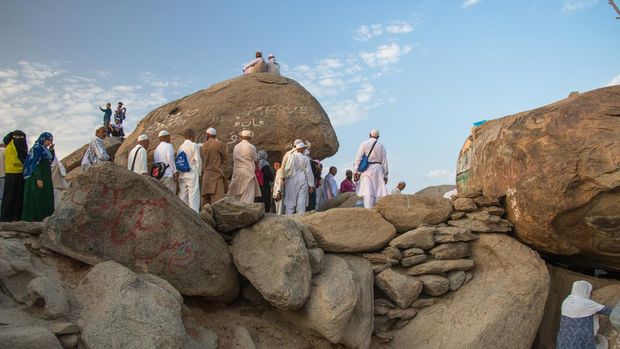
Accessible by a roughly 30-minute drive from Masjid al-Haram, Jabal Rahmah offers an emotionally resonant experience. While climbing to the summit, pilgrims are often moved to reflect on themes of repentance, forgiveness, and the universal human journey. The panoramic view of the vast Arafat plains from its peak, especially during Hajj, is an unforgettable sight, evoking a powerful sense of unity and spiritual devotion.
Jabal Omar: A Modern Testament to Makkah’s Evolution
In stark contrast to the ancient historical narratives of the other peaks, Jabal Omar represents a more contemporary chapter in Makkah’s story. Located on the western side of Masjid al-Haram, stretching between the neighborhoods of Al-Shabika and Al-Misfalah, Jabal Omar is named after Omar ibn al-Khattab, one of the most revered companions of Prophet Muhammad and the second Caliph of Islam. While it holds less direct historical event significance than other mountains, its name acknowledges a pivotal figure in Islamic history.
In recent decades, Jabal Omar has undergone a dramatic transformation, becoming a symbol of Makkah’s rapid modernization and expansion to accommodate the ever-increasing number of pilgrims. The area has been developed into a massive real estate project, featuring towering hotels, commercial centers, and residential complexes. This ambitious urban development aims to provide world-class accommodation and services for pilgrims, ensuring proximity to the Grand Mosque and enhanced facilities.
The Jabal Omar project is a testament to the Saudi government’s commitment to facilitating the Hajj and Umrah pilgrimages, which are central to the Kingdom’s identity and economy. The development, while altering the natural landscape, also provides crucial infrastructure, including pedestrian walkways and dedicated shuttle bus services that operate 24 hours a day, connecting hotels directly to the Grand Mosque. For many contemporary pilgrims, particularly those seeking comfort and convenience, staying in the Jabal Omar area has become a preferred choice due to its strategic location and modern amenities.
This mountain, therefore, represents the dynamic interplay between Makkah’s ancient spiritual heritage and its modern demands. It highlights the ongoing efforts to balance preservation with progress, ensuring that the spiritual journey remains accessible and comfortable for millions from around the globe.
Broader Implications and Enduring Legacy
The mountains of Makkah are more than just geological features; they are foundational pillars of Islamic history and spirituality. Their enduring significance lies in their ability to connect pilgrims physically and emotionally to the foundational events of Islam. Visiting these sites deepens faith, offers a tangible link to the past, and fosters a profound sense of reverence.
The Saudi government, recognizing the immense spiritual and historical value of these sites, faces the continuous challenge of managing their preservation amidst the relentless pressures of urban development and the exponential growth in pilgrim numbers. While modern infrastructure projects like those around Jabal Omar are essential for accommodating millions, there is a parallel commitment to maintaining the authenticity and sanctity of places like Jabal Nur and Jabal Thawr, ensuring they remain accessible for future generations.
These mountains also contribute significantly to Saudi Arabia’s religious tourism sector, which is a cornerstone of its economy. The spiritual journey to Makkah and its sacred peaks draws visitors from every corner of the world, fostering cultural exchange and strengthening global Muslim unity. Efforts are continually made to improve accessibility, provide information, and ensure the safety and spiritual fulfillment of all who visit.
In conclusion, the mountains of Makkah stand as silent, yet eloquent, witnesses to a history that transcends time. From the ancient tales of creation and tribal conflicts to the profound moments of prophetic revelation and migration, these peaks encapsulate the very essence of Islam’s journey. They beckon pilgrims not just to observe, but to reflect, to connect, and to draw strength from the eternal narratives etched into their rocky slopes, affirming Makkah’s timeless role as the undisputed heart of the Islamic world.