The Landscape of Healthcare Reform: Tracking State Decisions on the Affordable Care Act Medicaid Expansion

The Affordable Care Act (ACA) landmark health reform legislation fundamentally transformed the American healthcare safety net, establishing a framework designed to extend medical coverage to millions of previously uninsured citizens. Central to this legislative architecture was the Medicaid expansion initiative, a provision engineered to broaden eligibility criteria to nearly all low-income adults earning up to 138 percent of the Federal Poverty Level. For an individual in 2025, this income threshold translates to $21,597 annually. To incentivize participation, the federal government offered participating jurisdictions an enhanced federal medical assistance percentage (FMAP), assuming the vast majority of the financial burden for the newly eligible populations.
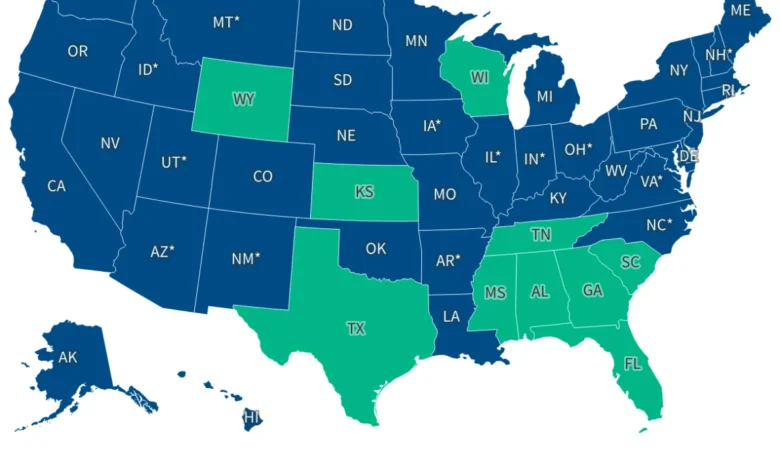
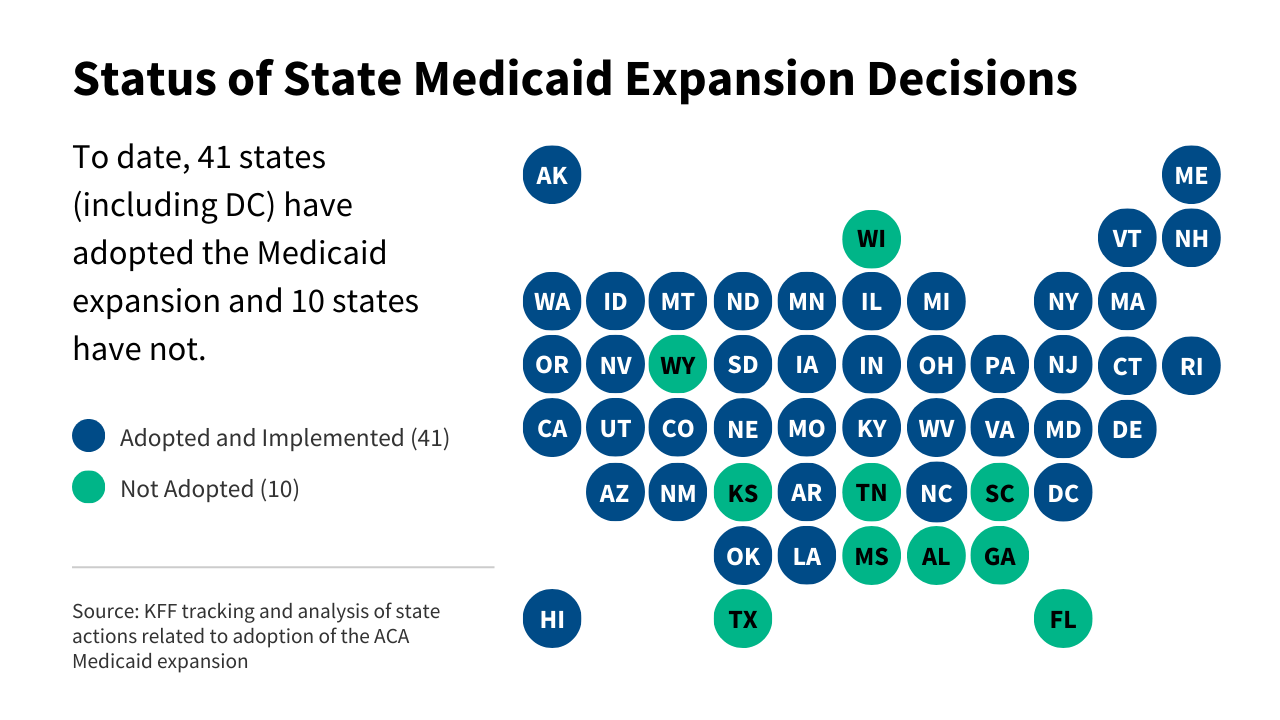
More than a decade after the implementation of the ACA, the national landscape regarding Medicaid expansion remains deeply bifurcated. According to comprehensive tracking and analysis conducted by KFF, 41 states—including the District of Columbia—have formally adopted the Medicaid expansion, integrating millions of low-income residents into managed care and fee-for-service healthcare systems. Conversely, 10 states have steadfastly declined to adopt the expansion, leaving a significant coverage gap for low-income residents who earn too much to qualify for traditional Medicaid yet fall below the poverty threshold required to receive subsidies on the ACA health insurance marketplaces.
This patchwork of state-level adoption has generated profound disparities in healthcare access, financial security, and public health outcomes across state lines. As policymakers, healthcare advocates, and economists continue to evaluate the long-term viability of the program, state legislatures and executive offices remain locked in ongoing debates concerning fiscal sustainability, federal funding dependencies, and the moral imperative of providing universal health coverage.
Historical Context and Evolution of the ACA Medicaid Expansion
Enacted in March 2010, the Affordable Care Act initially mandated that all states expand their Medicaid programs to cover non-elderly adults with incomes up to 138 percent of the federal poverty guidelines. However, a pivotal 2012 Supreme Court ruling in National Federation of Independent Business v. Sebelius fundamentally altered the trajectory of the law. The high court ruled that while the expansion itself was constitutional, the federal government could not penalize states that chose not to participate by withholding their existing Medicaid funding. This decision effectively converted the mandatory national expansion into a voluntary state-by-state option.
In the immediate aftermath of the ruling, a stark political divide emerged. Democratic-leaning states rapidly embraced the opportunity to draw down enhanced federal matching funds, reducing their uninsured rates to historic lows. Meanwhile, numerous Republican-led states resisted the expansion, citing concerns over long-term state budgetary commitments, distrust of federal spending mandates, and philosophical objections to government-subsidized healthcare programs.
Despite initial political resistance, the undeniable economic and public health benefits of the expansion gradually shifted political dynamics in several conservative jurisdictions. Over the subsequent decade, through a combination of legislative votes, executive actions, and voter-led ballot initiatives, several traditionally red states—including Oklahoma, Nebraska, Idaho, Utah, Missouri, and South Dakota—ultimately joined the ranks of expansion states. Proponents successfully utilized ballot measures to bypass recalcitrant state legislatures, directly appealing to voters who recognized the tangible benefits of injecting federal health dollars into local economies, particularly in rural communities facing hospital closures.
Chronology of Recent State Actions and Policy Shifts
The battlegrounds surrounding Medicaid expansion have continuously evolved, shifting from initial adoption debates to complex policy maneuvers involving budget restrictions, waiver requests, and legislative "trigger" mechanisms. In non-expansion states, policy debates have increasingly centered on alternative coverage models, tiered reforms, and localized compromise proposals. Legislative actions—such as the passage of expansion bills in at least one legislative chamber or committee—demonstrate that conversations remain active even in resistant jurisdictions. Executive actions, including gubernatorial budget proposals and executive orders, frequently serve as the primary catalyst for renewed discussions.
Concurrently, states that have already adopted the expansion are utilizing Section 1115 demonstration waivers to implement new requirements and administrative structures for their expansion populations. These waivers often introduce work requirements, premium contributions, or periodic eligibility verification checks, sparking intense legal and political scrutiny from advocacy organizations and federal oversight bodies.
Adding a new layer of complexity to the debate are "trigger" laws tied to the share of federal funding. These legislative mechanisms are designed to automatically roll back or terminate a state’s Medicaid expansion if the federal government reduces its enhanced matching rate below a specified threshold. South Dakota and West Virginia have actively considered or enacted such trigger provisions to protect their state treasuries from unforeseen federal budgetary shifts.
In Virginia, legislative battles have highlighted the precarious nature of these funding dependencies. Lawmakers introduced a budget amendment aimed at removing the automatic termination clause from the state’s trigger law. Instead of an abrupt cancellation of coverage upon federal reductions, the proposed amendment would have required a dedicated legislative committee to study and develop strategic recommendations for adjusting to potential funding losses. Although the measure was ultimately omitted from the final budget, it underscored growing legislative anxiety regarding fiscal volatility at the federal level. Similar proposals to scale back or eliminate restrictive trigger laws have emerged in states like Illinois and North Carolina, reflecting a broader bipartisan awareness of the catastrophic coverage losses that could ensue if federal support wanes.
Comprehensive Data and State-by-State Breakdown
The operational status of state Medicaid expansion decisions dictates the health insurance coverage of millions of Americans. KFF’s rigorous tracking and analysis framework categorizes states based on formal adoption, active legislative debates, and administrative adjustments.
States that have successfully implemented the expansion benefit from the federal government covering 90 percent or more of the costs for the expansion population. This infusion of federal capital has provided a substantial fiscal stimulus to state healthcare sectors, bolstering hospital balance sheets, supporting community health centers, and reducing uncompensated care costs. Studies consistently demonstrate that expansion states experience sharper declines in uninsured rates compared to non-expansion states, alongside improvements in early cancer detections, chronic disease management, and mental health service utilization.
Conversely, residents residing in the 10 non-expansion states—primarily concentrated in the American South and parts of the Midwest—remain trapped in the "coverage gap." These individuals earn too much to qualify for standard non-expansion Medicaid pathways, which are typically restricted to parents with very low incomes, pregnant women, adults with disabilities, and the elderly, yet they earn too little to qualify for advanced premium tax credits on the ACA insurance exchanges, which require a minimum income of 100 percent of the federal poverty level.
| Category | Number of States (incl. D.C.) | Key Characteristics & Financial Mechanisms |
|---|---|---|
| Expansion States | 41 | Full adoption of ACA Medicaid expansion; utilizes 90% federal matching rate; subject to periodic Section 1115 waiver modifications and administrative requirements. |
| Non-Expansion States | 10 | Has not adopted expansion; maintains restrictive eligibility criteria; experiences persistent coverage gaps for low-income adults earning below 100% FPL. |
| Trigger Law States | Varies | States implementing or considering statutory mechanisms that automatically roll back expansion if federal funding formulas are altered downward. |
Official Responses, Stakeholder Perspectives, and Advocacy
The ongoing national debate over Medicaid expansion features a diverse array of stakeholders, each advancing distinct arguments rooted in fiscal stewardship, public health ethics, and economic theory.
Public health advocates, hospital associations, and labor organizations consistently champion full nationwide expansion, pointing to overwhelming empirical evidence of improved health outcomes and financial stability for low-income families. Organizations such as the Georgetown Center for Children and Families have issued urgent warnings regarding federal funding cuts, emphasizing that legislative trigger laws and abrupt policy shifts threaten to automatically strip health insurance from millions of vulnerable residents. Proponents argue that health coverage is a fundamental economic driver, reducing emergency room reliance and stabilizing rural healthcare infrastructure that might otherwise face insolvency.
On the other side of the political aisle, fiscal conservatives and state-level policymakers who oppose expansion raise legitimate concerns regarding long-term budgetary predictability. Opponents argue that expanding entitlement programs exposes state budgets to severe financial vulnerability should future Congresses vote to reduce the enhanced federal matching rate. Furthermore, conservative policymakers frequently advocate for market-driven solutions, private insurance options, and work-requirement mandates designed to encourage employment independence rather than expanding traditional government-run welfare programs.
Healthcare economists note that while state budgetary costs for expansion have proven manageable—often offset entirely by savings in state-funded mental health programs, corrections healthcare, and reductions in uncompensated care pools—the political symbolism surrounding the ACA remains a potent force in legislative chambers nationwide.
Broader Impact, Economic Implications, and Future Outlook
The long-term trajectory of the ACA Medicaid expansion will depend heavily on upcoming federal legislative actions, executive branch priorities, and shifting political dynamics within holdout states. As healthcare costs continue to rise and the post-pandemic stabilization of Medicaid enrollment concludes, state legislatures are forced to re-evaluate their fiscal priorities.
The implications of these decisions extend far beyond individual medical bills; they dictate the economic vitality of entire communities. Rural hospitals, which rely heavily on a paying patient base, have closed at alarming rates in non-expansion states, exacerbating healthcare deserts and limiting access to emergency services. Conversely, states that have embraced expansion have successfully leveraged federal investments to retain healthcare workforce talent and expand telehealth and preventative care initiatives.
Ultimately, the persistent division over Medicaid expansion highlights the enduring federalist tensions embedded within the American healthcare system. Whether the remaining 10 holdout states eventually succumb to economic pressures, voter initiatives, or shifting political landscapes remains one of the most critical unanswered questions in modern American domestic policy. As tracking data from organizations like KFF and policy analyses from academic institutions continue to demonstrate, the choice to expand or restrict Medicaid is not merely a bureaucratic accounting exercise, but a foundational policy decision that directly impacts the health, longevity, and economic security of millions of American citizens.