Navigating the Landscape of Section 1115 Medicaid Waivers: Shifts in Eligibility, Benefits, and Federal Priorities

Section 1115 Medicaid demonstration waivers represent one of the most powerful and flexible administrative tools available to state health officials and federal policymakers. Authorized under the Social Security Act, these waivers empower the Secretary of Health and Human Services (HHS) to grant states the latitude to test experimental, pilot, or demonstration projects designed to promote the core objectives of the Medicaid program. While federal law establishes uniform baseline standards for Medicaid—a joint federal-state health coverage program catering to low-income populations—Section 1115 waivers allow states to break from these statutory constraints to implement localized delivery system reforms, test innovative coverage expansions, or introduce restrictive enrollment criteria.
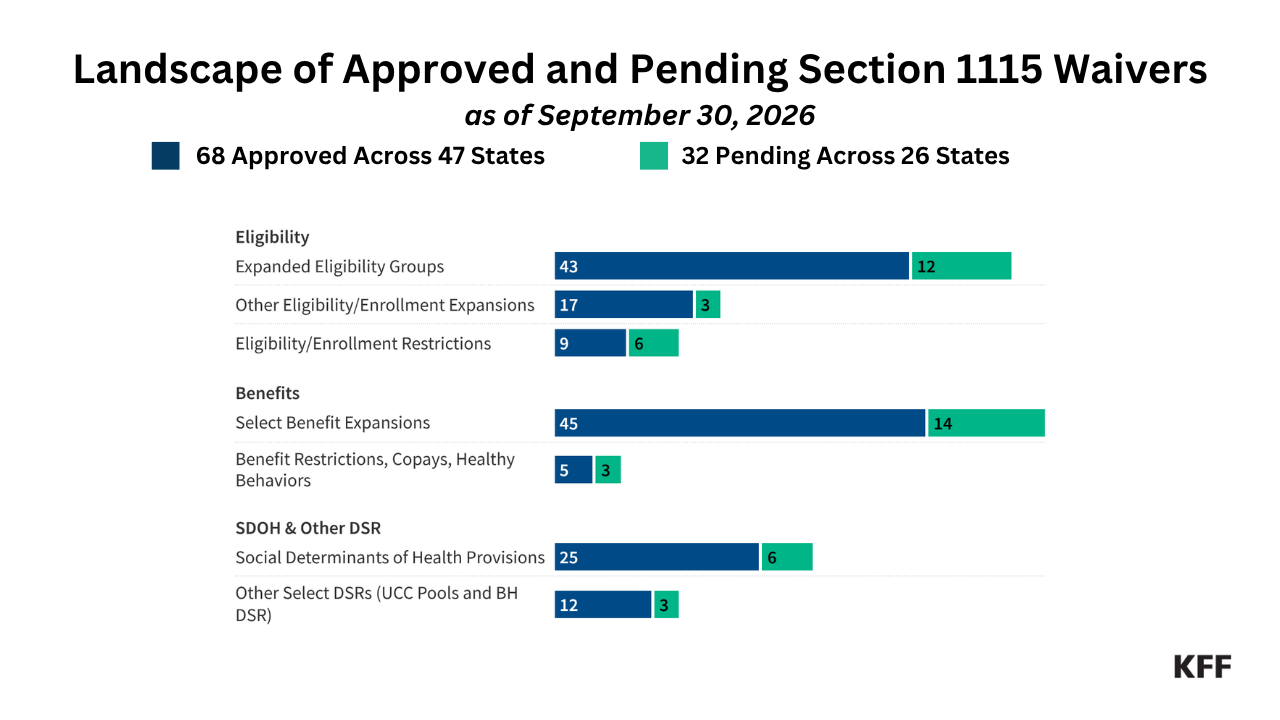
Nearly every U.S. state maintains at least one active Section 1115 waiver, with many juggling multiple concurrent demonstrations covering everything from behavioral health integration to delivery system delivery reforms. However, the precise nature, approval rate, and policy intent of these waivers are deeply intertwined with the shifting priorities of successive presidential administrations. As health policy tracker data and recent federal directives illustrate, the transition between the Biden-Harris administration and the second Trump administration has triggered a profound recalibration in how federal health officials evaluate state-level innovation.
Core Mechanics and Historical Evolution of Section 1115 Waivers
To understand the modern debate surrounding Section 1115 waivers, one must examine their foundational purpose. Traditionally, federal statute dictates mandatory eligibility groups, mandatory benefits, and strict financial frameworks. States seeking to deviate from these parameters—whether by adding non-traditional benefits, altering cost-sharing structures, or mandating work as a condition of eligibility—must secure federal clearance through an 1115 demonstration project.
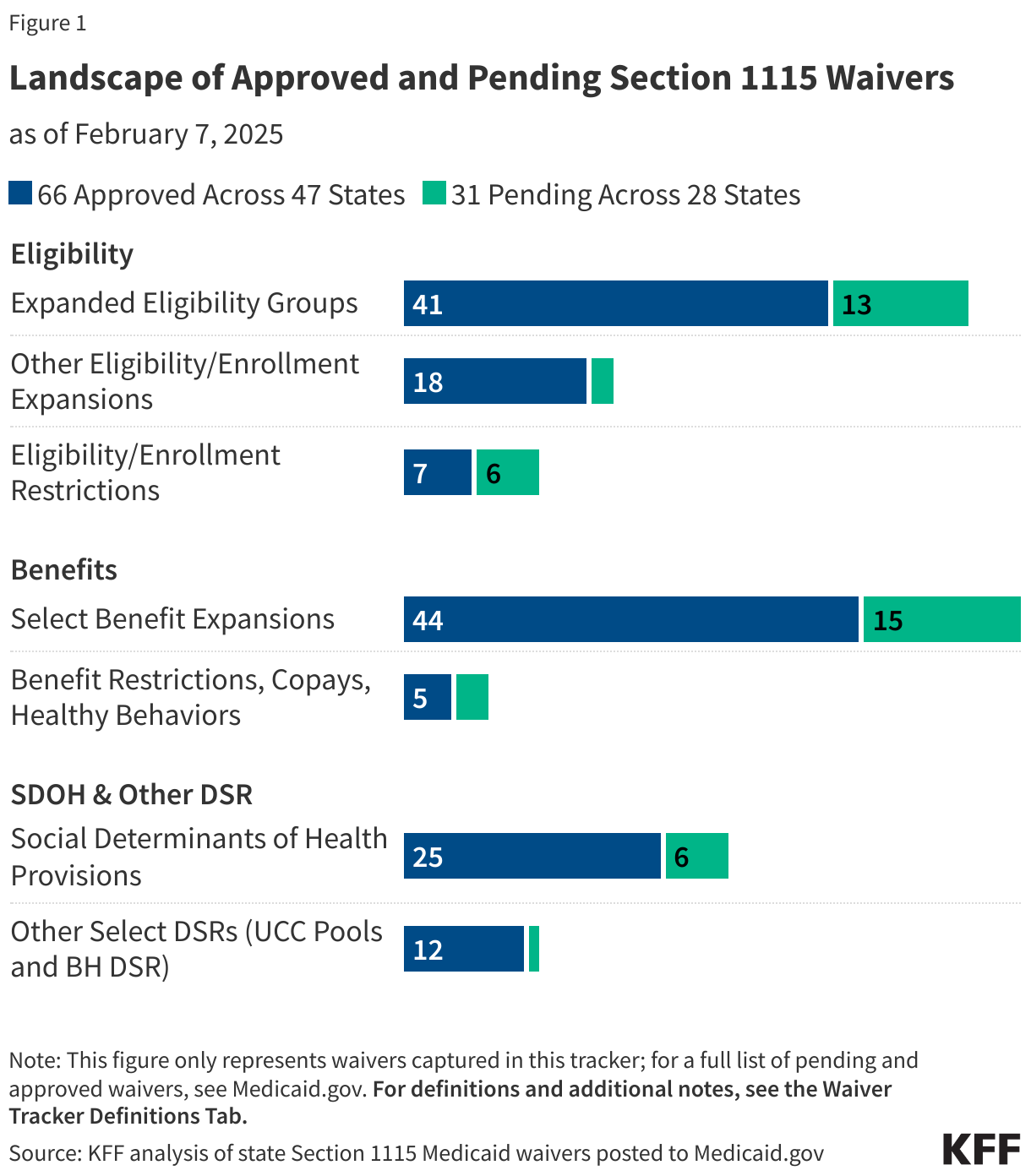
The approval process requires states to demonstrate that a proposed waiver is "budget neutral" to the federal government, meaning the federal financial participation over the course of the demonstration cannot exceed what would have been spent absent the waiver. Over the past decade, these waivers have evolved from modest administrative adjustments into major vehicles for sweeping structural overhauls. States regularly leverage them to target high-need populations, integrate social services into clinical care, and reshape reimbursement methodologies.
However, the ideological footprint of the White House heavily dictates which waiver applications receive a green light. Under the Biden-Harris administration, federal health agencies prioritized equity-focused initiatives, such as addressing health-related social needs (HRSN), securing pre-release healthcare services for incarcerated individuals, and expanding multi-year continuous eligibility for vulnerable children. Conversely, conservative administrations have historically favored market-based reforms, premium contributions, stricter verification procedures, and mandatory work requirements for non-elderly, non-disabled adults.
The 2025 Budget Reconciliation and the New Legislative Mandates
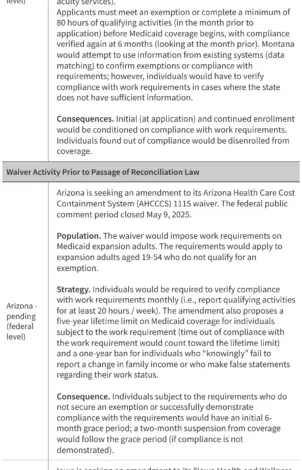
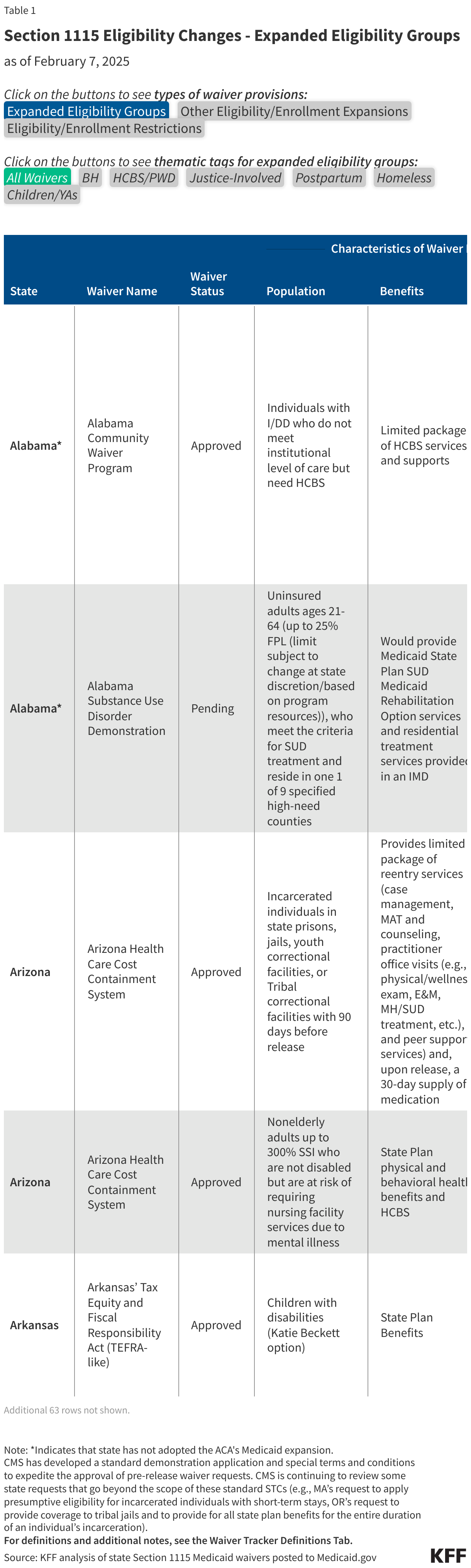
A massive turning point for Medicaid policy arrived with the passage of the 2025 federal budget reconciliation law. This legislation fundamentally altered the statutory landscape by introducing sweeping mandatory provisions that override or codify practices previously debated through the waiver process. Most notably, the 2025 reconciliation law mandates that all states condition Medicaid eligibility for adults in the Affordable Care Act (ACA) expansion group on meeting federal work and community engagement requirements, effective January 1, 2027.
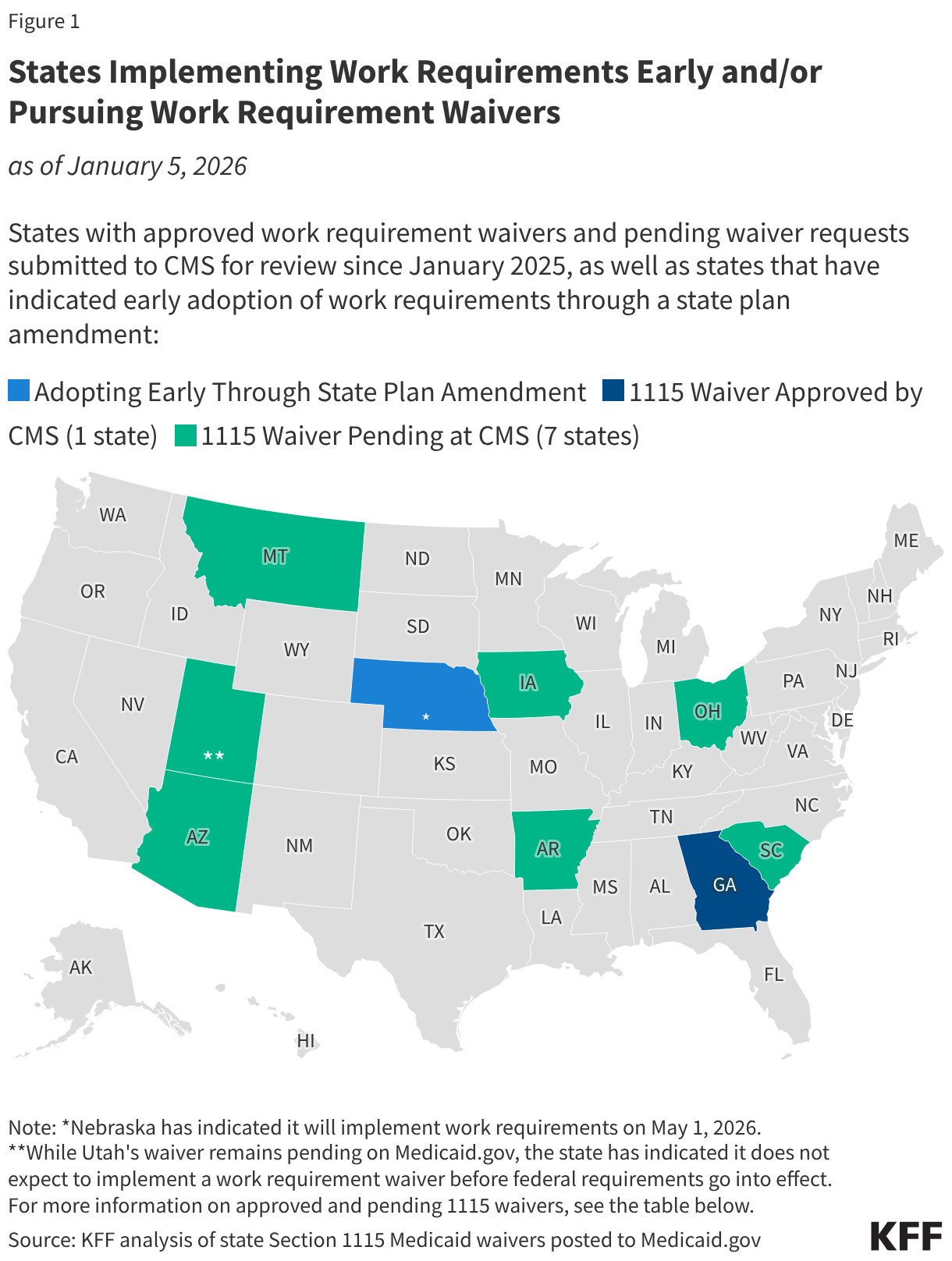
While the national mandate does not take effect until 2027, the legislative framework provides states with the option to implement work requirements early via State Plan Amendments (SPAs) or pre-existing Section 1115 authorities. Nebraska made headlines as the first state to announce early enforcement of federal work requirements through an SPA, slated for May 1, 2026. Montana and Iowa followed suit, planning early implementations for July 2026 and December 2026, respectively. Meanwhile, Arkansas announced a soft launch for July 2026, electing not to disenroll non-compliant individuals until the official federal mandate takes hold in 2027.
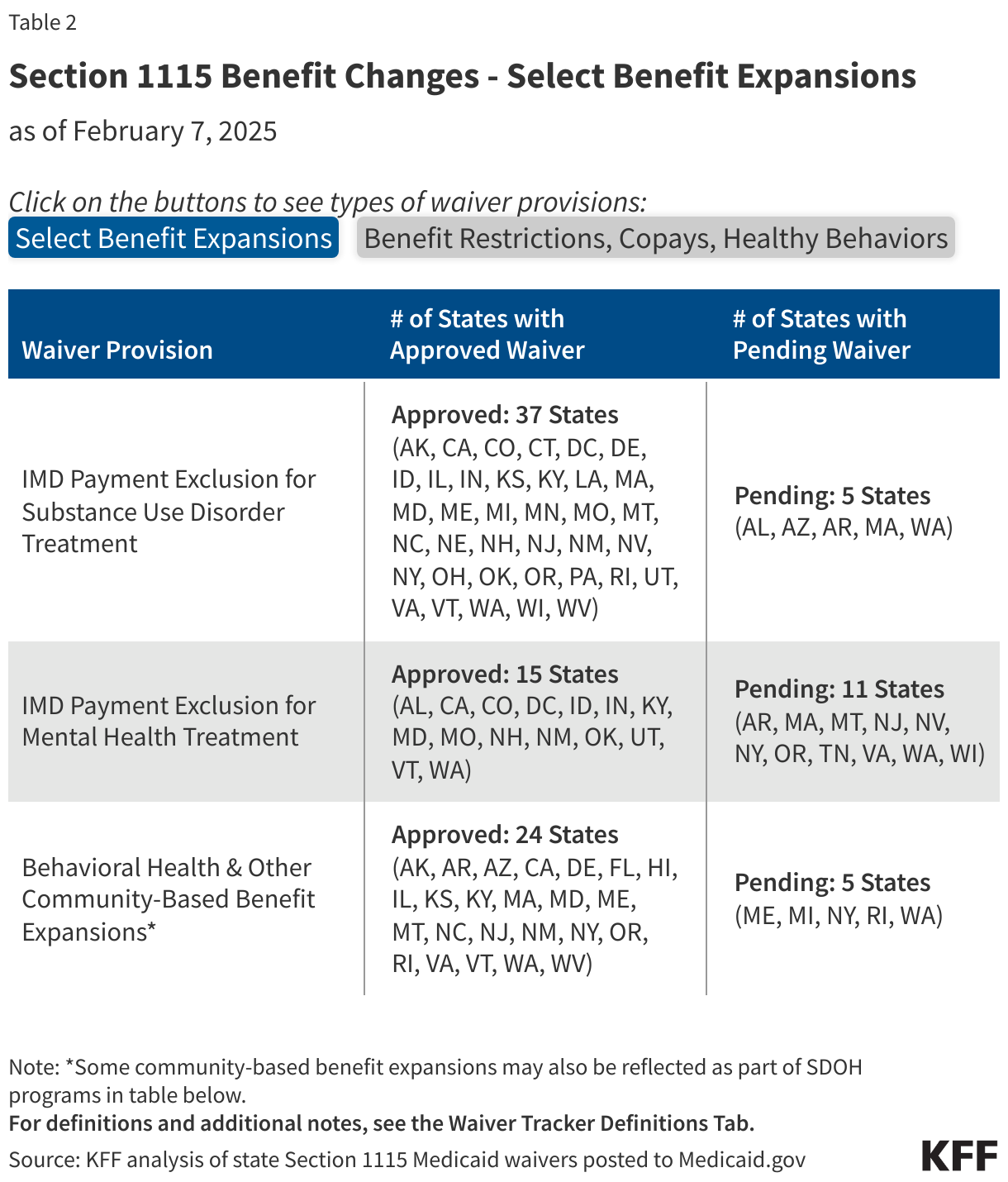
Concurrently, the 2025 reconciliation package introduced timeline constraints for other longstanding policies. Beginning January 1, 2027, retroactive Medicaid coverage—which traditionally grants up to three months of retroactive financial protection for medical bills incurred prior to application—will be legally restricted to one month for ACA expansion enrollees and two months for traditional enrollees. Furthermore, the legislation institutes a strict prohibition on enrollment fees and premiums for ACA expansion adults, taking effect in October 2028. This federal ban effectively phases out state-level experiments in states like Arkansas, Michigan, Montana, and Wisconsin that previously required monthly premiums under 1115 authority.
Shifts in Federal Guidance on Social Determinants of Health and HRSN
Social determinants of health (SDOH)—encompassing non-medical factors such as housing stability, nutritional access, and environmental safety—became a centerpiece of state innovation during the early 2020s. Under the Biden administration, the Centers for Medicare & Medicaid Services (CMS) issued formal guidance establishing the Health-Related Social Needs (HRSN) framework. This framework allowed states to use federal Medicaid dollars to fund housing supports, nutritional counseling, and remediation services for eligible beneficiaries experiencing housing instability or food insecurity.

However, the political pendulum swung sharply in March 2025, when the Trump administration officially rescinded the Biden-era HRSN guidance. Federal health officials clarified that while the rescission does not automatically nullify existing, previously approved HRSN waivers, all future state applications for HRSN-related services and supports will be evaluated strictly on a "case-by-case" basis.
In tandem with the HRSN pullback, the administration announced in April 2025 the systematic phasing out of federal funding for Designated State Health Programs (DSHP) within waiver packages. DSHP funding had long served as a crucial financing mechanism enabling states to build out the technological and administrative infrastructure necessary to support complex delivery system reforms.
Reentry Services for Incarcerated Individuals: A Bipartisan Exception
Amid rolling back several progressive waiver frameworks, federal policy regarding healthcare services for individuals who are incarcerated has maintained a notable degree of bipartisan consensus. Under traditional federal law, the "inmate exclusion policy" prohibited Medicaid from paying for medical care delivered to incarcerated individuals, resulting in severe disruptions in pharmaceutical adherence, mental health management, and chronic disease control upon release.
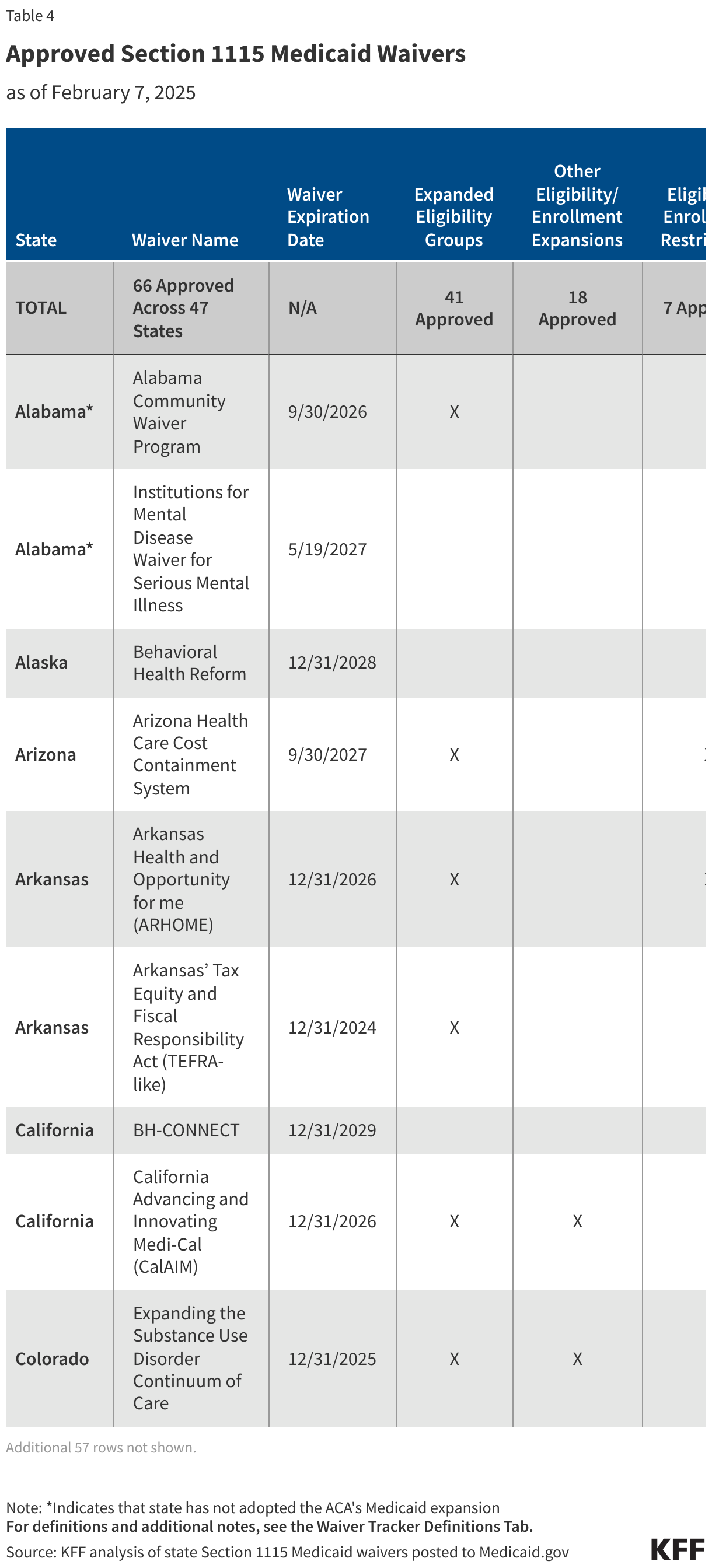
In April 2023, the Biden administration issued landmark guidance encouraging states to apply for Section 1115 demonstrations that partially waive the inmate exclusion policy, allowing Medicaid to cover targeted pre-release services up to 90 days prior to an individual’s scheduled release. Designed to bridge the gap between correctional facilities and community reentry, these programs aim to reduce recidivism, curb post-release mortality—particularly from opioid overdoses—and ensure continuity of coverage.
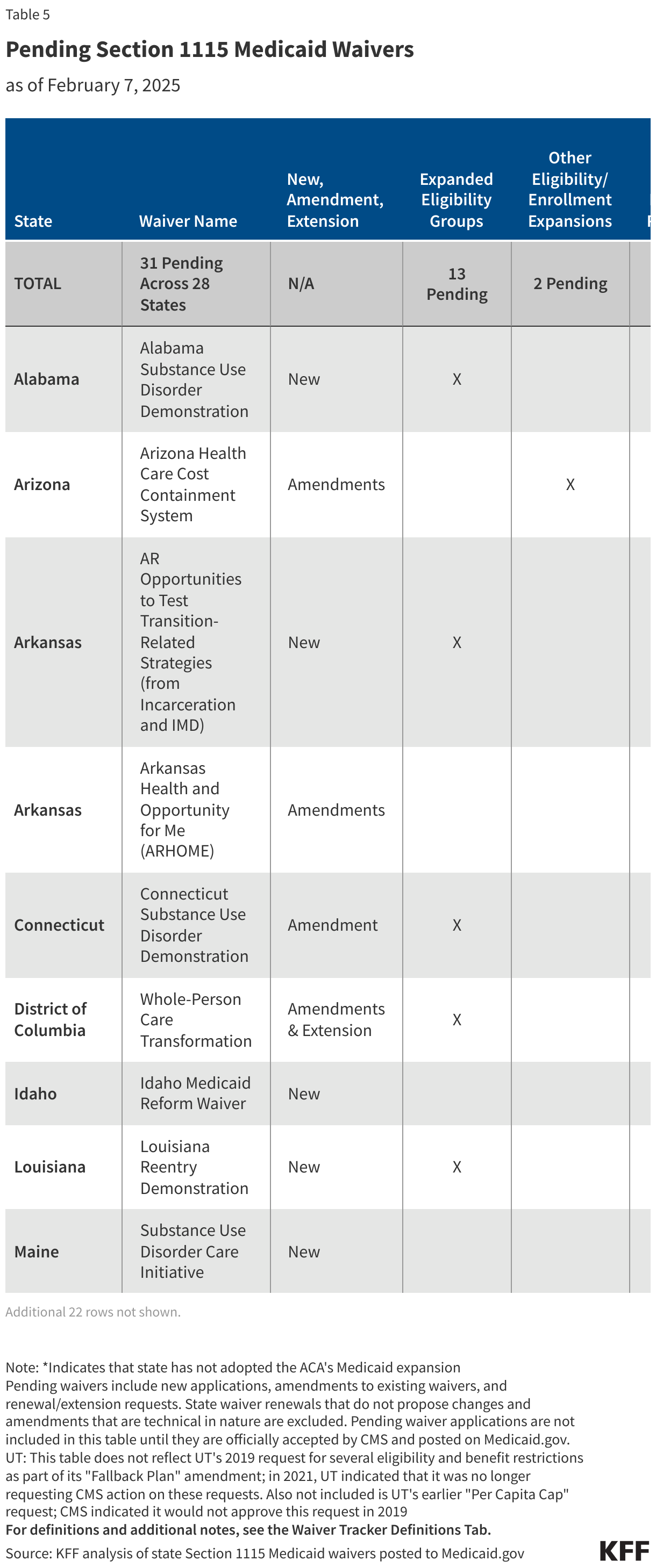
Despite executive branch transitions, this initiative has retained momentum. In September 2026, the Trump administration approved four additional state reentry waivers, signaling that transition-related coverage remains a viable path for states seeking to address public safety and recidivism through healthcare integration. To date, nearly two dozen states spanning both conservative and progressive leadership have pursued or secured pre-release coverage waivers, making it one of the most durable bipartisan trends in modern Medicaid policy.
The Fate of Continuous Eligibility and Workforce Initiatives
Another major casualty of the recent administrative shift involves multi-year continuous eligibility policies. The Consolidated Appropriations Act of 2023 mandated 12-month continuous eligibility for children nationwide starting in January 2024. Building on this, several states secured 1115 waivers to extend multi-year continuous eligibility—protecting children from coverage loss from birth up to age six. These policies successfully mitigated administrative "churn," reducing the frequency with which low-income children temporarily lose coverage due to minor fluctuations in household paperwork.
However, in July 2025, CMS released updated guidance declaring that the federal government will no longer approve new multi-year continuous eligibility waivers or grant extensions for existing ones for either children or adults. Additionally, the agency announced the phase-out of targeted federal initiatives aimed at strengthening the Medicaid workforce across primary care, behavioral health, dental care, and home- and community-based services.
Implications for States, Providers, and Beneficiaries
As the healthcare sector digests these regulatory reversals and statutory deadlines, the implications for state budget planners, healthcare providers, and vulnerable populations are profound. States must aggressively audit their active waiver portfolios to prepare for the sweeping changes mandated by the 2025 reconciliation law—particularly the impending enforcement of mandatory work requirements and the tightening of retroactive eligibility windows.

For healthcare providers, the mixed signals surrounding delivery system reform create operational uncertainty. While hospitals and community health centers have invested heavily in building infrastructure to address health-related social needs, the shift toward case-by-case federal review introduces regulatory friction for new investments. Meanwhile, correctional health systems and community reentry organizations continue to experience a rare window of opportunity as pre-release Medicaid coverage gains bipartisan traction.
Ultimately, Section 1115 waivers remain a mirror reflecting the ideological and fiscal priorities of Washington. As states prepare for the 2027 implementation of federal work requirements and the gradual phase-out of progressive delivery system tools, the landscape of American public health insurance continues to undergo its most significant restructuring in a decade.
Related posts: