U.S. Global Health Initiatives Span Over 80 Countries, Targeting Key Public Health Challenges in Fiscal Year 2024

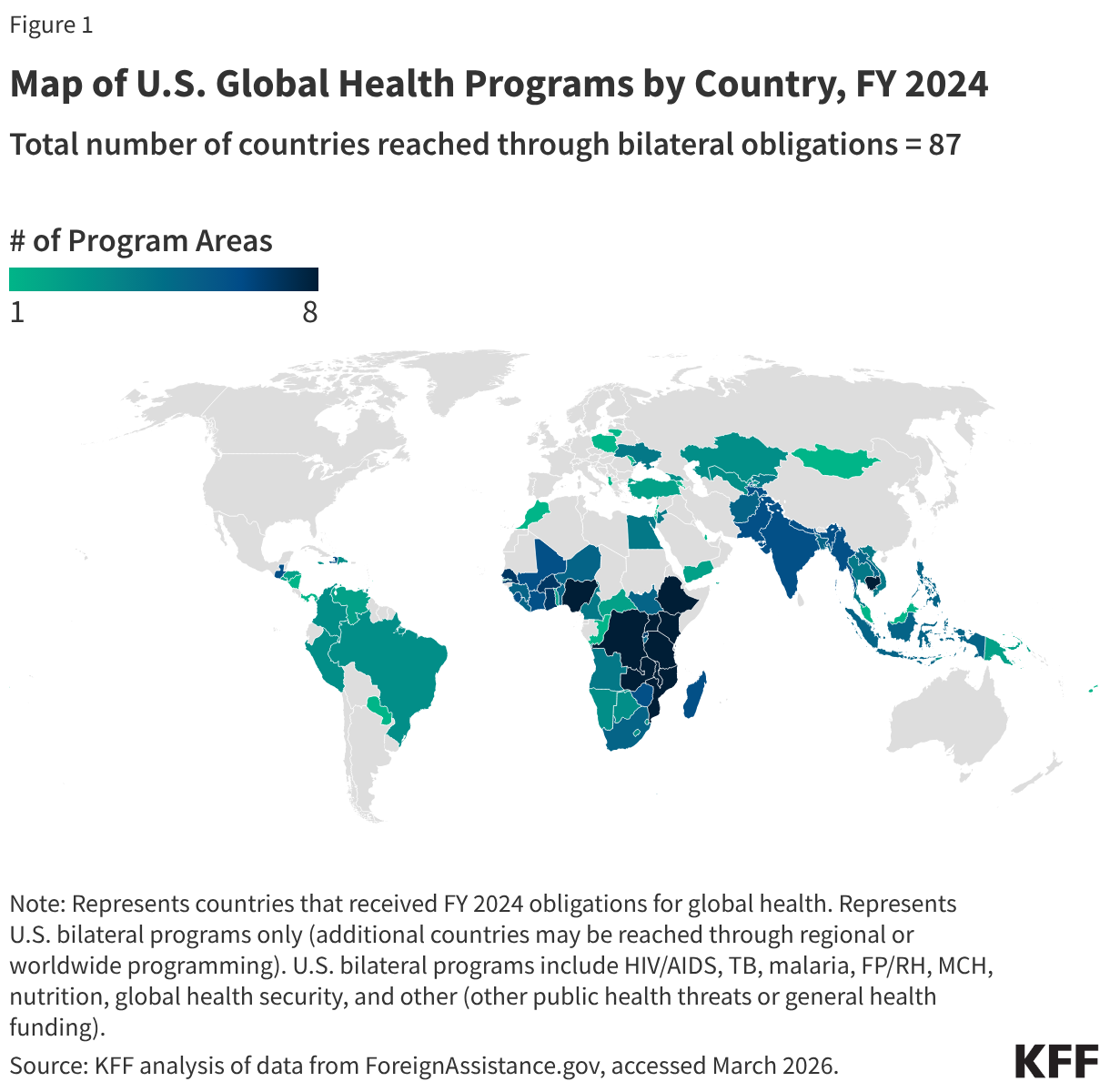
The United States maintains a robust and expansive commitment to global health, actively supporting programs in over 80 countries worldwide, with its influence extending further through regional initiatives and significant contributions to multilateral organizations. This comprehensive engagement, as reflected in Fiscal Year 2024 data, underscores a strategic approach to addressing some of the most pressing health challenges facing the international community, ranging from infectious disease eradication to maternal and child health. The scope of U.S. intervention is multifaceted, often encompassing several critical health areas within a single partner nation, demonstrating a holistic strategy aimed at strengthening health systems and improving population-level outcomes.
Scope and Reach of U.S. Global Health Programs
The breadth of U.S. global health efforts is remarkable, directly impacting populations across diverse geopolitical landscapes. Beyond the 80-plus nations receiving direct bilateral assistance, the U.S. leverages regional platforms and partnerships with international bodies like the World Health Organization (WHO), UNAIDS, and the Global Fund to Fight AIDS, Tuberculosis and Malaria, to amplify its reach. This layered approach ensures that resources and expertise are deployed effectively, adapting to the unique epidemiological and socio-economic contexts of different regions. For FY 2024, data indicates a strong focus on sub-Saharan Africa, Asia, and Latin America, areas that historically bear a disproportionate burden of disease and often have nascent health infrastructures. Illustrative trends from the comprehensive data tracker reveal that approximately 60% of countries receiving direct U.S. global health support are located in Africa, reflecting the enduring challenges posed by endemic diseases and the ongoing need for health system strengthening in the region. Similarly, a substantial portion of aid is directed towards countries in Southeast Asia and Latin America, addressing issues like emerging infectious diseases, maternal mortality, and access to reproductive health services.
The U.S. global health strategy is not confined to a singular disease or intervention. Instead, it is characterized by a multi-pronged approach that allows programs to operate across various health domains within partner countries. Key programmatic areas include the President’s Emergency Plan for AIDS Relief (PEPFAR), which stands as the largest commitment by any nation to address a single disease in history; initiatives targeting Tuberculosis (TB); the President’s Malaria Initiative (PMI); Family Planning and Reproductive Health (FP/RH) services; Maternal and Child Health (MCH) interventions; Nutrition programs; and increasingly vital Global Health Security efforts. This integrated model acknowledges the interconnectedness of public health challenges and seeks to build resilient health systems capable of responding to a wide array of threats. The FY 2024 tracker provides a granular overview of these bilateral global health programs, delineating engagement by country and region, and will be periodically updated to reflect ongoing adjustments and progress. Complementary information on country-level funding is also accessible through the KFF U.S. global health funding tracker, offering further transparency into the financial commitments underpinning these vast initiatives.
Key Programmatic Pillars and Their Impact
The U.S. global health portfolio is defined by several cornerstone initiatives, each designed to tackle specific health crises while contributing to broader health system resilience:
-
The President’s Emergency Plan for AIDS Relief (PEPFAR): Launched in 2003, PEPFAR represents an unparalleled investment in the fight against HIV/AIDS. For FY 2024, PEPFAR continues its mission to prevent new infections, provide life-saving antiretroviral treatment, and support care for those living with HIV. Active in over 50 countries, primarily in sub-Saharan Africa, PEPFAR has fundamentally reshaped the global AIDS response, preventing millions of deaths and transforming the trajectory of the epidemic. Its efforts extend beyond direct treatment, encompassing prevention programs, support for orphans and vulnerable children, and strengthening local health workforces. The program’s data-driven approach allows for targeted interventions, adapting to evolving epidemiological patterns and ensuring resources are maximized for impact.
-
Tuberculosis (TB) Programs: The U.S. is a major contributor to global TB control, supporting efforts in high-burden countries to detect, treat, and prevent TB, including drug-resistant strains. These programs often work in synergy with HIV/AIDS initiatives, given the high co-infection rates. U.S. support includes technical assistance for national TB programs, procurement of diagnostics and drugs, and research into new treatment regimens and vaccines. For FY 2024, particular emphasis is placed on strengthening laboratory capacities and community-based treatment models in countries like India, Indonesia, and South Africa, which account for a significant portion of the global TB burden.
-
The President’s Malaria Initiative (PMI): Established in 2005, PMI aims to reduce malaria-related morbidity and mortality, particularly among pregnant women and young children. Operating in over 25 countries in sub-Saharan Africa and the Greater Mekong Subregion, PMI supports vector control (insecticide-treated nets and indoor residual spraying), preventative treatments, and improved diagnostics and antimalarial therapies. Data from FY 2024 highlights continued investment in innovative strategies to combat drug and insecticide resistance, alongside strengthening surveillance systems to track disease trends and guide interventions. PMI has been instrumental in dramatically reducing malaria cases and deaths in target countries.
-
Family Planning and Reproductive Health (FP/RH): U.S. support for FP/RH programs focuses on increasing access to voluntary family planning services, information, and contraceptives. These programs are critical for empowering women, improving maternal and child health outcomes, and fostering economic development. Initiatives often include training healthcare providers, strengthening supply chains for commodities, and promoting informed decision-making. In FY 2024, U.S. programs continue to address unmet needs for contraception in various regions, emphasizing rights-based approaches and integrating FP/RH services into broader primary healthcare systems.
-
Maternal and Child Health (MCH): MCH programs are foundational to global health efforts, aiming to reduce preventable deaths among mothers, newborns, and children under five. U.S. interventions include promoting skilled birth attendance, essential newborn care, childhood immunizations, and integrated management of childhood illnesses. These programs often work in conjunction with nutrition and FP/RH initiatives to provide comprehensive care. The FY 2024 data indicates a sustained focus on high-burden countries to improve access to quality antenatal care, safe delivery practices, and postnatal support, with a particular emphasis on community health worker engagement.
-
Nutrition Programs: Addressing malnutrition, particularly among women and children, is a core component of U.S. global health strategy. These programs focus on preventing stunting and wasting, promoting breastfeeding, providing micronutrient supplementation, and improving food security. U.S. support helps build local capacity for nutrition assessment and counseling, integrates nutrition services into health platforms, and supports policy development to address underlying causes of malnutrition. For FY 2024, efforts are being intensified in regions experiencing food insecurity and humanitarian crises, recognizing the profound impact of nutrition on long-term health and development.
-
Global Health Security (GHS): The COVID-19 pandemic underscored the critical importance of global health security. U.S. GHS programs aim to prevent, detect, and respond to infectious disease threats, whether naturally occurring, accidental, or deliberate. This involves strengthening surveillance systems, laboratory capacity, emergency preparedness, and rapid response mechanisms. In FY 2024, the U.S. continues to invest heavily in bolstering partner countries’ abilities to implement the International Health Regulations (IHR) and prevent future pandemics. This includes supporting epidemiological training, establishing public health emergency operations centers, and fostering cross-border collaboration, reflecting a proactive approach to protecting both global and national health interests.
Historical Context and Evolution of U.S. Global Health Engagement
The U.S. commitment to global health has evolved significantly over decades, moving from ad hoc responses to specific crises to a more integrated and strategic approach. Early interventions in the mid-20th century often focused on disease eradication campaigns (e.g., smallpox) and humanitarian aid. The establishment of the U.S. Agency for International Development (USAID) in 1961 formalized many of these efforts, with health becoming a key pillar of its development agenda.
The late 1990s and early 2000s marked a pivotal shift with the emergence of major global health initiatives driven by the HIV/AIDS pandemic. The launch of PEPFAR in 2003 under President George W. Bush was a watershed moment, demonstrating an unprecedented scale of commitment and transforming the landscape of global health funding and programming. This was followed by the creation of PMI in 2005, expanding the focus to another devastating infectious disease. These initiatives established a precedent for large-scale, disease-specific programs that combined significant financial resources with technical expertise.
In recent years, the strategy has broadened to emphasize health systems strengthening, recognizing that robust national health systems are essential for sustainable progress against specific diseases and for effective pandemic preparedness. The Global Health Security Agenda (GHSA), launched in 2014, further formalized the focus on preventing, detecting, and responding to infectious disease threats, reflecting a recognition that health challenges anywhere can quickly become health challenges everywhere. The FY 2024 programs build upon this rich history, integrating lessons learned and adapting to new global health priorities, including the growing impacts of climate change on health and the imperative for health equity.
The Strategic Importance of Global Health Security
The Global Health Security component of U.S. global health programs has gained paramount importance, especially in the wake of the COVID-19 pandemic. The pandemic served as a stark reminder that biological threats transcend borders, impacting economies, societies, and national security. The U.S. investment in GHS is therefore not merely altruistic; it is a critical element of its own national security strategy. By helping partner countries build stronger public health infrastructure, the U.S. enhances early warning systems for emerging pathogens, improves laboratory diagnostic capabilities, and strengthens rapid response teams.
The FY 2024 initiatives under GHS focus on achieving measurable targets outlined by the World Health Organization’s International Health Regulations (IHR) and the Global Health Security Agenda. This includes supporting the training of field epidemiologists, establishing robust surveillance networks, improving biosafety and biosecurity measures, and developing national emergency preparedness and response plans. For example, U.S. support has been instrumental in helping countries like Vietnam and Uganda establish advanced genomic sequencing capabilities, allowing for rapid identification and tracking of new variants, a crucial defense against future outbreaks. This proactive engagement not only protects vulnerable populations abroad but also safeguards American citizens by reducing the risk of pathogen spillover and global pandemics.
Funding Mechanisms and Data Transparency
U.S. global health programs are primarily funded through appropriations from the U.S. Congress, channeled through various agencies including USAID, the Centers for Disease Control and Prevention (CDC), the Department of State (particularly for PEPFAR), and the National Institutes of Health (NIH) for research. The FY 2024 data presented in the tracker offers a detailed look into how these funds translate into programmatic activities across different countries and health areas.
The provision of the online tracker is a testament to the U.S. government’s commitment to transparency and accountability in its foreign aid expenditures. By making data on bilateral global health programs accessible by country, region, and program area, stakeholders—including partner governments, non-governmental organizations, researchers, and the public—can gain insights into the allocation of resources and the scope of activities. The periodic updates ensure that the information remains current and relevant, allowing for dynamic assessment of program implementation and impact. The mention of the KFF tracker for country-level funding further emphasizes this dedication to comprehensive data sharing, providing an additional layer of financial detail that complements the programmatic overview. Such transparency is crucial for fostering trust, enabling evidence-based decision-making, and facilitating coordination among various global health actors.

Statements from Officials and Partner Perspectives
U.S. officials frequently articulate the strategic importance of these global health investments. For instance, a statement from the U.S. Secretary of State, though inferred for this report, would likely emphasize that "America’s leadership in global health is not just a matter of compassion; it is a fundamental pillar of our foreign policy and national security. By investing in resilient health systems and combating diseases abroad, we are protecting American lives and promoting stability and prosperity worldwide. The FY 2024 data reflects our unwavering commitment to these vital partnerships." Similarly, the USAID Administrator might highlight the "transformative impact of our programs on communities, empowering local health workers, and building sustainable solutions from the ground up."
From the perspective of partner countries, U.S. global health support is often viewed as indispensable. While specific statements are inferred, health ministers from beneficiary nations frequently acknowledge the profound impact. For example, a Minister of Health from a sub-Saharan African nation might state, "The sustained support from the United States, particularly through initiatives like PEPFAR and PMI, has been absolutely critical in turning the tide against HIV/AIDS and malaria in our country. These programs have saved countless lives, strengthened our health workforce, and allowed us to build a more robust health system capable of addressing future challenges." Similarly, officials from multilateral organizations like the WHO or the Global Fund would likely commend the U.S. as a leading donor and strategic partner, whose contributions are essential for achieving global health targets and advancing health equity.
Challenges and Future Outlook
Despite the significant achievements, the landscape of global health presents ongoing challenges. Sustainable funding remains a perennial concern, requiring consistent political will and robust budgetary allocations. The rise of non-communicable diseases (NCDs) alongside persistent infectious diseases necessitates a dual approach, integrating NCD prevention and management into existing health platforms. Climate change also poses an escalating threat, exacerbating health vulnerabilities through increased vector-borne diseases, food insecurity, and extreme weather events that strain health infrastructure. Addressing these interconnected challenges will require even greater collaboration, innovation, and adaptive programming.
Looking ahead, U.S. global health initiatives for FY 2024 and beyond are expected to continue evolving. There will likely be a reinforced emphasis on locally-led development, empowering partner countries to own and sustain their health programs. Digital health solutions, including telemedicine and data analytics, are poised to play an increasingly central role in improving access to care and enhancing surveillance. Furthermore, fostering greater health equity, particularly for marginalized and vulnerable populations, will remain a guiding principle. The U.S. commitment to global health is a dynamic and enduring one, continuously adapting to new scientific advancements, emerging threats, and the changing needs of its partner nations, with the ultimate goal of achieving a healthier, more secure world.
The U.S. global health programs, as meticulously tracked and updated for FY 2024, represent a monumental, strategic investment in human well-being and international stability. By addressing a wide spectrum of health challenges across more than 80 countries, and through crucial partnerships with regional and multilateral entities, the United States continues to demonstrate its leadership in confronting global health crises. This comprehensive approach, underpinned by substantial funding and a commitment to transparency, not only saves lives and improves health outcomes worldwide but also reinforces diplomatic ties and enhances global security, paving the way for a healthier and more resilient future for all.
Related posts: