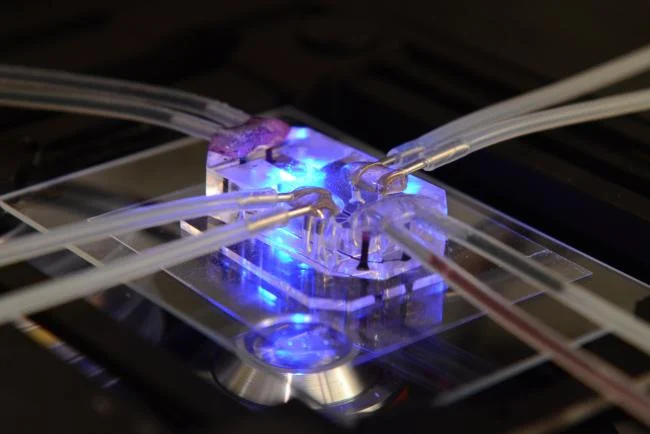
The National Institutes of Health (NIH) has announced a landmark investment exceeding $150 million to spearhead the development and widespread adoption of human-based research methods. This monumental initiative, formally known as the Complement Animal Research in Experimentation (Complement-ARIE) program, is set to revolutionize biomedical science by fostering the creation, validation, and standardization of sophisticated new approach methodologies (NAMs). These innovative tools are designed to more accurately simulate human biology, thereby reducing the longstanding reliance on traditional animal models and paving the way for more predictive and clinically relevant disease models. This significant funding marks the inaugural awards under the Complement-ARIE program, which has been a stated priority of the Trump Administration, underscoring a strategic shift in the national research agenda.
A New Era for Medical Research: Shifting Paradigms
This substantial financial commitment by the NIH signals a pivotal moment in biomedical research, reflecting a growing consensus within the scientific community and regulatory bodies regarding the limitations and ethical complexities associated with animal testing. For decades, animal models have served as the cornerstone of preclinical research, offering insights into disease mechanisms and potential therapeutic interventions. However, the translational gap—the often-observed failure of promising animal study results to translate into successful human clinical outcomes—has been a persistent challenge, contributing to high drug development costs and prolonged timelines. The Complement-ARIE program directly addresses this challenge by investing in technologies and methodologies that leverage human cells, tissues, and computational models to create more biologically relevant experimental systems. This transition is not merely about replacing animals but about fundamentally improving the scientific rigor and predictive power of early-stage research.
"This is an exciting opportunity to create a repertoire of human-focused methods that are so sophisticated and comprehensive that successful clinical translation will rise and we will be able to answer questions beyond our reach with current research models," stated Nicole Kleinstreuer, Ph.D., NIH Deputy Director for Program Coordination, Planning, and Strategic Initiatives. Dr. Kleinstreuer emphasized that these new projects represent critical steps in expanding and strengthening the scientific toolbox available to researchers. She further highlighted that NIH’s investment in NAMs is integral to its core mission of conducting "gold-standard research," implying a future where research outcomes are not only ethically sound but also demonstrably more reliable for human health.
The Imperative for Human-Based Models
The impetus behind the Complement-ARIE program stems from a confluence of scientific, ethical, and economic factors. While invaluable in their historical context, animal models present inherent limitations. Physiological differences between species can lead to discrepancies in disease progression, drug metabolism, and therapeutic responses, rendering findings from animal studies often poorly predictive of human reactions. For instance, it is widely cited that over 90% of drug candidates that show promise in preclinical animal studies ultimately fail in human clinical trials, a statistic that underscores the urgent need for more accurate predictive models.
Bridging the Translational Gap
The "translational gap" is a critical bottleneck in drug discovery and development. Diseases like Alzheimer’s, Parkinson’s, and many forms of cancer, which have been extensively studied in animal models, still lack effective treatments, partly due to species-specific biological variances. Human-based NAMs, such as organ-on-a-chip systems, microphysiological systems, and advanced computational models, offer the potential to mimic human physiology and disease states with unprecedented fidelity. These systems can incorporate human genetic diversity, cellular complexity, and tissue architecture, providing a more accurate window into human biology and pathology. By reducing the reliance on models that may not fully reflect human biology, the NIH aims to accelerate the discovery of truly effective therapies and prevent the costly progression of ineffective drugs into later-stage clinical trials.
Ethical Considerations and Public Pressure
Beyond scientific accuracy, ethical considerations play a significant role in the push for alternatives. Public sentiment and scientific ethics increasingly advocate for the reduction, refinement, and replacement (the "3Rs" principle) of animals in research. Regulatory bodies globally, including the European Union, have already implemented restrictions or bans on animal testing for certain products, such as cosmetics. In the United States, there has been growing legislative and administrative support for modernizing research practices to minimize animal use. The Trump Administration’s emphasis on this priority reflects a broader societal and scientific shift towards more humane and effective research methodologies. This investment by NIH is a direct response to these evolving ethical standards, seeking to provide researchers with robust, human-relevant alternatives that can fulfill scientific objectives while upholding animal welfare principles.
Complement-ARIE: A Comprehensive Strategy
The Complement-ARIE program is structured to provide a comprehensive ecosystem for NAM development, validation, and integration into mainstream research. It establishes several interconnected components designed to address the various stages of methodology development and implementation.
Technology Development Centers (TDCs)
A cornerstone of the program is the establishment of Technology Development Centers (TDCs). These centers will serve as focal points for advancing NAM development in areas of significant scientific and regulatory need. The initial focus areas include critical health challenges such as gynecological disorders, cardiac disease, neurological disorders, and rare diseases. By concentrating expertise and resources, TDCs are expected to accelerate the creation of novel NAMs that are tailored to specific disease contexts, offering more precise and relevant models for studying complex human conditions. These centers will foster interdisciplinary collaboration, bringing together biologists, engineers, computational scientists, and clinicians to innovate at the forefront of human-based modeling.
Data Hub and Coordinating Center (NDHCC)
The successful integration of NAMs into research hinges on robust data management and standardization. To this end, the program will establish a NAMs Data Hub and Coordinating Center (NDHCC). This central hub will facilitate data sharing across various research projects, ensuring that findings are accessible and interoperable. Crucially, the NDHCC will also be responsible for developing and promoting standards for NAMs, which is vital for reproducibility and broad acceptance within the scientific community. Standardization will enable researchers to compare results across different laboratories and studies, enhancing the reliability and utility of these new methodologies.
Validation and Qualification Network (VQN)
Perhaps one of the most critical components for the practical adoption of NAMs is the Validation and Qualification Network (VQN). Recognizing that regulatory acceptance is paramount for NAMs to impact drug development and toxicology, the Complement-ARIE program has partnered with the Foundation for the National Institutes of Health (FNIH) to establish the VQN. The NIH plans to contribute approximately $20 million to this network, pending available funds. The VQN is designed as a public-private partnership, leveraging expertise from industry and regulatory bodies to ensure that developed NAMs are not only scientifically sound but also reliable and "marketable"—meaning they can withstand rigorous regulatory scrutiny and be integrated into existing approval pathways.
The VQN has already selected four pilot projects focusing on critical areas: preterm birth, developmental neurotoxicity, inhalation toxicity, and acute oral toxicity. These projects represent real-world applications where current animal models have limitations, and robust NAMs could significantly improve assessment accuracy and efficiency. The network aims to prepare these NAMs for regulatory processes and clearance, setting a precedent for future applications. The expansion of these pilot projects is anticipated as the program matures, demonstrating the practical utility and regulatory readiness of NAMs.
Collaborative Momentum: Agencies and Industry Unite
The success of a paradigm shift of this magnitude requires widespread collaboration, and the Complement-ARIE program exemplifies this multi-stakeholder approach. The involvement of key federal agencies and external partners underscores the unified commitment to advancing human-based research.
Regulatory Buy-in: A Path to Acceptance
The active participation of the U.S. Food and Drug Administration (FDA) and the Environmental Protection Agency (EPA) is crucial for the eventual widespread adoption of NAMs. These agencies are the gatekeepers for drug approvals and chemical safety assessments, and their buy-in is essential for any new methodology to gain traction. Their involvement in the Complement-ARIE program, particularly in the VQN and the "Reduction to Practice Challenge," signals a crucial shift towards regulatory acceptance and integration of NAMs into decision-making processes. This collaboration will ensure that NAMs are developed with regulatory requirements in mind from the outset, streamlining the path from scientific innovation to practical application. The FDA, for instance, has historically relied on animal testing data for drug safety and efficacy, and its engagement here suggests a progressive outlook towards modernizing its review processes. Similarly, the EPA’s mandate for chemical safety assessment stands to benefit significantly from more accurate and high-throughput human-relevant toxicity testing.
The NAMs Reduction to Practice Challenge
Further demonstrating the collaborative spirit, the program launched a $7 million NAMs Reduction to Practice Challenge in partnership with the FDA and EPA. This challenge invited research teams to submit human-based NAMs and demonstrate their viability within a three-year period, with the ultimate goal of delivering successful methodologies to the VQN for further validation and qualification. Such challenges incentivize innovation and provide a structured pathway for promising NAMs to move from concept to regulatory readiness, fostering a competitive yet collaborative environment for scientific advancement. The prize-based structure encourages practical application and robust data generation, ensuring that the methodologies are not just theoretically sound but also demonstrably effective and reproducible.
A Historical Pivot: The Trump Administration’s Role and Chronology
While the scientific drive for alternatives has been ongoing for decades, the formalization and significant investment into the Complement-ARIE program under the Trump Administration marks a notable policy pivot. The administration identified the reduction of animal model use as a priority, likely driven by a combination of factors including ethical considerations, the desire for more efficient and predictive research, and public advocacy. This administrative backing provided the necessary political will and funding impetus to launch such a large-scale, coordinated effort.
Policy Underpinnings
Discussions and policy initiatives leading to this program likely began several years prior to the March 2026 announcement. The recognition of the translational gap and ethical concerns regarding animal welfare had been gaining momentum within policy circles. The administration’s focus on "modernizing" federal regulations and scientific practices likely provided a fertile ground for such an initiative. This period would have seen internal deliberations within the NIH, FDA, and EPA, as well as engagement with external stakeholders like patient advocacy groups and animal welfare organizations, all contributing to the program’s design and strategic objectives.
Program Development and Initial Milestones
The timeline for Complement-ARIE’s development can be inferred:
- Policy Formulation (Pre-2024): Identification of reducing animal models as an administrative priority, leading to initial conceptualization of a comprehensive program.
- Program Design (2024-2025): Development of the Complement-ARIE framework, including the conceptualization of TDCs, NDHCC, and VQN, and forging partnerships with FNIH, FDA, and EPA. The $7 million NAMs Reduction to Practice Challenge was also launched during this period, allowing time for teams to submit proposals and begin their three-year demonstration period.
- VQN Establishment (Late 2025/Early 2026): Formal partnership with FNIH and selection of the initial four pilot projects.
- First Awards (March 18, 2026): The current announcement of over $150 million in funding, marking the official commencement of large-scale research projects under the program.
- Ongoing (Post-2026): Continued expansion of TDCs, progress on VQN pilot projects, and evaluation of challenge submissions, leading to further integration of successful NAMs into research and regulatory pipelines.
The Promise of New Approach Methodologies (NAMs)
New Approach Methodologies encompass a diverse array of advanced scientific tools and techniques that offer significant advantages over traditional animal models. These innovations leverage cutting-edge technology to create more biologically relevant and efficient research platforms.
Organ-on-a-Chip and Microphysiological Systems
Among the most exciting NAMs are organ-on-a-chip and microphysiological systems (MPS). These sophisticated devices are tiny, microfluidic cell culture chips designed to mimic the structural and functional properties of human organs. They contain living human cells engineered to replicate the physiological environment and key functions of specific organs like the lung, liver, heart, or even complex systems like the blood-brain barrier. Researchers can use these systems to study disease mechanisms, test drug efficacy and toxicity, and understand drug metabolism in a human-relevant context, often with greater precision and throughput than animal studies. The ability to connect multiple "organs" on a single chip, forming a "human-on-a-chip," further enhances their potential to model systemic drug effects and inter-organ communication.
Advanced Computational Models
Computational models and in silico toxicology represent another powerful category of NAMs. These methods utilize advanced algorithms, artificial intelligence (AI), and machine learning to analyze vast datasets of chemical, biological, and clinical information. By identifying patterns and relationships, computational models can predict the toxicity or efficacy of substances without the need for physical experimentation. Quantitative Structure-Activity Relationship (QSAR) models, for example, correlate chemical structures with biological activities, allowing for rapid screening of compounds. These models are particularly valuable for high-throughput screening and prioritizing substances for further testing, significantly reducing the time and resources required for early-stage assessments.
Human Cell-Based Assays
High-throughput human cell-based assays are fundamental NAMs that involve screening thousands of compounds against human cells in vitro. These assays can assess various biological endpoints, from cellular viability and proliferation to specific molecular pathway activation. Advances in human induced pluripotent stem cells (iPSCs) have further revolutionized this field, allowing researchers to create patient-specific cell lines that can differentiate into various tissue types. This enables the study of genetic diseases and personalized medicine approaches in a dish, offering unprecedented opportunities for understanding individual responses to drugs and disease progression.
Broader Implications: Reshaping Biomedical Science
The NIH’s investment in Complement-ARIE is not merely a funding announcement; it represents a strategic commitment to reshaping the very foundation of biomedical research. The implications extend across scientific, ethical, and economic landscapes.
Accelerating Drug Discovery and Personalized Medicine
By providing more predictive models, NAMs are expected to significantly accelerate the drug discovery pipeline. Reduced translational failures mean that fewer resources will be wasted on drug candidates destined to fail in humans, allowing for a more focused and efficient pursuit of effective treatments. This shift will likely lead to a faster pace of innovation, bringing new therapies to patients more quickly. Furthermore, the ability to use patient-derived cells in NAMs opens new avenues for personalized medicine, allowing researchers to test drug responses on individual patient biology before administering treatments, thereby optimizing efficacy and minimizing adverse effects.
Ethical Progress and Public Trust
The reduction in animal use in research will have profound ethical implications. It addresses long-standing concerns from animal welfare advocates and the public, enhancing the ethical standing of biomedical science. As research becomes more humane, it can foster greater public trust and support, which are crucial for continued scientific progress and funding. This alignment with ethical principles reinforces the NIH’s commitment to responsible scientific conduct.
Economic Efficiencies and Global Competitiveness
The economic benefits of NAMs are substantial. Animal research is often costly, requiring specialized facilities, trained personnel, and extensive care protocols. NAMs can offer more cost-effective and time-efficient alternatives, particularly for early-stage screening and toxicology. By accelerating drug development and reducing failures, the pharmaceutical industry can achieve significant cost savings, which can then be reinvested in further research and development. This investment also positions the United States as a global leader in advanced biomedical research, attracting top talent and fostering innovation that can drive economic growth and enhance competitiveness on the international stage.
Modernizing Regulatory Science
The involvement of the FDA and EPA is a critical component for modernizing regulatory science. As NAMs become validated and qualified, they will increasingly be accepted as valid alternatives to animal testing for regulatory submissions. This will not only streamline the approval process for new drugs and chemicals but also establish more robust and human-relevant safety standards. The shift will push regulatory frameworks to adapt, creating a more agile and scientifically advanced system for ensuring public health and safety. This proactive engagement will ensure that the regulatory landscape evolves in tandem with scientific innovation, preventing delays in the adoption of superior methodologies.
Looking Ahead: The Future Landscape of Research
The initial awards under the Complement-ARIE program, supported by UM1TR006029; UM1TR006046; UM1TR006054; UM1TR006055; UM1TR006070; U24ES038377; and OT2OD039875, represent the genesis of a long-term transformation. The NIH envisions a future where human-based research methods are not just alternatives but become the primary tools for understanding disease, discovering new treatments, and ensuring public safety. This extensive investment is a testament to the belief that by harnessing the complexity of human biology directly, scientists can unlock unprecedented insights and deliver on the promise of turning discovery into health with greater precision, efficiency, and ethical responsibility. The journey ahead involves continuous innovation, rigorous validation, and sustained collaboration, but the foundation laid by Complement-ARIE promises a brighter, more human-centric future for medical research.
About the National Institutes of Health (NIH)
NIH, the nation’s medical research agency, includes 27 Institutes and Centers and is a component of the U.S. Department of Health and Human Services. As the primary federal agency conducting and supporting basic, clinical, and translational medical research, NIH is at the forefront of investigating the causes, treatments, and cures for both common and rare diseases. Its mission to turn discovery into health is continually advanced through strategic investments in groundbreaking science and the fostering of collaborative research environments. For more information about NIH and its programs, visit www.nih.gov.
Related posts: