A Sacred Sanctuary: Understanding the Spiritual Significance and Recommended Practices in Raudhah, the ‘Garden of Paradise’ in Madinah

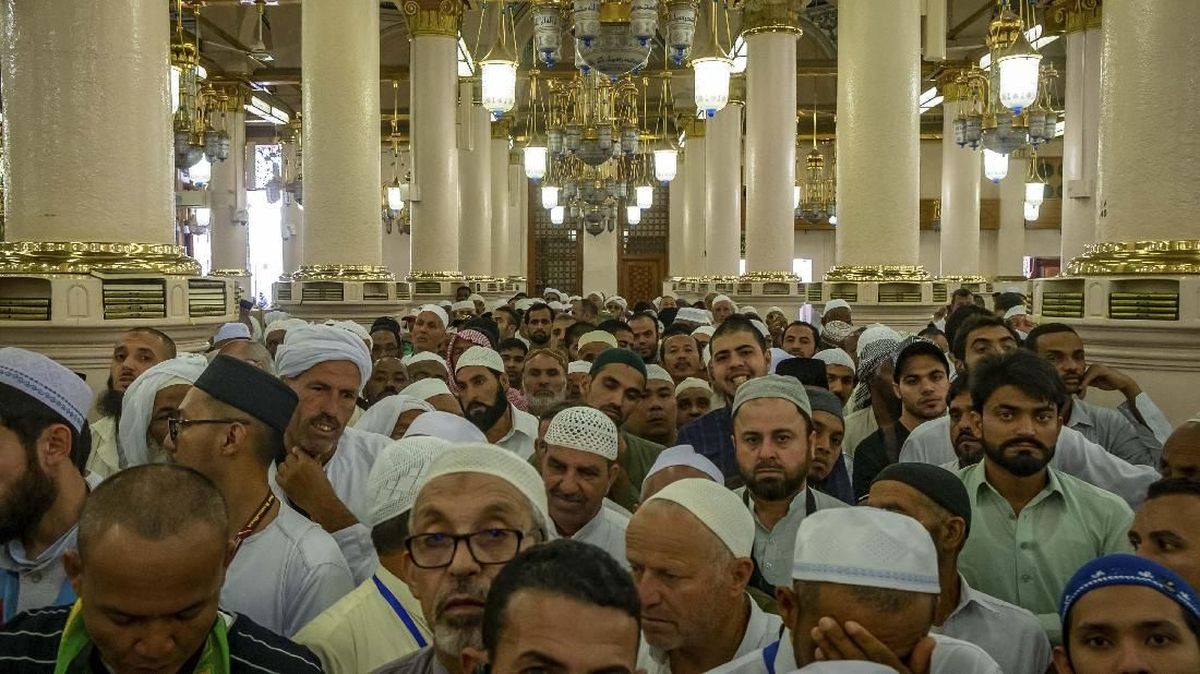
Madinah, Saudi Arabia – April 20, 2026 – Raudhah, a revered section within the Prophet’s Mosque (Masjid Nabawi) in Madinah, continues to draw millions of pilgrims annually, captivated by its profound spiritual significance and its designation as a "Garden of Paradise." This sacred area, distinguished by its green carpet, lies between the Prophet Muhammad’s tomb and his pulpit (minbar), representing a spiritual focal point for Muslims worldwide. As the pilgrimage seasons, both Hajj and Umrah, see an ever-increasing number of faithful, understanding the unique spiritual practices and the logistical considerations for accessing Raudhah becomes paramount for a meaningful and reverent experience.
The Enduring Significance of Raudhah
The profound importance of Raudhah is rooted deeply in Islamic tradition. It is explicitly mentioned in an authentic prophetic narration (Hadith) where the Prophet Muhammad (peace be upon him) said: "What is between my house and my minbar is one of the gardens of Paradise (Riyadh al-Jannah)." This declaration elevates the status of Raudhah beyond a mere physical space, transforming it into a spiritual conduit, believed by Muslims to be a tangible piece of heaven on earth. For pilgrims, entering Raudhah is not merely stepping into a section of a mosque but entering a place imbued with divine blessings, where prayers and supplications are thought to be particularly accepted.
Historically, this area was the site where the Prophet Muhammad (PBUH) often led prayers, delivered sermons, and engaged with his companions. It was the heart of the early Islamic community, a place of spiritual guidance, political counsel, and profound learning. The minbar from which he spoke and the sacred chamber housing his blessed tomb, along with those of his two closest companions, Abu Bakr and Umar ibn al-Khattab, define the boundaries of this blessed garden. Over centuries, Islamic scholars and mystics have emphasized the immense spiritual reward of performing acts of worship within Raudhah, considering it a moment of profound closeness to the Prophet and a direct connection to the divine grace associated with his presence. The green carpets that now delineate Raudhah from the rest of the mosque serve as a visual cue, guiding pilgrims to this hallowed ground.
Navigating the Pilgrim Experience: Logistical Realities and Management
The spiritual allure of Raudhah translates into immense demand for access, presenting significant logistical challenges for the Saudi authorities responsible for managing Masjid Nabawi. With millions performing Hajj and Umrah each year, the small area of Raudhah, estimated to be about 330 square meters, can only accommodate a limited number of people at any given time. This necessitates stringent crowd control measures and sophisticated management systems to ensure safety, order, and equitable access for all pilgrims.
In recent years, the Saudi government, through the General Presidency for the Affairs of the Two Holy Mosques, has implemented advanced digital booking systems, often through applications like ‘Nusuk’ or ‘Eatmarna’, for pilgrims to reserve time slots to enter Raudhah. This system aims to regulate the flow of visitors, reduce congestion, and enhance the overall experience. Pilgrims are typically allocated a brief window, often around 10-15 minutes, to perform their prayers and supplications. This time constraint, while necessary, means that pilgrims must be prepared to maximize their spiritual focus and adhere to strict etiquette.
Access to Raudhah is also segregated by gender, with specific timings and entry points for men and women. Women typically have designated hours, often during the morning and after certain prayer times, to visit Raudhah, entering through specific gates and being guided by female attendants. These measures, meticulously planned and executed, underscore the commitment of the Saudi authorities to facilitate the spiritual journey of pilgrims while maintaining the sanctity and safety of the sacred space. Despite the logistical complexities, the palpable sense of reverence and anticipation among pilgrims waiting to enter Raudhah is a testament to its enduring spiritual magnetism.
Recommended Acts of Worship in Raudhah
For those blessed with the opportunity to enter Raudhah, certain acts of worship (amalan) are particularly encouraged, designed to optimize the spiritual benefit within the limited time available. These practices are rooted in prophetic tradition and scholarly advice, focusing on sincerity, brevity, and reverence.
1. Performing Two Rak’ahs of Nafl Prayer (Voluntary Prayer)
Upon entering Raudhah, pilgrims are strongly encouraged to perform two rak’ahs of voluntary prayer. While some scholars recommend it as Tahiyatul Masjid (greeting the mosque), others suggest a general nafl prayer with the intention of seeking blessings in this sacred space. The intention for this prayer can be articulated as:
Arabic: أَصَلِّي سُنَّةَ تَحِيَّةِ الْمَسْجِدِ رَكْعَتَيْنِ أَدَاءً لِلَّهِ تَعَالَى
Transliteration: Ushallī sunnata tahiyyatil masjidi rak’ataini adā’an lillāhi ta’ālā.
Translation: "I intend to pray two rak’ahs of the sunnah prayer of greeting the mosque, for the sake of Allah the Almighty."
It is advisable to keep this prayer short, reciting brief chapters from the Quran after Surah Al-Fatihah, such as Surah Al-Ikhlas, Surah Al-Kafirun, or Surah Al-Kawthar. This brevity is crucial to respect the limited time and allow other pilgrims awaiting their turn to also benefit from the space. The focus should be on khushu’ (humility and concentration) rather than prolonging the prayer.
2. Engaging in Abundant Dhikr (Remembrance of Allah)
Following the prayer, pilgrims should dedicate their time to dhikr, the remembrance of Allah. Raudhah is an opportune place to engage in various forms of remembrance, seeking divine mercy and blessings. Recommended forms of dhikr include:
- Tasbeeh: Subhanallah (Glory be to Allah)
- Tahmeed: Alhamdulillah (All praise is due to Allah)
- Tahleel: La ilaha illallah (There is no god but Allah)
- Takbeer: Allahu Akbar (Allah is the Greatest)
- Istighfar: Astaghfirullah (I seek forgiveness from Allah)
Reciting these phrases with sincerity and contemplation, reflecting on their meanings, enhances the spiritual experience. The act of dhikr is a direct connection with the Creator, and performing it in Raudhah is believed to carry amplified rewards.
3. Making Heartfelt Du’a (Supplication)
One of the most profound acts in Raudhah is making du’a. It is believed that supplications made in this blessed area are more likely to be accepted by Allah. Pilgrims are encouraged to supplicate for themselves, their families, friends, and the entire Muslim Ummah. A comprehensive du’a that can be recited, as mentioned in various Islamic texts, is:
Arabic: بِسْمِ اللهِ وَعَلَى مِلَّةِ رَسُولِ اللهِ. رَبِّ أَدْخِلْنِي مُدْخَلَ صِدْقٍ وَأَخْرِجْنِي مُخْرَجَ صِدْقٍ وَاجْعَلْ لِي مِنْ لَدُنْكَ سُلْطَانًا نَصِيرًا. اَللَّهُمَّ صَلِّ عَلَى سَيِّدِنَا مُحَمَّدٍ وَعَلَى آلِ سَيِّدِنَا مُحَمَّدٍ، وَاغْفِرْ لِي ذُنُوبِي وَافْتَحْ لِي أَبْوَابَ رَحْمَتِكَ وَأَدْخِلْنِي فِيهَا يَا أَرْحَمَ الرَّاحِمِينَ.
Transliteration: Bismillah wa’alaa millati rasulillaahi. Rabbi adkhilnii mudkhala shidqin wa akhrijnii mukhraja shidqin waj’al lii min ladunka sulthaana nashiiraa. Allaahumma shalli ‘alaa sayyidina Muhammadin wa’alaa aali sayyidina Muhammadin, waghfir lii dzunuubii waftah lii abwaaba rahmatika wa adkhilni fiihaa yaa arhamar raahimiin.
Translation: "In the name of Allah and upon the religion of the Messenger of Allah. My Lord, cause me to enter with a truthful entry and to exit with a truthful exit and grant me from Yourself a helping authority. O Allah, send blessings upon our master Muhammad and upon the family of our master Muhammad. Forgive my sins, open for me the doors of Your mercy, and admit me into it, O Most Merciful of those who show mercy."
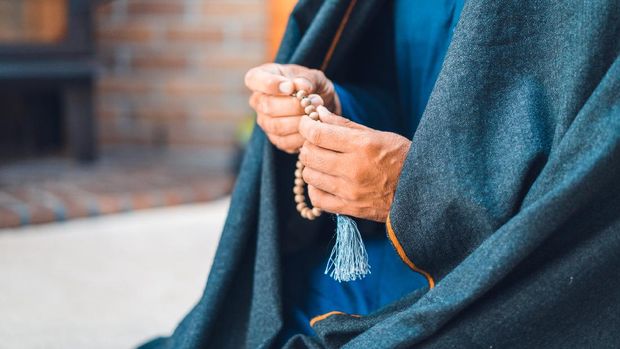
Beyond this specific supplication, pilgrims should articulate their deepest desires, seek forgiveness, ask for guidance, and pray for the well-being of humanity. The sincerity of the heart is paramount in du’a.
4. Sending Salawat (Blessings) upon the Prophet Muhammad (PBUH)
Given the proximity to the Prophet’s tomb, sending abundant blessings (Salawat) upon him is a highly recommended act of worship in Raudhah. This is a direct fulfillment of Quranic injunctions to send peace and blessings upon the Prophet. Forms such as the Salawat Ibrahimiyyah (recited in tashahhud during prayer) or shorter forms like "Allahumma Salli ‘ala Muhammad" are encouraged. This act not only earns immense rewards but also fosters a deep spiritual connection with the Messenger of Allah.
Etiquette and Guidelines for a Reverent Visit
To ensure a spiritual and respectful experience for all, pilgrims are advised to observe certain etiquettes while in Raudhah:
- Maintain Calm and Patience: The crowded nature of Raudhah requires immense patience. Avoid pushing or rushing, and be mindful of other pilgrims, especially the elderly and infirm.
- Keep Voices Low: The sanctity of the place demands quiet contemplation. Avoid loud conversations or shouting.
- Be Mindful of Time: Due to the regulated access, be efficient in performing acts of worship to allow others their turn. Do not linger unnecessarily.
- Respect the Sacred Space: Avoid photography that could disturb others or detract from the spiritual atmosphere. Keep the area clean.
- Focus on Worship: Resist the urge to engage in worldly discussions or distractions.
- Follow Attendants’ Instructions: The mosque staff and attendants are there to guide pilgrims and maintain order; their instructions should be followed diligently.
Broader Impact and Implications
The spiritual magnetism of Raudhah extends beyond the individual pilgrim’s experience, impacting various aspects:
- Spiritual Rejuvenation: For millions, a visit to Raudhah serves as a profound spiritual awakening, reinforcing faith, fostering humility, and inspiring a deeper commitment to Islamic teachings.
- Cultural and Historical Preservation: The meticulous care taken by the Saudi authorities in preserving Masjid Nabawi, including Raudhah, ensures that future generations can connect with this pivotal site in Islamic history.
- Economic Impact: The influx of pilgrims drawn by sites like Raudhah significantly boosts the local and national economy of Saudi Arabia, supporting industries ranging from hospitality and transport to retail and services.
- Global Muslim Unity: Raudhah stands as a powerful symbol of unity, attracting Muslims from every corner of the globe. Despite diverse backgrounds and languages, pilgrims share a common purpose and spiritual aspiration, fostering a sense of brotherhood and sisterhood.
- Continuous Infrastructure Development: The increasing number of pilgrims necessitates ongoing expansion and modernization projects within Madinah and Masjid Nabawi, reflecting Saudi Arabia’s commitment to enhancing the pilgrim experience. These projects often involve state-of-the-art facilities and technology to manage crowds and improve accessibility.
Conclusion
Raudhah, the ‘Garden of Paradise’ in Masjid Nabawi, remains an unparalleled spiritual destination for Muslims worldwide. Its designation as a piece of Jannah, coupled with its historical significance as the heart of early Islamic activity, imbues it with an extraordinary sanctity. While the logistical challenges of managing millions of pilgrims are substantial, the meticulous efforts by Saudi authorities ensure that this blessed space remains accessible and conducive to worship. For those who enter its hallowed confines, adhering to the recommended acts of worship and observing respectful etiquette transforms a brief visit into an enduring spiritual legacy, fostering a deeper connection with the divine and the legacy of Prophet Muhammad (PBUH). As April 2026 progresses, pilgrims continue their journey to Madinah, eager to experience the tranquility and blessings of Raudhah, a beacon of faith and hope.