The landscape of public health insurance in the United States has undergone unprecedented transformation over the past several years, shifting from a pandemic-era policy of continuous coverage to a complex process of administrative unwinding and newly enacted federal restrictions. According to the latest performance indicator data from the Centers for Medicare & Medicaid Services (CMS) and analytical breakdowns compiled through mid-2026, millions of Americans have experienced profound shifts in their healthcare coverage status. While the mass disenrollments associated with the formal post-pandemic "unwinding" period largely concluded in late 2024, the broader trajectory of Medicaid and the Children’s Health Insurance Program (CHIP) continues to evolve under new legislative mandates, most notably the federal budget reconciliation law set to take effect in January 2027.
Public health analysts, state administrators, and policy advocates are closely monitoring these shifts as the healthcare system adapts to a vastly different regulatory framework. The confluence of historical enrollment peaks, varied state-level renewal outcomes, and looming work requirements presents a multifaceted challenge for maintaining health equity and coverage stability for vulnerable populations nationwide.
Background and Historical Context: From Pandemic Protections to Policy Redesign
To understand the current state of public health insurance, one must look back to the onset of the COVID-19 pandemic in early 2020. In March 2020, Congress enacted the Families First Coronavirus Response Act (FFCRA), which included a crucial continuous enrollment provision. This mandate prohibited states from disenrolling individuals from Medicaid during the public health emergency, regardless of changes in their income or eligibility status, in exchange for enhanced federal matching funds.
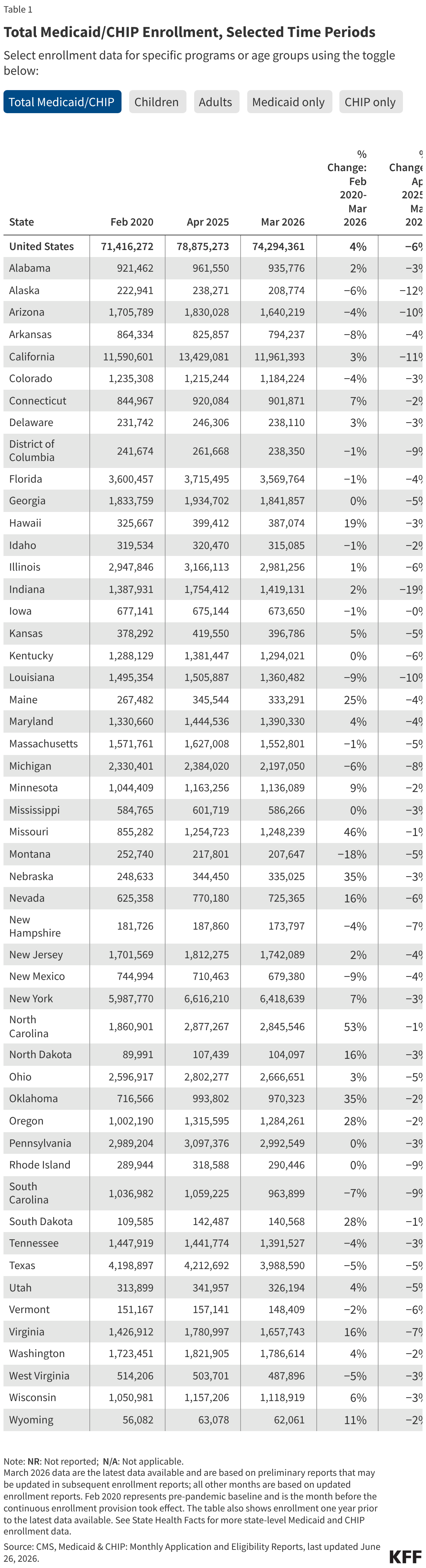
As a result, national Medicaid and CHIP enrollment swelled to historic highs, serving as a vital economic and health safety net for tens of millions of families. By February 2020, just before the continuous coverage provision took effect, enrollment stood at a specific baseline. Over the next three years, that number climbed exponentially, shielding vulnerable individuals from coverage losses during an era of immense economic uncertainty.
However, this era of continuous enrollment came to an end with the passage of the federal Consolidated Appropriations Act of 2023, which decoupled the continuous enrollment requirement from the formal end of the COVID-19 public health emergency. This triggered the "unwinding" period—a monumental administrative undertaking that required state Medicaid agencies to restart regular eligibility renewals and redeterminations for all enrollees over a 12-to-14-month window.
The Unwinding Period: Disenrollments, Renewal Outcomes, and State-Level Disparities
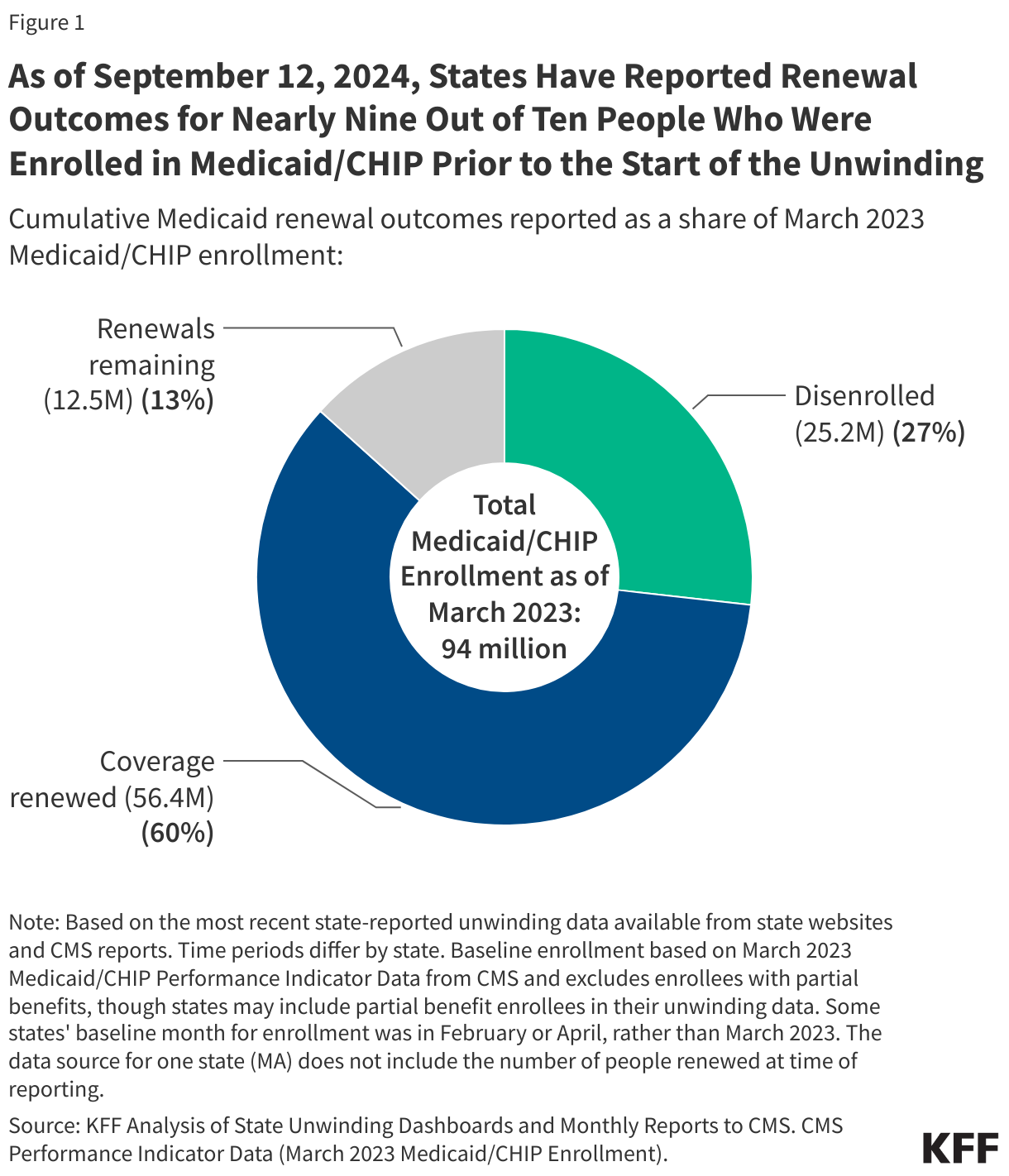
The formal unwinding period exposed deep operational disparities across the nation as states worked to process millions of pending renewals. Comprehensive tracking data finalized and archived by September 2024 revealed the sheer scale of this administrative transition. By the completion of the unwinding cycle in most jurisdictions, states had reported renewal outcomes for nearly nine out of ten individuals who were enrolled in Medicaid or CHIP prior to the start of the process.
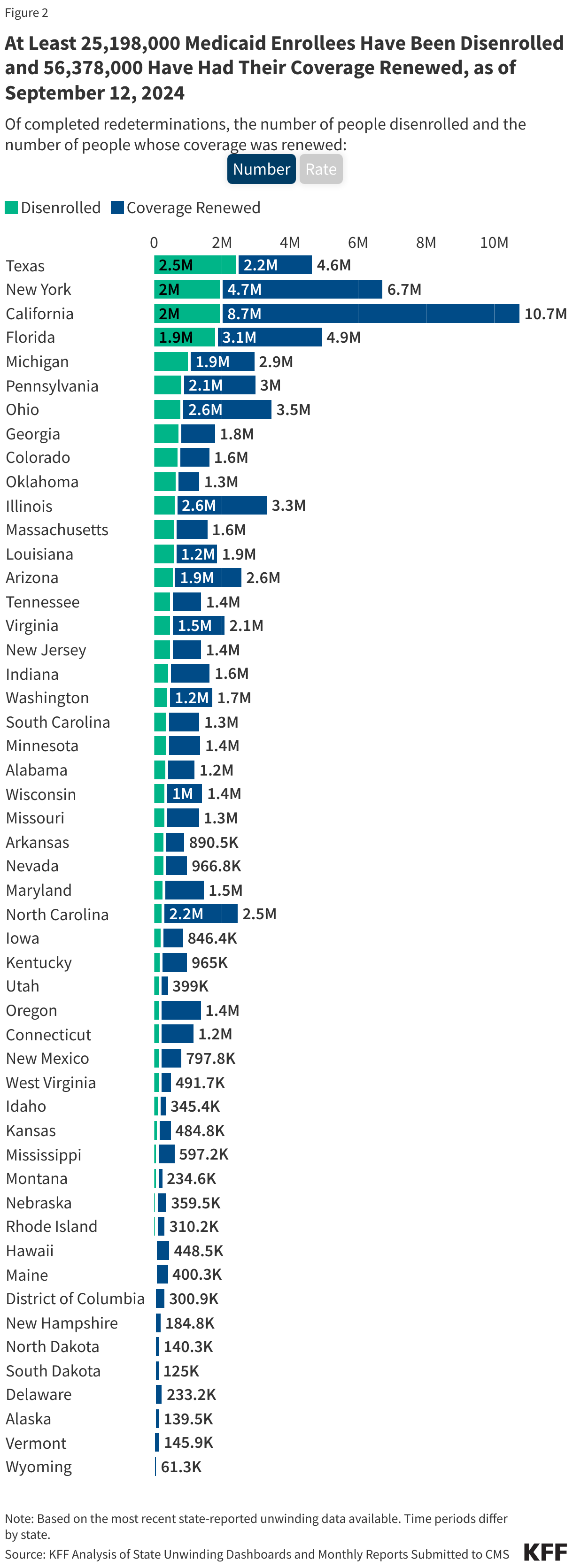
Cumulatively, at least 25,198,000 Medicaid enrollees were disenrolled from the program, while roughly 56,378,000 successfully had their coverage renewed. A significant driver of these coverage losses was procedural disenrollments—instances where individuals lost coverage not because they were verified to be ineligible, but because they failed to complete the complex paperwork required during the renewal process.
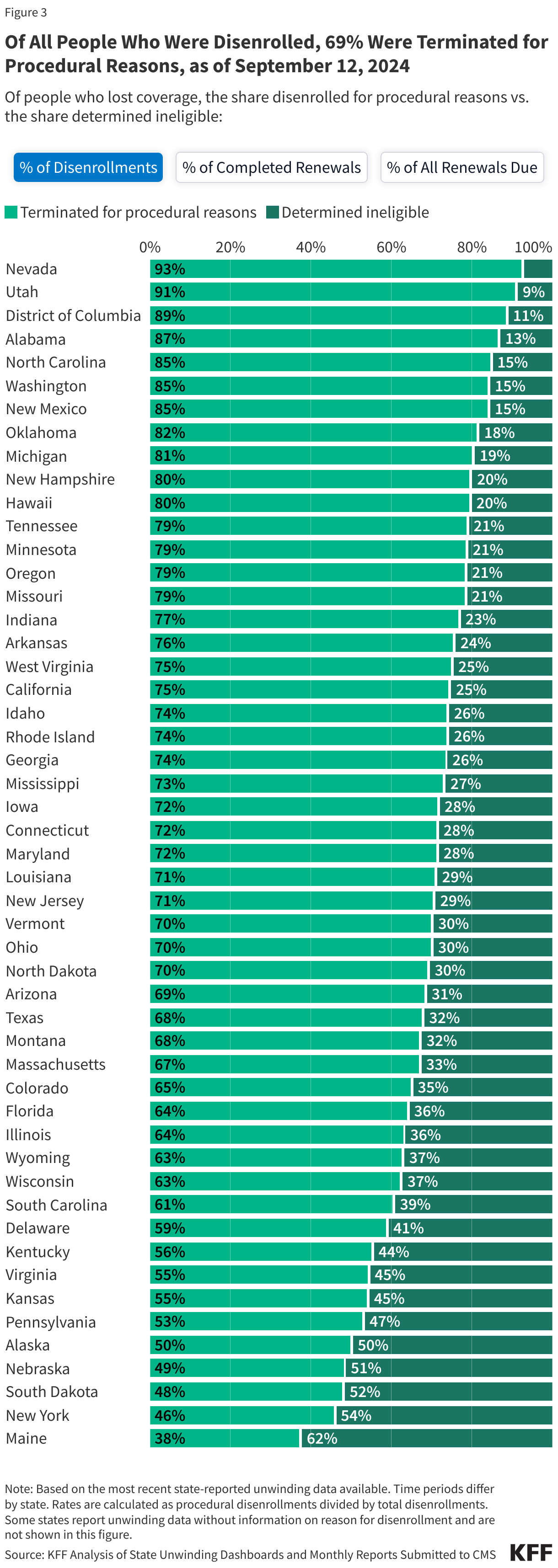
Data compiled up to September 2024 highlighted that of all individuals disenrolled, approximately 69% were terminated for procedural reasons. This translated to roughly 21% of all people who had renewals due being dropped from the rolls purely due to administrative hurdles, such as outdated mailing addresses or failure to return verification forms on time.
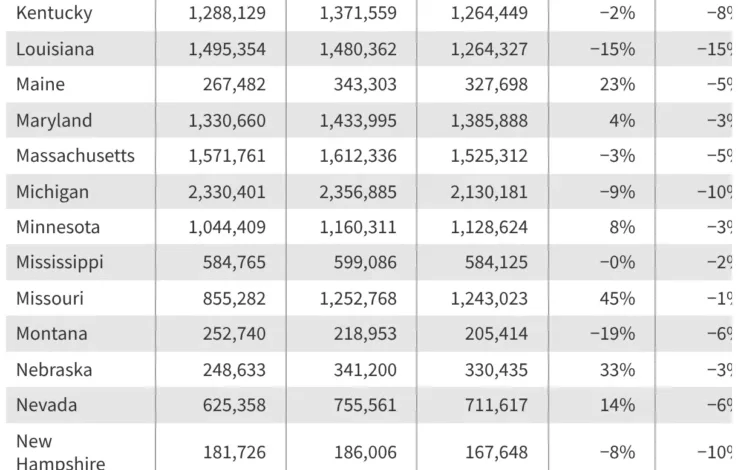
Furthermore, the unwinding revealed striking variations in state-level disenrollment rates. Across reporting states, completed redetermination outcomes varied widely, ranging from a high of 57% disenrollment in Montana to a low of 12% in North Carolina. These variances reflected differences in state outreach strategies, automated data-matching capabilities, and the aggressiveness of administrative timelines. For those who successfully retained their coverage, administrative efficiency also varied; overall, approximately 61% of individuals who kept their Medicaid coverage were renewed through "ex parte" processes—meaning the state successfully renewed coverage automatically using existing electronic data sources, such as wage databases, without requiring action from the enrollee.
Current Enrollment Trends as of June 2026
Fast-forwarding to mid-2026, monthly data reported by CMS under the Performance Indicator Project illustrates a stabilized yet dynamic post-unwinding landscape. While the monthly reports capture full-benefit enrollees—excluding those with limited benefits like family planning-only services—they provide a reliable barometer for broader trends in participation among children and adults.
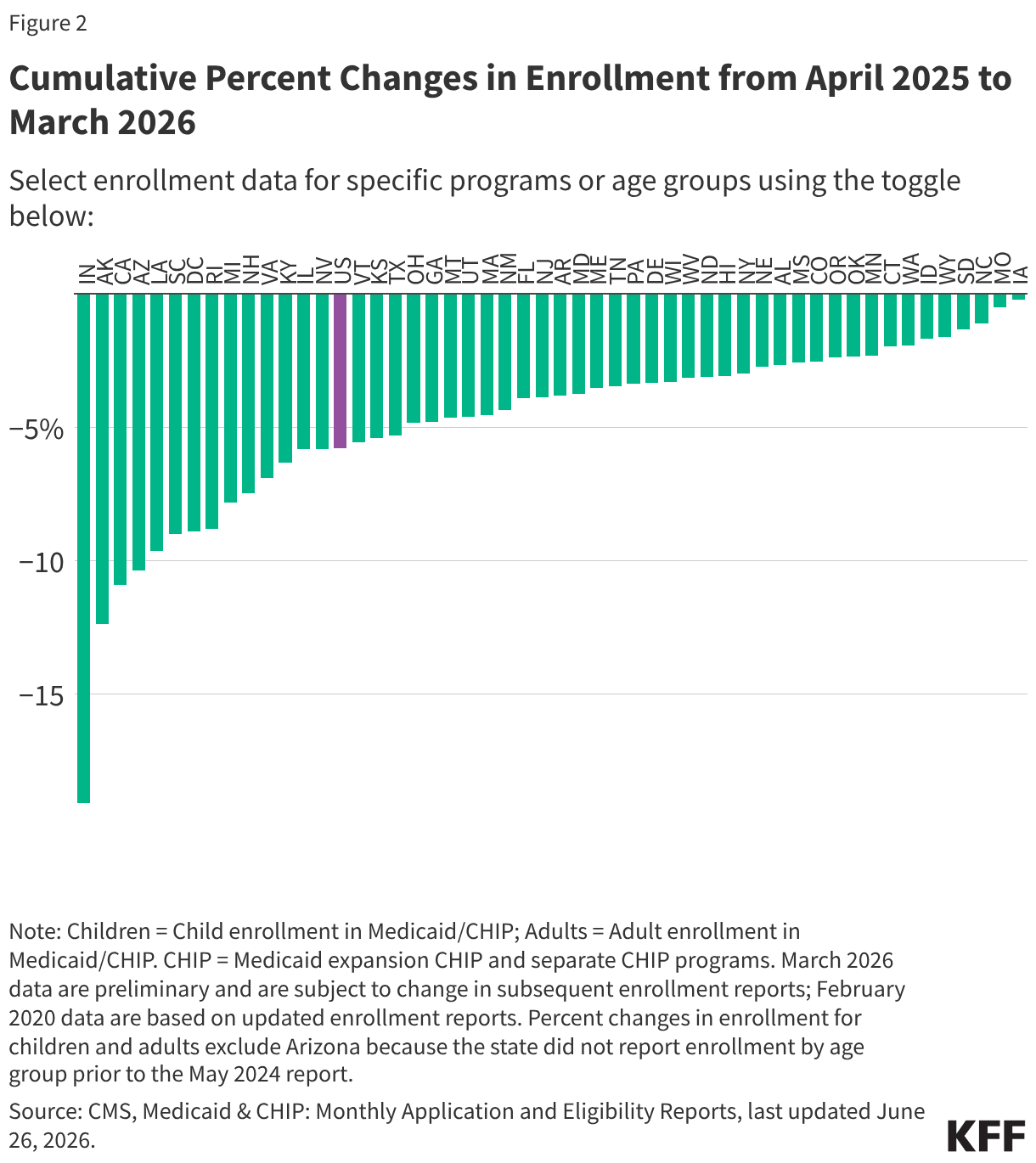
Preliminary reports for June 2026 indicate that enrollment numbers have settled well below the artificial peaks of the continuous coverage era, aligning more closely with pre-pandemic growth trajectories adjusted for demographic changes. However, policymakers emphasize that these figures represent preliminary snapshots that are subject to subsequent administrative revisions.
A closer examination of the June 2026 datasets reveals distinct trends across demographic subgroups:
- Child Enrollment: Pediatric coverage through Medicaid and CHIP has remained relatively resilient compared to adult cohorts, supported by ongoing federal oversight aimed at protecting children’s access to care during the unwinding aftermath.
- Adult Enrollment: Adult participation has experienced more pronounced fluctuations, heavily influenced by the conclusion of the unwinding and the economic mobility of enrollees who transitioned into employer-sponsored insurance or other commercial markets.
- Program Segregation: Enrollment distributions between Medicaid-only and CHIP-only tracks continue to demonstrate steady utilization of specialized children’s health programs, particularly in states that have expanded outreach to lower-income families.
The 2025 Reconciliation Law and Future Implications
Looking ahead, the policy environment governing public health insurance is poised for another seismic shift. The enactment of the 2025 federal budget reconciliation law introduced significant structural changes to the Medicaid program that are expected to reshape enrollment figures over the coming decade.
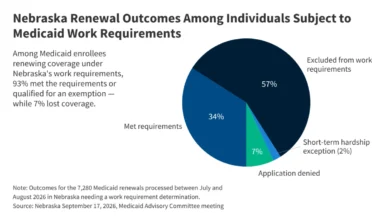
Most notably, the new legislation mandates that adults in the Medicaid expansion group, as well as those participating in certain Section 1115 demonstration waiver programs, must meet strict new work and reporting requirements beginning in January 2027. Under these provisions, able-bodied adults without dependent children must document a specific number of work, educational, or community service hours each month to maintain their healthcare benefits.
Federal budget projections and independent health policy analyses, such as those conducted by KFF, anticipate that these work requirements will lead to a gradual reduction in Medicaid enrollment over the next ten years relative to projections under prior law. While proponents of the policy argue that work requirements promote personal responsibility, economic self-sufficiency, and the integrity of public safety net programs, public health advocates express deep concern. Critics warn that complex bureaucratic reporting hurdles could mirror the procedural disenrollments seen during the unwinding, inadvertently stripping coverage from eligible individuals who struggle to navigate the documentation process.
Expert Reactions and Analytical Perspectives
The intersection of past administrative challenges and upcoming policy mandates has drawn sharp commentary from healthcare stakeholders across the political and professional spectrum.
Patient advocacy groups have emphasized the lessons learned from the 2023–2024 unwinding, arguing that state agencies must invest heavily in robust communication channels and simplified digital portals if the implementation of the 2027 work requirements is to avoid widespread coverage disruptions. "The high rate of procedural disenrollments during the unwinding taught us that administrative friction is the greatest enemy of continuous health coverage," noted a policy analyst tracking state health systems. "As we approach the rollout of the 2025 reconciliation law’s mandates, minimizing red tape and ensuring proactive outreach will be paramount to protecting vulnerable populations from falling through the cracks."
Conversely, fiscal conservatives and state budget directors have underscored the necessity of rigorous eligibility verification to ensure public resources are targeted effectively toward those who meet statutory guidelines. From this perspective, implementing structured accountability measures helps maintain the long-term fiscal sustainability of the Medicaid program amidst rising healthcare costs and expanding state budgetary pressures.
As states continue to process preliminary monthly data and prepare for the operational realities of the 2027 mandates, the national conversation around Medicaid and CHIP remains centered on a delicate balancing act: ensuring fiscal responsibility and program integrity while safeguarding access to essential healthcare services for millions of low-income children, families, and adults.
Related posts: