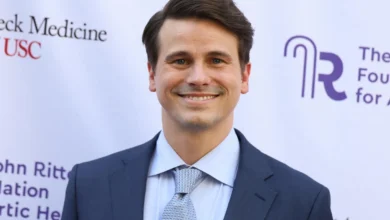
Michael J. Fox Receives Lasker-Bloomberg Public Service Award for Historic Parkinson’s Disease Advocacy


The landscape of medical research and public advocacy shifted significantly this week as actor and activist Michael J. Fox was named the recipient of the prestigious Lasker-Bloomberg Public Service Award. Often described as “America’s Nobels,” the Lasker Award recognizes individuals whose contributions have made a profound impact on the nation’s medical landscape. For Fox, the honor serves as a poignant milestone in a 35-year journey that began with a private diagnosis and transformed into a global crusade to eradicate Parkinson’s disease. Since the inception of the Michael J. Fox Foundation for Parkinson’s Research (MJFF) in 2000, the organization has catalyzed more than $3 billion in research funding, fundamentally altering how scientists approach the neurodegenerative condition.
A Chronology of Advocacy and Resilience
The trajectory of Michael J. Fox’s life shifted in 1990, when he first began noticing symptoms of Parkinson’s disease. He was only 29 years old, a point in his career where he was at the zenith of his professional fame. For seven years, Fox maintained a veneer of normalcy, concealing his diagnosis from the public. It was not until 1998 that he chose to disclose his condition, a move that effectively de-stigmatized a disease that was, at the time, frequently relegated to the shadows of geriatric health discussions.
Following his public disclosure, Fox pivoted from Hollywood stardom to full-time advocacy. In 2000, he founded the MJFF, a move that would prove to be the most significant turning point in the history of Parkinson’s research. Unlike traditional research institutions, the MJFF adopted a "venture philanthropy" model, emphasizing speed, risk-taking, and direct engagement with patients. This model focused on funding projects that were often overlooked by traditional government grants due to their high-risk nature. Over the past two and a half decades, this strategy has led to breakthroughs in biomarker research, clinical trial infrastructure, and the development of novel therapeutic candidates that are currently being tested in human subjects.
The Impact of the Lasker-Bloomberg Public Service Award
The Lasker-Bloomberg Public Service Award is not merely a recognition of celebrity; it is an acknowledgment of the tangible, systemic change Fox has fostered within the scientific community. The Lasker Foundation jury cited Fox’s ability to mobilize a global community of patients, scientists, and donors as a singular achievement in the history of public health.
"When we launched the Foundation, our goal was simple, yet ambitious—cure Parkinson’s," Fox stated following the announcement. "I am humbled to be recognized by the Lasker Foundation and jury. I accept this honor on behalf of everyone living with Parkinson’s and everyone with us in our shared mission to end the disease."
The prestige of the Lasker Award underscores the magnitude of the foundation’s work. Historically, the award has been given to pioneers in molecular biology, surgery, and public health policy. Fox’s inclusion in this roster highlights the increasing importance of patient-led advocacy in directing the course of modern medical research. By bridging the gap between clinical bench work and the lived experience of patients, Fox has ensured that the "patient voice" is at the center of every drug discovery pipeline his foundation supports.
Supporting Data: The Financial and Scientific Footprint
The efficacy of the Michael J. Fox Foundation can be measured by its fiscal impact. With over $3 billion invested into research initiatives since 2000, the foundation has become the largest non-profit funder of Parkinson’s research in the world. This capital has supported thousands of researchers across more than 40 countries.
A critical success of the foundation has been the development of the Parkinson’s Progression Markers Initiative (PPMI), a landmark study that has collected data from thousands of participants to identify biological indicators of the disease. This data is now open-access, allowing researchers globally to use it for their own studies, which has significantly accelerated the pace of discovery. The foundation’s strategy of de-risking early-stage research has allowed biotech firms and pharmaceutical companies to pick up promising leads, moving them through the regulatory pipeline faster than ever before.

Personal Resilience and the Support System
Despite the accolades, Fox has been transparent about the physical toll of the disease. In recent interviews, he has noted that managing his symptoms has become increasingly difficult. He attributes his ability to remain focused on his mission to the unwavering support of his wife, Tracy Pollan, and their four children.
The balance between personal health and public duty is a recurring theme in Fox’s life. After stepping back from full-time acting in 2020 due to the cognitive challenges of memorizing dialogue, he has carefully curated his professional life. His recent guest-starring role in the Apple TV+ series Shrinking was lauded by critics and fans alike, not only for his performance but for his decision to play a character living with Parkinson’s. By incorporating his reality into his art, Fox continues to challenge the narrow media portrayals of those living with chronic illness, opting for authenticity over sympathy.
Broader Implications for Future Research
The medical community is currently at a precipice in Parkinson’s research. With new genetic therapies and refined diagnostic tools, scientists are closer than ever to identifying the disease before motor symptoms even appear. Fox’s foundation is now spearheading a new campaign to raise an additional $2.5 billion, specifically targeting the next generation of precision medicine.
The broader implications of Fox’s work extend beyond Parkinson’s. His model of venture philanthropy has been studied and replicated by other organizations focused on rare diseases, Alzheimer’s, and cancer. By demonstrating that a non-profit can act with the agility of a startup while maintaining the rigor of a scientific institute, Fox has provided a blueprint for future public health movements.
"Science is hard," Fox remarked to People magazine in a recent interview. "But as long as we stay focused, we stay hopeful, we’ll get there. And the science is showing we’re getting close."
Analysis: A Shift in Patient Advocacy
The recognition of Michael J. Fox by the Lasker Foundation signals a shift in how society values the role of the patient advocate. Historically, medical advancement was viewed as the sole domain of the laboratory and the university. Fox has dismantled this hierarchy, showing that the patient—the person directly affected by the condition—is a vital stakeholder in the research ecosystem.
His advocacy has moved the conversation from a focus on mere symptom management to a rigorous, data-driven search for a cure. By funding high-risk research that traditional institutions avoided, the MJFF has successfully incentivized the private sector to invest billions of their own dollars into the space. This multiplier effect is perhaps the most lasting legacy of his work. Every dollar donated to the MJFF has historically leveraged significantly more in follow-on investment, creating a sustainable ecosystem of research that did not exist prior to 2000.
Conclusion
As the Parkinson’s community looks toward the next decade, the impact of Michael J. Fox’s efforts remains an unparalleled beacon of hope. The Lasker-Bloomberg Public Service Award is a testament to the fact that his legacy is not merely defined by his acting career, but by the millions of lives he has touched through his determination.
The challenges remain daunting; Parkinson’s is a complex, multi-systemic disorder that resists easy solutions. However, the momentum built by the foundation over the last 25 years has created a scientific landscape where the term "cure" is no longer considered impossible, but rather, a matter of time and continued, rigorous investment. With the support of his family and the scientific community, Fox continues to lead the charge, proving that even when faced with the most formidable personal obstacles, a singular, focused mission can alter the course of medical history.