TSA Upgrades to Advanced CT Scanners Across National Airport Checkpoints Creating New Challenges for Oversized Carry-On Luggage

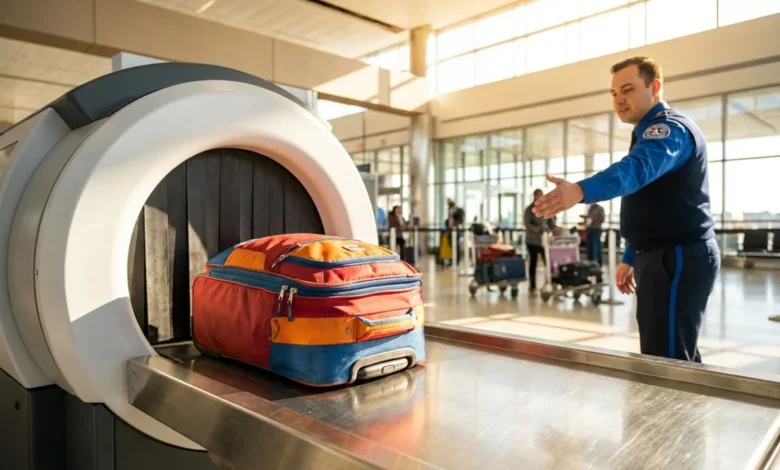
The Transportation Security Administration (TSA) is currently in the midst of a significant technological overhaul at security checkpoints in airports across the United States, transitioning from traditional X-ray machines to sophisticated computed tomography (CT) scanners. While the agency maintains that this transition is a vital step toward enhancing national aviation security and streamlining the passenger experience, the rollout has introduced a logistical hurdle for travelers: a reduction in the aperture size of the scanner tunnels. This engineering constraint means that bags exceeding standard airline dimensions—typically 22 inches by 14 inches by 9 inches—may no longer fit through the new machines, potentially forcing passengers to check their luggage at the last minute.
The shift toward CT technology represents a major evolution in how the TSA handles threat detection. Unlike conventional X-ray machines, which produce two-dimensional images that require a human operator to mentally reconstruct the layers of a bag’s contents, CT scanners utilize algorithms similar to those used in medical imaging to generate high-resolution, 3-D images. These images can be rotated and analyzed by officers on a computer monitor, allowing for a more granular inspection of items without the need to physically open the bag. This technological leap is intended to decrease the frequency of manual bag searches, thereby increasing the speed of the checkpoint process.
The Engineering Necessity Behind the Aperture Reduction
The smaller opening of the new CT scanners is not a design oversight, but rather a functional necessity dictated by the requirements of the internal rotating gantries that perform the 3-D imaging. A TSA spokesperson identified as Velez confirmed to FOX 13 that the design is essential to achieve the performance standards required for the advanced imaging technology to function optimally.
From an engineering perspective, the internal mechanism of a CT scanner involves a rotating array of X-ray sources and detectors that must maintain precise alignment to capture the density and material composition of objects within a carry-on. A larger aperture would require significantly larger, heavier, and more expensive rotating components, which would be impractical to install within the confined, modular footprint of existing airport security lanes. Consequently, the industry-standard "carry-on" size has effectively become the maximum physical capacity of these new security gates.
Chronology of the TSA’s Technology Deployment
The integration of CT technology has been a multi-year project for the Department of Homeland Security. Following successful pilot programs at select major hubs, the TSA began a phased, nationwide rollout.
- Initial Phase (2018–2021): The TSA began testing and deploying CT scanners at high-traffic airports to evaluate their impact on throughput and security detection rates.
- Operational Expansion (2022–2024): Following positive performance data, the agency accelerated the procurement of these units as part of a broader infrastructure modernization effort.
- Current State (2025–2026): The deployment has reached a critical mass where travelers are now frequently encountering these machines at mid-to-large-sized airports.
However, this deployment has coincided with a period of intense institutional pressure on the agency. Throughout 2025 and into 2026, the TSA faced heightened scrutiny regarding its operational efficiency and funding stability. Reports from the Ron Paul Institute in late 2025 challenged the efficacy of the PreCheck program, characterizing it as a complex fee-based system that forces travelers into a pay-to-play model to avoid standard security inconveniences. Furthermore, the political landscape in early 2026 saw significant tension, as a partial government shutdown—marked by the failure of the Senate to pass funding for the Department of Homeland Security—led to reports of strained operations and long wait times at major airports.
Supporting Data and Operational Impact
The primary benefit touted by the TSA is the elimination of the "unpacking" requirement. With traditional 2-D scanners, passengers are often required to remove laptops, tablets, and liquids from their bags to ensure clear images. The 3-D imaging capability allows officers to identify materials with greater accuracy, effectively negating the need for passengers to empty their carry-ons.
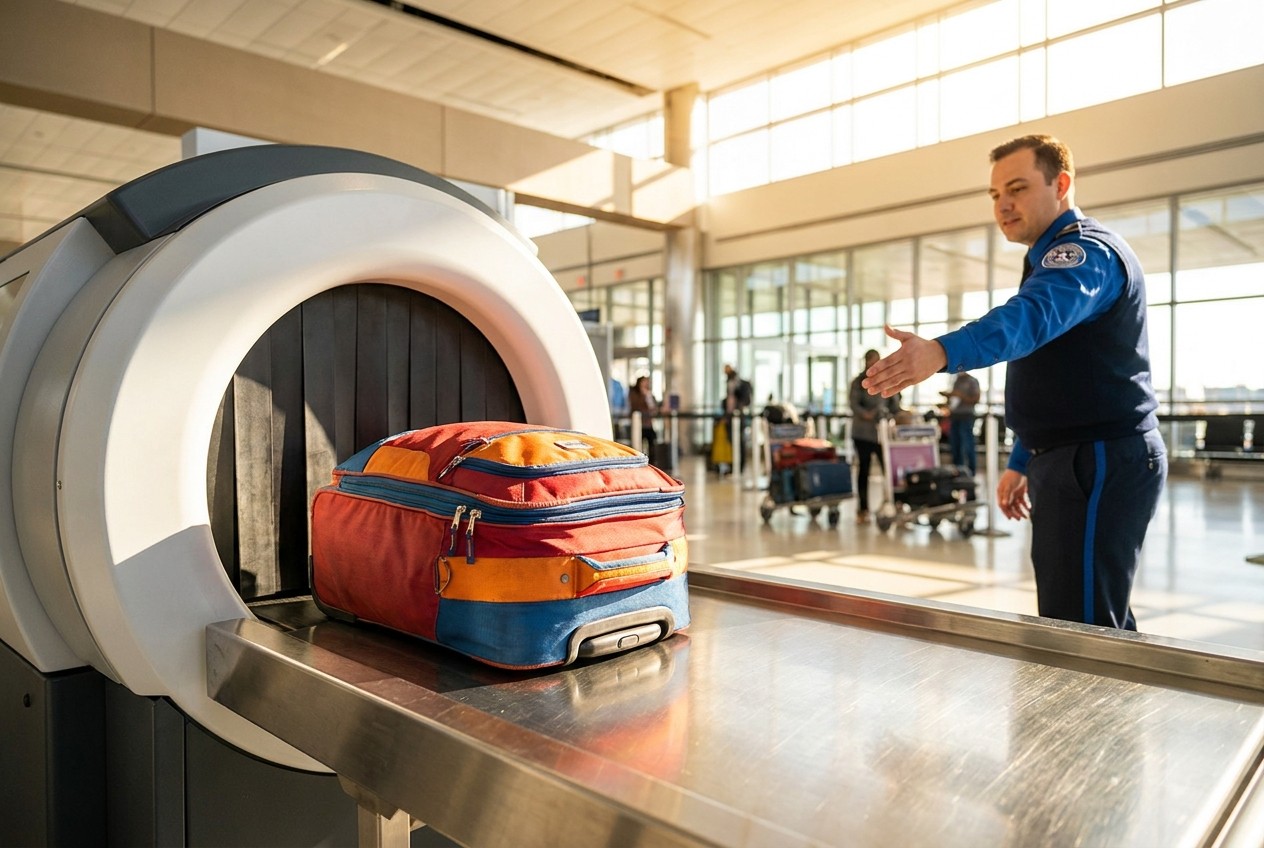
Data provided by the TSA suggests that in lanes equipped with CT scanners, the time spent per passenger can be reduced significantly. However, this efficiency gain is predicated on the bag fitting through the machine. When a bag is too large, the process halts: the officer must redirect the passenger to check the bag with the airline, which often requires leaving the security area, returning to the airline check-in counter, and re-entering the security line. This sequence of events can result in significant delays, particularly during peak travel hours or for travelers who are already tight on time.
Broader Implications for Air Travel
The mismatch between existing luggage sizes and the new, smaller aperture sizes of the CT scanners has created a friction point in the travel ecosystem. Many travelers purchase carry-on bags specifically designed to maximize the volume allowed by airlines. When a passenger’s "standard" bag is rejected by the scanner, it creates a point of contention between the passenger, the airline, and the TSA.
Furthermore, recent high-profile incidents have underscored the growing public frustration with TSA screening procedures. In December 2025, the case of Evita Duffy-Alfonso, who sought an alternative to a body scanner due to pregnancy, brought national attention to the rigidity of TSA protocols. Her public critique, which included a call to abolish the agency, reflects a wider sentiment of dissatisfaction that often peaks during periods of increased wait times and operational flux. The introduction of the new scanners, while a security enhancement, is being implemented against this backdrop of skepticism and fatigue regarding federal travel mandates.
Official Guidance and Traveler Preparedness
To mitigate the risk of being turned away at the checkpoint, the TSA strongly advises passengers to adhere strictly to the dimensions stipulated by their respective airlines. While many airlines use the standard 22x14x9-inch rule, some budget carriers have different requirements. The agency emphasizes that travelers should not assume that because a bag fits in the overhead bin of an aircraft, it will automatically fit through the security scanner.
TSA spokesperson Velez stated that officers are prepared to assist travelers with special needs or larger items, but there is a clear limit to how much "assistance" can be provided if a piece of luggage is physically incapable of passing through the aperture. The agency has not provided a comprehensive list of which airports have been updated, nor has it established a firm completion date for the nationwide transition. Consequently, the current state of affairs is one of inconsistency: a traveler may face no issues at their departure airport but encounter a restrictive scanner during their return flight from a different city.
Analytical Outlook
From an analytical standpoint, the TSA’s transition to CT scanners is a necessary evolution to keep pace with modern security threats, such as sophisticated improvised explosive devices that are more easily detected by 3-D imaging. The trade-off, however, is a reduction in the "forgiveness" of the checkpoint infrastructure. As the technology continues to roll out, the aviation industry will likely see a shift in consumer behavior regarding luggage. Manufacturers may begin to market "TSA-scanner compliant" bags, and airlines may be forced to update their carry-on signage to reflect the new realities of the checkpoint.
In the short term, the transition is expected to contribute to intermittent volatility in checkpoint wait times. As travelers adjust to the stricter size requirements and officers manage the bottlenecking caused by oversized bags, the efficiency gains promised by the technology may be temporarily obscured by the logistical challenges of implementation. For the average passenger, the most effective strategy remains proactive compliance: measuring bags before arriving at the airport and being prepared for the possibility of having to check oversized items. As the agency moves forward, the success of this program will depend as much on public education as it does on the advanced algorithms within the scanners themselves.