Decoding Mortality: How Computational Biologist Emma Glass and the Buck Institute Are Building Digital Cells to Revolutionize Human Healthspan


The pursuit of human longevity has long relied on physical experimentation—testing molecules, observing cellular decay under microscopes, and conducting exhaustive clinical trials that span years or decades. However, a quiet revolution is underway in the hills above Novato, California, at the Buck Institute for Research on Aging. Here, interdisciplinary scientists are shifting the paradigm of medicine from physical trial-and-error to digital prediction. At the forefront of this movement is Dr. Emma Glass, a research scientist in James Yurkovich’s laboratory, whose work in computational biology is laying the foundational blueprints for whole-cell simulations that could one day map the complex trajectory of human aging.
Joined by a shared commitment to extending human healthspan—the period of life spent free from chronic disease—researchers at the Buck Institute are leveraging advancements in artificial intelligence, machine learning, and big data. Glass, a Virginia native with a Bachelor of Science in Applied Mathematics from the College of William & Mary and a Ph.D. in Biomedical Engineering from the University of Virginia, represents a new generation of scientists bridging the gap between mathematics, microbiology, and translational medicine. Her work focuses primarily on developing sophisticated software capable of simulating cellular life with mathematical precision, beginning with single-celled organisms and moving progressively closer to complex human systems.
The Genesis of a Computational Pioneer: Background and Chronology
The trajectory that led Emma Glass to the Buck Institute is emblematic of the changing landscape of modern biomedical research. Traditionally, biological sciences and mathematical modeling operated in distinct academic silos. However, the exponential growth of genomic sequencing, proteomics, and computational power over the past two decades has created an urgent demand for researchers fluent in both disciplines.
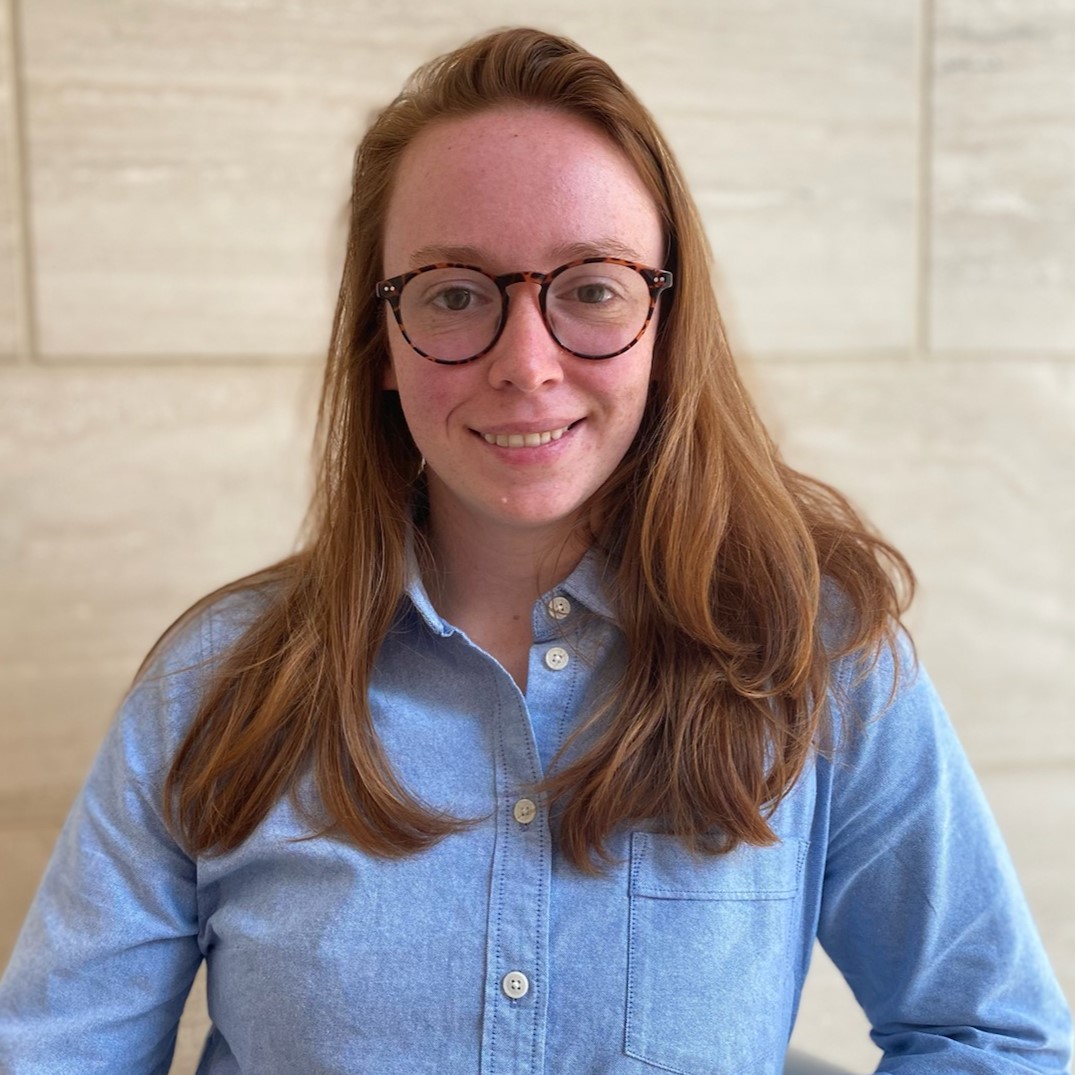
During her doctoral studies at the University of Virginia, Glass specialized in computational microbiology, honing her ability to translate biological processes into algorithmic frameworks. This academic background proved pivotal when she evaluated career options following her graduation. Driven by a personal and professional fascination with wellness and longevity science, Glass sought an institution that not only studied aging but actively sought to disrupt it.
When an opportunity opened at the Buck Institute in late 2022 and early 2023, Glass transitioned to the West Coast to join James Yurkovich’s laboratory. The lab’s mandate was clear: develop robust whole-cell simulation software and sophisticated data analysis tools to support high-stakes clinical initiatives, such as the TIME clinical trial. Over the past year, Glass has integrated herself into a multidisciplinary team tasked with fulfilling a high-profile, federally funded research initiative that seeks to rewrite how science understands cellular mechanics.
Tackling Complex Biological Questions: The DARPA Initiative
At the heart of Glass’s current research is a high-profile project funded by the Defense Advanced Research Projects Agency (DARPA). The initiative focuses on creating a comprehensive computational simulation capable of predicting, with absolute fidelity, how E. coli bacteria behave when subjected to varying environmental stressors.
To the layperson, simulating a simple bacterium might seem detached from the human aging process. Yet, in computational biology, E. coli serves as the proving ground for whole-cell modeling. By inputting every known biochemical interaction, genetic pathway, and metabolic reaction into a computer, Glass and her colleagues can simulate how the bacterium reacts to different antimicrobial agents.
Rather than conducting thousands of physical trials in a petri dish—a process that is both time-consuming and cost-prohibitive—researchers can run simulations to calculate the precise concentration of an antibiotic required to arrest bacterial growth. This capability has immediate translational value for pharmacology, potentially accelerating the development and deployment of targeted treatments for drug-resistant infections.
However, the ultimate objective extends far beyond bacteriology. The architectural framework required to simulate a single-celled bacterium acts as a critical proof-of-concept. By mastering the mathematical logic of E. coli, the Yurkovich lab is constructing the foundational blueprint necessary to eventually model human cells. Understanding why human cells lose their functional integrity over time requires tracking millions of variables simultaneously—a task impossible for human cognition alone, but uniquely suited for advanced computational simulations.
Team Science and Collaborative Frameworks
The complexity of modeling life at a cellular level demands an operational model that moves beyond the traditional lone-researcher paradigm. At the Buck Institute, this is manifested through an intentional culture of "team science."
Glass’s work within the Yurkovich lab operates on two primary thrusts established by the DARPA program: "Measure and Inform" (the generation of massive, empirical biological datasets) and "Simulate and Predict" (the construction and refinement of computational models). Achieving this requires seamless cross-disciplinary cooperation. Glass collaborates daily with faculty members across the Buck Institute who specialize in experimental biology, generating the empirical data necessary to anchor her models in biological reality.
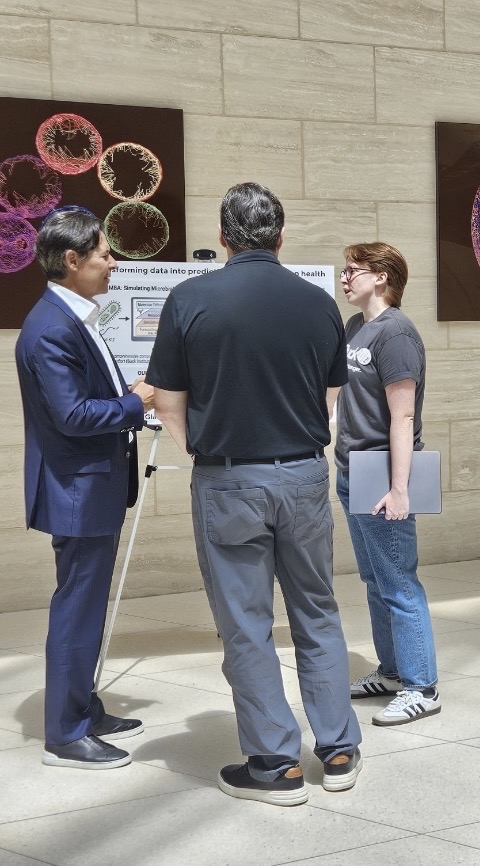
Furthermore, the institute’s initiatives are bolstered by strategic partnerships with external industry leaders who provide specialized software and hardware infrastructure required to scale these technologies. By positioning itself at the intersection of longevity science and artificial intelligence, the Buck Institute has cultivated an ecosystem where mathematicians, computer scientists, and biogerontologists can operate cohesively.
Demystifying the Research: From Petri Dishes to Digital Twins
For observers outside the scientific community, the concept of a "whole-cell simulator" can be difficult to visualize. Glass offers a straightforward analogy: imagine testing a new pharmaceutical drug or observing environmental stress on a living cell not through physical experimentation, but by utilizing a digital twin on a computer screen.
In traditional laboratories, validating a single therapeutic hypothesis requires extensive trial-and-error. Researchers cultivate cell cultures, administer compounds, measure biochemical outputs, and repeat the process under modified conditions. This methodology, while historically effective, creates significant bottlenecks in drug discovery and basic research.
Glass’s computational models transform this workflow. By synthesizing existing biological literature and real-time empirical data into a digital architecture, researchers can execute virtual experiments instantaneously. Changing a variable—such as introducing a specific molecule or altering temperature—allows the computer to project the exact physiological response of the cell.
In the context of aging, this technology promises to illuminate the black box of cellular senescence. As human cells age, they accumulate macromolecular damage, experience mitochondrial dysfunction, and exhibit altered gene expression. A digital human cell model would allow scientists to observe these degenerative processes unfold in real time, testing potential interventions virtually before advancing them to animal or human trials.
Broader Implications for Personalized Medicine and Healthcare
The implications of whole-cell simulation extend deeply into the future of clinical medicine, promising a paradigm shift away from reactive, generalized healthcare toward proactive, personalized longevity management.
In the short term, the methodologies being developed by Glass and her peers could transform infectious disease management. By accurately predicting bacterial responses to antimicrobials through simulation, clinicians may soon select optimal antibiotic therapies with pinpoint accuracy, mitigating the global threat of antibiotic resistance.
Over the next decade, however, the scalability of these models represents the true frontier. If researchers successfully transition from bacterial simulations to human cellular models, the medical community could witness the advent of personalized longevity simulations. In such a future, physicians might utilize a patient’s unique genetic and metabolic data to run predictive simulations, determining precisely how specific diets, pharmacological interventions, lifestyle modifications, or environmental factors would impact their cellular aging process.

This predictive capability aligns with the broader mission of the Buck Institute: to extend not just human lifespan, but healthspan. By intervening before degenerative cellular damage manifests as overt clinical disease, medicine could theoretically prevent chronic conditions such as cardiovascular disease, neurodegeneration, and metabolic disorders rather than merely managing their symptoms after onset.
Future Horizons: The Next Decade in Longevity Science
As Glass looks toward the next five to ten years, her optimism is anchored in the accelerating convergence of computer science and biology. The DARPA SMS program represents only the nascent phase of what is mathematically and biologically achievable.
Industry analysts and academic leaders anticipate that within the coming decade, the scientific community will unveil the first high-fidelity digital models of human cells. For researchers embedded in the longevity sector, this milestone will mark the transition from observing biological decline to actively engineering its prevention.
Reflecting on her journey from applied mathematics and biomedical engineering to the forefront of aging research at the Buck Institute, Glass remains energized by the scale of the challenge. Supported by a collaborative institute environment and driven by the potential to fundamentally alter human health outcomes, her work exemplifies the modern scientific endeavor: using the power of computation to decode the deepest mysteries of life and translate them into actionable longevity solutions for humanity.
Related posts: