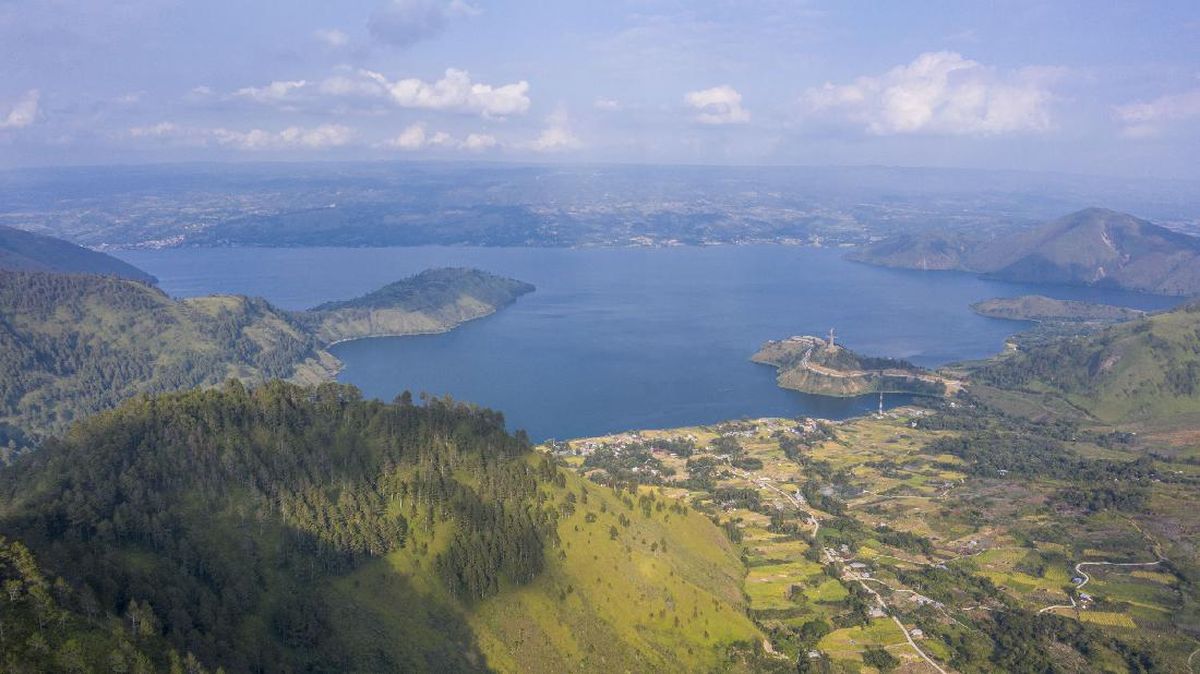
The iconic Lake Toba, a jewel of Indonesia and the world’s largest volcanic lake, is once again facing an alarming environmental crisis as its water levels continue a precipitous decline, sounding a grave warning for the vital aquaculture sector, particularly the numerous floating net cages (Keramba Jaring Apung or KJA) that dot its expansive waters. This concerning trend, which has seen the lake’s surface drop by approximately 1.6 meters since June 2025 and threatening to reach 2 meters if the dry season persists, is not merely an isolated hydrological event but a complex interplay of climatic shifts, historical mismanagement, and the delicate balance of a globally significant ecosystem.
A Looming Environmental and Economic Catastrophe
The KJA industry, a cornerstone of the local economy, supports thousands of livelihoods around Lake Toba. These floating fish farms, which have at times numbered in the tens of thousands, represent a critical source of income for many families in the surrounding communities. However, their proliferation has also long been a subject of environmental debate, contributing to the very issues that now threaten their existence. Beyond fisheries, the declining water levels cast a long shadow over other critical sectors, including agriculture, which relies on the lake for irrigation, and the operations of PT Indonesia Asahan Aluminium (INALUM), one of Indonesia’s largest hydropower producers. The multinational corporation, deeply integrated into the regional economy, depends on a stable water supply from Lake Toba to power its aluminum smelter and other industrial facilities, meaning any significant reduction in water volume directly impacts its operational capacity and, by extension, national energy and industrial output.
Satellite altimetry data, meticulously tracked by national monitoring agencies, paint a stark picture: from June 2025 to March 2026, the lake’s water surface has consistently receded, reaching the current deficit of 1.6 meters. Experts caution that a continued dry spell could push this reduction to a critical 2-meter mark, a threshold that has historically triggered devastating ecological consequences. This forecast is underpinned by projections from the Meteorology, Climatology, and Geophysics Agency (BMKG), which anticipates the simultaneous occurrence of El Niño and a positive Indian Ocean Dipole (IOD) phase throughout 2026. This dual climatic phenomenon is notoriously linked to prolonged dry seasons across the Indonesian archipelago, exacerbating water scarcity and accelerating the shrinkage of major water bodies like Lake Toba. The confluence of these factors creates a high-risk environment for a repeat of past mass fish mortality events within the KJA systems.
The Complex Mechanism of Fish Mortality
While a drop in water level is a clear indicator of environmental stress, it is rarely the sole direct cause of mass fish deaths. The true danger emerges from the synergy between low water levels and extreme weather conditions, particularly strong winds. In such scenarios, the reduced water volume leads to shallower conditions, making the lake’s water column more susceptible to vertical mixing. Intense winds churn the surface, causing deeper, often stagnant layers of water to rise. This process brings up fine sediments accumulated at the bottom – a repository of organic waste from years of aquaculture activity and domestic runoff. These suspended particles can directly clog fish gills, impeding respiration.
More critically, the upwelling brings anoxic or hypoxic water (water severely depleted of oxygen) from the lakebed to the surface. The decomposition of organic matter at the bottom of the lake is an oxygen-consuming process. Under normal conditions, a healthy oxygen gradient exists, but when turnover occurs, this oxygen-poor water rapidly mixes with the surface layers, drastically reducing the dissolved oxygen (DO) levels available to fish. The incident in Pangururan in 2025 serves as a poignant example: despite a less severe drop in water level, the combination of relatively shallow waters and strong winds triggered intense vertical mixing. The subsequent uplift of fine sediments and oxygen-depleted water led to widespread fish deaths, illustrating the intricate and often rapid environmental tipping points at play.
Furthermore, the problem is compounded by the ongoing accumulation of organic waste – primarily uneaten fish feed, fish excrement, and domestic sewage – at the lake’s bottom. In healthy, oxygenated conditions, aerobic bacteria decompose this waste. However, when oxygen levels plummet due to mixing and depletion, anaerobic decomposition takes over. This process generates noxious gases, notably hydrogen sulfide (H2S) and methane (CH4). Hydrogen sulfide is highly toxic to fish, impairing their respiratory systems and causing cellular damage, while methane further degrades water quality and contributes to greenhouse gas emissions. The combined effect of low dissolved oxygen, elevated levels of toxic gases, and increased water turbidity creates a lethal cocktail for fish in KJA, turning their enclosures into death traps.
A Recurring Nightmare: A Chronology of Crises
The present crisis is not an isolated incident but rather the latest chapter in a distressing saga of environmental degradation and recurrent fish mortality events in Lake Toba. The year 2016 stands out as a particularly devastating benchmark. When the lake’s water level receded by approximately 2 meters, thousands of tons of fish perished in KJA, inflicting economic losses estimated at tens of billions of rupiah upon the local fishing communities. This catastrophe sent shockwaves through the region, prompting calls for stricter regulations on aquaculture and a reevaluation of the lake’s ecological carrying capacity.
Following the 2016 disaster, various stakeholders, including local government bodies, environmental organizations, and scientific institutions, initiated efforts to mitigate future risks. These included campaigns to reduce the number of KJA, promote more sustainable aquaculture practices, and enhance water quality monitoring. However, the underlying vulnerabilities persisted. Smaller-scale but significant fish mortality incidents continued to plague the lake in 2018, 2020, and 2023, each occurring during periods of relatively low water levels. These recurring events underscored the systemic challenges in managing the lake’s ecosystem, particularly the delicate balance between economic development and environmental preservation.
The 2025 Pangururan incident served as a stark precursor to the current situation. While the overall water level drop was not as severe as in 2016, the localized conditions – specifically, the interplay of shallow waters, strong winds, and concentrated organic waste – demonstrated that even moderate environmental stress can trigger widespread fish deaths. This event provided critical insights into the localized nature of these phenomena and the need for highly granular monitoring and rapid response mechanisms. The forecast for 2026, with the strong likelihood of a prolonged dry season driven by El Niño and IOD, suggests that the conditions leading to these past disasters are not only likely to recur but could potentially be more severe. The cumulative impact of years of waste accumulation, coupled with projected climatic extremes, places Lake Toba at an unprecedented risk.
Broader Implications: Beyond the KJA
The decline in Lake Toba’s water level and the associated ecological threats extend far beyond the immediate plight of KJA fishermen. The lake is a multifaceted ecosystem and a cornerstone of regional development.
-
Tourism: As a UNESCO Global Geopark and one of Indonesia’s "10 New Balis" priority destinations, Lake Toba relies heavily on its pristine natural beauty. Lower water levels can expose muddy shorelines, reduce the aesthetic appeal, and impact water-based recreational activities such as boating, swimming, and watersports. This directly threatens the burgeoning tourism industry, which is a major driver of economic growth and job creation in the region. Tourist operators and local businesses, from hotels to souvenir shops, face potential revenue losses, dampening the government’s ambitious tourism development plans.
-
Agriculture: The communities surrounding Lake Toba, particularly those in the fertile valleys and plains, depend on the lake’s water for irrigation. A significant drop in water levels could lead to reduced water availability for agricultural land, impacting crop yields and threatening food security for local populations. Farmers cultivating rice, corn, and various vegetables could face substantial economic hardship, potentially leading to social unrest and increased migration from rural areas.
-
Hydropower Generation: PT Indonesia Asahan Aluminium (INALUM) operates a crucial hydropower plant that harnesses the water flow from Lake Toba. Reduced water levels directly translate to diminished hydraulic head and lower water discharge, thereby decreasing the plant’s electricity generation capacity. This has significant implications for industrial operations, especially INALUM’s massive aluminum smelter, which requires a continuous and stable power supply. Any disruption could lead to production cutbacks, affecting national industrial output and potentially impacting the global aluminum supply chain where Indonesia plays a role.
-
Ecosystem Health and Biodiversity: Lake Toba is home to several endemic species of fish and flora adapted to its unique volcanic environment. Prolonged periods of low oxygen, increased turbidity, and toxic gas concentrations can severely stress these native populations, potentially leading to biodiversity loss. Furthermore, the altered nutrient dynamics and water chemistry could trigger harmful algal blooms, further degrading water quality and creating a positive feedback loop that intensifies the ecological crisis. The long-term health of this unique freshwater ecosystem is at stake, with cascading effects on the entire food web and ecosystem services provided by the lake.
Urgent Calls for Proactive Measures and Integrated Management
The escalating crisis necessitates an immediate and comprehensive response from all stakeholders. For KJA fishermen, who are the most vulnerable, immediate preparedness at the field level is paramount. This includes constant vigilance for signs of extreme weather, such as unusually high wind speeds or visible changes in water color indicating increased turbidity. Should these warning signs appear, fishermen must be empowered and supported to take swift action, such as relocating KJA to deeper parts of the lake where water mixing is less severe, or initiating emergency harvesting to minimize losses. However, these individual actions, while crucial, are reactive and insufficient in the face of systemic challenges.
Government agencies, both local and national, alongside relevant private sector entities and community organizations, must shift from reactive responses to proactive, integrated management strategies. This entails establishing a robust, accurate, and rapid early warning system that transcends mere advisories. Such a system would integrate real-time meteorological data from BMKG, satellite altimetry data, and continuous water quality monitoring (DO, pH, temperature, nutrient levels, turbidity, H2S) from various points across the lake. This data, analyzed by scientific experts, could then be disseminated promptly to KJA operators and other affected communities through accessible channels, allowing for timely decision-making and pre-emptive actions.
Furthermore, long-term policy interventions are critical. This includes stricter enforcement of regulations on KJA numbers and density, potentially coupled with incentives for fishermen to transition to more sustainable aquaculture methods or alternative livelihoods. Waste management strategies for both KJA and surrounding residential areas need significant upgrades to reduce the organic load entering the lake. Investing in advanced water treatment facilities and promoting environmentally friendly farming practices in the agricultural sector are also vital components of a holistic solution. Given Lake Toba’s status as the world’s largest volcanic lake and its profound significance for human activities, strengthening the system for continuous water quality monitoring and ecological research is indispensable. This research should inform adaptive management strategies, helping the region cope with the inevitable impacts of climate change and ensuring the long-term sustainability of this extraordinary natural heritage. The current drop in water levels and the specter of mass fish deaths serve as an undeniable clarion call for concerted, multi-sectoral action to safeguard Lake Toba for future generations.