Rewiring the Immune System: Scientists Discover Novel Method to Supercharge T Cells for Potent Cancer Attack

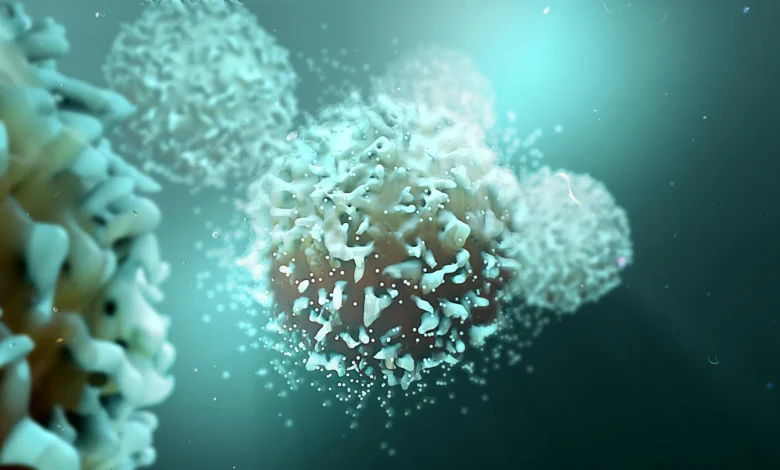
Jerusalem/Marburg/Houston – October 26, 2023 – A groundbreaking discovery by an international team of researchers has unveiled a novel strategy to significantly enhance the effectiveness of the immune system’s T cells in their fight against cancer. By targeting and blocking a specific protein, Ant2, scientists have successfully reconfigured how these critical immune cells generate and utilize energy, effectively overhauling their internal power systems. This metabolic reprogramming renders T cells more potent, resilient, and ultimately, more capable of eradicating tumors. The findings, published in the prestigious journal Nature Communications, pave the way for innovative cancer treatment paradigms that leverage and amplify the body’s innate defensive mechanisms, offering a more precise and potentially less toxic approach to oncology.
The research, a collaborative effort involving institutions in Israel, Germany, and the United States, was spearheaded by PhD student Omri Yosef and Professor Michael Berger from the Faculty of Medicine at Hebrew University, in conjunction with Professor Magdalena Huber from Philipps University of Marburg and Professor Eyal Gottlieb from the University of Texas MD Anderson Cancer Center. Their collective work centers on a fundamental principle: manipulating the energetic pathways within T cells, pivotal players in orchestrating immune responses, can dramatically improve their capacity to identify and neutralize cancerous cells.
The Ant2 Switch: Unlocking Enhanced T Cell Efficacy
At the heart of this breakthrough lies the protein Ant2, a component of the cell’s energy production machinery. The researchers found that by inhibiting Ant2, they could profoundly alter the metabolic landscape of T cells. This intervention essentially forces the cells to adopt a more efficient and aggressive energy-generating strategy, akin to upgrading a car’s engine for peak performance.
"By disabling Ant2, we triggered a complete shift in how T cells produce and use energy," explained Professor Berger in a press briefing. "This reprogramming made them significantly better at recognizing and killing cancer cells." This metabolic transformation equips T cells with the sustained energy reserves necessary to mount a robust and prolonged assault on tumors, which often possess their own mechanisms to evade immune detection and suppress immune responses.
The implications of this finding are far-reaching, suggesting that the precise modulation of cellular metabolism could be a key to unlocking new avenues for cancer immunotherapy. Traditional approaches have focused on enhancing the activation signals for T cells or improving their ability to traffic to tumor sites. This new research delves deeper, focusing on the fundamental bioenergetic capabilities that underpin T cell function.
Mitochondria and the Metabolic Rewiring of Immune Cells
The study places a significant emphasis on the role of mitochondria, often referred to as the "powerhouses" of the cell. These organelles are central to cellular respiration and energy production. The research team meticulously detailed how disrupting a specific energy pathway within T cells, particularly one involving mitochondrial function, led to a fundamental rewiring of the cells’ internal engines. This metabolic reorientation places the T cells in a state of heightened readiness and sustained activity.
The modified T cells exhibited a marked improvement in several key areas crucial for effective cancer combat:
- Increased Endurance: They were able to sustain their anti-tumor activity for longer periods, a critical factor in overcoming the persistent defenses of tumors.
- Accelerated Proliferation: The reprogrammed T cells demonstrated a capacity to multiply more rapidly, leading to a larger army of cancer-fighting cells.
- Enhanced Precision Targeting: Their ability to accurately identify and engage cancer cells was significantly augmented, reducing the risk of collateral damage to healthy tissues, a common concern with some conventional cancer therapies.
This detailed understanding of cellular bioenergetics opens up a new frontier in immunotherapy. It suggests that by fine-tuning the energy metabolism of immune cells, researchers can create supercharged T cells that are not only more effective but also potentially more targeted and less prone to exhaustion.
From Laboratory Bench to Clinical Promise: The Drug Discovery Pathway
A particularly encouraging aspect of this research is the potential for clinical translation. The study revealed that the critical metabolic shift in T cells could be induced not only through genetic modifications, which are often complex and time-consuming, but also through the administration of drugs. This discovery significantly shortens the path from laboratory findings to potential real-world therapeutic applications.
The identification of Ant2 as a target provides a clear molecular entry point for drug development. Pharmaceutical companies specializing in oncology and immunology are likely to take keen interest in this research, as it offers a novel target for developing small molecule inhibitors or other therapeutic agents. The development of such drugs would aim to mimic the effects of genetic manipulation, making the enhancement of T cell function accessible through pharmacological means.
This research aligns with a broader, burgeoning trend in cancer immunotherapy that is moving beyond merely "guiding" the immune system to actively "upgrading" its fundamental operational capabilities. While the journey from preclinical research to FDA-approved treatments is often lengthy and involves rigorous clinical trials, the findings provide a robust foundation for future therapeutic development.
Professor Berger further elaborated on the significance of this direction: "This work highlights how deeply interconnected metabolism and immunity truly are. By learning how to control the power source of our immune cells, we may be able to unlock therapies that are both more natural and more effective." This sentiment underscores the potential for treatments that are not only powerful but also more harmonious with the body’s own biological processes.
Background Context: The Evolving Landscape of Cancer Immunotherapy
The concept of harnessing the immune system to fight cancer, known as cancer immunotherapy, has revolutionized oncology in recent decades. Historically, cancer treatments relied heavily on surgery, chemotherapy, and radiation therapy, which often carried significant side effects due to their indiscriminate nature. Immunotherapy emerged as a paradigm shift, aiming to empower the patient’s own immune system to recognize and destroy cancer cells, which are inherently foreign to the body.
Early successes in immunotherapy included the development of vaccines and adoptive cell therapies, such as CAR T-cell therapy, which involves genetically modifying a patient’s T cells to express chimeric antigen receptors (CARs) that specifically target cancer cells. While CAR T-cell therapy has shown remarkable efficacy in certain blood cancers, challenges remain, including tumor resistance, T cell exhaustion, and potential off-target effects.
The current study by Yosef, Berger, Huber, and Gottlieb addresses some of these limitations by focusing on the intrinsic functional capacity of T cells. By understanding and manipulating their metabolic state, researchers aim to create T cells that are more robust and less susceptible to the immunosuppressive tumor microenvironment. The tumor microenvironment is a complex ecosystem surrounding a tumor that often contains immune-suppressing cells and molecules, creating a hostile environment for anti-tumor immune responses. Enhancing T cell metabolism could provide them with the energy and resilience to overcome these barriers.
Chronology of Discovery and Future Research
While specific timelines for the research leading to this publication are not detailed in the initial release, the process of scientific discovery typically involves several stages:
- Initial Hypothesis and Pilot Studies: Researchers likely began with a hypothesis about the role of specific metabolic pathways in T cell function and their impact on anti-tumor immunity. Early experiments would have involved testing this hypothesis in vitro (in laboratory dishes) and in preclinical animal models.
- Identification of Key Protein (Ant2): Through systematic investigation of cellular metabolism, the team would have identified Ant2 as a critical regulator of T cell energy production. This stage likely involved extensive genetic screening and biochemical analysis.
- Experimental Validation: The core of the research would have involved experiments to block Ant2 and observe the subsequent effects on T cell behavior and anti-tumor efficacy in various cancer models. This would include in vitro assays and in vivo studies in mice bearing human tumors.
- Publication and Peer Review: The culmination of these efforts would be the submission of their findings to a peer-reviewed journal, such as Nature Communications, where the scientific community rigorously scrutinizes the data and methodology before publication.
- Translation to Preclinical and Clinical Trials: Following publication, the focus shifts towards translating these findings into potential therapies. This involves further preclinical development, including optimizing drug delivery and efficacy, followed by human clinical trials.
The next steps for this research team will undoubtedly involve further refining the understanding of Ant2’s precise mechanisms and exploring the development of specific drug candidates. Preclinical studies will aim to confirm the safety and efficacy of these drug-induced metabolic changes in a wider range of cancer types. Subsequently, if preclinical data is promising, the research will progress to human clinical trials, where the therapy will be tested in patients to assess its safety and effectiveness in a real-world setting.
Supporting Data and Scientific Rationale
The scientific rationale behind this research is rooted in the established principles of cellular bioenergetics and immunology. T cells, like other cells, require a constant supply of energy in the form of ATP (adenosine triphosphate) to perform their functions, which include proliferation, cytokine production, and cytotoxic killing of target cells. The way T cells generate ATP can shift depending on their activation state and the demands placed upon them.
Under normal physiological conditions, T cells primarily rely on glycolysis for energy. However, during periods of intense activation, such as when encountering a pathogen or cancer cell, they can also engage mitochondrial oxidative phosphorylation (OXPHS). The balance between these pathways is crucial for optimal T cell function. If T cells become metabolically exhausted, their ability to maintain effector functions diminishes, leading to immune evasion by cancer cells.
The Ant2 protein is understood to play a role in nutrient uptake and metabolic flux within cells. By blocking Ant2, the researchers likely induced a state where T cells are compelled to rely more heavily on OXPHS, a more efficient and sustainable form of energy production, especially for prolonged activity. This shift could provide the sustained energy required for T cells to overcome tumor-induced suppression and maintain their anti-cancer activity over time.
While specific quantitative data such as percentage increases in T cell killing efficacy or proliferation rates are not provided in the initial summary, the publication in Nature Communications suggests that the observed improvements were statistically significant and robust enough to warrant publication in a high-impact journal. Such data would typically include graphs illustrating differences in T cell viability, proliferation, cytokine secretion, and tumor growth inhibition between control and treated groups in preclinical models.
Broader Impact and Implications for Cancer Therapy
The implications of this research extend far beyond the laboratory bench. If successfully translated into clinical practice, this approach could offer several key advantages for cancer patients:
- Enhanced Efficacy: By supercharging T cells, treatments could lead to more complete and durable tumor responses, potentially improving outcomes for patients with difficult-to-treat cancers.
- Reduced Toxicity: A more precise targeting of cancer cells by enhanced T cells could lead to fewer side effects compared to systemic chemotherapy or radiation, improving the quality of life for patients during treatment.
- Overcoming Resistance: This metabolic approach could provide a way to overcome resistance mechanisms that cancer cells employ to evade current immunotherapies, offering hope for patients who have not responded to existing treatments.
- Combination Therapies: The metabolic enhancement of T cells could be used in conjunction with other cancer therapies, such as checkpoint inhibitors or targeted therapies, to create more potent synergistic effects.
The discovery underscores the growing recognition within the scientific community that cancer is a complex disease with multifaceted evasion strategies, and that tackling it requires a holistic approach that considers not only the cancer cells themselves but also the intricate interplay between cancer and the immune system at a fundamental cellular and molecular level.
As Professor Berger aptly summarized, "This work highlights how deeply interconnected metabolism and immunity truly are. By learning how to control the power source of our immune cells, we may be able to unlock therapies that are both more natural and more effective." This sentiment points towards a future where cancer treatment is not just about attacking the disease, but about empowering the body’s own remarkable capacity to heal and defend itself. The path forward involves continued rigorous research and meticulous clinical evaluation, but the promise of this metabolic reprogramming strategy offers a significant beacon of hope in the ongoing battle against cancer.