Study Finds Wild Bees, Not Managed Hives, Drive Tomato Pollination in Organic Systems – NaturalNews.com

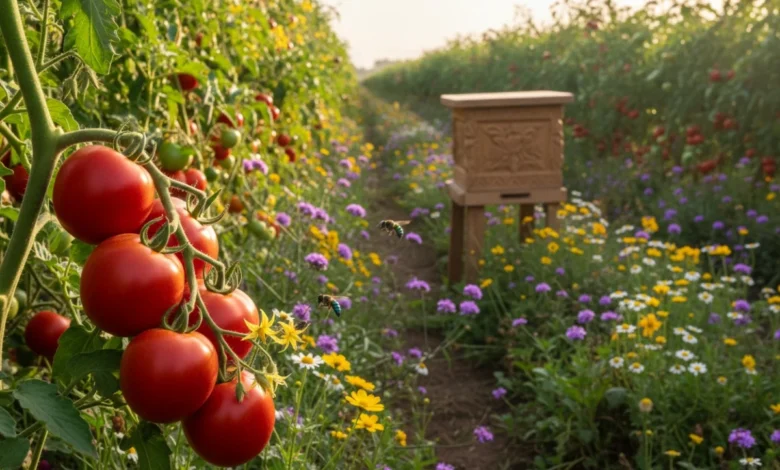
The study’s findings arrive at a pivotal moment for global agriculture, as farmers and policymakers grapple with declining pollinator populations and the rising costs of managed pollination services. By focusing on the Solanum lycopersicum (tomato), a crop of immense economic value that requires specific pollination techniques, the researchers have highlighted a significant disconnect between traditional agricultural interventions and ecological reality.
The Mechanism of Pollination and the Study’s Core Objective
Tomato plants are unique in their reproductive requirements. They possess "poricidal anthers," meaning their pollen is tucked away inside tube-like structures that require vigorous vibration to be released—a process known as "buzz pollination" or sonication. While wind can facilitate some pollen release, certain bee species are specialized in vibrating their thoracic muscles at specific frequencies to dislodge the pollen effectively.
For years, organic farmers in Brazil have supplemented their fields with managed hives of the stingless bee Melipona quadrifasciata, assuming these insects would perform the necessary sonication to boost fruit size and seed count. However, the research team, led by experts in apiculture and ecology, sought to validate this assumption through rigorous field testing and molecular analysis.
The study was conducted over a four-month period, from July to October 2023, across seven distinct organic farms. These sites were chosen specifically because they practiced "ecological intensification"—a method that allows non-crop plants, often dismissed as weeds, to flourish alongside the primary crop.
Methodology: Comparing Managed Hives vs. Natural Diversity
To isolate the impact of different pollination sources, the researchers implemented a multi-variable experimental design. They categorized tomato flowers into two primary groups: self-pollinated flowers, which were meticulously bagged to prevent any insect contact, and open-pollinated flowers, which remained accessible to the entire local insect community, including the introduced managed bees.
The team monitored several key indicators of fruit quality, which directly correlate to market value:
- Fruit Weight: A primary metric for yield volume.
- Fruit Diameter: A standard for grading and consumer preference.
- Seed Count: An internal indicator of pollination efficiency, as more seeds generally result in larger, more nutrient-dense fruit.
Parallel to the physical monitoring of the plants, the scientists conducted an intensive survey of the bee population. They collected 2,692 individual bees visiting both the tomato flowers and the surrounding non-crop vegetation. These specimens were identified and categorized to map the movement of species across the landscape.
Findings: The Failure of Managed Hives to Engage
The most striking result of the study was the total lack of engagement from the managed Melipona quadrifasciata bees with the tomato crops. Despite being placed directly within the organic fields, these bees showed no interest in the tomato flowers.
To understand why the managed bees were failing to perform, the researchers employed DNA metabarcoding—a high-tech forensic approach to analyze the pollen collected by the managed hives. The results were definitive: the M. quadrifasciata bees were almost exclusively foraging on large arboreal plants (trees) in the surrounding landscape rather than the low-lying tomato plants.
"The presence of M. quadrifasciata hives did not influence fruit quality, indicating that wild bees primarily drove pollination benefits," the study authors noted. This lack of interaction meant that the financial and labor resources spent on maintaining these managed hives did not translate into agricultural gain for the tomato harvest.
In contrast, the open-pollinated flowers—those visited by wild bees—showed significantly higher quality metrics compared to the bagged, self-pollinated control group. This confirmed that while pollination was happening and was vital for the crop, it was being performed entirely by "unpaid" wild volunteers rather than the "hired" managed bees.
The Role of Wild Bee Diversity and Non-Crop Flora
The diversity of the wild bee population recorded during the study was remarkably high. Of the 60 species identified:
- 8 species were specialized, found only on tomato plants.
- 37 species were found only on the non-crop plants.
- 15 species were "generalists," moving between the tomatoes and the surrounding flora.
Among the most effective pollinators identified were wild species such as Paratrigona lineata, Exomalopsis analis, Exomalopsis auropilosa, and various bees from the Pseudaugochlora genus. These species are natural buzz-pollinators, perfectly adapted to the morphology of the tomato flower.
The researchers highlighted that the success of these wild bees was inextricably linked to the presence of non-crop plants. By allowing "weeds" to grow in the margins and between rows, the organic farmers had inadvertently created a "pollinator reservoir." These non-crop plants provided a continuous supply of nectar and alternative pollen sources, which sustained a high density of wild bees throughout the season.
"By offering a diverse range of floral shapes, colors, traits, and sizes, non-crop plants support a broader assemblage of pollinator species with complementary functional traits," the researchers explained. This biological diversity ensures that even if one species fluctuates in population, others are present to fill the ecological niche, providing a "pollination insurance policy" for the farmer.
Chronology of the Research and Global Context
The timeline of this study reflects a growing urgency in the scientific community to address the "pollination crisis."
- July – October 2023: Fieldwork is conducted across seven organic farms in Brazil.
- 2024 – 2025: Data analysis and DNA metabarcoding are performed in laboratory settings to track pollen origins.
- April 16, 2026: The final peer-reviewed paper is published in Apidologie, sparking a re-evaluation of stingless bee management in South American agriculture.
This Brazilian study does not exist in a vacuum. It mirrors similar findings in North America and Europe, where the over-reliance on a single managed species—the European honey bee (Apis mellifera)—has been questioned. In the United States, honey bee populations have faced staggering annual losses, often cited between 30% and 40%. Reports from organizations like Children’s Health Defense and Beyond Pesticides suggest that these declines are driven by a "triple threat" of pesticide exposure, habitat loss due to monoculture, and climate-driven stress.
The Brazilian findings suggest that for certain crops, the solution is not more "industrial" pollination, but rather a return to "ecological" pollination.
Implications for Agricultural Policy and Pesticide Use
The study’s conclusion that wild bees are the superior pollinators for tomatoes has significant implications for how agricultural subsidies and conservation efforts are directed. If managed hives are ineffective for open-field tomatoes, the focus must shift toward habitat restoration.
Advocacy groups have seized upon this data to argue against the use of systemic pesticides, particularly neonicotinoids. These chemicals, often used in conventional tomato farming, are known to impair the cognitive and navigational abilities of wild bees. The U.S. Environmental Protection Agency (EPA) has faced intense criticism from environmentalists for its plans to reapprove several neonicotinoids, despite internal and external science suggesting they pose a "high risk" to non-target pollinators.
"Pesticides plus monoculture doubles the damage," noted an analysis by Beyond Pesticides. The Brazilian study provides the "other side" of this coin: Organic farming plus floral diversity doubles the benefit. By eliminating synthetic toxins and promoting plant variety, organic systems foster the very wild populations that the Apidologie study proves are essential for productivity.
Expert Reactions and Economic Analysis
While the study focused on biological outcomes, agricultural economists are already weighing the cost-benefit implications. Managed hives represent a capital investment and an ongoing maintenance cost. For small-to-medium-sized organic growers, the realization that they can achieve superior results by simply managing their field margins more effectively is a potential game-changer.
"This research provides the empirical validation that was previously missing," said one agricultural consultant not involved in the study. "We have spent decades trying to force nature into a predictable, ‘managed’ box. This data tells us that if we provide the right environment, the ecosystem will provide the service for free, and more efficiently than our managed interventions."
However, some proponents of managed bees argue that hives still have a place in greenhouse environments or in areas where wild habitats have been so degraded that no natural populations remain. The study authors were careful to specify that their findings applied to "open-field" systems where natural habitat was accessible.
Conclusion: A New Paradigm for Food Security
The authors of the study concluded that the practice of introducing managed bees for open-field tomato crops "lacks local, empirical validation." They affirmed that "wild bees primarily drove the benefits of pollination, besides the role of wind."
As the global population nears 10 billion, food security depends on maximizing yields without further destroying the ecological foundations of the planet. The Brazilian study serves as a powerful reminder that "productivity" and "conservation" are not opposing forces. In the case of the organic tomato, they are two sides of the same coin.
The findings underscore a critical shift in agricultural philosophy: from "replacing" natural systems with managed ones to "supporting" natural systems so they can perform their inherent functions. Moving forward, the success of the tomato industry—and perhaps the wider agricultural sector—may depend less on the hives farmers bring into the field and more on the wild spaces they leave untouched.