Your Students Will Remember How You Made Them Feel: Here’s How to Get It Right.

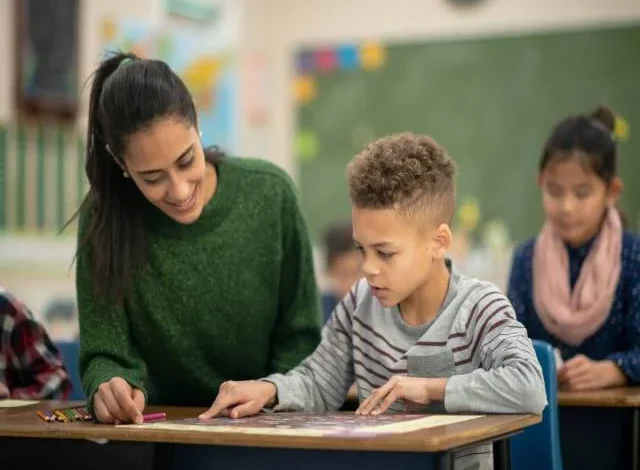
The profound and lasting impact of student-teacher relationships on individual development and societal well-being is a well-established fact, yet these crucial connections are often subtly undermined by implicit biases. While educators universally aspire to foster supportive and nurturing environments, unconscious attitudes and stereotypes can inadvertently create barriers, leading to disparities in student engagement, academic outcomes, and even long-term health. A growing body of research underscores the imperative for educators to recognize and actively counter these biases, not merely through awareness, but by strategically altering their behaviors to cultivate genuinely inclusive and impactful relationships.
The Enduring Impact of Student-Teacher Relationships
Decades of psychological and educational research consistently affirm that the quality of student-teacher interactions significantly shapes a student’s trajectory. These relationships extend far beyond academic performance, influencing a child’s social-emotional development, sense of belonging, and even their physical and mental health into adulthood. Studies, such as those published in the Journal of School Psychology and Review of Educational Research, demonstrate a direct correlation between positive student-teacher relationships and increased student engagement, higher academic achievement, and improved social-emotional competencies. For instance, a meta-analysis involving thousands of students found that strong teacher-student bonds can mitigate the effects of adverse childhood experiences and promote resilience. Conversely, strained or absent connections can lead to feelings of alienation, decreased motivation, and heightened behavioral challenges.
The benefits are reciprocal. Educators who cultivate positive relationships with their students report higher levels of teaching efficacy, greater job satisfaction, and reduced burnout, as highlighted in studies appearing in Learning and Instruction. This symbiotic dynamic underscores the critical role these interactions play in creating a vibrant and effective learning environment for all stakeholders. "The classroom is not just a place for learning facts; it’s a crucible for human connection," observes Dr. Elena Rodriguez, a prominent educational psychologist. "When teachers feel connected to their students, and students feel seen by their teachers, the entire educational ecosystem thrives."
Unpacking Implicit Bias in Educational Settings
Despite the clear advantages of positive relationships, a significant barrier persists: implicit bias. Implicit bias refers to the unconscious attitudes, stereotypes, and beliefs that can influence an individual’s perceptions, actions, and decisions without their conscious awareness or intent. These biases are not necessarily aligned with one’s explicit values or conscious beliefs; an educator may consciously believe in equity and inclusion, yet harbor unconscious biases that affect their interactions. The phenomenon is deeply rooted in the brain’s natural propensity for rapid, automatic processing, combined with constant exposure to societal prejudices like racism, sexism, homophobia, and transphobia.
In educational contexts, implicit bias manifests in various ways, often contributing to systemic inequities. For example, research has shown that educators may unconsciously associate Asian students with being quiet, compliant, and self-sufficient—a manifestation of the "model minority" myth—potentially overlooking their needs for support or individual expression. Conversely, Black and Hispanic students may be unconsciously perceived as loud, disruptive, or aggressive, leading to disproportionately higher rates of disciplinary action and lower expectations for academic performance. A 2021 report by the U.S. Department of Education, for instance, indicated that Black students are nearly four times more likely to be suspended than white students for similar infractions, a disparity often attributed, in part, to implicit bias in disciplinary referrals. These unconscious perceptions can prevent educators from truly seeing students for who they are and who they could become, thereby hindering the formation of genuine connections.
Vulnerable Decision Points: When Bias Takes Hold
Implicit biases are not constant; they are often exacerbated under specific conditions known as "vulnerable decision points." These are moments when individuals are more likely to rely on quick, unconscious processing rather than deliberate thought. Common vulnerable decision points for educators include time constraints, exhaustion, frustration, stress, and even hunger. As Dr. Patti Staats noted in "Understanding Implicit Bias: What Educators Should Know" (published in American Educator), teachers routinely encounter many, if not all, of these conditions throughout a typical school day. This constant pressure makes educators particularly susceptible to implicit biases influencing their actions and decisions, often without conscious realization.
The consequences are tangible. In K-12 education, implicit bias contributes to measurable disparities in academic achievement and disciplinary outcomes. Students of color, for instance, are consistently less likely to report close connections with their teachers. This relational gap is a critical concern, as a lack of connection can undermine trust, reduce student voice, and create an environment where students feel unseen and undervalued. Addressing these vulnerable decision points requires more than just awareness; it demands a proactive strategy to disrupt biased responses before they translate into behavior.
The Challenge of Eradicating Bias vs. Disrupting Behavior
Traditional approaches to combating implicit bias often focus on identification, reflection, and attempts at eradication. However, neuroscience suggests that implicit biases are remarkably resistant to direct removal. The brain’s ingrained pathways, formed through years of societal conditioning and automatic processing, are not easily overwritten. This resistance has led researchers to explore more effective interventions: those that focus on disrupting the manifestation of implicit bias before it becomes a behavior.
The good news is that by consistently changing behavior, educators can, over time, weaken the underlying implicit biases. This behavioral approach shifts the focus from an often-futile attempt to erase unconscious thoughts to a more practical and empowering strategy of conscious action. It acknowledges that while biases may persist, their influence on observable interactions can be mitigated and eventually reduced through deliberate practice. This paradigm shift offers a tangible pathway for educators to build the positive, equitable relationships they aspire to achieve with all their students.
A Three-Step Framework for Educators: Cultivating Conscious Connections
Drawing on neuroscience and educational psychology, a three-step reflective process has emerged as a powerful tool for educators to counter implicit bias and foster stronger student relationships. This framework transforms insights into actionable self-awareness, enabling educators to replace bias-influenced behaviors with values-aligned responses.
Step 1: Self-Reflection and Value Alignment
The initial phase involves a deep dive into self-awareness, starting with a clear articulation of personal values. Educators are encouraged to reflect on their core principles—what truly matters to them as professionals and individuals. These values serve as the ethical compass for desired behaviors and relationship building. For example, a teacher might identify "connection," "equity," and "empathy" as their guiding values.
Next, educators select a specific student with whom they feel a weaker connection or experience recurring challenges. This choice is crucial for focused introspection. The prompts guide the educator to honestly describe their current relationship, their feelings towards the student, and their typical reactive patterns when difficulties arise. "It’s uncomfortable to admit when you’re struggling to connect with a student," shares Mark Johnson, a high school history teacher who recently adopted this framework. "But being honest about my knee-jerk reactions, like getting defensive or shutting down, was the first step toward real change."
Crucially, this step also involves considering the role of implicit bias. Without judgment, educators are prompted to reflect on how unconscious stereotypes or assumptions might be influencing their perceptions of the student. For instance, an educator might realize they are unconsciously holding a student of a particular background to a different standard or misinterpreting their expressions of frustration. The example of "Justin," a tall Latino male student perceived as older and held to an unrealistic maturity standard, illustrates how these biases can subtly shape interactions, leading to conflict avoidance rather than connection.
The culmination of Step 1 is naming a specific behavioral change. This involves identifying one problematic behavior to stop and articulating a values-aligned behavior to replace it. For Justin’s teacher, this meant replacing public corrections and frustration during transitions with quiet, pre-emptive warnings and one-on-one check-ins. This targeted approach makes the abstract concept of "countering bias" concrete and actionable.
Step 2: Real-Time Intervention and Behavior Change
The second step shifts from reflection to real-time action, occurring in the moments that matter most within the classroom. This process, adapted from Zarretta Hammond’s "SODA Strategy" in her book Culturally Responsive Teaching and the Brain, emphasizes mindful awareness and intentional response.
Educators are encouraged to "tune in" to their physical and emotional cues. The body often signals implicit bias before the conscious mind registers it—a tightening jaw, a racing heart, a surge of frustration. Recognizing these signals serves as a critical pause point, offering the opportunity to choose a response rather than react on autopilot. "That moment when my stomach clenches, I now recognize it as my brain’s warning sign," explains Johnson. "It’s my cue to breathe, remember my values, and pivot."
Once grounded, the educator "tries out" the replacement behavior identified in Step 1. The goal is not perfection, but practice. For Justin’s teacher, this meant giving him a quiet heads-up about a transition, and when he still hesitated, approaching him individually instead of calling him out. Even if the immediate outcome isn’t flawless, the act of choosing a values-aligned response over a biased reaction is itself progress. This real-time application generates valuable observational data about the student, the educator, and the evolving relationship, which becomes crucial for the final step.
Step 3: Collaborative Reflection and Growth
The final, and arguably most powerful, step involves engaging in communal reflection. Bringing these experiences to a trusted colleague or professional learning community offers external perspectives that can illuminate blind spots, especially concerning implicit bias. This collaborative process, inspired by Barbara Dray and Debora Basler Wisneski’s mindful reflection protocol, uses a structured approach of description, interpretation, and evaluation.
First, the educator describes the interaction objectively, focusing solely on factual events. Thought partners listen, ask clarifying questions, and gently steer away from subjective interpretations. For example, "I gave Justin a heads-up; he didn’t transition with peers; I gave a private reminder; he transitioned."
Next, participants surface interpretations, naming the meanings assigned to the student’s behavior. Justin’s teacher might interpret his initial delay as disrespect. Here, thought partners offer alternative interpretations, such as considering if quick transitions are genuinely challenging for the student or if he was deeply engaged in a task. "My colleagues helped me see that my interpretation of ‘disrespect’ might just be my own frustration," says Johnson. "They offered that perhaps the student was just overwhelmed, or even proud of his work and reluctant to stop."
Finally, the group examines evaluations, scrutinizing the judgments (positive or negative) attached to the interaction. Was the evaluation grounded in facts, or influenced by biased interpretations? This collective examination helps reframe negative judgments into more generous, empathy-driven perspectives.
The process culminates in planning the next move together. Reconnecting with core values and integrating fresh perspectives, the group collaborates on strategies for future interactions. Justin’s teacher, for instance, might realize that his "grumbling" while transitioning was actually a sign of progress, and decide to acknowledge his effort. They might also consider adjusting lesson design to minimize jarring transitions for students who need more processing time. This iterative cycle of reflection, action, and collaborative analysis fosters continuous growth and refinement, moving educators closer to their ideal selves.
Broader Implications and Systemic Change
The ripple effects of this intentional approach extend beyond individual classrooms. As author and activist adrienne maree brown reminds us, "how we are at the small scale is how we are at the large scale." Every instance where an educator chooses values over bias not only transforms a single relationship but also contributes to shaping a more equitable and inclusive classroom, school, and ultimately, community.
Implementing such a framework can lead to significant improvements in school culture. When educators are more aware of their biases and actively work to counter them, it fosters an environment of psychological safety where all students feel valued and seen. This, in turn, can reduce disciplinary disparities, improve academic outcomes for marginalized groups, and enhance overall student well-being. From a systemic perspective, widespread adoption of such practices could lead to a more equitable distribution of educational resources, better teacher retention, and a more robust educational system capable of serving diverse student populations effectively. It moves schools closer to fulfilling their promise of being places where every student has the opportunity to thrive, not despite their background, but because their unique identities are understood, respected, and celebrated. While the journey is continuous and imperfect, this deliberate work empowers educators to become the transformative figures their students remember, shaping not just academic success, but the very fabric of their future lives.