A Silent Epidemic Unmasked: Landmark International Study Reveals Widespread Hidden Atherosclerosis in Apparently Healthy Young Adults

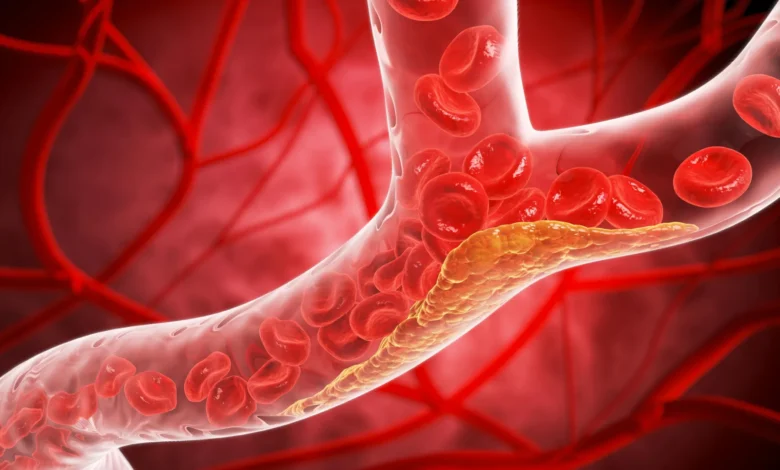
Cardiovascular disease remains the leading cause of mortality worldwide, claiming nearly 20 million lives annually. For decades, the medical community has operated under the assumption that the foundational driver of this crisis—atherosclerosis, the gradual accumulation of lipid-rich plaque inside arterial walls—develops slowly over a lifetime, typically manifesting clinical symptoms only in middle or older age. However, a massive, paradigm-shifting international study has shattered these long-held assumptions. The research reveals that this hidden vascular pathology is not only present in a staggering majority of seemingly healthy adults, but it frequently takes root far earlier in life than previously documented.
The findings from the first phase of the Risk Estimation and Atherosclerosis Evaluation in Cardiovascular Health (REACT) study were unveiled during a prestigious Hot Line session at the European Society of Cardiology (ESC) Congress 2026 and published simultaneously in The New England Journal of Medicine. Led by a coalition of eminent cardiologists, including Professor Henning Bundgaard of Rigshospitalet in Copenhagen, Denmark, and Dr. Borja Ibáñez of the Centro Nacional de Investigaciones Cardiovasculares Carlos III (CNIC) in Madrid, Spain, the initiative represents one of the most comprehensive investigations into silent cardiovascular pathology ever undertaken.
By utilizing advanced, multi-site imaging across a broad demographic cohort, the international research team has provided an unprecedented atlas of atherosclerosis progression. The implications of this research extend far beyond academic curiosity; they threaten to dismantle current models of primary cardiovascular prevention and force a global reassessment of how physicians evaluate heart disease risk in seemingly healthy populations.
Breaking Down the Data: The Shocking Prevalence of Silent Plaque
The scale of the REACT study is monumental. For Phase 1 of the project, researchers enrolled 16,808 healthy participants aged 18 to 70 across Denmark and Spain. Crucially, none of the participants had any known history of cardiovascular disease or clinical symptoms at the time of enrollment.
Every individual underwent rigorous, standardized diagnostic assessments, which included advanced vascular imaging of three major arterial territories: the carotid arteries supplying the brain, the femoral arteries in the legs, and the coronary arteries feeding the heart muscle itself. In addition to imaging, the project gathered an extensive array of cardiovascular risk factors, blood biomarkers, retinal photographs, and biological samples dedicated to omics-level analyses, establishing one of the most robust cardiovascular databases in medical history.
When the imaging results were compiled, the findings startled the research community. Across the entire cohort of nearly 17,000 participants, atherosclerotic plaques were detected in 57.1% of individuals.
Even more alarming was the detection rate among the youngest cohort. Among participants aged 18 to 29—an age group typically considered immune to structural cardiovascular disease—approximately 1 in 13 individuals (roughly 7.7%) already exhibited verifiable signs of atherosclerotic plaque in at least one major arterial bed.
As expected, the prevalence climbed steadily with advancing age, correlating with cumulative exposure to metabolic and environmental stressors. By the time participants reached their 40s and 50s, plaque detection rates crossed majority thresholds. Among the oldest cohort in the study, those aged 60 to 70, roughly 9 in 10 individuals displayed measurable arterial plaque, reinforcing the reality that atherosclerosis is an almost universal accompaniment of human aging under modern lifestyle conditions, even in the absence of overt clinical disease.
A Chronology of Discovery: From PESA to REACT
The journey toward these 2026 revelations has been decades in the making, tracing a deliberate trajectory of scientific inquiry aimed at intercepting cardiovascular disease before it turns lethal.
The conceptual predecessor to the REACT initiative was the pioneering PESA-CNIC-Santander study, directed by Dr. Valentin Fuster, General Director of the CNIC and a foundational figure in modern cardiology. The PESA study focused primarily on middle-aged adults, demonstrating that subclinical atherosclerosis was surprisingly common in middle age and closely tied to lifestyle choices such as diet, physical activity, and smoking. However, PESA left open critical questions regarding the very early stages of the disease: When exactly does plaque first emerge? And how does it evolve across the entirety of early adulthood?
To answer these questions, the Novo Nordisk Foundation stepped forward with substantial philanthropic backing, awarding up to EUR 23 million to fund the first phase of the international REACT project. Carried out through a strategic collaboration between Rigshospitalet, partner institutions in Denmark, and the CNIC in Spain, REACT was designed as a multi-phase, longitudinal endeavor.
Phase 1, formally titled REACT-DETECT, commenced in 2024 with the recruitment of the 16,808 participants whose data now fills the pages of medical journals. The completion of Phase 1 sets the stage for an even more ambitious second phase. Contingent on continued funding, Phase 2 (REACT-PROTECT) is slated to run from 2027 through 2032. This next phase will transition from observation to intervention, launching large-scale randomized clinical trials to test whether targeted, imaging-guided preventive treatments can halt or reverse the systemic progression of silent plaque and ultimately prevent heart attacks and strokes.
The Paradigm Shift: Moving from Risk Estimation to Direct Detection
The core thesis of the REACT study challenges the foundational methodology of modern preventative cardiology. For the past several decades, clinical guidelines have relied on risk-estimation models—such as the SCORE2 algorithm or the Framingham Risk Score—to calculate a patient’s statistical probability of experiencing a cardiovascular event over a 10-year period. These models rely on indirect surrogate markers: chronological age, blood pressure readings, cholesterol levels, smoking status, and diabetic history.
Dr. Ibáñez described the limitations of this traditional framework during the presentation of the findings. "For decades, we have estimated cardiovascular risk using factors such as age, blood pressure, and cholesterol," he noted. "This study shows that we can now go one step further and detect the disease directly before it causes a heart attack or stroke."
The REACT data exposed a glaring flaw in conventional risk-scoring systems. When researchers applied standard risk assessment tools to the study cohort, these models identified only a minute fraction of the individuals who were subsequently proven to harbor active, subclinical atherosclerotic plaques. In practical terms, millions of individuals walk around with low or moderate calculated risk scores while dangerous lipid deposits quietly accumulate inside their arteries.
Dr. Ibáñez summarized the revolutionary philosophy driving the project: "The REACT study is based on a simple but revolutionary idea: moving from the current model, which estimates the probability of cardiovascular disease on the basis of traditional risk factors, towards a new paradigm in which the disease is detected directly through imaging before it causes symptoms. In this model, preventive interventions and the treatment of risk factors could be guided by the actual presence of silent atherosclerosis rather than relying solely on an indirect estimate of risk."
Professor Bundgaard echoed this sentiment, emphasizing that the project provides an invaluable roadmap for the medical field. "Until now, preventive decisions have been based on an estimate of risk, but we did not know whether the disease was already present," Bundgaard explained. "REACT shows that atherosclerosis can be detected decades before clinical manifestations appear and provides the most comprehensive atlas of the evolution of the disease across adult life."
A Simplified Screening Tool: The Power of Peripheral Ultrasound
One of the most practical and clinically significant discoveries to emerge from the REACT imaging data involves the anatomical distribution of plaque across the body.
When researchers mapped the location of atherosclerotic lesions, they discovered a strong spatial correlation. The vast majority of participants who exhibited plaque in their high-risk coronary arteries—the vessels directly supplying the heart muscle—also showed measurable plaque in their carotid arteries in the neck or femoral arteries in the legs.
This anatomical overlap carries immense potential for the democratization and simplification of cardiovascular screening. Assessing coronary arteries typically requires high-resolution cardiac computed tomography (CT) scans, which involve radiation exposure, higher costs, and limited availability in primary care settings. In contrast, examining the carotid and femoral arteries can be accomplished quickly, safely, and noninvasively using standard ultrasound equipment.
This realization points toward a future where routine primary care visits could incorporate portable ultrasound scans. "In the paradigm we propose, portable ultrasound devices usable by any healthcare professional will become the standard tool for atherosclerosis screening from the early stages of adult life," Dr. Ibáñez predicted. Such a shift could transform primary care, allowing general practitioners to screen patients directly for structural vascular disease during routine check-ups rather than waiting for symptoms or relying on flawed mathematical risk scores.
Sexual Dimorphism in Vascular Aging: Men vs. Women
The REACT dataset also offered profound insights into the differing ways atherosclerosis develops across the lifespan in men and women, highlighting a distinct sexual dimorphism in vascular aging.
Among male participants, the prevalence of atherosclerosis began escalating at noticeably younger ages. Across nearly all metrics, the overall trajectory of vascular plaque formation in men appeared approximately five to ten years ahead of the timeline observed in women. This early vulnerability helps explain why men historically experience clinical cardiovascular events at younger ages than pre-menopausal women.
Conversely, female participants exhibited a different pattern characterized by a dramatic, sharp inflection point in plaque accumulation between the ages of 40 and 60. This rapid acceleration phase broadly overlaps with the menopausal transition, suggesting a strong mechanistic link between declining endogenous estrogen levels and accelerated vascular aging.
These pronounced differences underscore the urgent necessity of tailoring cardiovascular prevention and screening strategies to account explicitly for both biological sex and life stage, moving away from a one-size-fits-all medical model.
Global Expansion and the Path to Eradication
Recognizing that cardiovascular disease is a universal scourge with varied manifestations across distinct genetic and environmental landscapes, the leadership of REACT is actively expanding the scope of the project beyond Europe.
"REACT is expanding its impact around the world," Dr. Ibáñez stated. "We have established close collaborations with India, Singapore, Tanzania, and Mexico to validate these results in populations across the globe." By testing whether the high prevalence of subclinical atherosclerosis holds true in diverse, non-European populations, the research consortium aims to build a truly universal framework for precision cardiovascular medicine.
Dr. Fuster, reflecting on the historical arc of this research from PESA to REACT, expressed optimism regarding the ultimate goal of the initiative: complete eradication of clinical manifestations. "For years, we have proposed that early intervention in atherosclerosis could not only prevent its progression but might even make it possible to cure the disease," Fuster noted. "REACT will answer this question."
As the medical community digests the profound revelations of Phase 1, the overarching message is clear: cardiovascular prevention is standing at a historic crossroads. By shifting focus from passive risk estimation to active, early-stage detection via noninvasive imaging, modern medicine may soon possess the tools needed to intercept America’s and the world’s most lethal chronic condition long before it ever strikes.
Related posts: