Europe’s self-inflicted energy crisis: Gas prices hit four-year high as war and policy collide

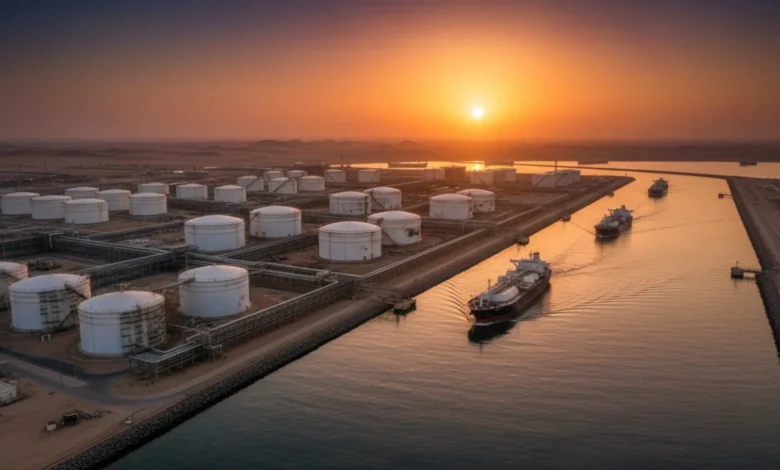
The European energy landscape is currently undergoing its most precarious winter since the onset of the conflict in Ukraine, as a volatile confluence of geopolitical instability and long-term structural policy shifts drives natural gas prices to levels not seen in four years. On Monday, wholesale gas prices on the Title Transfer Facility (TTF)—the European benchmark—surged to over €97 ($108) per megawatt-hour. This sharp ascent represents a significant economic burden for a continent that has spent the last three years attempting to decouple itself from Russian energy supplies, only to find itself increasingly vulnerable to the vicissitudes of the global liquefied natural gas (LNG) market.
The immediate catalyst for this price spike is the intensification of conflict in the Middle East. The obstruction of the Strait of Hormuz, a critical maritime chokepoint through which approximately 20% of the world’s LNG trade typically flows, has effectively severed a vital supply artery for Europe. With Qatar and other regional exporters struggling to navigate the blockade, European nations are facing a severe supply shortfall. As of October 25, EU gas storage facilities were reported at 74.62% capacity—a figure that, while seemingly robust, falls significantly below the seasonal norms required to guarantee supply security through the peak of winter.
A Chronology of Dependency and Decoupling
To understand the current crisis, one must look at the strategic pivot initiated in 2022. Following the invasion of Ukraine, the European Union implemented a series of aggressive sanctions aimed at reducing reliance on Russian pipeline gas, which in 2021 accounted for roughly 45% of the bloc’s total imports. By early 2025, that figure had plummeted to approximately 12%.
However, this transition was predicated on the assumption that global LNG markets would remain fluid and that alternative suppliers would be both accessible and affordable. The timeline of this transition reveals the fragility of this plan:
- 2022: The EU commits to the REPowerEU plan, aiming to eliminate dependence on Russian fossil fuels.
- 2023: Massive infrastructure investments are made in floating storage regasification units (FSRUs) across Germany, the Netherlands, and Finland.
- February 2026: The eruption of major conflict in the Middle East disrupts global shipping lanes, causing a sudden constriction in LNG availability.
- May 2026: LNG shipments from the Persian Gulf, a critical source for European stability, effectively cease due to the closure of the Strait of Hormuz.
- October 2026: Wholesale prices hit a four-year peak as the continent enters the heating season with historically low inventory cushions.
The Paradox of Russian LNG Imports
While the European Commission has maintained a firm rhetorical stance against the purchase of Russian energy, market data reveals a starkly different reality. A comprehensive investigation by the NGO Urgewald indicates that the EU has spent approximately €7.28 billion on Russian Arctic LNG during the first eight months of 2026 alone. This figure surpasses the total spending for the entirety of 2025, highlighting a deep-seated reliance that persists despite formal sanctions.
The Yamal LNG project, in particular, has become a lifeline for several EU member states. Between January and August 2026, 156 cargoes of Russian gas were offloaded at European ports, representing a 10% year-on-year increase in volume. France, Belgium, Spain, and the Netherlands have emerged as the primary importers, with France receiving 4.4 million tonnes. This "backdoor" dependency creates a significant political dilemma for Brussels, as the EU prepares for a total ban on Russian LNG scheduled for January 2027. Critics argue that the current strategy is not only failing to achieve its energy security objectives but is also placing an untenable financial burden on European taxpayers.
Socio-Economic Impact: The Cost of a Cold Winter
The direct impact of these wholesale price increases is manifesting in household energy bills. British consumers, already grappling with inflation, face a projected 27% increase in energy costs starting in January, bringing average annual dual-fuel bills to approximately £2,200 ($2,940). Within the Eurozone, the situation is similarly dire. Estimates from analysts suggest that an average gas-heated household consuming 10,000 kilowatt-hours during the winter season could see an additional €715 added to their annual energy expenditure once VAT is applied.
In Germany, the economic implications are being addressed through aggressive state intervention. The federal government has initiated plans for a national emergency gas reserve, a project expected to cost more than €3 billion over the next decade. While this reserve is intended to mitigate risks such as infrastructure sabotage, its funding will be levied directly onto households and businesses, further straining the industrial sector’s competitiveness. Opposition parties, such as the Alternative for Germany (AfD), have utilized the crisis to call for a recalibration of foreign policy, advocating for a pragmatic approach to energy procurement that includes restoring ties with Moscow, citing the current U.S. administration’s transactional diplomacy as a potential template.
Analysis of Global Supply Constraints
The fundamental challenge facing Europe is that it has traded a reliance on Russian pipelines for a reliance on the global spot market for LNG. In this new paradigm, Europe is in direct competition with rapidly growing economies in Asia. When supply is constrained—as it is now—European buyers must outbid Asian markets to secure shipments, which forces prices upward.
Tom Marzec-Manser, director of European gas and LNG at Wood Mackenzie, notes that the market is unlikely to see significant rebalancing until at least 2028. "Even if the current geopolitical tensions in the Middle East were to subside by the end of the year, the structural deficit in global LNG production capacity means that supply will remain tight," Marzec-Manser explained. This long-term outlook suggests that the current price volatility is not a transient shock but a reflection of a supply-demand imbalance that will persist for several years.
Official Responses and Future Outlook
Brussels continues to emphasize that the transition away from Russian energy remains a non-negotiable security imperative. European officials argue that the current crisis is a temporary, albeit painful, adjustment period necessary to ensure long-term energy sovereignty. They point to the ongoing expansion of renewable energy capacity and the development of new LNG terminals in North America and West Africa as evidence that the long-term trend is toward diversification.
However, the divergence between official policy and market reality is widening. While the Kremlin has labeled the EU’s energy policy as "suicidal," European leaders maintain that the alternative—continued reliance on an unpredictable and hostile state—is a greater long-term risk. Russian envoy Kirill Dmitriev has publicly criticized the EU’s leadership, claiming that the refusal to acknowledge the failure of current sanctions is the primary driver of the current cost-of-living crisis.
As the continent enters the coldest months of the year, the focus has shifted from ideological policy to practical survival. The reliance on the global LNG market has introduced a level of price sensitivity that few European economies were prepared for. The coming winter will serve as a definitive test of the continent’s infrastructure and its political resolve. If storage levels continue to decline faster than anticipated, policymakers may be forced to consider extreme measures, including industrial curtailment or emergency price caps, to protect the most vulnerable households.
In summary, the European energy crisis of 2026 is the result of an ambitious energy transition colliding with the rigid realities of geography and global conflict. By attempting to sanction its way out of energy dependence, the bloc has entered a period of extreme exposure to global market fluctuations. The realization is beginning to dawn on policymakers and the public alike that the path to energy security is not merely about who provides the gas, but about the systemic resilience of the entire energy architecture in an era of global fragmentation. Whether the current policy framework can survive the winter remains the central question for European leaders as they navigate the most challenging energy market of the decade.
Related posts: