Global COVID-19 Landscape: Tracking Cases, Deaths, and Evolving Policy Responses in a Post-Pandemic Era

The global landscape of the COVID-19 pandemic continues to be meticulously monitored, even as the world transitions into a phase of sustained management rather than acute crisis. A comprehensive tracker provides an ongoing, weekly updated overview of the cumulative number of confirmed COVID-19 cases and deaths, alongside the weekly rates of new cases and fatalities. This crucial data is disaggregated by country, income level, and World Health Organization (WHO) region, offering a granular perspective on the pandemic’s enduring impact worldwide. As of March 7, 2023, the World Health Organization’s (WHO) Coronavirus (COVID-19) Dashboard serves as the authoritative source for all data pertaining to cases and deaths, marking a significant transition from previous reliance on the Johns Hopkins University (JHU) Coronavirus Resource Center’s COVID-19 Map, which ceased its operations on March 10, 2023. This strategic shift underscores the WHO’s central role in global health data stewardship. While the tracker endeavors to provide the most recent available information, it operates with a two-week reporting lag to ensure data accuracy and completeness. A notable clarification was issued on March 18, 2024, confirming that the reported figures for new cases and deaths represent totals over a full week, rather than an average per day over a seven-day period, enhancing the precision of the epidemiological reporting.
The tracker also offers a historical repository of policy measures implemented to combat the pandemic, categorized into social distancing and closure measures, economic interventions, and health systems responses. These policy data, though no longer actively updated past the end of 2022 due to the cessation of the original data source, provide an invaluable retrospective analysis of governmental actions at country, income, and regional levels. This dual focus on epidemiological trends and policy responses offers a holistic view of the global fight against COVID-19, allowing for a deeper understanding of the virus’s trajectory and the varied strategies employed by nations to mitigate its health and economic consequences.
The Genesis and Evolution of Global COVID-19 Tracking
The COVID-19 pandemic, caused by the SARS-CoV-2 virus, first emerged in late 2019, rapidly escalating into a global health crisis by early 2020. The unprecedented scale and speed of its spread necessitated immediate and robust data collection mechanisms to inform public health responses, track contagion, and assess mortality. In the initial chaotic months, with fragmented information and rapidly evolving understanding of the virus, institutions like Johns Hopkins University (JHU) stepped forward to fill a critical void. JHU’s Coronavirus Resource Center launched one of the most widely referenced and comprehensive dashboards, aggregating data from numerous national and international sources. This dashboard quickly became an indispensable tool for governments, researchers, media, and the general public, providing near real-time updates on cases, deaths, and recoveries across the globe.
The early reliance on JHU’s tracker highlighted the critical need for accessible, aggregated data in a global health emergency. Its success lay in its timeliness and user-friendly interface, democratizing access to complex epidemiological information. However, as the pandemic matured and global health infrastructure adapted, the World Health Organization, as the paramount international public health authority, naturally assumed an increasingly central role in data collection and dissemination. The transition from JHU to WHO as the primary data source for this tracker reflects a broader trend towards consolidation of authoritative data under established global health bodies. This shift, formalized on March 7, 2023, with JHU’s map ending shortly thereafter on March 10, 2023, signifies a maturation of the global data infrastructure for pandemic monitoring, emphasizing the WHO’s mandate to provide consistent and globally standardized public health data. This evolution underscores the dynamic nature of data stewardship in a prolonged global health crisis, adapting to changing needs and institutional capacities.
Methodological Rigor and Data Transition
The foundation of any robust public health tracker lies in its methodology and data sources. The current tracker’s reliance on the WHO Coronavirus (COVID-19) Dashboard ensures alignment with international health standards and classifications. This is a significant shift from its previous dependency on the Johns Hopkins University Coronavirus Resource Center’s COVID-19 Map, a pivotal resource during the early and peak phases of the pandemic. The transition, effective March 7, 2023, was necessitated by JHU’s decision to conclude its COVID-19 tracking efforts on March 10, 2023, recognizing the evolving phase of the pandemic and the strengthening of national and international reporting mechanisms.
To provide comprehensive demographic context, population data are sourced from the United Nations World Population Prospects, utilizing 2021 total population estimates. This allows for accurate per capita calculations and comparisons across diverse populations. Income-level classifications, crucial for understanding socioeconomic disparities in pandemic impact and response, are derived from the latest World Bank Country and Lending Groups. Similarly, regional classifications adhere to the World Health Organization’s established geographical groupings, ensuring consistency with global health reporting frameworks.
A key aspect of data integrity involves transparency around reporting methodologies. The tracker explicitly acknowledges a two-week lag in data reporting, a common feature in global health surveillance that allows for data validation, aggregation from various national sources, and reconciliation before publication. While this means the data presented is not strictly real-time, it prioritizes accuracy and completeness over immediacy. For users requiring the complete historical dataset beyond the 200-day window displayed, the full data set is readily available for download from the tracker’s GitHub page, promoting open access and further research. The clarification issued on March 18, 2024, regarding the representation of "new cases and deaths over a full week" rather than an "average per day over a seven-day period," demonstrates a commitment to precise data interpretation, preventing potential misrepresentations and ensuring users correctly understand the weekly aggregated figures. This continuous refinement of data presentation underscores the ongoing efforts to maintain the highest standards of epidemiological reporting.
Chronology of Key Data Reporting Milestones
The journey of global COVID-19 data tracking has been marked by several critical milestones, reflecting both the pandemic’s progression and the evolution of global public health responses:
- Late 2019: Initial cases of a novel coronavirus, later identified as SARS-CoV-2, emerge in Wuhan, China, marking the covert genesis of the pandemic.
- January 2020: The World Health Organization declares the outbreak a Public Health Emergency of International Concern. In parallel, Johns Hopkins University launches its now-iconic COVID-19 dashboard, rapidly becoming a primary, accessible global reference for tracking cases and deaths.
- March 2020: WHO officially declares COVID-19 a pandemic. Governments worldwide begin to implement a diverse array of policy measures, ranging from lockdowns to travel restrictions, necessitating tools to track both the disease and the responses.
- 2020-2022: This period represents the peak of intensive global data collection efforts. Daily updates are frequent, and public and scientific scrutiny of the numbers is intense. The development and rapid rollout of COVID-19 vaccines introduce new dimensions to data tracking, including vaccination rates and vaccine effectiveness.
- Early 2023: As the acute phase of the pandemic begins to recede in many regions, global data reporting enters a transition phase. Johns Hopkins University announces its intention to cease updating its COVID-19 map, signaling a shift in the perceived urgency and necessity of its specific real-time aggregation efforts. The WHO increasingly solidifies its position as the central, authoritative hub for global COVID-19 data.
- March 7, 2023: The tracker officially transitions its data source for COVID-19 cases and deaths to the World Health Organization’s Coronavirus Dashboard, aligning with the WHO’s ongoing mandate.
- March 10, 2023: The Johns Hopkins University Coronavirus Resource Center’s COVID-19 Map officially concludes its operations, marking the end of an era for a widely relied-upon tracking tool.
- March 18, 2024: A significant data clarification is implemented within the tracker, specifying that reported new cases and deaths represent totals over a full week, rather than daily averages, enhancing the accuracy and interpretability of the published epidemiological trends.
This chronology underscores the dynamic nature of pandemic response and data management, from the rapid establishment of tracking systems in crisis to the eventual consolidation under official international health bodies.
Global Case and Death Trends: A Persistent Public Health Challenge
The cumulative global figures for COVID-19 cases and deaths, meticulously compiled by the WHO, represent an unprecedented health crisis in modern history. While specific real-time numbers are dynamic and subject to the two-week reporting lag, the overall scale is staggering, with hundreds of millions of confirmed cases and millions of reported deaths worldwide. Beyond these direct fatalities, analyses of excess mortality suggest an even higher true death toll, highlighting the pervasive and indirect impacts of the pandemic on global health systems and population well-being.
The tracker’s ability to disaggregate daily COVID-19 cases and deaths by country, income, and WHO region reveals persistent disparities in the pandemic’s burden and ongoing vulnerabilities. High-income countries, often with robust healthcare infrastructures and earlier access to vaccines, generally demonstrated lower per capita mortality rates in later stages, though they bore significant initial burdens. Conversely, many low- and middle-income countries faced immense challenges, struggling with vaccine equity, limited testing capacities, and fragile health systems, which often led to underreporting and higher rates of severe outcomes. Regional trends, such as those observed across the WHO’s six regions (Africa, Americas, South-East Asia, Europe, Eastern Mediterranean, Western Pacific), illustrate varied epidemiological trajectories influenced by demographics, public health interventions, and socioeconomic factors. For instance, regions with older populations or higher prevalence of comorbidities often experienced greater strain on healthcare services and higher mortality.
These ongoing trends, even as the world moves beyond the emergency phase, continue to inform public health strategies. The data underscores the importance of continued surveillance, equitable vaccine distribution, and strengthening health systems globally. The virus, while often less severe due to widespread immunity and improved treatments, continues to circulate, cause illness, and contribute to fatalities, particularly among unvaccinated, immunocompromised, or elderly populations. Understanding these sustained impacts is crucial for resource allocation, for managing long COVID, and for preparing for future variants or health threats. The weekly updates serve as a critical reminder that while the acute crisis may have subsided, the long-term management of COVID-19 remains a significant global public health endeavor.
The Landscape of Policy Actions: A Retrospective Analysis
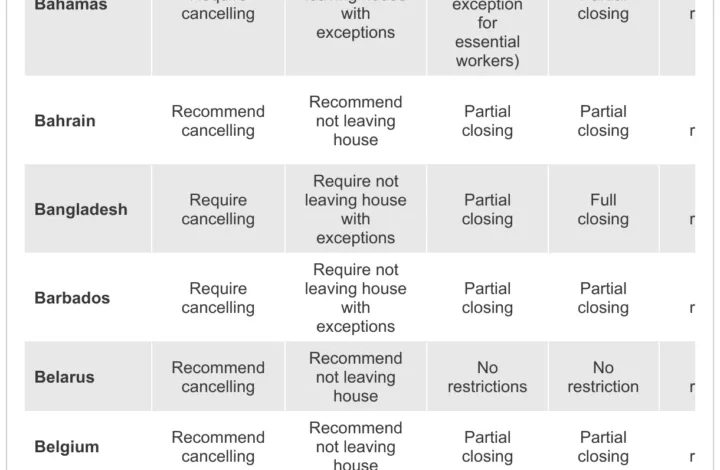
Beyond the direct epidemiological data, the tracker provides a vital historical record of policy actions implemented by governments worldwide to address the COVID-19 pandemic. This section, though no longer updated past the end of 2022, offers an invaluable retrospective lens into the diverse and often rapidly evolving governmental responses. The cessation of updates for policy actions is directly linked to the Oxford Covid-19 Government Response Tracker (OxCGRT), which served as the primary data source, concluding its active tracking of government responses. Despite this, the compiled data remains a critical resource for understanding the historical context of policy decisions across three broad categories: social distancing & closure measures, economic measures, and health systems measures. These policies were tracked at the country, income, and regional levels, enabling comparative analysis of how different jurisdictions responded to the crisis. The data, reflective of measures in place as of the end of 2022, captures a significant period of the pandemic’s active management, providing a snapshot of the global policy landscape during a time of unprecedented public health intervention.
A. Social Distancing and Closure Measures (Historical Snapshot)
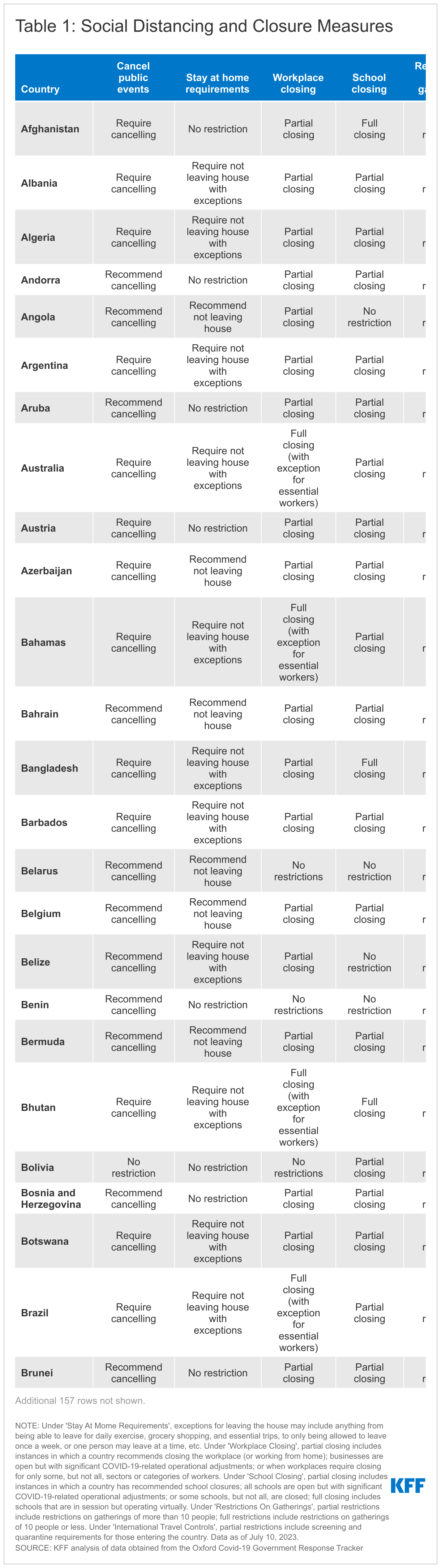
The social distancing and closure measures were among the most visible and impactful government responses, aimed at curbing the transmission of SARS-CoV-2. These policies dramatically altered daily life for billions, demonstrating governments’ willingness to intervene extensively to protect public health.
- Stay At Home Requirements: These varied significantly, from recommendations to strict mandates. "Exceptions for leaving the house" could range from allowing daily exercise and grocery shopping to highly restricted movements, such as only one person leaving per week or for essential trips only. These measures aimed to drastically reduce person-to-person contact.
- Workplace Closing: Policies here spanned from government recommendations for remote work to partial or full closures. "Partial closing" included instances where businesses were open but with significant COVID-19-related operational adjustments (e.g., capacity limits, hygiene protocols) or when closures applied only to specific sectors or categories of workers deemed non-essential.
- School Closing: Educational institutions faced similar disruptions. "Partial closing" entailed recommended closures, schools operating with significant COVID-19-related adjustments, or only some schools being closed. "Full closing" included schools that were technically in session but operating entirely virtually. The impact on education and child development was profound.
- Restrictions On Gatherings: These were implemented to prevent super-spreading events. "Partial restrictions" typically limited gatherings to more than 10 people, while "full restrictions" were more stringent, limiting gatherings to 10 people or less, often extending to private settings.
- International Travel Controls: These measures aimed to prevent the importation and exportation of cases. "Partial restrictions" involved screening and quarantine requirements for incoming travelers, while stricter controls included outright bans on non-essential travel or specific nationalities.
- Cancel Public Events: These measures were broadly implemented, from concerts and sporting events to religious gatherings, to minimize large crowds where transmission risk was high.
The rationale behind these measures was to "flatten the curve," reducing the peak burden on healthcare systems. While effective in slowing transmission, they came with significant socio-economic costs, including business closures, job losses, mental health challenges, and educational disruptions.
B. Economic Measures (Historical Snapshot)
The economic fallout of the pandemic and the associated public health measures placed unprecedented strain on national economies and household finances. Governments responded with various economic interventions to cushion the impact.
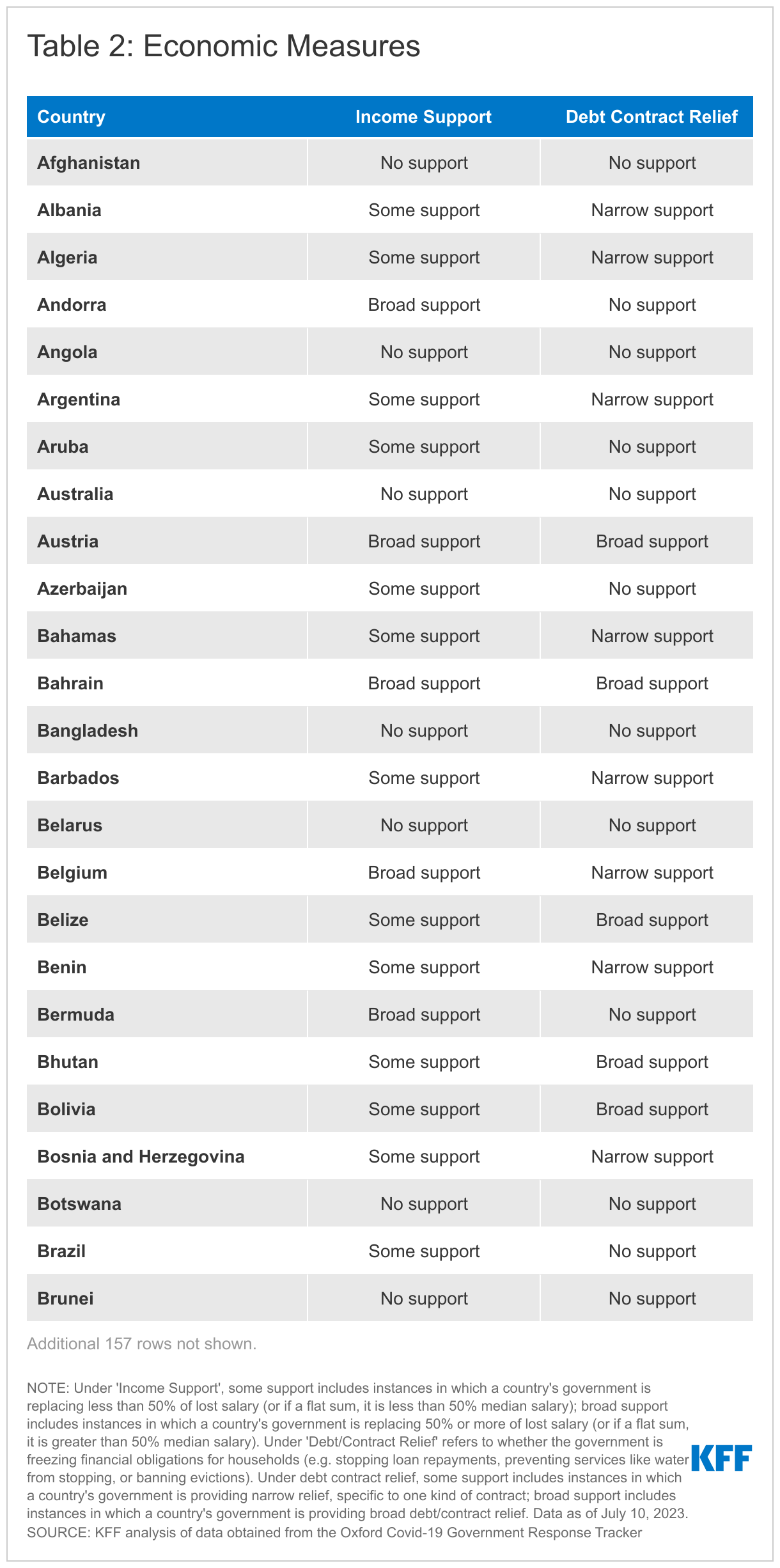
- Income Support: These policies aimed to replace lost income for individuals affected by job losses, furloughs, or reduced working hours. "Narrow support" typically involved governments replacing less than 50% of lost salary or providing a flat sum less than 50% of the median salary. "Broad support" was more substantial, replacing 50% or more of lost salary or providing a flat sum greater than 50% of the median salary. These measures were critical in preventing widespread poverty and maintaining consumer spending power.
- Debt/Contract Relief: Governments also intervened to provide relief from financial obligations. "Narrow support" in this category included specific relief measures, such as moratoriums on evictions for renters or specific loan deferrals for certain types of contracts, rather than broad-based debt forgiveness.
These economic measures were essential for mitigating the severe recessionary pressures and social unrest that could have resulted from the widespread disruptions. They represented a massive fiscal commitment by governments worldwide, demonstrating the interconnectedness of public health and economic stability.
C. Health Systems Measures (Historical Snapshot)
The COVID-19 pandemic severely tested global health systems, necessitating rapid adaptations and the implementation of specific health-related policies.
- Vaccine Eligibility: The rollout of COVID-19 vaccines marked a turning point in the pandemic. Policies on "vaccine eligibility" determined who could access vaccines and when. "Partial availability" often involved a phased rollout, prioritizing key workers (healthcare, essential services), non-elderly clinically vulnerable groups, and elderly populations, or making vaccines available for select broad age groups. Full availability eventually meant widespread access for the general population.
- Facial Coverings: Mandates or recommendations for "facial coverings" were a simple yet effective public health intervention to reduce airborne transmission. "Recommend/partial requirement" included instances where governments recommended wearing masks, required them in some specific situations (e.g., public transport, healthcare settings), or mandated them only when social distancing was not possible. Stricter policies involved universal mask mandates in all public indoor settings.
These health systems measures were critical components of the overall pandemic response, directly impacting disease transmission and severity. The challenges in vaccine distribution, public acceptance of masking, and the strain on healthcare infrastructure were significant, highlighting the complexities of implementing population-wide health interventions during a global crisis.
Broader Impact and Implications of Comprehensive Tracking
The comprehensive tracking of COVID-19 cases, deaths, and policy actions, as provided by this and similar global trackers, offers profound and multifaceted implications for public health, economic stability, and future global preparedness.
Firstly, for Public Health Planning, the detailed epidemiological data is indispensable. It informs critical decisions regarding resource allocation, such as the deployment of medical supplies, healthcare personnel, and vaccine doses. By identifying areas with high transmission rates or disproportionate mortality, public health authorities can strategically target interventions, establish testing sites, and manage hospital bed capacity. The data also aids in understanding disease dynamics, including the impact of variants and the effectiveness of different public health campaigns.
Secondly, the historical record of Economic Measures provides crucial insights for future recovery strategies. Analyzing which income support and debt relief programs were most effective in mitigating economic hardship during the pandemic can inform policies for subsequent economic downturns or crises. It highlights the direct link between public health interventions and economic resilience, demonstrating how robust social safety nets can prevent deeper and more prolonged recessions.
Thirdly, the retrospective analysis of Policy Efficacy Studies is a goldmine for researchers and policymakers. The comprehensive data on social distancing, school closures, and international travel controls, alongside health system measures, allows for rigorous academic studies into what worked, where, and why. This evidence-based understanding is vital for developing more refined and effective crisis management protocols for future pandemics or large-scale emergencies, optimizing outcomes while minimizing societal disruption.
Fourthly, the disaggregation of data by income and region underscores issues of Global Equity. It starkly reveals disparities in disease burden, access to healthcare, and the capacity of governments to implement robust policy responses. This highlights the need for continued international cooperation, equitable distribution of health resources, and targeted support for vulnerable nations to build resilient health systems and economies. Global health security is inherently interdependent, and these data illuminate where collective action is most needed.
Fifthly, the emphasis on Data Transparency and Trust cannot be overstated. Relying on authoritative sources like the WHO and adhering to transparent methodologies for data collection and reporting builds public trust, which is essential for compliance with public health directives and combating misinformation. The detailed methods section and the availability of full datasets on GitHub promote accountability and allow for independent verification and research, fostering a more informed global discourse.
Finally, the lessons learned from COVID-19 data collection and policy tracking will be Invaluable for Future Pandemics. The experience has spurred innovations in surveillance technologies, data sharing protocols, and rapid response mechanisms. The evolution of tracking methodologies, from the initial ad-hoc efforts to more standardized and institutionalized approaches, demonstrates a critical adaptability. This collective experience will undoubtedly shape how the world prepares for and responds to the next global health threat, emphasizing agility, equity, and data-driven decision-making.
In conclusion, the ongoing commitment to comprehensively track COVID-19 cases, deaths, and to retrospectively analyze policy actions provides an indispensable resource for understanding the multifaceted impacts of the pandemic. As the world transitions into a new phase of living with the virus, sustained vigilance, robust data collection under authoritative bodies like the WHO, and continuous learning from past policy interventions remain paramount. The legacy of COVID-19 tracking will not only inform current public health strategies but will also serve as a critical foundation for building a more resilient and equitable global health future, forever emphasizing the necessity of data-driven responses in the face of unprecedented challenges.
Related posts: