Sweeping Healthcare Overhaul Under the 2025 Reconciliation Law Threatens Coverage for Millions of Lawfully Present Immigrants

The landscape of American healthcare is undergoing a profound transformation following the passage of the 2025 federal budget reconciliation law. This sweeping legislation implements rigorous new eligibility restrictions for federally funded health programs—including the Affordable Care Act (ACA) Marketplace, Medicaid, the Children’s Health Insurance Program (CHIP), and Medicare—targeting millions of lawfully present immigrants who previously qualified for financial assistance. While undocumented immigrants have historically been barred from federally funded health coverage under longstanding U.S. policy, the new law introduces unprecedented barriers for authorized residents, fundamentally reshaping the boundaries of public health access in the United States.
Chronology of Implementation and Critical Deadlines
The implementation of the 2025 reconciliation law is structured across multiple phases, creating a compressed and complex timeline for federal agencies, state-based marketplaces, and affected enrollees.
The initial phase took effect on January 1, 2026, eliminating access to subsidized Marketplace coverage for all lawfully present immigrants earning less than 100 percent of the federal poverty level (FPL) who were previously excluded from Medicaid due to their immigration status. This group includes individuals currently navigating the mandatory five-year waiting period required for certain legal residents before they can enroll in Medicaid.
The most sweeping provisions, however, are slated to take effect on January 1, 2027. Beginning on this date, eligibility for Marketplace premium tax credits (PTCs) and income-based cost-sharing reductions (CSRs) will be drastically curtailed. The Open Enrollment Period for the 2027 plan year—which commences on November 1, 2026—serves as the critical window during which millions of noncitizen enrollees and new applicants must have their immigration statuses verified under the new statutory guidelines.
Furthermore, looking ahead to the 2028 tax year, the law mandates that all individuals eligible for PTCs must undergo complete pre-verification of household income, family size, residence, and immigration status before receiving any financial assistance. This eliminates the historical grace period that allowed consumers to receive subsidies while their documentation was actively being processed.
Strict Subsidies Redefined: The "Eligible Noncitizen" Standard
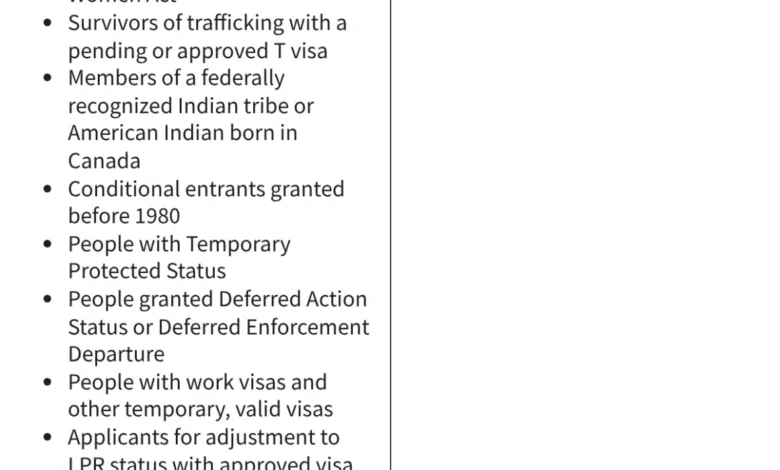
Under the revised framework of the 2025 reconciliation law, financial assistance within the ACA Marketplace will be restricted exclusively to individuals classified as "eligible noncitizens." This newly codified category encompasses lawful permanent residents (LPRs)—commonly referred to as green card holders—Cuban and Haitian entrants, and individuals residing in the United States under the Compacts of Free Association (COFA).
Consequently, the law strips Marketplace subsidy eligibility from several major categories of lawfully present immigrants. Most notably, refugees and asylees who have not yet obtained a green card, as well as individuals residing in the country on valid work visas, will no longer qualify for federal financial assistance to offset the cost of health insurance.
While these groups retain the legal right to purchase a Qualified Health Plan (QHP) through the Marketplace at full cost without subsidies, policy analysts note that unsubsidized coverage will likely remain financially out of reach for the vast majority. Additionally, individuals protected under Deferred Action for Childhood Arrivals (DACA) remain categorically ineligible to purchase ACA Marketplace coverage, reinforcing restrictions enacted under recent regulatory updates.
Federal Projections and Fiscal Impact Estimates
The Congressional Budget Office (CBO) and the Centers for Medicare and Medicaid Services (CMS) have released extensive economic projections detailing the fiscal and demographic consequences of the 2025 reconciliation law.
According to CBO estimates, the restriction limiting Marketplace subsidies exclusively to designated "eligible noncitizens" will reduce federal spending by $91.4 billion over a ten-year projection period ending in 2035. However, this reduction in federal outlays comes at a severe human cost: the CBO projects that this specific provision will result in an additional one million individuals becoming uninsured, with the vast majority of coverage losses occurring immediately in 2027.
Moreover, the earlier restriction targeting lawfully present immigrants earning below 100 percent of the FPL—which took effect at the beginning of 2026—is projected to reduce federal spending by $27.3 billion between 2026 and 2035 while pushing an additional 200,000 people out of the insured population. Combined, these regulatory shifts are expected to strip health coverage from roughly 1.4 million lawfully present immigrants over the coming decade.
Verification Procedures and Administrative Mechanics
To operationalize these mandates, the Centers for Medicare and Medicaid Services (CMS) released comprehensive technical guidance outlining how the federally facilitated exchange (FFE)—operating in 29 states via HealthCare.gov and partner platforms—will verify immigrant eligibility during the 2027 Open Enrollment Period.
The FFE relies heavily on automated data matching through the Department of Homeland Security’s Systematic Alien Verification for Entitlements (SAVE) system. Current noncitizen enrollees and new applicants must attest to their status and provide updated documentation, such as passport numbers, Permanent Resident Cards, or Employment Authorization Documents (EADs).
If the FFE cannot automatically verify an individual’s status through existing electronic data hubs, the affected enrollee is issued a 95-day window to submit physical documentation. Individuals who fail to resolve discrepancies or do not take action by the plan selection deadline will automatically lose their subsidies effective January 1, 2027.
Crucially, enrollees determined to be lawfully present but ineligible for subsidies will be automatically re-enrolled into unsubsidized Marketplace plans. Unless these consumers actively cancel their coverage, they become legally and financially responsible for the full monthly premium. Failure to pay these higher costs can lead to plan termination under standard issuer grace periods, leaving consumers vulnerable to medical debt and stripped of the standard three-month grace period previously afforded to subsidized policyholders. Furthermore, any premium tax credits disbursed during the 95-day verification window must be fully repaid during annual tax filings if the individual is ultimately deemed ineligible, with the 2025 law and accompanying IRS rules removing previous income-based caps on such repayments.
Divergent State Approaches and Administrative Pressures
While the FFE governs the process across 29 states, state-based exchanges (SBEs) operating in 22 states and the District of Columbia retain authority over their specific outreach and verification protocols. Although SBEs are legally bound to enforce the same federal immigrant eligibility restrictions, their timelines, communications strategies, and technical execution vary significantly.
States operating their own exchanges face an immense administrative burden. They must overhaul their technological infrastructure, retrain customer service personnel, and conduct widespread public outreach simultaneously while implementing parallel immigrant eligibility restrictions within their state Medicaid programs.
In stark contrast to states scaling back access, some regional governments are attempting to fill the coverage gaps created by federal policy. For instance, New Mexico has allocated state funds to provide localized coverage and premium subsidies through its state-based exchange for lawfully present noncitizens—as well as DACA recipients—who have been priced out or disqualified from the federal Marketplace. Nevertheless, most states lack the fiscal capacity to establish parallel funding streams, leaving vulnerable populations with few viable alternatives.
Broader Implications for Public Health and Mixed-Status Families
Public health experts and immigrant advocacy organizations have raised profound concerns regarding the secondary effects of the 2025 reconciliation law. Beyond the explicit loss of coverage driven by statutory ineligibility, a significant number of individuals who technically remain eligible for subsidies are expected to drop out of the system due to bureaucratic hurdles, administrative confusion, and widespread fear.
Data reliability issues within the SAVE system remain a persistent concern. Because SAVE provides a "point-in-time" verification that does not automatically update when an immigrant’s legal status changes or advances toward permanent residency, many individuals who hold valid eligible statuses may face erroneous rejections unless they successfully navigate complex document-submission protocols.
Furthermore, these healthcare policy changes intersect with a broader climate of heightened federal immigration enforcement and evolving public charge regulations. Advocacy groups report that ambient fear and confusion within immigrant communities often deter eligible individuals from seeking necessary medical care or engaging with public health programs altogether.
For those who lose coverage entirely, options remain severely constrained. Uninsured individuals often turn to federally qualified community health centers that operate on a sliding fee scale, though these facilities frequently lack the capacity to provide comprehensive specialty care. As the 2027 plan year approaches, policy analysts warn that the cumulative impact of rising baseline premiums, the expiration of enhanced tax credits, and the stringent new noncitizen rules will permanently alter the fabric of the American healthcare safety net, leaving a significant segment of the nation’s legal resident population without financial protection against medical illness and injury.
Related posts: