The Rise of Quantified Self: Balancing Wearable Health Technology With Human Intuition

In an era defined by rapid technological integration, the traditional methods by which humans assess their own physical well-being have undergone a fundamental shift. Historically, human beings relied strictly on subjective internal cues—such as perceived exertion, perceived fatigue levels, and intuitive body assessments—to determine health status and physical capability. Today, however, a rapidly expanding market of wearable technology and digital applications allows individuals to monitor physiological metrics with unprecedented granularity. Modern consumers can track resting heart rates, daily step counts, exercise intensities, sleep architectures, and metabolic outputs, often consolidating this vast array of information onto a single, sleek wrist-mounted device or smartphone screen.
This convergence of biology and technology creates a bridge between subjective physical feelings and objective, quantifiable measurements. Analysts note that this development represents a major leap forward in personal health management. Human beings are notoriously unreliable at quantifying personal experiences and behaviors with cold, objective precision. For example, individuals routinely miscalculate caloric intake, often underestimating portion sizes or overlooking liquid calories such as dressings and sauces, which can add hundreds of uncounted calories to a daily total. By providing hard data, fitness trackers aim to correct these cognitive biases, offering a mirror that reflects true behavioral patterns rather than perceived ones.
However, the widespread adoption of health-tracking technology has also introduced complex psychological and physiological challenges. Industry experts, behavioral scientists, and healthcare professionals are increasingly examining the paradox of information overload. While data can illuminate blind spots and validate healthy routines, an over-reliance on digital metrics can sometimes detach individuals from their internal physical cues, elevate stress levels, and occasionally degrade performance or enjoyment. Navigating this new landscape requires a nuanced understanding of how to effectively integrate technological tools without sacrificing bodily intuition.
The Evolution and Accuracy of Modern Tracking Devices
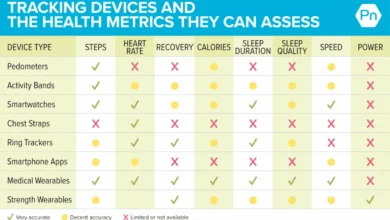
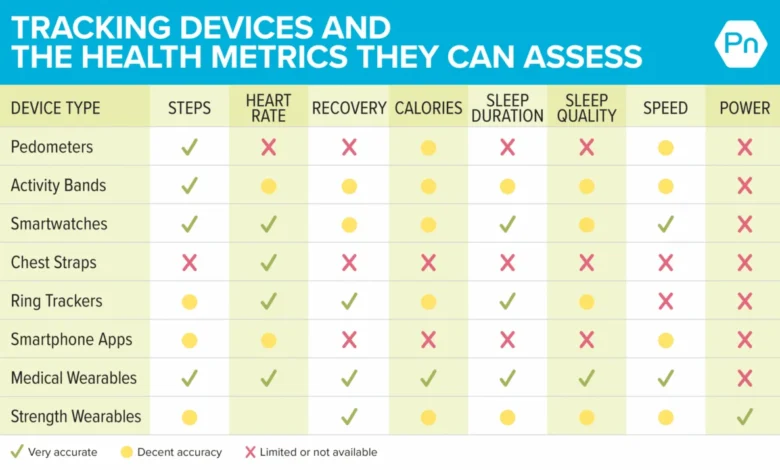
The global market for wearable fitness technology has expanded exponentially over the past decade, evolving from simple pedometers into sophisticated health monitoring systems. Contemporary smartwatches, activity bands, smart rings, chest straps, and medical wearables utilize a variety of sensors—including accelerometers, optical heart rate monitors, and gyroscopes—to capture real-time physiological data.
Despite the advanced engineering behind these devices, researchers emphasize that not all health data is created equal. The accuracy of a wearable device depends heavily on both hardware quality and the underlying software algorithms used to process raw sensor outputs. Fundamental metrics such as step counts and heart rate measurements have achieved high levels of reliability across most major device manufacturers. Conversely, secondary derived metrics—such as estimated active calories burned, movement velocity, and granular sleep stages—continue to exhibit substantial margins of error.
To help consumers navigate this landscape, health researchers frequently categorize tracking tools by their specific capabilities. While chest straps remain the gold standard for continuous cardiovascular monitoring, smartwatches offer a broad, albeit sometimes less precise, overview of daily activity. Understanding these limitations is critical for users who make lifestyle or dietary adjustments based entirely on digital feedback. Data should be viewed as an informed estimate rather than an infallible medical diagnosis.
The Paradox of Information: Finding the Optimal Data Threshold
One of the most significant psychological phenomena associated with the quantified self-movement is the inverted U-curve of decision-making. According to computer scientist Samantha Kleinberg, who studies human decision-making processes, even a surplus of minor information can exert a negative effect on cognitive choices.
This creates a distinct tracking paradox: having too little detail makes it difficult to make informed health decisions, but having too much information can lead to analysis paralysis, decision fatigue, and heightened anxiety. In the context of health and fitness—an industry continually saturated with new scientific studies, complex dietary protocols, and competing wellness philosophies—excessive data can easily blur the path forward.

Behavioral experts suggest that the relationship between information volume and decision-making efficiency resembles a bell curve. At the lower end, ignorance or a lack of data results in poor choices due to blind spots. At the peak—the optimal "sweet spot"—individuals possess sufficient, clear, and actionable data to make productive adjustments. However, at the upper extreme, the accumulation of granular, sometimes contradictory metrics overwhelms the cognitive processing capacity, resulting in decreased performance, chronic stress, and behavioral paralysis.
To determine whether tracking is serving a beneficial purpose or contributing to information fatigue, health professionals recommend evaluating personal well-being through three primary diagnostic lenses.
Sign #1: Validation Versus Unnecessary Stress
For many individuals, tracking devices serve a validating function, reducing anxiety by confirming that a specific health protocol is working. For example, athletes or recreational runners transitioning to low-intensity, high-volume training regimes—such as Zone 2 cardio—often experience psychological friction. Because these workouts feel deceptively easy, high-achieving individuals frequently second-guess their effectiveness, assuming that progress requires constant physical exhaustion.
When these individuals utilize heart rate monitors and observe objective markers of cardiovascular adaptation, such as a declining resting heart rate and shortened recovery times, the data provides reassurance. This objective validation helps reconcile subjective feelings of ease with objective physiological progress, reducing performance anxiety.
Conversely, tracking can become a source of chronic stress when it delivers negative feedback regarding metrics entirely outside an individual’s immediate control. For instance, new parents monitoring sleep quality scores are frequently confronted with unavoidable sleep deprivation. When poor digital scores are coupled with an inability to alter the underlying environmental circumstances, tracking transforms into a counterproductive psychological burden. In such scenarios, experts advise stepping away from the data until life circumstances shift to accommodate active health optimization.
Sign #2: Enhancing Motivation Versus Fueling Obsession
Behavioral psychology models indicate that successful habit formation relies on three core components: sufficient motivation, adequate physical and mental ability, and a timely prompt. Fitness trackers excel precisely at providing that timely prompt.
When an individual possesses the underlying desire and physical capability to change a behavior, a clear digital readout can act as a catalyst. For example, individuals utilizing sleep trackers or continuous glucose monitors frequently discover direct correlations between evening alcohol consumption or specific dietary choices and poor physiological recovery. Once that relationship is highlighted through data, the correct behavioral choice becomes starkly apparent, often resulting in immediate lifestyle modifications.
However, the dark side of this motivational feedback loop is the erosion of intrinsic enjoyment. Recreational athletes who become hyper-focused on breaking digital records, maintaining strict training streaks, or optimizing every minute of recovery can inadvertently strip the joy from their pursuits. When physical activity transforms from an enjoyable, expressive practice into a rigid mathematical equation governed by algorithmic scores, the risk of burnout, overtraining, and psychological fatigue increases dramatically.
Sign #3: Self-Awareness Versus Sensory Disconnection
The ultimate goal of self-monitoring should be an enhanced understanding of one’s own physical capacity, potential, and limitations. While some individuals chronically overestimate their work capacity and drive themselves into states of overtraining, others severely underestimate their physical potential and hold back. Objective data can serve as an equalizer, helping both demographics calibrate their efforts more accurately.

Despite these benefits, an uncritical over-reliance on digital trackers carries the distinct risk of disconnecting individuals from their own internal biological signals. Historical anecdotes, such as widespread temporary outages of popular digital calorie-tracking applications, have highlighted the phenomenon of "algorithmic dependency." When technical platforms become temporarily unavailable, users can experience acute anxiety, revealing a dangerous detachment from natural internal cues such as hunger, satiety, and intuitive energy regulation.
Over time, outsourcing self-assessment entirely to machines can atrophy an individual’s ability to interpret foundational sensory inputs, leaving them feeling unanchored whenever the technology fails or battery power runs out.
Three Strategies for Integrating Technology and Intuition
To maximize the benefits of wearable health technology while preserving natural self-awareness, health coaches and behavioral specialists recommend adopting three core integration practices.
-
Check In Before Consulting the Device
Before reviewing the metrics recorded by a fitness tracker—whether it is sleep duration, heart rate, or energy expenditure—individuals should pause to consciously assess their own internal state. Ask: How rested do I feel? How hard was that workout on a subjective scale? By estimating these values internally first and then comparing them against the objective tracker data, users can gradually narrow the gap between subjective perception and objective reality, sharpening their intuitive calibration over time. -
Develop Mental Shortcuts for Effort and Exertion
Relying exclusively on complex digital outputs can complicate simple training decisions. Individuals can build effective mental shortcuts by utilizing established self-monitoring tools such as the Rate of Perceived Exertion (RPE) scale. By periodically checking internal feelings of effort against objective metrics like heart rate or speed, exercisers learn to accurately gauge proximity to muscular failure or cardiovascular limits without constantly staring at a wrist display. -
Cultivate Sensory Literacy
Human beings possess a vast, sophisticated network of internal sensory systems, including proprioception, interoception, vestibular awareness, and thermal regulation. Technology cannot replicate the nuanced pattern-recognition capabilities of the human nervous system. Regularly practicing mindfulness, paying attention to physical posture, noting muscular tension, and tuning into natural hunger and fatigue cues ensures that technology remains a supportive tool rather than a sensory replacement.
Ultimately, while modern fitness trackers and health gadgets offer extraordinary insights into human physiology, they are most effective when used to calibrate, rather than replace, human intuition. By maintaining a balanced relationship with digital metrics, individuals can leverage the best of modern science while keeping their own lived, felt experience at the center of their health journey.