Remembering Tom Johnson: The Visionary Geneticist Who Proved Aging Could Be Manipulated


The scientific community is mourning the loss of Thomas "Tom" E. Johnson, a pioneering geneticist whose revolutionary work in the mid-to-late 1980s shattered long-held biological dogmas and laid the foundation for the modern field of geroscience. Passing away last month, Johnson leaves behind a legacy that transformed aging from an inevitable, unchangeable mystery of nature into a tractable biological process capable of manipulation and intervention.
Before Johnson’s breakthrough investigations at the University of Colorado in Boulder, the academic consensus viewed aging as an intractable, chaotic byproduct of entropy. Spanning thousands of genes and countless physiological declines, the deterioration of living organisms was widely considered impossible to isolate, study systematically, or alter. Today, the notion that lifespan can be extended through genetic targeting is a cornerstone of biomedical research, largely due to the courage, persistence, and groundbreaking empirical evidence provided by Johnson and his laboratory.
The Paradigm Shift: Disrupting the Biological Status Quo
In the mid-1980s, the landscape of biogerontology was vastly different from the high-funded, technologically advanced field it is today. Mainstream biologists largely dismissed aging as a byproduct of generalized wear and tear, rendering rigorous genetic analysis nearly nonexistent. Researchers who dared to study longevity were frequently marginalized, with established academics often steering promising students away from the topic, branding it as speculative or even "junk science."
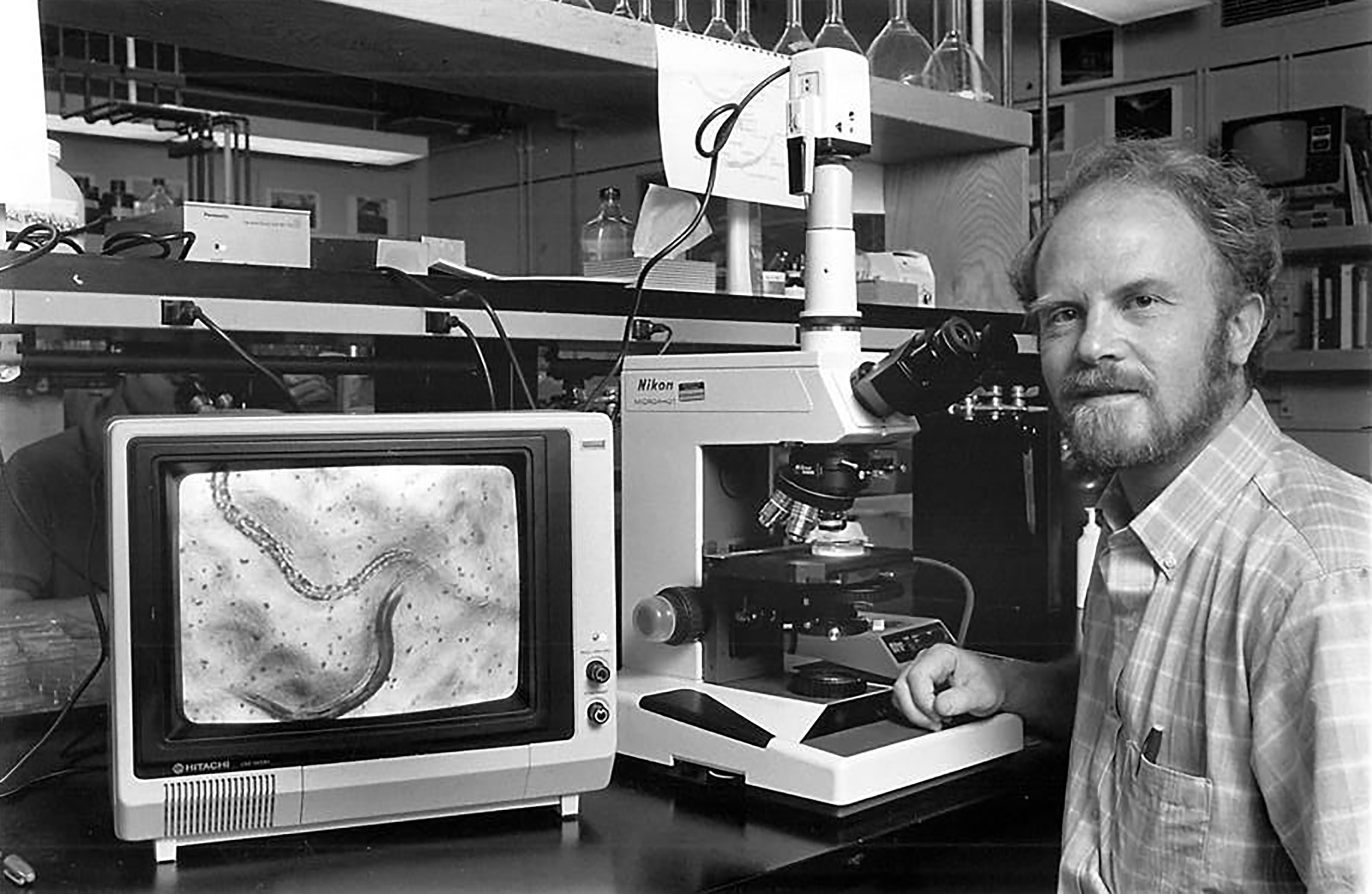
Johnson’s entry into this scientific wilderness permanently altered the trajectory of the discipline. Through a meticulous series of four landmark publications, he dismantled the prevailing assumption that lifespan was genetically fixed beyond alteration. Building upon earlier foundational efforts by researcher Mike Klass, Johnson utilized the nematode worm Caenorhabditis elegans (C. elegans)—a microscopic organism that has since become a premier model for genetic and aging research—to test his hypotheses.
In his initial study, Johnson demonstrated that selective breeding of C. elegans could yield significant, measurable effects on longevity. He followed this breakthrough with three subsequent papers that proved mutations in a single gene were sufficient to extend the lifespan of the nematodes by more than 50 percent. For the scientific community of the era, the idea that a single genetic alteration could drastically delay aging and extend life was unprecedented, sparking skepticism, disbelief, and intense debate across laboratories worldwide.
A Heroic Fellowship of Skeptics and Pioneers
While many academic contemporaries dismissed Johnson’s findings as statistical anomalies or scientific overreach, a small cohort of visionary young scientists recognized the profound implications of his work. Among them were Dr. Gordon Lithgow and Dr. Simon Melov, two researchers who would later become instrumental figures at the Buck Institute for Research on Aging.
Recalling his early days as a graduate student in the early 1990s, Dr. Melov noted the immense institutional pressure he faced when attempting to pursue the biology of aging. Established academics whom he consulted for career advice explicitly warned him that focusing on aging was equivalent to "throwing his life away."
Seeking guidance from a future Nobel Prize winner regarding a potential fellowship in Johnson’s laboratory, Dr. Melov received a blunt warning that Johnson was "crazy" and that he should instead pursue a respectable, conventional path in developmental biology. Rather than deterring him, the skepticism served as a catalyst. Dr. Melov bypassed traditional academic gatekeepers, writing directly to Johnson to inquire about postdoctoral opportunities for international researchers.
Johnson’s prompt and welcoming response initiated a mentorship that not only launched Dr. Melov’s career but also reinforced an institutional culture centered on rigor, open-mindedness, and empirical courage. The laboratory environment cultivated by Johnson in Boulder became a crucible for a new generation of scientists who would go on to build the structural and intellectual foundations of modern geroscience.
Chronology of a Scientific Revolution
To fully grasp the magnitude of Tom Johnson’s contributions, it is essential to examine the chronological progression of discoveries that transitioned biogerontology from the fringes of biology to the cutting edge of modern medicine:

- The Pre-1980s Era: Aging is viewed predominantly as a thermodynamic inevitability—a complex, multi-gene decay process that cannot be systematically manipulated or reversed.
- The Late 1970s to Early 1980s: Researcher Mike Klass identifies genetic variants in C. elegans that affect lifespan, planting the seeds for single-gene control of longevity, though the findings require further validation.
- The Mid-to-Late 1980s: Tom Johnson publishes a series of four revolutionary papers. He proves that selective breeding alters longevity and subsequently demonstrates that single-gene mutations can extend C. elegans lifespan by over 50 percent.
- The Early 1990s: Young researchers such as Dr. Gordon Lithgow and Dr. Simon Melov brave professional skepticism to join Johnson’s laboratory at the University of Colorado Boulder, cementing a collaborative network that champions genetic interventions in aging.
- The Late 1990s and Beyond: The validation of Johnson’s single-gene mutation model paves the way for the establishment of specialized research institutions, most notably the Buck Institute for Research on Aging, propelling geroscience into the mainstream of biomedical science.
Implications and the Rise of Geroscience
The implications of Johnson’s discoveries extend far beyond the laboratory bench or the lifespan of nematode worms. By establishing that aging is governed by specific, mutable genetic pathways, Johnson’s work provided the conceptual framework for geroscience—an interdisciplinary field dedicated to understanding the molecular and cellular mechanisms of aging in order to prevent, delay, or treat age-related chronic diseases collectively rather than individually.
Historically, modern medicine has operated reactively, treating cardiovascular disease, neurodegeneration, cancer, and metabolic disorders as distinct pathologies. However, because advanced age remains the single greatest risk factor for virtually all chronic diseases, Johnson’s discovery suggested a unified therapeutic strategy: targeting the aging process itself could simultaneously compress morbidity and extend healthspan—the period of life spent in good health, free from chronic disease and disability.
Today, pharmaceutical and biotechnology pipelines heavily draw upon the genetic pathways first illuminated in model organisms by pioneers like Johnson. Interventions targeting nutrient-sensing pathways, cellular senescence, and mitochondrial function trace their intellectual lineage directly back to the radical notion that a single gene could alter the biological clock.
A Lasting Scientific Legacy
Thomas E. Johnson’s passing marks the end of an era for biogerontology, but his contributions remain permanently embedded in the DNA of contemporary life sciences. He demonstrated that scientific progress frequently requires challenging entrenched orthodoxies and listening to empirical data over conventional wisdom.
As researchers at institutions like the Buck Institute and laboratories worldwide continue to decode the intricacies of human aging, they stand upon the shoulders of a researcher who looked at a microscopic worm and saw the future of human health. Tom Johnson’s legacy is not merely the extension of lifespan in an experimental model, but the liberation of generations of scientists to pursue a world where aging is no longer an immutable fate, but a manageable component of biology.