Saudi Oil Halt Is a Self-Inflicted European Catastrophe and a Warning to the West


Western Europe is currently navigating its most precarious energy security environment since the conclusion of the Second World War. On Friday, September 11, 2026, the global energy landscape underwent a structural shock when Saudi Arabia confirmed the indefinite suspension of operations along the East-West Pipeline. The move followed a series of coordinated drone and missile strikes that rendered key pumping stations inoperable. As Riyadh moved to cancel crude oil cargoes scheduled for late September loading and suspended activities at the Yanbu port facility on the Red Sea, the ripple effects began to destabilize European markets already grappling with severe supply constraints.
The Chronology of the Disruption
The events of September 2026 represent the culmination of months of deteriorating security in the Middle East. The timeline of the escalation is as follows:
- September 8, 2026: Houthi forces execute a precision drone and missile strike against the Saudi Aramco refinery at Jazan, resulting in significant infrastructure damage and civilian casualties.
- September 10–11, 2026: A secondary, more coordinated wave of attacks targets critical pumping stations along the East-West Pipeline near Riyadh and Medina. Intelligence reports indicate the projectiles originated from the Maysan province in Iraq.
- September 11, 2026: Saudi authorities formally announce the closure of the pipeline. Simultaneously, reports emerge that Houthi forces have seized control of Perim Island and the strategic city of al-Makha, effectively tightening their blockade on the Bab al-Mandeb Strait.
- Mid-September 2026: Riyadh begins the cancellation of crude oil export contracts for European refineries, citing force majeure conditions.
Infrastructure Vulnerability and Engineering Realities
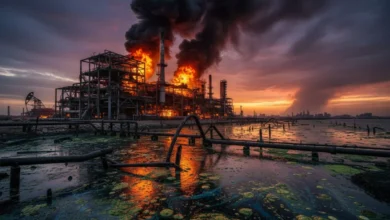
The East-West Pipeline, spanning 745 miles across the Arabian Peninsula, has long been the primary export conduit for Saudi crude, particularly as the Strait of Hormuz has become increasingly difficult to navigate. The damage reported at the al-Mesabaah pumping station serves as a case study in infrastructure vulnerability. Satellite imagery has confirmed extensive thermal damage and structural collapse at these nodes.
Petroleum engineers note that the shutdown of these facilities is not merely a logistical pause; it is a technical crisis. When crude oil remains stagnant in a pipeline for extended periods, the risk of paraffin wax accumulation and water sedimentation increases, which can permanently impair the internal integrity of the pipes. Furthermore, if oil wells are forced to cease production, the process of bringing them back online is costly and time-consuming. Experts suggest that a full restoration of supply chains could take upwards of thirty days of continuous repair, assuming the security environment permits maintenance crews to operate safely.
The European Energy Deficit
The European Union’s current predicament is compounded by a shift in energy procurement strategy over the past 24 months. Following the pivot away from Russian natural gas, European member states increased their reliance on Middle Eastern crude and Liquefied Natural Gas (LNG) from the Gulf region. However, with Qatari LNG shipments already severely restricted due to the broader Red Sea crisis, Europe has been forced to rely heavily on diesel imports to power its industrial base.
Data from the European refining sector indicates that diesel stocks were already at record lows prior to the Saudi pipeline closure. With the sudden loss of Saudi-sourced refined products, prices for diesel have surged, creating a significant cost burden for the logistics, agriculture, and manufacturing sectors. In major hubs such as London, Berlin, and Paris, fuel shortages are beginning to mirror the supply chain bottlenecks seen during the pandemic era, with analysts warning that the current shortfall could reach 3.6 million barrels per day.
Geopolitical Responses and Regional Security
The security architecture in the Middle East has proven insufficient to deter these regional escalations. The "Mecca defense pact," a security arrangement between Saudi Arabia, Turkey, and Pakistan, has not resulted in a kinetic military response. Pakistan’s foreign office issued a statement clarifying that no direct military intervention is currently under consideration, citing a preference for diplomatic mediation.

In Washington, the U.S. administration has opted for a measured approach. While President Trump has committed to providing intelligence and targeting data to the Saudi military, he has explicitly declined requests for direct U.S. intervention, citing current military readiness concerns and the need to prioritize domestic stability. This stance has left a security vacuum in the Red Sea, which non-state actors have moved quickly to fill.
Economic Implications for the West
The economic impact on the European continent is projected to be significant, with analysts at major investment firms forecasting crude oil prices potentially reaching $150 per barrel if the supply interruption persists into the fourth quarter. The crisis is expected to manifest in three distinct phases:
- Immediate Price Shocks: The sudden reduction in supply has led to immediate spikes in Brent crude futures, impacting transportation costs and utility bills for households across the Eurozone.
- Industrial Contraction: As diesel and petrochemical feedstocks become scarce, manufacturers are signaling potential production halts. This is particularly concerning for the chemical and food packaging industries, which rely on crude-derived polymers.
- Societal Stress: Persistent energy shortages historically correlate with increased public unrest. As European governments move to implement potential fuel rationing schemes, political analysts observe an uptick in support for populist and nationalist movements, which advocate for a return to energy independence and a re-evaluation of current foreign policy alliances.
Comparing Transatlantic Resilience
While the United States is not immune to global energy price volatility, its domestic production profile provides a degree of insulation not available to its European counterparts. The U.S. maintains a robust refining capacity and a vast network of domestic shale production, which ensures that while fuel prices will likely climb, the risk of total energy scarcity remains low.
However, the U.S. faces its own set of challenges. The global nature of the petrochemical market means that supply chain disruptions in the Middle East inevitably impact American manufacturers. Furthermore, the devaluation of currency in the face of rising energy costs remains a primary concern for the Federal Reserve. The consensus among economic analysts is that while the U.S. will avoid the "cold home" scenario currently threatening Europe, it will still experience the inflationary pressures associated with global energy shortages.
Looking Toward 2027
The long-term outlook for energy security remains tied to the resolution of regional conflicts in the Middle East and the reconstruction of global energy trade routes. Russia has successfully redirected the majority of its oil exports to the Asian market, effectively insulating its economy from the European embargo. Conversely, Europe is now facing the consequence of its reliance on fragile, long-distance supply lines.
The current crisis has forced a re-examination of the "energy sovereignty" doctrine. Policymakers are now under immense pressure to determine whether a transition to renewable energy sources can be accelerated without sacrificing industrial base stability. As winter approaches, the priority for European governments will be to secure sufficient reserves to prevent a systemic collapse of their power grids.
In summary, the events following the September 11 attack have fundamentally altered the strategic calculus for the Western alliance. The intersection of kinetic warfare, infrastructure vulnerability, and an over-reliance on imported energy has created a "perfect storm." Whether through the restoration of historical energy trade partners or the rapid development of domestic reserves, the path forward for Europe will require a significant pivot in policy to avoid a sustained period of economic and social volatility. The coming months will be a definitive test of the resilience of the European project and the cohesion of Western energy policies.