Public Outcry and Civil Liberties Concerns Force Flock Safety to Terminate Controversial Audio Surveillance Pilot Program

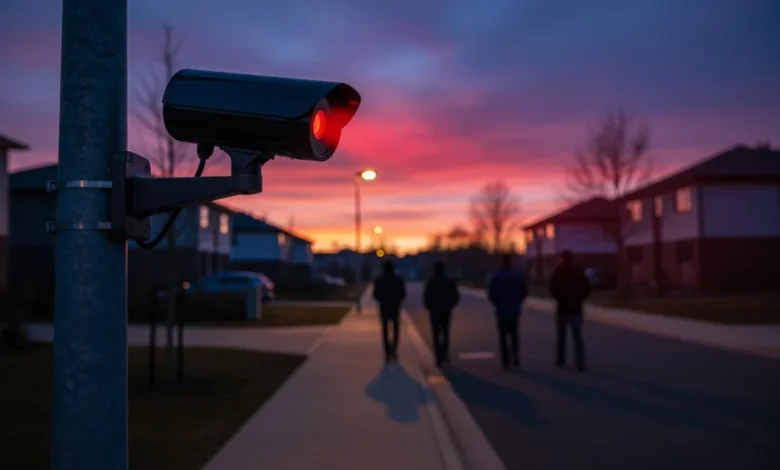
On July 17, 2026, the surveillance technology landscape shifted significantly as Flock Safety, a dominant force in the American private-public policing sector, officially announced the termination of its "human distress detection" pilot program. This decision follows months of intensifying public backlash, organized resistance from privacy advocacy groups, and a series of high-profile acts of vandalism against the company’s physical infrastructure. The program, which utilized a network of high-powered microphones to monitor public spaces for the sound of human screaming, had become a lightning rod for criticism regarding "mission creep" and the erosion of constitutional privacy rights. While Flock Safety framed the withdrawal as a result of "careful consideration and community consultation," the move is widely viewed by civil liberties organizations, including the Electronic Frontier Foundation (EFF), as a landmark victory for citizens seeking to limit the expansion of the surveillance state.
The Evolution of the Raven System: From Gunshots to Human Voices
Flock Safety first gained national prominence through its widespread deployment of automated license plate readers (ALPRs). These cameras, now ubiquitous at thousands of intersections across the United States, were initially marketed as a specialized tool for recovering stolen vehicles and tracking suspects in high-profile crimes. However, the company’s trajectory took a more invasive turn with the introduction of acoustic monitoring.
The foundation for the now-defunct pilot was "Flock Raven," an acoustic gunshot detection system designed to compete with established players like SoundThinking (formerly ShotSpotter). In October 2025, Flock Safety quietly expanded the capabilities of these microphones. Original marketing materials and internal documentation revealed a new "Distress Detection" feature. Unlike traditional gunshot detection, which listens for the specific percussive signature of a firearm discharge, this feature was programmed to identify vocalized "screaming."
As public scrutiny intensified, the company attempted to mitigate concerns by softening its language, replacing the specific term "screaming" with the more ambiguous "human distress." Despite the rebranding, the underlying technology remained the same: an always-on microphone array capable of capturing and analyzing human vocalizations in public squares, parks, and residential neighborhoods.
Technical Limitations and the Risk of "Mission Creep"
The primary concern cited by privacy advocates and technical experts is the inherent inaccuracy of acoustic detection technology. History has shown that these systems often struggle to differentiate between criminal activity and benign city noise. Critics point to documented failures in cities like Chicago, where acoustic sensors have famously mistaken fireworks, backfiring engines, or construction noise for gunfire. In several instances, these false positives have led to "high-alert" police responses, where officers arrive on the scene with weapons drawn, prepared for a violent confrontation. One notable incident involved police discharging weapons at children who were setting off celebratory fireworks, an event triggered by an inaccurate acoustic alert.
The expansion into "distress detection" raised the stakes even further. By moving from the objective sound of a gunshot to the subjective sound of a "scream" or "distress," the technology entered a gray area of human behavior. Civil liberties groups warned that such a system would inevitably lead to armed police intervention in non-criminal situations, such as loud arguments, exuberant play in parks, or individuals experiencing mental health crises. The EFF argued that the technology represented a fundamental shift in the nature of public space, where the expectation of privacy in one’s speech and emotional expression is replaced by a permanent state of government monitoring.
A Chronology of Resistance: Vandalism and "Folk Hero" Status
The cancellation of the pilot program did not occur in a vacuum; it followed a year of escalating physical resistance against Flock’s hardware. Throughout 2025 and early 2026, reports of "blinded" or destroyed cameras surged. In online forums and decentralized anti-surveillance communities, individuals who disabled the devices began to be characterized as "folk heroes."
The tension reached a boiling point on July 4, 2026, in Houston, Texas. Near the high-traffic Washington Avenue corridor, multiple Flock cameras were found systematically disabled. Some had been cut in half with power tools, while others were spray-painted. In a symbolic gesture that resonated across social media, one camera lens was found covered by a meticulously painted American flag.
The Houston Police Department (HPD) confirmed an ongoing investigation into the incidents but highlighted a growing logistical challenge: the ambiguity of ownership. Because Flock cameras can be purchased and installed by municipal governments, local police departments, neighborhood associations, or even private businesses—all of whom can choose to share their data feeds with law enforcement—it is often difficult for the public (and sometimes the police themselves) to identify the specific legal entity responsible for a device. This "privatization of policing" has been a central point of contention for those who argue that surveillance infrastructure lacks the transparency and accountability required of public institutions.
Legal Implications and the Violation of Eavesdropping Laws
Beyond the social and physical resistance, Flock Safety faced significant legal headwinds. The Electronic Frontier Foundation and other legal watchdogs noted that "always-on" audio monitoring likely violates wiretapping and eavesdropping laws in several states. In jurisdictions that require "two-party consent" for the recording of private conversations, the deployment of microphones that can capture vocalizations—even in public spaces where a "reasonable expectation of privacy" is debated—presents a precarious legal situation.
The EFF’s analysis suggested that the Distress Detection feature would have been illegal under the statutes of multiple states, as it effectively records the "utterances" of individuals without their knowledge or consent. This legal vulnerability, combined with the threat of class-action lawsuits, likely played a pivotal role in the company’s decision to retreat.
"This was a misguided and dangerous feature because of the civil liberties concerns it poses," the EFF stated in a press release following the announcement. "The possibility it could summon armed police to every loud interaction happening on the street is a recipe for disaster. While we celebrate this cancellation, it does not mean that these high-powered microphones are now magically safe."
Historical Context: The American Tradition of Privacy Advocacy
The backlash against Flock Safety is part of a much longer historical narrative of American skepticism toward government and corporate surveillance. This resistance traces back to the 1970s, when the Church Committee investigations revealed the extent of the FBI’s COINTELPRO operations, which targeted domestic political activists. It echoes the national debate sparked in 2013 by Edward Snowden’s revelations regarding the National Security Agency’s (NSA) mass metadata collection programs.
In each of these historical instances, the American public has demonstrated a consistent pattern: an initial acceptance of technology for "safety" or "security," followed by a sharp rejection once the full scope of the monitoring and its potential for abuse becomes clear. The Flock controversy highlights the recurring problem of "mission creep"—where a tool designed for a specific, narrow purpose (like catching car thieves) is gradually expanded into a tool for general social control and behavioral monitoring.
Flock Safety’s Official Response and the Path Forward
In a formal blog post addressing the termination of the pilot, Flock Safety defended its mission while acknowledging the program’s failure to gain public trust. The company stated that the audio detection features were "designed to help identify potential violent incidents in areas where other public safety tools were less effective." They emphasized that the "Distress Detection" feature was only available to a small number of customers during a limited trial and was never intended for a broad, unmonitored release.
"Damaging public safety equipment is illegal and puts the community at risk," the company added, addressing the vandalism. Flock continues to maintain that its primary goal is to "eliminate crime while respecting privacy," though they have not yet addressed whether they will continue to pursue other forms of non-gunshot acoustic monitoring in the future.
Despite the cancellation of the "distress" pilot, the underlying infrastructure remains a reality. Flock continues to operate thousands of audio detection devices that listen for gunshots and "community disruptions" like illegal fireworks. The cameras remain at the intersections, and the microphones remain active, even if the "screaming" algorithm has been deactivated.
Analysis: The Power of Public Pressure in the Digital Age
The retreat by Flock Safety serves as a case study in the efficacy of sustained public pressure. It demonstrates that when civil liberties organizations, local activists, and the general public align, they can influence the product roadmaps of multi-million-dollar corporations and the procurement policies of city governments.
However, the victory is seen by many as tactical rather than absolute. The surveillance-industrial complex is characterized by a "ratchet effect," where privacy is rarely fully restored once it has been surrendered. While the "screaming" detection is gone, the microphones are still physically installed. The question for the future is whether this episode marks a permanent boundary for the surveillance industry or merely a temporary pause as companies develop more discreet or socially palatable ways to implement the same level of monitoring.
As cities continue to grapple with crime and the promise of "smart" technology, the Flock Safety saga serves as a reminder that public safety and civil liberty are not a zero-sum game. The American public has signaled that there are lines they are not willing to cross, and for now, "always-on" audio monitoring of human voices remains firmly on the wrong side of that line.