Neuroscience Uncovers Revenge as a Deadly Addiction, Forgiveness as Its Potent Antidote

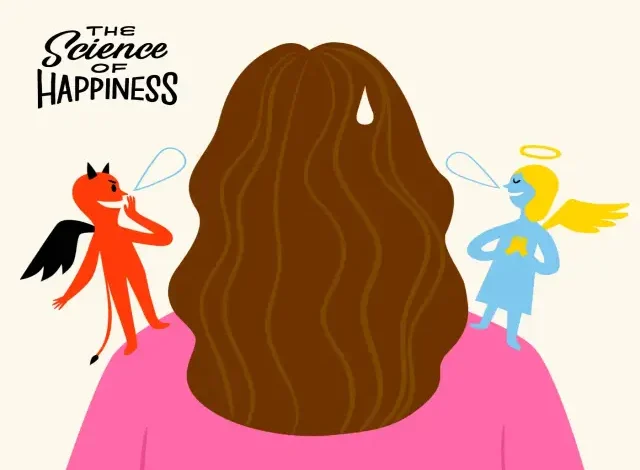
New research in neuroscience is revealing that the powerful urge for revenge can manifest with characteristics strikingly similar to addiction, profoundly impacting brain chemistry and behavior. Conversely, the ancient practice of forgiveness is emerging not merely as a moral or spiritual tenet, but as a neurobiologically validated mechanism for healing, breaking cycles of violence, and fostering self-control. This groundbreaking perspective, championed by James Kimmel Jr., an assistant clinical professor at the Yale School of Medicine, challenges conventional understandings of justice and offers a potent pathway toward individual and societal well-being.
The Genesis of a Quest: Personal Trauma Fuels Scientific Inquiry
James Kimmel Jr.’s journey into the neuroscience of revenge and forgiveness is deeply rooted in a harrowing personal experience. Raised on a farm in Central Pennsylvania, Kimmel endured years of escalating bullying from neighboring farm kids. What began as verbal harassment intensified into physical violence, including pushing, shoving, kicking, and punching, coupled with relentless psychological abuse and shaming. This prolonged torment culminated in a series of traumatic events during his late teenage years.
One night, the Kimmel family was awakened by a gunshot. Looking out the window, James observed a pickup truck, known to be driven by one of his tormentors, speeding away. The family initially found no damage and returned to bed. However, the next morning, Kimmel made a grim discovery: his beloved beagle hunting dog, Paula, lay dead in her pen, a victim of a bullet to the head. Despite reporting the incident to the police, the case was not pursued, leaving the family without formal recourse and Kimmel grappling with profound grief and a burgeoning sense of injustice.
Weeks later, while home alone, Kimmel experienced another act of terror. A vehicle stopped outside their house, followed by a flash and an explosion – their mailbox had been detonated. This final act of aggression proved to be a breaking point. "With that explosion," Kimmel recounts, "it didn’t only detonate the mailbox, it took what was left of my self-control." Overwhelmed by rage and a desperate need for retribution, Kimmel seized his father’s loaded handgun, jumped into his mother’s car, and pursued his tormentors. He eventually cornered their truck against a barn on their farm. In that tense moment, he observed them to be unarmed and unaware of his own weapon. It was, as he described, "the perfect setup to get the perfect payback."
However, just as he was about to act, a sudden flash of insight pierced through his rage. He envisioned two potential futures: one, where he committed violence, resulting in arrest, incarceration, and the destruction of his own identity; the other, a path not yet clear, but free from that immediate, irreversible act. This stark realization – that the cost of revenge far outweighed any perceived satisfaction – compelled him to pull back, put the gun down, and drive home. This pivotal moment, a narrow escape from a life-altering act of violence, ignited his lifelong quest to understand the compelling nature of revenge and the pathways to overcoming it.
From Legal Vengeance to Neuroscientific Exploration
Kimmel’s initial response to his trauma was not forgiveness, but a desire for "revenge on discount." He sought a way to inflict pain legally, leading him to pursue a career as a lawyer, specifically a litigator. He critically refers to this as entering the "professional revenge business," where "legalized revenge" is marketed under the brand name "Justice." As a litigator, Kimmel observed that both he and his clients experienced "momentary bursts of pleasure" whenever they could "make a bad day for the other side or inflict pain on them." This vicarious and direct satisfaction, however, proved insidious. Kimmel noticed the punitive mindset seeping into his personal life, transforming him from a professional avenger at work into someone who would "look for grievances and reasons to feel aggravated or angry or hurt or offended" at home, seeking opportunities to retaliate and "self-medicate."
This escalating pattern led him to question if he was "hooked on something," suspecting an addiction. Despite attempts to distance himself, the allure of the intense feelings of pleasure associated with inflicting pain, combined with financial incentives, repeatedly drew him back. This cycle ultimately led to a point of despair and suicidal ideation, solidifying his conviction that he was grappling with an addiction.
This profound personal realization spurred a radical career shift. Despite his legal background, Kimmel, through what he describes as a series of fortunate coincidences, found himself at the Yale School of Medicine, Department of Psychiatry, collaborating with neuroscientists. His goal was to scientifically investigate the mechanisms underlying the desire for revenge, a phenomenon he now strongly suspected mirrored drug addiction.
The Brain on Revenge: An Addiction Pathway Revealed
The burgeoning field of neuroscience provided the tools Kimmel needed. Researchers began utilizing fMRI and PET scanners to observe brain activity in individuals presented with a grievance and then an opportunity to retaliate. The findings were striking: "Your brain on revenge looks like your brain on drugs," Kimmel asserts, emphasizing that this is not a metaphor but a neurobiological reality.
When an individual experiences the pain of a grievance, a specific area of the brain known as the anterior insula (part of the brain’s pain network) activates. This pain signal then appears to cue the desire for revenge within the brain’s reward circuitry, specifically activating two key areas: the nucleus accumbens and the dorsal striatum. These regions are intimately linked to the "go circuitry" of addiction, responsible for motivation, craving, and the experience of pleasure.
Simultaneously, the prefrontal cortex, which serves as the "stop circuitry" for cost-benefit analysis, decision-making, and impulse control, appears to become suppressed or "shut down" during revenge-seeking. This combination—activated reward pathways, a triggered pain response seeking gratification, and a compromised inhibitory control system—creates a state akin to compulsive revenge-seeking. This neurological profile aligns perfectly with the clinical definition of addiction: "the inability to resist an urge or desire… despite knowing the negative consequences of doing so." For Kimmel, this scientific validation of his personal experience underscored the profound and dangerous nature of revenge.
Revenge: The World’s Deadliest Addiction
Beyond individual experiences, criminologists and behavioral scientists have independently identified revenge-seeking as the primary motivation in almost all forms of violence. This includes intimate partner violence, youth and gang violence, violent extremism, police brutality, genocide, and even warfare. The perception of being wronged consistently drives individuals and groups to inflict harm. Kimmel aptly summarizes this universal truth: "hurt people hurt people." Given its pervasive role in human conflict and suffering, Kimmel posits that revenge is "the world’s deadliest addiction." The gratification of this addiction frequently results in physical violence, death, and widespread societal disruption.
The societal cost of this "addiction" is immense. In the United States alone, a highly punitive legal system, often critiqued for "selling revenge to the masses," incarcerates over 2 million people. Data consistently shows that punitive approaches, such as lengthy prison sentences, often have little impact on recidivism, suggesting that the underlying drivers of violent behavior, including revenge, remain unaddressed. This highlights a critical need for alternative approaches that move beyond mere punishment to address the psychological and neurobiological roots of aggressive behavior. Restorative justice initiatives, which focus on repairing harm and fostering understanding rather than solely on retribution, represent a growing counter-movement to the traditional punitive model, aligning conceptually with Kimmel’s findings on forgiveness.
Forgiveness: The Neurobiological Detox
Against the backdrop of revenge as an addiction, neuroscience is revealing forgiveness as its powerful antidote—a neurobiological "detox." Researchers have found that when individuals choose to forgive, profound changes occur within the brain, effectively reversing the circuitry activated by a grievance and the subsequent desire for revenge.
When someone in an fMRI scanner is given a grievance and then chooses to forgive instead of retaliate, several key neurobiological benefits emerge:
- Pain Reduction: Forgiveness actively shuts down the anterior insula, the brain’s pain network. This indicates that forgiveness can directly alleviate emotional and even physical pain associated with past wrongs.
- Reward Circuitry Deactivation: The "go circuitry" of addiction, involving the nucleus accumbens and dorsal striatum, which is activated by revenge-seeking, is significantly quieted. This helps to break the compulsive craving for retaliation.
- Enhanced Self-Control: Forgiveness reactivates or strengthens the prefrontal cortex, the brain region responsible for executive function, decision-making, and self-control. This restores an individual’s capacity for reasoned thought and reduces impulsive, destructive behaviors.
Kimmel refers to forgiveness as a "human superpower" or a "wonder drug" due to these significant, measurable neurobiological benefits. It is "free," requires "no prescription," and is "manufactured inside your brain," offering constant, immediate access to healing.
Decisional Forgiveness: An Accessible Path to Healing
A common misconception about forgiveness is that it is inherently difficult, a gift to the wrongdoer, an act of weakness, or an endorsement of past harm. Kimmel clarifies that the neurobiological and psychological benefits stem from "decisional forgiveness," an internal decision focused on self-healing. This form of forgiveness does not require interaction with the person who caused harm, nor does it imply condoning their actions or releasing them from accountability. It is a personal act of liberation from the emotional chains of the past.
The immediate impact of decisional forgiveness is remarkably accessible. Kimmel demonstrates that merely imagining what it would feel like to forgive a long-held grievance can produce immediate relief. When individuals mentally engage with the concept of forgiving a past wrong, even without fully committing to it, they report feelings of tension dissipating and a sense of calm. From a neuroscientific perspective, this imaginative exercise momentarily stops the pain in the anterior insula, halts revenge fantasies and rumination, and reactivates the prefrontal cortex, providing instantaneous, albeit temporary, relief.
For Kimmel, forgiveness is a daily practice, a "medicinal value" that he actively cultivates to discharge grievances and remain productive. He emphasizes that revenge-seeking fixates on punishing the past, dragging victimization and pain into the present, contaminating life, and hindering productivity. Forgiveness, conversely, allows individuals to "let that go," stopping the pain, and enabling them to move forward into a fulfilling present and future.
Broader Implications and a Less Violent World
The implications of this research extend far beyond individual mental health, offering a profound lens through which to view societal challenges. In a world grappling with escalating polarization, geopolitical conflicts, and pervasive violence, understanding revenge as an addiction and forgiveness as its cure presents a transformative paradigm.
If communities, legal systems, and educational institutions were to integrate these neuroscientific insights, the potential for a less violent world is immense. Education on the neurobiology of revenge and forgiveness could be incorporated into conflict resolution programs, mental health support, and even public policy discussions. Shifting cultural narratives from glorifying retribution to valuing forgiveness as a strength could empower individuals to break cycles of intergenerational trauma and violence.
Moreover, the Yale Collaborative for Motive Control Studies, co-founded by Kimmel, is dedicated to exploring these very intersections of neuroscience, law, and behavior. Supported by grants from organizations like the Templeton World Charity Foundation and the Greater Good Science Center, projects such as "Putting the Science of Forgiveness into Practice" aim to translate these scientific discoveries into tangible strategies for individual and collective well-being.
The work of James Kimmel Jr. and his collaborators offers a powerful message: the capacity for healing and peace resides within each individual, not as an abstract moral ideal, but as a tangible neurobiological mechanism. By understanding and actively cultivating forgiveness, individuals can reclaim self-control, alleviate suffering, and contribute to the creation of a more compassionate and less violent world. This scientific validation of forgiveness as a practical, accessible tool for self-healing and societal transformation marks a significant advancement in our understanding of human behavior and potential.