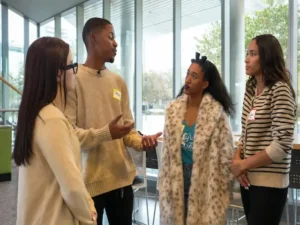
Getting and Giving Our Perspectives at Bowie State University & University of Maryland

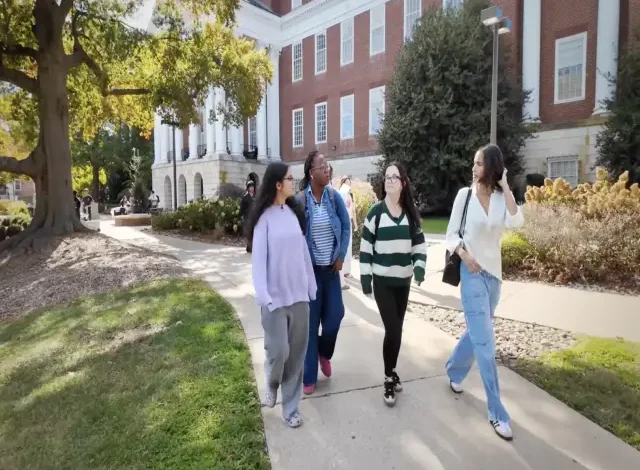
The Context of Campus Polarization
The initiative emerges against a backdrop of declining social cohesion within American higher education. According to reports from the American Council on Education, students across the nation are increasingly sequestered into ideological echo chambers, a phenomenon that inhibits the development of essential soft skills such as empathy, active listening, and perspective-taking. The collaboration between BSU and UMD seeks to dismantle these invisible barriers. By creating a controlled, neutral space for students to meet for the first time, organizers aim to move beyond superficial interactions toward a deeper understanding of the diverse lived experiences that define the modern American student body.
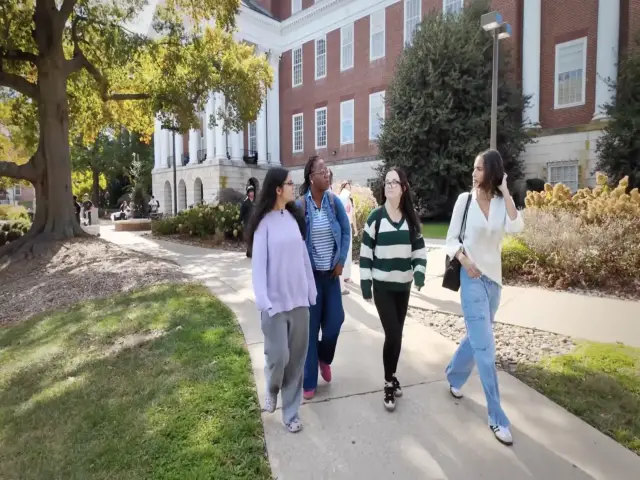
The project is grounded in the "contact hypothesis," a psychological theory first proposed by Gordon Allport in 1954, which suggests that under appropriate conditions—such as equal status, common goals, and intergroup cooperation—interpersonal contact can effectively reduce prejudice and conflict between groups. By bringing together students from two distinct institutional cultures, the program tests whether these principles can be scaled to address contemporary societal tensions.
Chronology of the Engagement
The initiative unfolded in distinct phases, meticulously planned to ensure that students felt secure enough to engage in authentic dialogue. The first phase, as highlighted in the preceding series, focused on the "courage to expand our circles." This involved initial ice-breaking exercises and the establishment of "community agreements"—a set of guidelines ensuring that every voice in the room could be heard without fear of retribution or judgment.
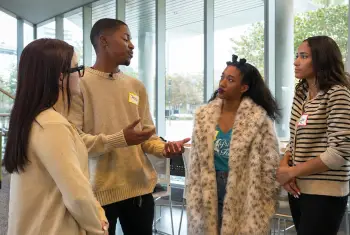
The second phase, captured in the latest footage, shifts the focus from simple acquaintance to deeper, more challenging inquiry. During these sessions, facilitators guided participants through structured exercises designed to uncover the personal values that inform their political and social worldviews. Unlike a debate, where the objective is to "win" a point, the goal here was to articulate one’s own truth while practicing the discipline of active listening.
Over the course of the 11-minute and 24-second engagement, participants navigated complex discussions regarding identity, systemic barriers, and the future of higher education. This trajectory—moving from initial hesitation to nuanced, vulnerable exchange—illustrates the non-linear nature of bridge-building.
Data-Driven Insights on Intergroup Dialogue
Data regarding the success of such programs often points to a measurable shift in participant attitudes. Longitudinal studies conducted by the University of Michigan’s Intergroup Dialogue (IGD) program indicate that students who participate in sustained, facilitated intergroup dialogues demonstrate higher levels of cognitive complexity and a greater capacity to handle ambiguity.
Key metrics for success in these environments typically include:

- Reduced Affective Polarization: A statistically significant decrease in the negative sentiment participants hold toward members of "out-groups."
- Increased Empathy Scores: Pre- and post-program assessments consistently show a rise in self-reported scores on the Interpersonal Reactivity Index (IRI).
- Perceived Agency: Students report a higher sense of efficacy in navigating diverse social environments in the long term, noting that the skills learned—such as the ability to "pause and reflect" before responding to a value-clash—are directly transferable to their professional and personal lives.
Official Responses and Academic Perspectives
While the Greater Good Science Center has not yet released a formal quantitative report on this specific collaboration, the qualitative data provided through their video documentation offers a compelling narrative of institutional impact. Academic observers have noted that the BSU-UMD partnership is particularly noteworthy because it bridges not just a demographic divide, but a structural one.
"The significance of this partnership lies in its refusal to treat diversity as a box to be checked," says Dr. Elena Rodriguez, a sociologist specializing in campus climate. "By fostering these conversations, the universities are providing a template for how to maintain civil discourse in an increasingly fragmented society. The patience required to listen to a perspective that challenges your own is a muscle; these students are effectively training that muscle in real-time."

University administrators have signaled that such programs are increasingly viewed as essential, rather than peripheral, to the mission of higher education. As institutions face mounting pressure to provide safe environments for discourse, the BSU-UMD model provides a scalable framework that emphasizes internal character development over external policy enforcement.
Broader Implications for Society
The broader implications of this project extend far beyond the campus grounds of Maryland. In the United States, the breakdown of civil discourse has been cited as a primary driver of political dysfunction. By institutionalizing the practice of "curiosity over judgment," these students are performing a public service. The ability to remain curious when values collide—the subject of the companion video featuring the Iliff School of Theology—is the foundational skill for a functioning democracy.

If these findings are any indication, the future of intergroup relations may rely less on the legislative mandates of the state and more on the intentional, micro-level interactions fostered in controlled environments. The "Bowie-Maryland" model suggests that when individuals are provided with the right tools—courage to face the unknown, curiosity to understand the other, and the patience to endure the discomfort of difference—the potential for reconciliation and mutual growth is substantial.
Future Directions and Sustainability
The next phase of the program is expected to focus on the sustainability of these connections. Can these nascent friendships survive the pressure of the wider, more polarized social media landscape? Researchers are closely monitoring how the students integrate their new perspectives into their daily campus life. The goal is to transition from a single "event" model to a more permanent cultural shift within the student body, where intergroup dialogue becomes a standard practice rather than a curated experience.
As the Greater Good Science Center continues to document these sessions, the focus remains on the "humanizing" aspect of the work. By prioritizing the individual voice, the project challenges the monolithic labels that often define intergroup conflict. In doing so, it offers a blueprint for other institutions of higher learning to follow, suggesting that the most difficult conversations are often the most necessary for the advancement of the collective good.
Ultimately, the BSU-UMD partnership stands as a testament to the resilience of the human spirit when placed in a supportive framework. It demonstrates that while structural divisions may be historical and deeply ingrained, the human capacity for connection is, with the right encouragement, equally robust. As these students move forward into their respective careers, the lessons of empathy, patience, and courage learned during these sessions will likely serve as their most valuable credentials, equipping them to navigate—and perhaps heal—the fractures in the world beyond the university.