Navigating the Milestones: What Your 5-Month-Old Baby Can Do and How to Support Their Growth


Jakarta – As babies approach their first half-year mark, typically around five months of age, parents witness a significant acceleration in their development. This period is characterized by a surge in physical capabilities, enhanced sensory perception, and burgeoning social and cognitive skills. Understanding these developmental leaps is crucial for parents to provide appropriate stimulation and support, fostering a healthy and robust foundation for their child’s future. This article delves into the multifaceted development of a 5-month-old infant, drawing upon insights from authoritative sources like the Indonesian Ministry of Health and reputable child development organizations, and offers practical guidance for parents on how to best nurture their child’s growth during this dynamic stage.
The journey of infant development is a continuous, albeit sometimes subtle, progression. At five months, many of the foundational skills established in earlier months become more refined and pronounced. This is a time when a baby’s interactions with their environment and the people in it become more deliberate and responsive. The small, often imperceptible, changes that parents observe daily—from more vigorous kicking and grasping to a wider range of facial expressions—are tangible indicators of their child’s rapid learning and maturation. These moments, while seemingly small, are a source of immense pride and joy for parents, marking significant achievements in their child’s life.
Physical Development: A Foundation for Exploration
At five months, a baby’s physical development is a cornerstone of their increasing independence and curiosity. Their musculoskeletal system is strengthening, enabling them to perform more complex movements.
- Head Control: By this age, most babies have excellent head control, able to hold their head steady and lift it with confidence when placed on their stomach. This allows them to look around more effectively and engage with their surroundings.
- Trunk Strength: The development of core muscles allows for better support of the torso. This is evident when they are seated with support, demonstrating a more upright posture.
- Limb Mobility: Both arms and legs become significantly more active. Babies might begin to push up with their arms while on their tummy, a precursor to crawling. Their legs often extend and straighten, and they may even kick their legs rhythmically, especially when excited or playing.
- Weight Gain and Growth: Consistent weight gain and growth are critical indicators of healthy development. According to WHO growth charts, a 5-month-old boy typically weighs around 7.6 kg (16.7 lbs) and measures about 67.6 cm (26.6 inches) in length, while a 5-month-old girl typically weighs around 6.9 kg (15.2 lbs) and measures about 65.5 cm (25.8 inches) in length. These are average figures, and variations within a healthy range are normal.
Gross Motor Skills: The Dawn of Mobility
The realm of gross motor skills sees remarkable advancements at five months, laying the groundwork for future locomotion.
- Rolling Over: This is a significant milestone for many babies around this age. They may start by rolling from their tummy to their back, and some will master rolling in both directions. This newfound ability allows them to explore their environment from different perspectives and reach for objects they couldn’t before.
- Pushing Up: While on their tummy, babies often develop the strength to push themselves up onto their hands, lifting their chest and abdomen off the floor. This position, sometimes referred to as "swimming," strengthens their upper body and prepares them for crawling.
- Sitting with Support: With improved trunk strength, babies can often sit with support, such as being propped up with pillows or placed in a bouncer. While they may still be wobbly, their ability to maintain an upright position is improving.
- Reaching and Grasping: Babies at this age are becoming more adept at reaching for objects and grasping them with their hands. They might bring toys to their mouth to explore them, a natural part of their sensory development.
Fine Motor Skills: Precision and Exploration
Fine motor skills, which involve the coordination of small muscles, particularly in the hands and fingers, also show significant progress.
- Reaching and Grasping: The ability to intentionally reach for objects and grasp them becomes more refined. They may bat at dangling toys or reach out to touch objects within their grasp.
- Transferring Objects: Some babies at this age may begin to transfer objects from one hand to the other. This demonstrates developing bilateral coordination and an understanding of object manipulation.
- Mouthing Objects: Bringing objects to their mouth is a primary way babies explore the world. Their hands and mouth are their primary tools for sensory input, helping them understand the texture, shape, and taste of different items.
Sensory Development: Sharpening Perception
The senses of sight and hearing continue to develop, allowing babies to perceive and interact with their world more richly.
- Vision: At five months, a baby’s vision is much sharper than at birth. They can focus on objects at a distance and track moving objects with greater accuracy. They also have improved depth perception and can distinguish between colors more effectively. They often enjoy looking at faces and contrasting patterns.
- Hearing: Hearing is well-developed by five months. Babies can locate the source of sounds, respond to their name, and show recognition of familiar voices. They are also beginning to differentiate between various sounds and tones.
Vocalization: The Beginnings of Communication
The journey of vocal development is a fascinating aspect of a 5-month-old’s growth.
- Babbling: Babies at this stage are typically engaged in more complex babbling, stringing together vowels and consonants in a more varied way. They might produce sounds like "ba," "da," "ga," and "ma."
- Imitation: They may begin to imitate sounds they hear, responding to speech with their own vocalizations. This is a crucial step in learning language.
- Expressive Sounds: Beyond babbling, babies use a range of sounds to express emotions, such as cooing, gurgling, and sighing. They can also make sounds to indicate pleasure or displeasure.
Social and Cognitive Development: Connecting with the World
The social and cognitive realms are where a 5-month-old’s burgeoning personality and understanding of the world truly shine.
- Social Smiling: While social smiling may have begun earlier, it becomes more consistent and responsive at five months. Babies smile at familiar faces and respond to interactions with others.
- Recognizing Familiar Faces: They demonstrate a clear preference for familiar caregivers and may show anxiety or distress when separated from them.
- Object Permanence (Early Stages): While full object permanence develops later, babies at this age are beginning to understand that objects continue to exist even when they can’t see them. This might manifest as searching for a toy that has been partially hidden.
- Cause and Effect: They start to grasp basic cause-and-effect relationships, such as shaking a rattle to make a sound.
- Emotional Expression: Babies at five months can express a wider range of emotions, including joy, frustration, and curiosity, through facial expressions, body language, and vocalizations.
Nurturing Growth: Strategies for Parents of a 5-Month-Old
Supporting a baby’s development at this crucial stage involves a combination of responsive caregiving, stimulating interactions, and a safe environment.
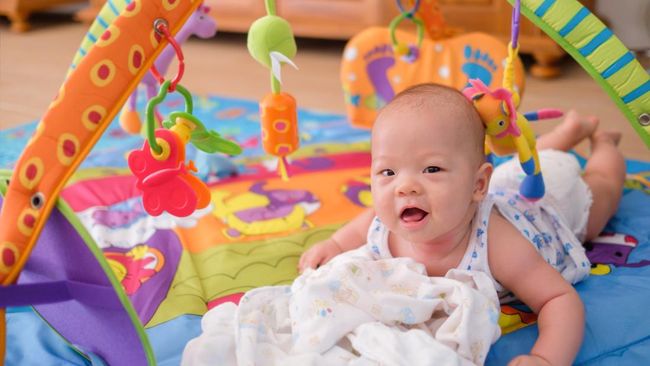
1. Engage in Rich Communication: The Power of Conversation
Context: Language acquisition is a foundational cognitive skill. Early verbal interactions establish neural pathways crucial for future literacy and communication. The Indonesian Ministry of Health emphasizes the importance of early childhood communication for holistic development.
Enrichment: Beyond simple talking, parents can enhance communication by engaging in "parentese" – a higher-pitched, sing-song voice that naturally captures a baby’s attention and facilitates language learning. Mimicking a baby’s babbling sounds and responding enthusiastically encourages their vocal exploration. Looking into your baby’s eyes while speaking, and mirroring their facial expressions, helps them understand the connection between words, emotions, and social cues. This reciprocal interaction builds a strong emotional bond and lays the groundwork for understanding social nuances.
2. Respond to New Encounters with Sensitivity
Context: As babies become more aware of their surroundings, they may exhibit varying reactions to new people or unfamiliar environments. This is a normal developmental phase reflecting their growing sense of attachment and security.
Enrichment: When a baby shows signs of distress or apprehension around new individuals, it’s important to validate their feelings. Offering a comforting embrace and reassuring words can help them feel safe. Instead of forcing interaction, allow the baby to observe from a distance, gradually becoming more comfortable. Introducing new people slowly, with the parent present as a secure base, can ease the transition. This approach fosters trust and teaches the baby that their feelings are acknowledged and respected.
3. Foster Development Through Play and Exploration
Context: Play is the primary mode of learning for infants. Age-appropriate activities stimulate physical, cognitive, and emotional growth. The principle of "learning through play" is universally recognized in early childhood education.
Enrichment: Engaging in singing, reading board books with bright illustrations, and playing with soft toys are excellent ways to stimulate a 5-month-old. Making silly sounds and engaging in peek-a-boo games enhance their understanding of object permanence and social interaction. Crucially, supervised tummy time on a safe, flat surface is vital for strengthening neck, back, and shoulder muscles, essential for developing gross motor skills like crawling. Providing a variety of safe sensory objects—such as textured fabrics, smooth wooden toys, or even a piece of soft, clean fruit like an orange segment (under strict supervision)—allows babies to explore through touch, sight, and taste. It’s imperative to avoid small objects that pose a choking hazard, sharp edges, or items that could cover the face.
4. Introduce Solids: A Nutritional and Developmental Step
Context: The World Health Organization (WHO) recommends exclusive breastfeeding for the first six months of life. However, around this age, many babies show readiness for the introduction of complementary foods, which supports their increasing nutritional demands and aids in the development of oral motor skills.
Enrichment: When introducing solid foods, it’s essential to offer pureed or finely mashed options with a smooth texture to prevent choking. Single-ingredient purees, such as sweet potato, avocado, or banana, are ideal starting points. This process not only supplements breast milk or formula but also helps the baby develop the ability to chew and swallow different textures, which is crucial for speech development and the strengthening of jaw muscles. Parents should observe for signs of readiness, such as good head control, the ability to sit up with support, and an interest in food.
5. Respect Sleep Patterns: Understanding Infant Sleep Needs
Context: Sleep is critical for a baby’s physical and cognitive development. By five months, babies begin to establish more predictable sleep patterns, though they still require significant rest.
Enrichment: A 5-month-old typically needs between 12 to 15 hours of sleep in a 24-hour period, often comprising 10-11 hours of nighttime sleep and 2-4 naps during the day, each lasting from 30 minutes to 2 hours. Recognizing a baby’s sleep cues—such as yawning, eye-rubbing, fussiness, or a decreased interest in play—allows parents to initiate bedtime routines before the baby becomes overtired and difficult to settle. Consistent bedtime routines, involving calming activities like a warm bath, a gentle massage, or a quiet lullaby, can signal to the baby that it’s time to wind down.
6. Create a Safe Haven for Exploration
Context: As babies become more mobile, their environment needs to be adapted to ensure their safety. Restricting their movement in devices can hinder natural development.
Enrichment: Providing ample supervised floor time allows babies the freedom to explore and develop their motor skills. Limiting the use of restrictive devices like infant seats, swings, or strollers during awake periods encourages natural movement and muscle development. If a baby is starting to roll over, constant supervision is paramount. Baby-proofing the home, removing potential hazards like electrical cords, small objects, or cleaning supplies, is essential to create a secure environment for exploration. This freedom of movement, within a safe context, empowers babies to learn about their physical capabilities and the world around them.
7. Expand Horizons: Outdoor Play and Sensory Experiences
Context: Exposure to diverse environments offers rich sensory stimulation and contributes to a baby’s overall development. Outdoor play has been linked to improved mood, sensory integration, and cognitive stimulation.
Enrichment: Taking a 5-month-old outdoors to a calm and relatively uncrowded space, such as a park or a garden, can be incredibly beneficial. Allowing them to feel the textures of grass, soft soil, or gently touch leaves and flowers (under close supervision) provides novel sensory input. This exposure to nature can be calming and stimulating, fostering a connection with the natural world. It’s important to remember that babies are still developing their motor control, so continuous observation and gentle guidance are necessary to ensure their safety and comfort during these outdoor excursions.
The developmental milestones achieved by a 5-month-old are a testament to the rapid and remarkable growth that occurs in the first year of life. By understanding these advancements and actively engaging in supportive and stimulating practices, parents play a pivotal role in nurturing their child’s physical, cognitive, and emotional well-being, setting them on a path for continued healthy development.