WHO Director-General visits Jordan to recognize strong collaboration on health system delivery, emergency relief and advancing mental health

Amman, Jordan – Dr. Tedros Adhanom Ghebreyesus, the Director-General of the World Health Organization (WHO), successfully concluded the initial day of his two-day State visit to the Hashemite Kingdom of Jordan today, marking a significant milestone in the enduring partnership between the global health body and the kingdom. The visit underscored a shared commitment to advancing universal health coverage (UHC), strengthening mental health services, and enhancing humanitarian health action, particularly in a region grappling with protracted crises. This high-level engagement reflects Jordan’s critical leadership in prioritizing health, both domestically and on the international stage, demonstrating its unwavering dedication to humanitarian principles and regional stability.
A Cornerstone of Regional Health Diplomacy
The visit commenced with a series of high-profile meetings and field visits, meticulously designed to highlight the breadth and depth of WHO’s collaboration with Jordan. The choice of Jordan for a State visit by the WHO Director-General is particularly telling, given the nation’s pivotal geopolitical role and its historical commitment to humanitarianism. Jordan, a country of approximately 11 million people, hosts one of the largest refugee populations per capita globally, primarily from neighboring Syria and Palestine. This reality has necessitated a robust and resilient health system capable of serving both its citizens and its temporary residents, often under significant resource constraints. The discussions throughout the day reinforced Jordan’s status not merely as a recipient of aid but as a proactive partner and a beacon of stability in a volatile Middle East. The visit serves as a powerful affirmation of Jordan’s strategic importance in global health diplomacy and humanitarian response, showcasing a model of compassionate governance in action.
Chronicle of Day One: High-Level Engagements and Field Visits
The first day’s itinerary was packed with crucial engagements, beginning with a ceremonial welcome and progressing through a series of strategic discussions and firsthand observations of WHO-supported initiatives. Each segment of the day was carefully curated to illustrate the multifaceted challenges and collaborative solutions in public health.
Royal Audience and Strategic Health Dialogues
A central and defining moment of the day was Dr. Tedros’s audience with His Majesty King Abdullah II. This meeting, a testament to the profound importance of the State visit, provided a high-level platform for discussing critical health priorities. The conversation centered on strategies for strengthening Jordan’s national health systems, expanding equitable access to care for all residents, and sustaining robust support for emergency responses across the region. A significant portion of the dialogue focused on the humanitarian crisis affecting the Palestinian people, specifically addressing the urgent needs of patients evacuated from Gaza to Jordan for life-saving medical treatment, and the ongoing provision of health services to the vast refugee populations hosted within Jordan’s borders.
King Abdullah II has long been a vocal advocate for regional peace and humanitarian aid, making his engagement with the WHO Director-General a powerful endorsement of the health agenda. Dr. Tedros expressed profound appreciation for His Majesty’s unwavering commitment to advancing universal health coverage, a cornerstone of WHO’s global mission. He also extended gratitude to the King and the people of Jordan for their remarkable solidarity and generosity in providing essential health services to over three million refugees, predominantly from Gaza and Syria. This extraordinary commitment, often stretching Jordan’s resources, exemplifies a profound humanitarian spirit that Dr. Tedros lauded as a model for the international community.
Further highlighting Jordan’s humanitarian leadership, Dr. Tedros specifically commended His Majesty’s Medical Corridor initiative. This critical lifeline delivers specialized medical care to ill and injured children from Gaza, offering hope and healing amidst devastating circumstances. Dr. Tedros reiterated that Jordan consistently demonstrates to the world what it truly means to prioritize health and humanity above all else, underscoring the kingdom’s role as a moral compass in times of crisis.
Witnessing Humanitarian Compassion: A Visit to Evacuated Children
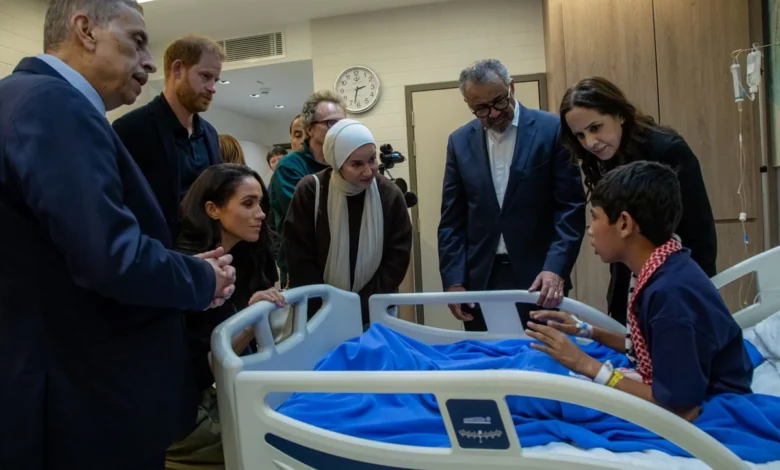
Following the royal audience, Dr. Tedros embarked on an emotional and impactful visit to a WHO-supported hospital dedicated to providing specialized care for children evacuated from Gaza. The visit offered a poignant glimpse into the human toll of conflict and the life-saving impact of international cooperation. Dr. Tedros met with young patients and their families, hearing firsthand accounts of their harrowing journeys and witnessing the dedication of frontline health workers. These medical professionals deliver critical treatment for severe injuries, cancer, and other serious conditions, embodying resilience and compassion.
The hospital visit served as a powerful illustration of the indispensable nature of the medical evacuation corridor through Jordan. It vividly demonstrated the urgent need for sustained international support to ensure that children and other vulnerable individuals affected by the conflict can access essential, often life-saving, medical care that is unavailable in their home territories. The scenes of children receiving advanced treatment, far from the conflict zones, underscored the tangible impact of humanitarian corridors and the collective responsibility to protect the most vulnerable.
Mobilizing Global Support: The High-Level Partners Meeting
Later in the day, Dr. Tedros convened a crucial high-level meeting with a diverse array of health partners, including representatives from donor countries, various United Nations agencies, and philanthropic organizations. This gathering was designed to discuss and coordinate financing priorities for strengthening Jordan’s health system and to bolster ongoing humanitarian health action across the region. Key agenda items included scaling up access to mental health services – a critical need often overlooked in crisis settings – and enhancing support for countries like Jordan that host large refugee populations.
The meeting fostered robust dialogue on collaborative strategies, identifying gaps in funding and areas for increased investment. Dr. Tedros expressed his appreciation for the strong collaboration and continued commitment demonstrated by all partners, emphasizing the importance of collective action to invest in health in Jordan and throughout the wider region. The discussions aimed to translate pledges into actionable plans, ensuring a more coordinated and impactful response to the complex health challenges facing the region.
Strengthening National Health Systems and Universal Health Coverage
Further reinforcing the strategic partnership, Dr. Tedros held bilateral discussions with Jordan’s Minister of Health. These talks focused intensely on fortifying Jordan’s national health system and accelerating progress towards universal health coverage. Jordan has garnered international recognition for its leadership in adopting a primary health care approach to achieve UHC. A notable aspect of this approach is the successful integration of mental health services into routine care, ensuring that citizens and residents can access vital psychological support as part of their standard healthcare provision. This pioneering effort aligns perfectly with the WHO Director-General’s Special Initiative for Mental Health, which WHO continues to actively support, providing technical expertise and strategic guidance. The discussions explored avenues for further innovation, capacity building, and knowledge sharing, positioning Jordan as a regional leader in integrated healthcare delivery.
The Role of Global Philanthropy: Archewell’s Advocacy for Health and Mental Wellbeing
Adding a unique dimension to the visit, Dr. Tedros was accompanied during several key engagements by Prince Harry, Duke of Sussex, and Meghan, Duchess of Sussex. Their presence was in their capacities as founders of Archewell Philanthropies, a foundation with a strong track record of supporting WHO’s work. Archewell has been a long-standing ally, contributing to diverse WHO initiatives ranging from ensuring equitable access to COVID-19 vaccines during the pandemic to supporting medical evacuation efforts and critical mental health programs.
Prince Harry, in particular, participated as a passionate advocate for WHO’s work on mental health. He consistently highlighted the imperative of investing in mental health services across communities and in emergency settings, drawing particular attention to the needs of men, young people, and children. His advocacy brings significant visibility and resources to an often-stigmatized area of healthcare, amplifying the message that mental health is integral to overall well-being.
Dr. Tedros publicly acknowledged and thanked Prince Harry and Meghan for their commitment, stating: "I want to thank our partners, including Prince Harry, Duke of Sussex and Meghan, Duchess of Sussex, whose commitment to mental health and humanitarian action has helped bring visibility, resources and hope to some of the world’s most vulnerable communities. Their collaboration is helping to advance WHO’s mission to ensure health for all."
Prince Harry, reflecting on the visit, shared his perspective: "It is an honour to join the Director-General of the World Health Organization in Jordan, a country that is leading by example in compassion, resilience and innovation. Through our work with Archewell Philanthropies, my wife and I have seen first-hand the impact of WHO’s efforts to support mental health and deliver life-saving care in emergencies. We remain deeply committed to advancing awareness, reducing stigma and expanding access to mental health support for all those affected by conflict and crisis. Mental health is fundamental to recovery, dignity and long-term peace, and we are proud to stand with WHO and partners around the world to make it a global priority." Their involvement underscores the growing importance of private philanthropy and celebrity advocacy in mobilizing global attention and resources for critical health issues.
Statements of Solidarity and Commitment
The statements from Dr. Tedros and Prince Harry resonated with themes of gratitude, solidarity, and unwavering commitment to global health. Dr. Tedros’s repeated emphasis on Jordan’s "humanitarian leadership" and its ability to "put health and humanity first" serves as a powerful endorsement of the Kingdom’s policies and actions. Prince Harry’s acknowledgement of Jordan as a country "leading by example in compassion, resilience and innovation" further cemented this positive perception. These statements are not merely ceremonial; they represent a significant diplomatic validation of Jordan’s efforts and a call to the international community to recognize and support its crucial role.
Jordan’s Enduring Role as a Humanitarian Hub
Jordan’s strategic geographical location, coupled with its stable political environment and robust infrastructure, has historically positioned it as a vital hub for humanitarian operations in the Middle East. This role has become even more pronounced amidst the ongoing conflicts and crises in neighboring countries. The Kingdom serves as a critical conduit for medical evacuations, a staging ground for emergency response teams, and a sanctuary for millions fleeing violence. The visit by the WHO Director-General and the accompanying high-level discussions serve to strengthen this role, potentially unlocking further international support and resources for Jordan’s humanitarian endeavors. The commitment to maintaining a robust and resilient health system within Jordan is not only for its own population but also for the wider regional stability, as a healthy populace is a prerequisite for peace and development.
Looking Ahead: Day Two Agenda and Future Implications
The State visit is set to continue with an equally impactful second day. Dr. Tedros is scheduled to visit Jordan’s National Center for Rehabilitation of Addicts, a facility supported by WHO that provides integrated medical, psychological, and social services. This visit will highlight the importance of holistic care in addressing public health challenges beyond acute illness. He will also engage with community leaders and women’s groups, including the Jordanian Hashemite Fund for Human Development, underscoring the role of community-level initiatives in health promotion and social development. A visit to the renowned King Hussein Cancer Center is also on the agenda, where discussions will focus on advances in cancer care and opportunities for regional collaboration in oncology, a growing health concern globally.
The State visit will conclude with additional engagements with partners supporting humanitarian operations, reinforcing Jordan’s critical and indispensable role as a hub for medical evacuation, emergency response, and overall health system resilience in the region. The comprehensive nature of this visit, spanning national health system strengthening, humanitarian aid, mental health, and the integration of philanthropic efforts, is expected to yield tangible outcomes in terms of increased collaboration, resource mobilization, and policy alignment. It solidifies Jordan’s standing as a vital partner for the WHO and a leading example of humanitarian compassion and health leadership in a complex and challenging world. The implications of this visit are far-reaching, promising to enhance health outcomes for millions, both within Jordan and across the broader Middle East.
Related posts: