
Coordinated Bomb Threats Target European Media and Aviation Infrastructure in Widespread Hoax Campaign

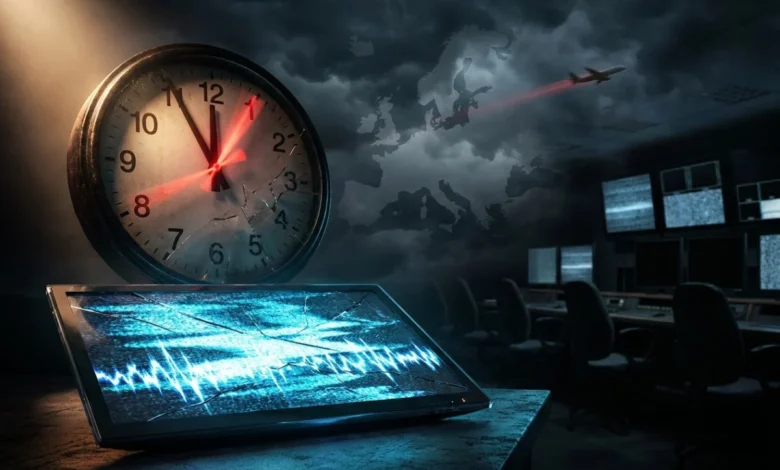
A wave of sophisticated, high-pressure bomb threats swept across Europe this past Friday, targeting major television networks and disrupting international aviation infrastructure. The coordinated nature of these alerts, which prompted mass evacuations of newsrooms in Dublin, London, and Sofia, has triggered a high-level security response across the continent. While investigative authorities have confirmed that every threat received to date has been a hoax, the psychological and operational impact on public institutions has been profound.
The threats, which were delivered via email, utilized a chilling narrative of impending doom. One such message, received by the Irish public broadcaster RTE and Bulgaria’s Nova TV, warned, "We want the whole world to know about us, which is why one of our operatives has planted an explosive device in your building. It will detonate in 45 minutes. The clock is ticking." These messages, signed by an individual identifying themselves as "Mikhail Andropov"—a name bearing an uncanny and likely provocative resemblance to the former Soviet General Secretary—claimed that the Friday incidents were merely the opening salvo of a broader campaign targeting European stability.
A Chronology of Disruption
The crisis began in earnest on Friday morning, though it followed several days of escalating instability within the European transport sector. At approximately 8:33 a.m., RTE received a targeted email that immediately triggered internal security protocols. Director General Kevin Bakhurst confirmed that after an urgent consultation with the An Garda Síochána (Irish police), a full-scale evacuation of the Donnybrook campus was ordered. For the next three hours, RTE’s standard news programming was suspended, replaced by a looped music track and a pre-recorded message informing viewers of the operational interruption.
Simultaneously, in Sofia, Bulgaria, the newsroom of Nova TV was cleared following a similar alert. Law enforcement officials conducted an exhaustive sweep of the premises, eventually clearing the building after finding no evidence of explosive materials. Similar, though less publicized, threats were reported at various media offices across the United Kingdom, including sites associated with Sky News.
These media threats did not occur in a vacuum. Throughout the week, European aviation authorities were besieged by a string of false bomb scares. Passenger flights connecting major hubs—ranging from Serbia to Finland and Spain—were forced into emergency landings and precautionary diversions. By Friday, the situation had intensified significantly; in several instances, Hungarian fighter jets were scrambled to intercept and escort commercial airliners that had been targeted by these anonymous threats. Despite the intensity of the response, including the deployment of bomb disposal squads and K-9 units at airports across Rome, Prague, and Lisbon, no explosives were recovered.
Security Implications and the Mechanics of Chaos
Security analysts have noted that the campaign represents a "low-cost, high-impact" form of hybrid warfare. By utilizing nothing more than electronic communication and the psychological weight of anonymity, the perpetrators have successfully paralyzed critical infrastructure, disrupted international supply chains, and incurred significant financial costs for both private corporations and state agencies.
"This episode illustrates how relatively simple it can be to cause disruption and to undermine the normal operation of society through unconventional activities," Irish Prime Minister Micheal Martin remarked during a radio interview conducted from an outside broadcasting unit. The Prime Minister’s comments underscore a growing concern among European leaders: that modern, interconnected societies are uniquely vulnerable to "nuisance" attacks that do not require physical presence to cause widespread fear and economic loss.
The technical nature of the threats—delivered via mass-distributed emails—suggests a level of coordination that transcends typical "prank" behavior. While no specific group has claimed responsibility, the signatures attached to the messages point to a desire to sow political discord. The use of the "Andropov" moniker is widely viewed by intelligence observers as a theatrical attempt to evoke Cold War-era tensions, designed to heighten the perception of a systematic, state-aligned, or extremist threat.
The Broader Context of European Cyber-Instability
Friday’s events follow a worrying trend of digital and physical interference across Europe. In recent weeks, several European nations have grappled with large-scale cyberattacks targeting retail chains and logistical hubs. While it remains unclear if the bomb hoaxes are directly linked to these cyber-incidents, the confluence of events has led to a heightened state of alert among European intelligence services.
The economic cost of such hoaxes is substantial. An emergency landing or a full-scale evacuation of a national broadcaster requires the mobilization of police, fire services, and medical personnel, all while causing hours of downtime. For the aviation industry, the cost is even higher; diverted flights, missed connections, and the necessity of re-screening hundreds of passengers place immense strain on already stretched airport resources.
Furthermore, the "crying wolf" effect poses a significant risk to public safety. Security experts warn that a continuous stream of hoaxes may eventually lead to "alert fatigue," where the public and security staff become desensitized to warnings, potentially creating a window of opportunity for a genuine attack to occur undetected.
Official Responses and Future Investigations
As of late Friday, no arrests have been made. European authorities, including Europol, have begun the process of cross-referencing the emails sent to media organizations with the threats targeting the aviation sector. Investigations are focused on tracing the digital origins of the messages and analyzing the linguistic patterns used in the communications to identify the potential source.
While Irish authorities have sought to project a sense of normalcy, urging the public to remain calm and vigilant, the atmosphere in newsrooms and airports across the continent remains tense. Security protocols have been tightened indefinitely. Many media organizations have implemented stricter screening for incoming digital correspondence and are working closely with national cyber-security centers to fortify their networks against further intrusion.
The lack of concrete evidence linking the aviation hoaxes to the media threats remains a point of contention for investigators. Some analysts suggest that the media threats may be "copycat" actions spurred by the publicity generated by the aviation disruptions, while others argue that the precision of the timing suggests a single, sophisticated actor or small cell looking to maximize psychological impact.
Analysis: The Vulnerability of Public Discourse
The targeted nature of these threats—specifically aimed at institutions that disseminate information—speaks to the strategic intent of the perpetrators. By attacking the media, the culprits strike at the heart of public information channels. The temporary silencing of broadcasters like RTE serves to create a vacuum of information that is quickly filled by rumors and speculation, further fueling the "fear and anxiety" described by Prime Minister Martin.
As Europe navigates this period of heightened uncertainty, the challenge for law enforcement is twofold: to identify and apprehend those responsible for the digital-led disruption, and to restore public confidence in the safety of both transit systems and media institutions. The event serves as a stark reminder that in an increasingly digitized Europe, the infrastructure of public life—whether the flight paths above us or the airwaves that connect us—is only as secure as the digital walls built around it.
For now, the "clock" has stopped, and the threats have been proven false, yet the investigation into the "Mikhail Andropov" campaign is only beginning. Governments are expected to coordinate a pan-European response in the coming days, likely involving increased intelligence sharing and a renewed focus on tracking digital threats that cross national borders. Until the perpetrators are unmasked, the incident stands as a definitive case study in the power of coordinated, anonymous disruption in the 21st century.
Related posts: