Digital Twins of Life: How Buck Institute Researchers Are Using Computer Simulations to Decode Aging


The pursuit of human longevity has long relied on trial-and-error experimentation in wet labs, a painstaking and resource-heavy process that has gradually yielded insights into the biology of aging. Today, however, that paradigm is shifting toward computational biology. At the Buck Institute for Research on Aging in Novato, California, scientists are pioneering a digital revolution that could fundamentally alter how medicine approaches human healthspan. Through sophisticated whole-cell computer simulations, researchers are moving away from observing cellular decline after it occurs and toward predicting, managing, and ultimately preventing it.
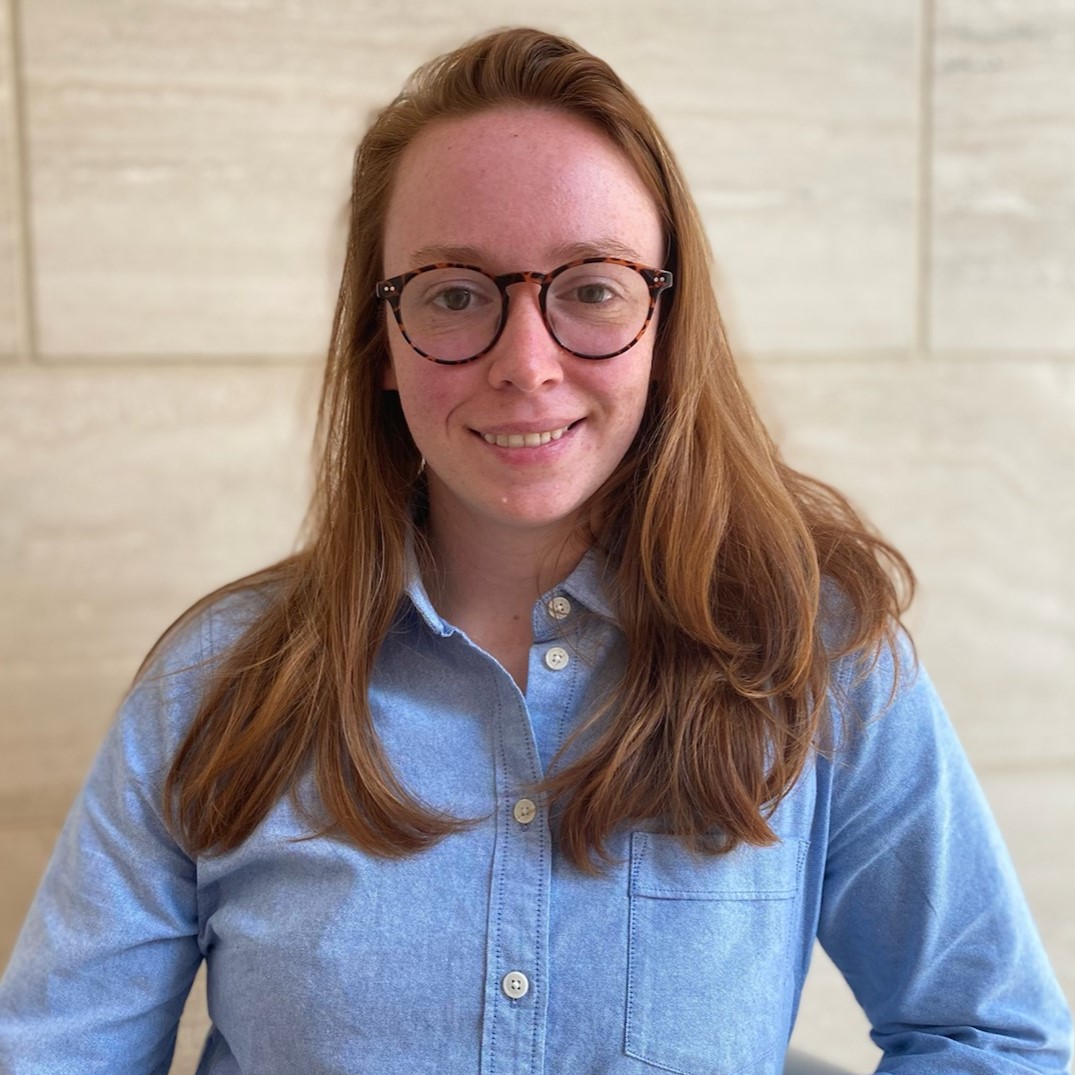
At the center of this computational frontier is Dr. Emma Glass, a research scientist who joined James Yurkovich’s laboratory at the Buck Institute. Glass, a Virginia native with a Bachelor of Science in Applied Mathematics from the College of William & Mary and a Doctor of Philosophy in Biomedical Engineering from the University of Virginia, represents a new generation of scientists bridging the gap between computational microbiology and geroscience. Her work, funded in part by the Defense Advanced Research Projects Agency (DARPA), focuses on building software that can simulate the precise behavior of living cells under varying environmental conditions.
From Bacteria to Human Cells: The Chronology of Whole-Cell Modeling
The journey toward simulating human cellular aging has deep roots in systems biology, but the specific methodologies being deployed at the Buck Institute represent a significant leap forward in computational power and biological accuracy. Whole-cell modeling—the practice of creating comprehensive, computer-based representations of organisms that account for every known molecule and biochemical reaction—has evolved over the past decade from a theoretical exercise into an actionable scientific discipline.
Chronologically, the foundational efforts in whole-cell simulation began with simpler organisms where genetic circuits and metabolic pathways could be mapped entirely. E. coli, a bacterium frequently used as a model organism in molecular biology, has served as the primary canvas for these early digital blueprints. Glass and her colleagues in the Yurkovich lab are utilizing DARPA funding to refine these E. coli simulations, teaching computers to predict how the bacterium will react to stressors, environmental shifts, and antimicrobial agents without requiring physical trials in a petri dish.
This capability is not merely a theoretical exercise; it has immediate, real-world applications in pharmacology. By calculating the exact concentration of an antibiotic needed to halt bacterial growth through mathematical prediction alone, researchers can drastically accelerate the identification of effective treatments for specific infections. However, the ultimate horizon of this research extends far beyond bacteriology. The E. coli model functions as a critical proving ground—a technological stepping stone designed to yield the algorithms, frameworks, and data integration techniques necessary to eventually simulate human cells, tissues, and entire physiological systems.
The Mechanics of Team Science: Measuring, Simulating, and Predicting
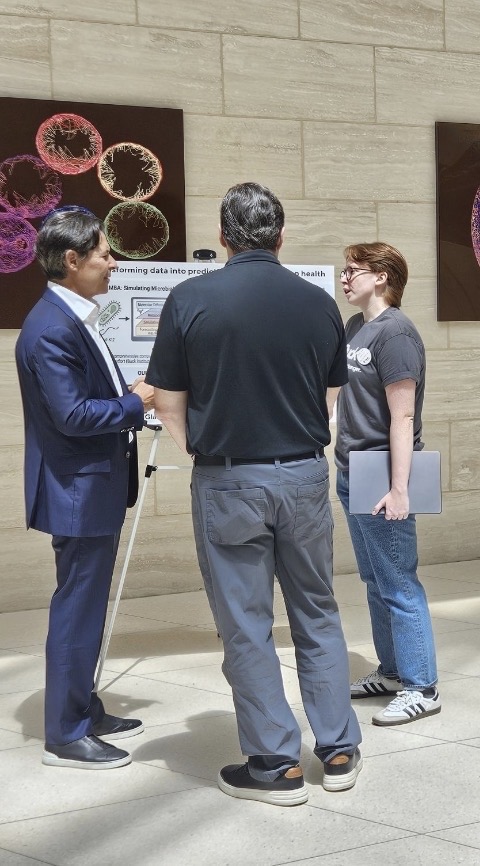
Tackling a challenge as complex as cellular aging requires an interdisciplinary ecosystem that defies traditional, siloed academic research. At the Buck Institute, this manifests as a highly collaborative operational model divided into two primary operational thrusts: data generation, categorized as "Measure and Inform," and model construction, categorized as "Simulate and Predict."
Glass’s work directly intersects these two worlds. Generating the massive, high-resolution experimental datasets required to ground digital models in biological reality demands close cooperation with other faculty members and wet-lab researchers across the institute. Furthermore, the complexity of modern biological datasets necessitates external partnerships with industry leaders who possess specialized expertise in scaling computational architectures.
This environment has been intentionally cultivated by the Buck Institute, which has increasingly leaned into the application of artificial intelligence and machine learning to the study of healthspan. By embedding computational scientists alongside traditional molecular biologists, the institute has established a pipeline where raw biological observations are rapidly transformed into predictive mathematical frameworks.
Decoding the Science: Demystifying Digital Biology
To understand the practical implications of whole-cell simulation, one must contrast it with traditional biomedical research methodologies. Historically, when researchers sought to understand how a cell reacts to a pharmaceutical compound, environmental toxin, or metabolic stressor, they were forced to execute thousands of physical experiments. These empirical studies are constrained by time, financial expenditure, and biological variability.
In contrast, a whole-cell computer simulation acts as a virtual laboratory. By programming all known biochemical interactions, genetic expressions, and metabolic pathways of a cell into a software environment, researchers can run countless iterations digitally. Users can introduce a drug into the simulated cellular environment and instantly observe whether the cell accelerates its growth, experiences metabolic failure, or succumbs to the treatment.
While currently executed at a microbial scale, this methodology is being intentionally scaled upward. The long-term objective of the Buck Institute’s computational initiatives is to translate this digital framework to human cellular biology. If researchers can accurately simulate the internal mechanisms of a human cell—and observe how those mechanisms degrade over time—they gain the ability to test potential interventions on a computer screen long before clinical trials begin.
Broader Impacts and the Shift Toward Precision Longevity
The implications of successful whole-cell and multi-cellular simulation extend into nearly every facet of modern healthcare, promising a paradigm shift from reactive treatment to proactive, personalized prevention.
In the near term, the optimization of antimicrobial prediction tools stands to transform infectious disease management, allowing clinicians to tailor antibiotic regimens with unprecedented precision, thereby mitigating the growing global threat of antimicrobial resistance. Yet, the broader philosophical and medical transformation lies in extensibility. As the foundational frameworks mastered in single-bacterium simulations are scaled to human tissues and organs, medicine moves closer to true personalized longevity modeling.
In a future shaped by these technologies, a physician might utilize a patient’s digital cellular twin to test how specific dietary modifications, lifestyle interventions, or pharmacological agents would impact their unique biological aging process. This capability decouples healthcare from generalized, population-wide guidelines, replacing them with mathematically precise, individualized strategies designed to maximize healthspan—the period of life spent in good health, free from chronic disease.
Looking Ahead: The Next Decade of Geroscience

As the scientific community looks toward the next five to ten years, the convergence of high-performance computing, artificial intelligence, and molecular biology is expected to accelerate dramatically. Programs such as DARPA’s Systems Metabolic Engineering and similar advanced simulation initiatives are pushing researchers to increase system complexity by orders of magnitude.
For the researchers at the Buck Institute, the upcoming decade represents a transition from observing the phenotypic decline associated with aging to predicting and preempting it at the molecular root. The anticipated development of the first high-fidelity digital models of human cells will provide a microscopic window into biological aging that was once confined to the realm of science fiction. By treating aging as a complex, solvable computational problem, these scientists are laying the groundwork for interventions capable of extending human healthspan by decades, fundamentally redefining the human lifecycle.
Related posts: