Digital Twins and the Quest for Longevity: How Computational Biology is Rewriting the Future of Aging


The Buck Institute for Research on Aging stands as a global epicenter for investigating the biological mechanisms of human decline, driven by the foundational belief that breakthroughs in longevity are powered by people. Through its monthly Face of Discovery series, the institution highlights the researchers unraveling the complex mysteries of aging. Among them is Dr. Emma Glass, a research scientist in James Yurkovich’s laboratory, whose work sits at the cutting-edge intersection of computational biology, artificial intelligence, and digital modeling. Glass, who joined the Buck Institute over a year ago, is spearheading software development for whole-cell simulations and data analysis tied to the TIME clinical trial. Her research, backed by funding from the Defense Advanced Research Projects Agency (DARPA), seeks to fundamentally change how science approaches cellular behavior, paving the way for predictive medicine that could one day transform the human healthspan.
From Applied Mathematics to Computational Microbiology
Dr. Glass’s journey toward the forefront of longevity science is rooted in a robust academic foundation. Originally from Virginia, she earned her Bachelor of Science in Applied Mathematics from the College of William and Mary before pursuing a Doctor of Philosophy in Biomedical Engineering at the University of Virginia. During her doctoral studies, Glass focused heavily on computational microbiology, honing skills that would eventually align seamlessly with the mission of the Buck Institute.
When the opportunity arose to join the Buck Institute, Glass saw an ideal pathway to merge her computational expertise with her personal passion for wellness and longevity science. While her current day-to-day work involves microbial models, the ultimate application of her research reaches far beyond bacteria. By building precise, predictive cellular models today, Glass and her colleagues are laying the foundational stepping stones required to eventually model complex human cells. Driven by the potential to fundamentally improve human healthspan, her transition to the Buck Institute represents a strategic convergence of big data, artificial intelligence, and geroscience.
The DARPA Initiative: Simulating E. coli to Predict Biological Outcomes
At the heart of Glass’s current research is a high-stakes project funded by DARPA, designed to create advanced computational simulations capable of predicting the exact behavior of E. coli bacteria when exposed to diverse environments. Traditionally, determining how a cellular organism reacts to an antimicrobial intervention requires thousands of physical, wet-lab experiments that consume considerable time and financial resources.
Glass’s work circumvents these limitations by translating biological knowledge into digital frameworks. By leveraging whole-cell simulation software, researchers can test hypotheses digitally, calculating the precise concentration of an antibiotic needed to halt bacterial growth without ever touching a petri dish. This capability allows scientists to predict optimal treatments for specific infections with mathematical precision.
However, the implications of this DARPA-funded initiative extend far beyond bacteriology. The E. coli whole-cell simulator serves as a critical proof-of-concept and blueprint for future modeling. By mastering the simulation of a single, well-understood bacterium, computational biologists are developing the scalability framework necessary to eventually simulate human cells, laying the groundwork for understanding the complex mechanisms of human cellular decline.
Team Science and Interdisciplinary Collaboration
Tackling a scientific hurdle as monumental as whole-cell simulation requires a departure from traditional, siloed academic research. At the Buck Institute, Glass’s laboratory operates under the banner of team science, a collaborative model that merges distinct disciplines to accelerate discovery.
The DARPA project is structurally divided into two primary thrusts: "Measure and Inform," which focuses on generating empirical biological data, and "Simulate and Predict," which centers on building and refining the computational models. To bridge these areas, Glass works closely with faculty members across the Buck Institute to produce the massive experimental datasets required to ground digital models in biological reality.
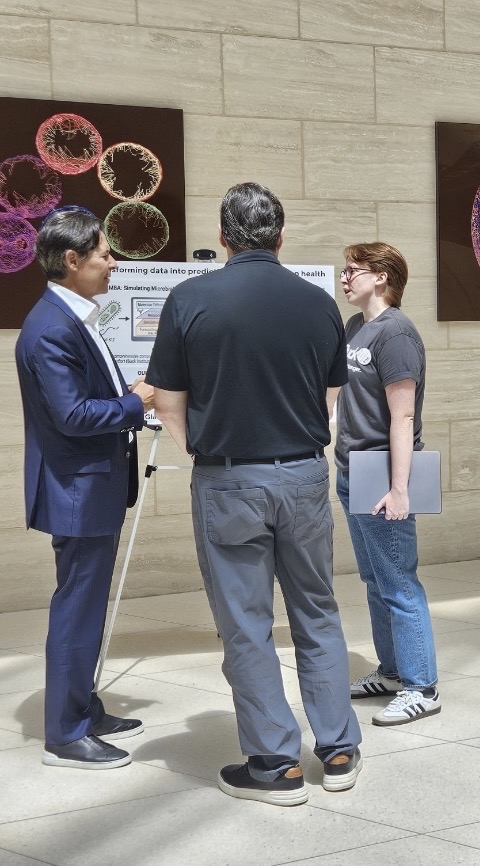
Furthermore, the team maintains vital external partnerships with industry leaders who supply specialized expertise in scaling computational technologies. The broader ecosystem at the Buck Institute—specifically its emphasis on applying artificial intelligence to healthspan—creates an optimal environment for mathematicians, data scientists, and biologists to collaborate seamlessly. This multi-institutional and cross-disciplinary approach ensures that theoretical computer models remain tethered to empirical biological truth.
Translating Complex Biology into Practical Solutions
For the lay observer, the concept of whole-cell simulation can appear abstract. In layman’s terms, Glass’s research functions similarly to an advanced engineering blueprint, but for living organisms. Instead of building physical prototypes through trial and error, computational biologists construct a fully interactive digital replica of a cell on a computer screen.
When researchers introduce a variable—such as a new therapeutic drug or an environmental stressor—they can instantly observe the cell’s response: whether it accelerates growth, suffers metabolic disruption, or dies. By perfecting this digital sandbox on simpler organisms like bacteria, the scientific community moves closer to replicating human cells digitally. Observing how human cells age, mutate, and degrade on a computer screen will eventually allow researchers to design and test targeted interventions to reverse or halt that damage long before clinical symptoms manifest.
Implications for Healthcare, Medicine, and Everyday Life
The transition from reactive medicine to predictive, computational healthcare carries profound implications for everyday life. In the short term, the software models developed by Glass and her team offer tangible advancements in infectious disease management. By rapidly predicting which antibiotics will yield optimal efficacy against specific bacterial strains, clinicians can bypass trial-and-error prescriptions, reducing the risk of antibiotic resistance and improving patient outcomes.
In the long term, the extensibility of these models promises a revolution in preventive health and longevity. As computational frameworks scale from single bacteria to human tissues and organs, medicine could shift toward personalized longevity simulations. In such a future, physicians might utilize digital twins of a patient’s biological systems to forecast how specific lifestyle interventions, dietary adjustments, or pharmacological treatments will influence their individual cellular aging process. This precision-based paradigm replaces generalized medical guidelines with proactive, mathematically optimized healthspan management.
The Next Decade: From Single Cells to Body Systems
Looking forward over the next five to ten years, the field of computational geroscience stands at the precipice of transformative breakthroughs. Glass expresses profound optimism regarding the transition from simulating isolated cells to modeling entire, interconnected body systems.

Initiatives like the DARPA SMS program represent merely the initial phase of what is achievable in cellular modeling, pushing researchers toward systems ten times more complex than those available today. Within the coming decade, the scientific community anticipates the emergence of the first high-fidelity digital models of human cells. For researchers at the Buck Institute, this milestone will mark a paradigm shift, enabling scientists to probe the fundamental drivers of biological aging at a level of granularity once relegated to science fiction. By moving from the passive observation of age-related decline to active prediction and prevention, computational biology is poised to redefine the boundaries of human healthspan.
Related posts: