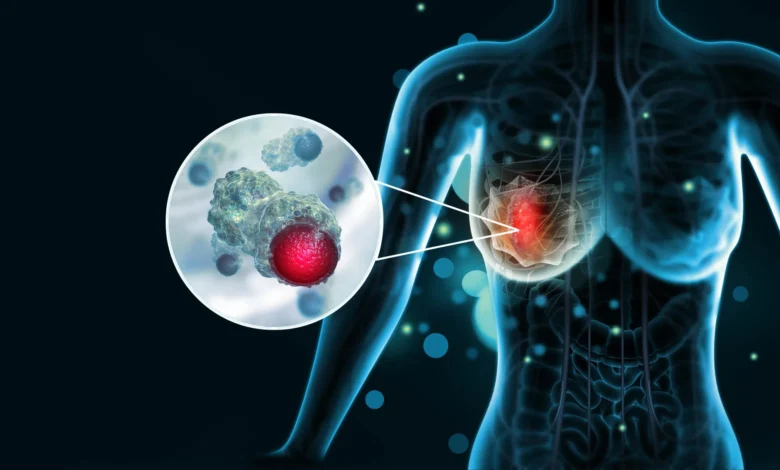
A groundbreaking study conducted by the National Institutes of Health (NIH), a component of the U.S. Department of Health and Human Services (HHS), has identified a significant correlation between elevated blood concentrations of two prevalent per- and polyfluoroalkyl substances (PFAS) and an increased risk of developing estrogen receptor-negative (ER-negative) breast cancer. This research, published in the Journal of Clinical Oncology, sheds light on the long-term health implications of "forever chemicals"—synthetic compounds engineered for durability that now permeate global water supplies, household products, and human biological systems.
The investigation specifically isolated perfluorooctanoic acid (PFOA) and perfluorooctanesulfonic acid (PFOS) as primary targets of concern. While the study did not establish a definitive link between these chemicals and an overall increase in all breast cancer diagnoses, the data revealed a stark, statistically significant association with the ER-negative variant. This particular subtype of breast cancer is historically categorized as more aggressive and harder to treat, as its tumor cells do not possess the estrogen receptors typically targeted by hormonal therapies like tamoxifen or aromatase inhibitors.
A Chronology of Chemical Persistence
PFAS were first developed in the mid-20th century, gaining widespread industrial application in the 1940s and 1950s. Their unique chemical structure—a chain of carbon and fluorine atoms—makes them impervious to water, grease, and heat. This durability, which makes them ideal for non-stick cookware, stain-resistant textiles, and firefighting foams, is precisely what makes them an environmental and biological hazard. Because the carbon-fluorine bond is one of the strongest in organic chemistry, these substances do not degrade naturally.
In the decades following their introduction, PFAS became ubiquitous in the consumer landscape. By the early 2000s, longitudinal studies began to suggest that these chemicals were accumulating in human blood at levels that could potentially disrupt endocrine function and immunological health. The Sister Study, a cohort of over 50,000 women initiated by the National Institute of Environmental Health Sciences (NIEHS) between 2003 and 2009, provided the foundational data for this recent analysis. By tracking women who had a sister with breast cancer, researchers created a robust environment to monitor how environmental factors, such as PFAS exposure, interact with genetic predisposition over time.
Quantifying the Risk: The Data Breakdown
The researchers, led by NIH Stadtman Investigator Alexandra White, Ph.D., utilized blood samples collected from participants years before any cancer diagnosis occurred. This prospective approach is vital in epidemiological studies, as it minimizes "reverse causation," where a disease state might alter a patient’s lifestyle or metabolic processes.
The results were statistically profound. Women positioned in the highest quartile of PFOA exposure demonstrated a 67% higher rate of developing ER-negative breast cancer compared to those in the lowest exposure quartile. The correlation was even more pronounced for PFOS, where the highest exposure group faced a 93% higher rate of the same aggressive cancer type. It is essential to note that these figures represent relative risk—an increase in the likelihood of incidence within the studied groups—rather than a direct, absolute probability for any single individual.
The study analyzed 1,609 women who developed breast cancer during the follow-up period and compared them against a control group of 2,269 women. By measuring 17 different PFAS compounds, the team was able to differentiate between the legacy chemicals (PFOA and PFOS) and newer iterations that have begun to replace them in the market.
Official Responses and Public Health Policy
The findings have prompted a swift response from federal health leadership. HHS Secretary Robert F. Kennedy, Jr. emphasized the government’s commitment to investigating these findings further. "Women deserve clear answers about how chemicals in their environment may affect their health," Kennedy stated. "This NIH study links two forever chemicals to a higher risk of ER-negative breast cancer and demands further investigation. Under President Trump’s leadership, we will pursue the evidence, confront environmental health risks, and give women the information they need to protect their health."
The implications for public health are substantial. As government agencies like the Environmental Protection Agency (EPA) move toward stricter regulation of PFAS in drinking water, this study provides a new, urgent clinical rationale for those policies. The focus is shifting from simply monitoring environmental levels to understanding the precise molecular pathways through which these chemicals may initiate carcinogenesis.
Mechanisms of Action: Why ER-Negative?
The study’s most intriguing finding is the specific association with ER-negative tumors. Most breast cancer research focuses on estrogen-responsive cancers because they are more common and medically responsive to hormone-blocking drugs. The fact that PFOA and PFOS are linked to the more aggressive, non-responsive type suggests that these chemicals may operate through non-hormonal pathways.
Che-Jung Chang, Ph.D., the study’s first author and a researcher at DLH, suggests that the mechanism might involve alterations in gene expression or disruptions to the immune system’s ability to survey and destroy nascent tumor cells. Because the study did not explicitly test these biological mechanisms, the scientific community is now calling for follow-up studies that bridge the gap between exposure data and molecular oncology. Potential areas of investigation include the impact of PFAS on epigenetic programming—how chemicals might "turn on" or "turn off" specific genes that regulate cell cycle checkpoints.
Broader Implications and Future Research
While PFOA and PFOS have been largely phased out of production in the United States under various voluntary and regulatory agreements, the "forever" nature of these chemicals ensures they remain in the environment for decades. They are present in soil, groundwater, and the food chain. Consequently, even women who avoid new products containing these substances are likely to have measurable levels in their blood.
The public health sector now faces the challenge of addressing "replacement" PFAS. Manufacturers have introduced newer, shorter-chain PFAS compounds to replace PFOA and PFOS, under the assumption that they are less bioaccumulative. However, the scientific community remains cautious. Dr. White noted that "more research is needed, particularly evaluating the risk of breast cancer associated with newer replacement PFAS chemicals." There is a legitimate concern that these substitutes may mirror the toxicity of their predecessors, potentially leading to a new wave of environmental health challenges.
For the medical community, the study provides a clarion call for better exposure screening. If clinicians can identify high-risk populations based on environmental exposure history, they may be able to implement more aggressive screening protocols, such as earlier or more frequent mammography, for women who have lived in regions known for high levels of PFAS contamination.
Conclusion: A Shift in Environmental Health
The NIH findings serve as a stark reminder that the modern environment is a complex landscape of chemical exposure. The transition from legacy chemicals to modern alternatives has not yet yielded the safety data required to assure public health. By identifying the link between PFOA, PFOS, and ER-negative breast cancer, this research provides the necessary data to push for more stringent environmental protections and more targeted cancer research.
As the scientific community continues to dissect the long-term impact of these synthetic compounds, the focus will likely move toward remediation, detoxification, and the development of safer alternatives. For now, the study underscores that while some environmental exposures are beyond an individual’s immediate control, the cumulative weight of scientific evidence is finally providing the clarity needed to demand systemic change. The path forward involves not only monitoring these "forever chemicals" but also rigorously testing the next generation of industrial materials before they become the next public health crisis. Through continued investment in epidemiological research and interdisciplinary science, the goal remains clear: to mitigate the risks posed by environmental pollutants and improve clinical outcomes for women worldwide.
Related posts: