Remembering Thomas E. Johnson: The Pioneer Who Transformed Aging from Fringe Concept to Modern Geroscience


The scientific community is mourning the recent
passing of Dr. Thomas "Tom" E. Johnson, a visionary researcher whose pioneering work fundamentally transformed aging from an untamed biological mystery into a rigorous, manipulable discipline. Long dismissed by mainstream academia as an inevitable consequence of systemic wear-and-tear or even "junk science," aging was once believed to be completely impervious to genetic or medical intervention. Dr. Johnson’s groundbreaking research in the mid-to-late 1980s dismantled this long-held dogma, proving that lifespan is not a fixed clock, but a plastic trait governed by specific genetic pathways.
Today, as the global population ages and the socioeconomic burdens of age-related chronic diseases mount, the intellectual infrastructure of modern geroscience stands directly on the foundations laid by Dr. Johnson in his laboratory at the University of Colorado at Boulder. His legacy lives on not only through the monumental paradigm shift he engineered, but also via the generations of researchers he inspired, mentored, and launched into careers dedicated to unraveling the biological mechanisms of longevity.
A Paradigm Shift in Molecular Biology: The 1980s Landscape
To fully appreciate the magnitude of Dr. Johnson’s contributions, one must examine the state of molecular biology and gerontology in the early 1980s. At the time, aging was broadly viewed as a chaotic, decentralized process. Conventional scientific wisdom held that thousands of genes interacted in complex, inscrutable ways to cause a gradual decline in physiological function. Because deterioration seemed so diffuse and universal, manipulating lifespan directly was widely considered biologically impossible. Textbooks and senior academics framed aging not as a phenotype subject to natural selection or genetic regulation, but as the inevitable accumulation of random molecular damage, akin to a machine rusting over time.
Within this skeptical environment, a small cohort of forward-thinking scientists began utilizing model organisms to test the boundaries of genetic plasticity. Among them was Mike Klass, who had previously isolated nematode mutants with altered lifespans. However, it was Dr. Johnson who systematically validated and expanded upon these early observations, turning isolated anomalies into a cohesive, undeniable scientific revolution.
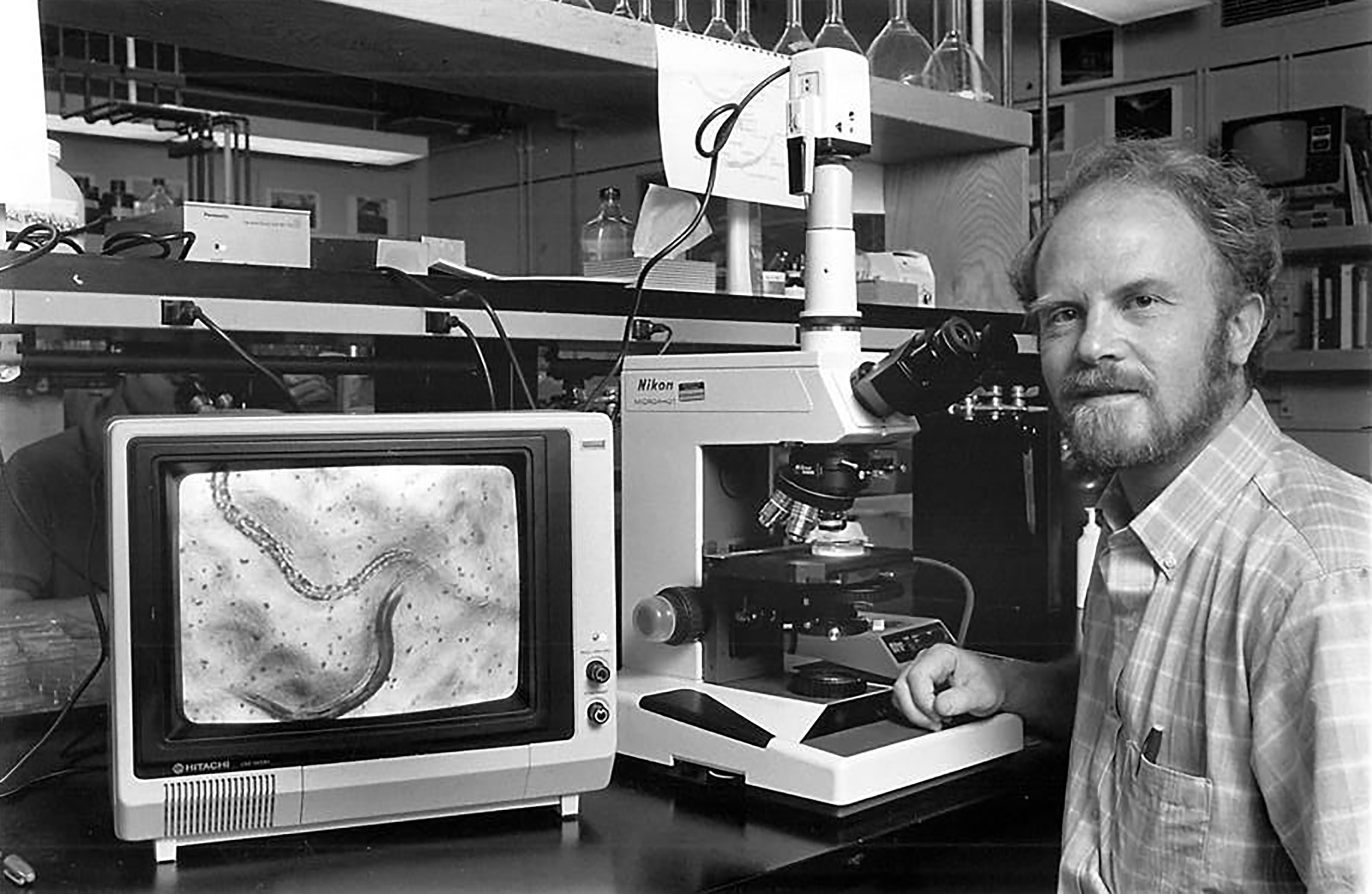
The Four Groundbreaking Publications That Defied Orthodoxy
Dr. Johnson’s transformation of the field crystallized through a historic series of four publications released in the 1980s. Together, these studies served as a seismic disruption to conventional gerontological thought:
- Selective Breeding of Nematodes: In his initial foundational studies, Dr. Johnson demonstrated that selectively breeding the nematode Caenorhabditis elegans (C. elegans) could yield substantial, predictable changes in longevity. By showing that lifespan could be selected for as a distinct trait, he provided early empirical proof that genetic architecture underpins how long an organism lives.
- Isolating Single-Gene Mutations: Building directly upon the prior observations of Mike Klass, Dr. Johnson’s subsequent papers achieved what many thought impossible. He isolated and characterized specific genetic mutations capable of extending the lifespan of C. elegans by more than 50 percent.
- Pinpointing the Longevity Gene: Crucially, these papers demonstrated that mutations in a single gene were sufficient to drive these dramatic shifts in longevity. This discovery shattered the notion that aging was too polygenic and complex to manipulate, reducing a chaotic biological problem down to tractable, identifiable genetic components.
Despite the empirical rigor of these findings, the broader scientific community was initially resistant. Many established researchers dismissed the data as experimental artifact or statistical anomaly, struggling to reconcile single-gene lifespan extension with existing theories of aging.
Defying the Naysayers: Mentorship and the Birth of a New Generation
For young scientists entering the field during the late 1980s and early 1990s, Dr. Johnson’s laboratory served as a solitary beacon of revolutionary science. Among those who recognized the monumental significance of his work were Dr. Gordon Lithgow and Dr. Simon Melov, both of whom would eventually become foundational figures at the Buck Institute for Research on Aging.
Recalling his entry into the field as a graduate student in the early 1990s, Dr. Melov noted the immense professional friction associated with studying aging at the time. When seeking career advice from established academics and future Nobel laureates, Dr. Melov was frequently warned that pursuing the biology of aging was professional suicide. Senior mentors labeled aging research "junk science" and advised him to focus on more respectable, mainstream disciplines, such as developmental biology, dismissing Dr. Johnson as eccentric.
Rather than deterring him, this skepticism acted as a catalyst. Immersed in scientific journals at the library, Dr. Melov recognized that Dr. Johnson’s laboratory was one of the very few groups globally performing direct, mechanistic experiments on aging using genetically tractable model organisms. Treating aging itself as a measurable phenotype—and utilizing genetics to directly alter it—resonated deeply with Dr. Melov’s scientific curiosities.
He wrote directly to Dr. Johnson, inquiring about postdoctoral opportunities from overseas. Dr. Johnson’s prompt and welcoming response altered the trajectory of Dr. Melov’s life and career. Dr. Johnson’s commitment to rigorous, meticulous experimentation and openness to unorthodox hypotheses established a cultural standard that shaped his mentees for decades to come. Through his mentorship, Dr. Johnson effectively catalyzed nearly forty years of continuous, highly productive research into the biology of aging.
From Fringe Hypothesis to the Foundation of Geroscience
The implications of Dr. Johnson’s worm studies extended far beyond nematodes. In the decades following his breakthrough publications, researchers discovered that the genetic pathways regulating longevity in C. elegans—such as the insulin/IGF-1 signaling pathway—are remarkably conserved across evolutionary history, operating similarly in fruit flies, mice, and ultimately humans.
This evolutionary conservation bridged the gap between basic invertebrate genetics and translational human medicine, giving birth to the modern interdisciplinary field of geroscience. Geroscience posits that aging is the single greatest risk factor for nearly all chronic diseases, including Alzheimer’s, cardiovascular disease, cancer, and type 2 diabetes. By targeting the fundamental biological processes of aging rather than treating individual diseases in isolation, geroscience aims to extend human healthspan—the period of life spent free from chronic disease and disability.
The intellectual architecture of premier research institutions, most notably the Buck Institute for Research on Aging, traces its lineage directly back to the intellectual earthquake caused by Dr. Johnson’s lab. The realization that aging is malleable opened up vast new avenues of pharmaceutical, genetic, and lifestyle interventions designed to delay age-related functional decline.
A Lasting Legacy in Scientific History
The history of science is punctuated by rare individuals who possess the intellectual courage to look at a universal constant—such as aging and mortality—and ask whether it can be altered. Thomas E. Johnson was undeniably one of those rare figures. By dragging the study of aging out of the realm of speculation and into the light of rigorous molecular genetics, he altered humanity’s relationship with time itself.
As the scientific community reflects on his passing, the consensus among his peers is unanimous: Dr. Johnson’s work represents one of the most profound biological discoveries of the 20th century. His fearless pursuit of empirical truth not only validated a dismissed field of study, but also paved the way for future medical breakthroughs that will continue to benefit human health for generations to come.