The Foundation of Human Longevity: Why Experts Say It Is Time to Re-Evaluate Foot Health and Biomechanics

In the modern fitness landscape, physical conditioning is largely defined by what can be observed in a mirror or quantified on a training log. Enthusiasts and athletes dedicate substantial mental and physical capital to developing visible muscle groups—the biceps, quadriceps, rectus abdominis, and gluteal complexes. Routine workout blocks are engineered to maximize hypertrophy, improve muscular endurance, and enhance aesthetic symmetry in these primary regions. Yet, this localized focus frequently overlooks a complex anatomical foundation located at the terminal point of the human kinetic chain: the human foot.
Comprising 29 intricate muscles, 26 bones, and thousands of specialized mechanoreceptors, the human foot functions as a sophisticated sensory and structural nexus. Despite its critical role in human locomotion, foot health has historically been relegated to an afterthought in mainstream physical culture. While athletes routinely incorporate targeted protocols for hamstring flexibility, iliotibial band release, and shoulder stability, the intrinsic muscles of the foot remain largely untrained, frequently constrained within narrow-toed footwear and heavily cushioned athletic sneakers. In recent years, however, biomechanists, physical therapists, and longevity researchers have increasingly turned their attention toward podiatric function, identifying foot health not merely as a localized orthopedic concern, but as a foundational indicator of overall physical longevity and kinetic efficiency.
The Neurological and Biomechanical Role of the Feet
To understand the growing emphasis on foot mechanics, researchers point to the constant neurological feedback loop operating between the soles of the feet and the central nervous system. Every step initiates a complex computation involving thousands of mechanoreceptors embedded in the plantar fascia and surrounding soft tissues. These receptors transmit vital data to the brain regarding spatial orientation, ground surface consistency, and load distribution, allowing the body to maintain balance and upright posture autonomously.

When this intricate feedback loop is compromised, the physiological consequences rarely remain isolated to the foot. Biomechanical studies demonstrate that podiatric dysfunction—such as restricted arch mobility, underutilized intrinsic musculature, or chronic toe compression—initiates a cascade of compensatory movement patterns. These adaptations travel upward through the kinetic chain, influencing ankle mobility, patellar tracking, hip stability, and spinal alignment. Clinicians frequently trace chronic lower back tightness, hip impingements, and knee pain back to sub-optimal foot function and inadequate load distribution at the point of initial ground contact.
The Longevity Connection and Aging
The implications of foot health extend far beyond athletic performance, intersecting directly with the science of human longevity and healthy aging. Dr. Courtney Conley, a prominent chiropractic physician and specialist in foot and gait mechanics, has repeatedly emphasized the correlation between declining foot strength and diminishing physical autonomy in older adults.
According to clinical observations and aging research, progressive loss of intrinsic foot strength directly correlates with reduced gait velocity, diminished balance capacity, and a heightened risk of falls among aging populations. Because independent mobility is a primary determinant of healthspan—the period of life spent in good health—maintaining structural integrity and sensory acuity in the lower extremities is increasingly viewed by preventative health specialists as a critical component of long-term wellness. Consequently, experts argue that interventions addressing foot mechanics should begin decades before age-related mobility declines manifest.
The Evolution of Footwear and Sensory Deprivation
A significant catalyst for the contemporary reassessment of foot health is the evolution of modern footwear design. Over the past several decades, commercial footwear has increasingly prioritized hyper-cushioned midsoles and tapered toe boxes designed for immediate consumer comfort. While these features reduce peak impact forces during high-impact activities, biomechanical analysts note that excessive cushioning can simultaneously dampen sensory input from plantar mechanoreceptors.
This sensory attenuation diminishes proprioception, reducing the brain’s ability to accurately assess spatial positioning under heavy loads. During complex movements such as barbell squats, lunges, or rapid lateral cutting maneuvers in sports like pickleball, this reduced clarity can generate micro-instabilities across the ankle and knee joints. Over thousands of repetitions and years of training, these cumulative micro-stresses can contribute to chronic joint wear and tear.
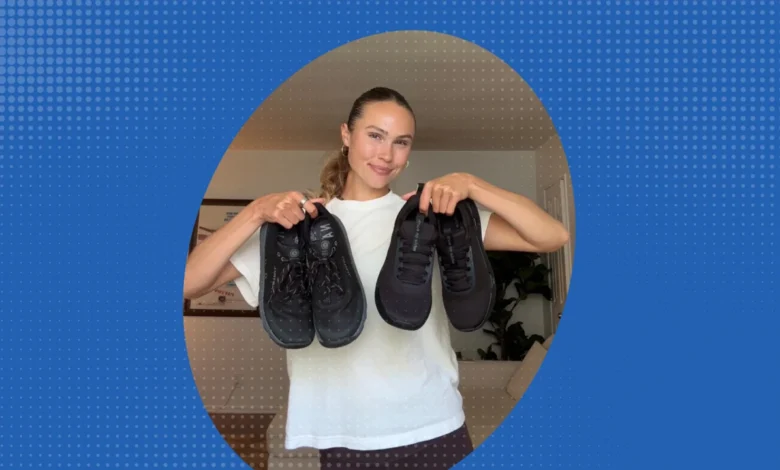
To counteract these effects, a growing segment of the fitness and footwear industries has shifted toward minimalist, zero-drop, and wide-toe-box footwear. These designs aim to restore natural foot splay, encourage intrinsic muscle engagement, and reestablish direct ground feedback while maintaining adequate protection against environmental hazards.
Practical Protocols for Integrating Foot Health
Recognizing the broader implications of podiatric neglect, health practitioners and fitness educators have advocated for accessible, daily interventions designed to restore foot functionality without requiring radical lifestyle disruptions. Common protocols currently gaining traction among physical therapists and strength coaches include:
- Toe Splay and Alignment Devices: The use of silicone toe spacers during sedentary periods, such as resting or working at a desk, to gradually counteract the compressive effects of narrow footwear.
- Intrinsic Muscle Strengthening: Implementation of targeted foot-specific exercises, including short-foot activations, eccentric calf raises, and barefoot balance drills designed to stimulate neglected stabilizing muscles.
- Gradual Footwear Transitions: Systematic integration of minimalist or zero-drop shoes, allowing the structural tissues of the foot and lower leg to adapt progressively to altered biomechanical demands.
- Increased Barefoot Exposure: Expanding the amount of time spent barefoot or in socks within controlled indoor environments to encourage continuous activation of the plantar arch and intrinsic musculature.
Broader Implications and Future Outlook
As the intersection of biomechanics, preventative medicine, and longevity continues to evolve, the traditional paradigm of physical fitness is undergoing a subtle but profound recalibration. The growing focus on foot health highlights a broader philosophical shift toward functional foundation rather than superficial aesthetics.

While visible muscle hypertrophy and athletic performance metrics will undoubtedly remain central to physical training, the rising emphasis on podiatric awareness underscores a fundamental physiological truth: the structural integrity of the entire human body is inextricably linked to its lowest point of contact. By recognizing the foot as a complex, trainable organ system rather than a passive shock absorber, researchers and practitioners hope to establish new standards for lifelong mobility, injury prevention, and physical resilience.