Digital Twins of Life: How Computational Biologists at the Buck Institute Are Simulating Cells to Defeat Aging


The quest to extend the human healthspan—the period of life spent in good health, free from chronic disease—has long relied on physical experimentation, trial-and-error laboratory work, and decades-long clinical observations. However, a quiet revolution is underway at the intersection of applied mathematics, artificial intelligence, and microbiology. At the Buck Institute for Research on Aging in Novato, California, scientists are pioneering a fundamentally new approach to understanding human decline: building digital, whole-cell simulations that can predict biological behavior on a computer screen long before a drug ever enters a petri dish.
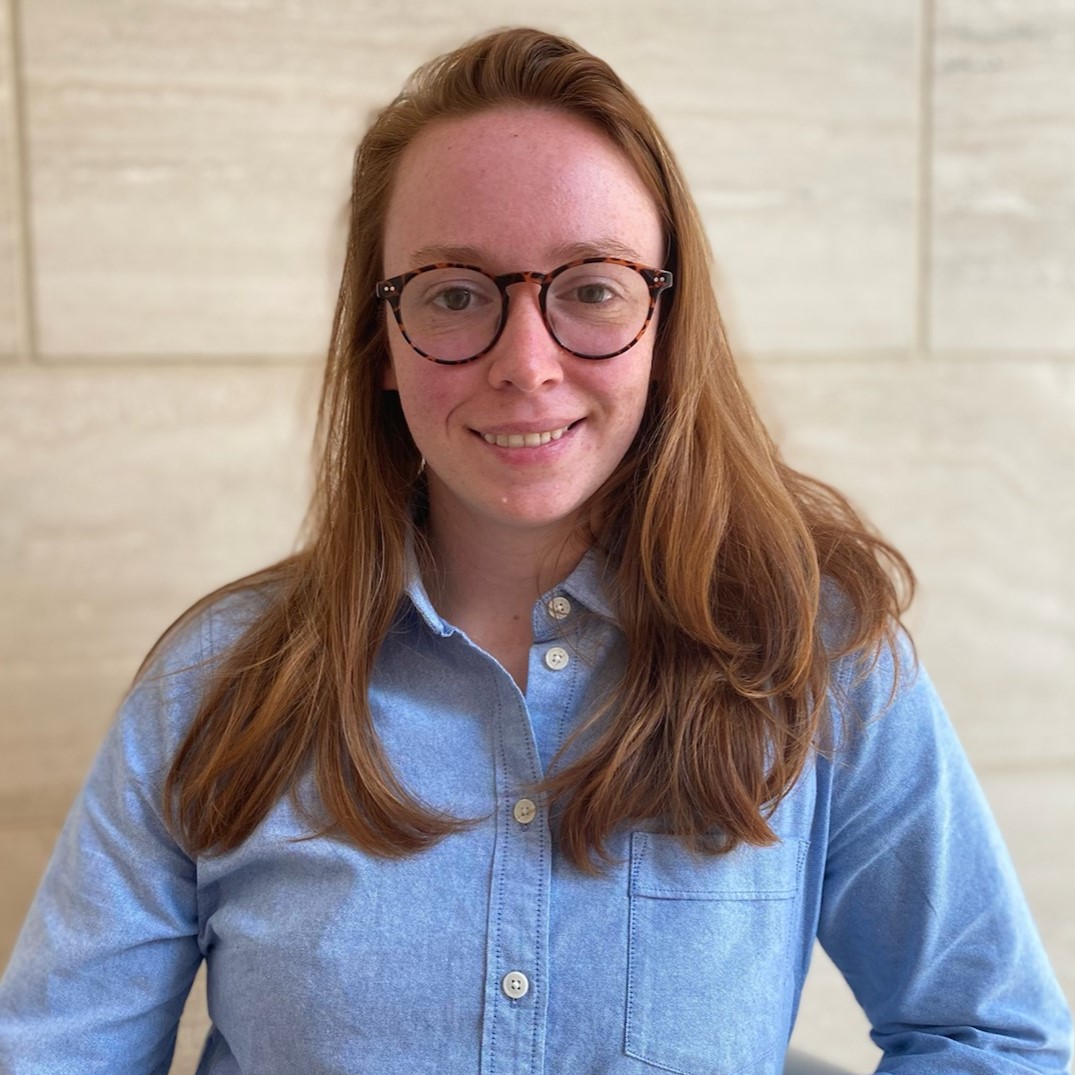
This initiative is the focus of Faces of Discovery, a monthly editorial series highlighting the researchers unraveling the mysteries of aging. Among the bright minds driving this computational shift is Dr. Emma Glass, a research scientist who joined the Yurkovich Lab at the Buck Institute. Glass, a Virginia native with a Bachelor of Science in Applied Mathematics from William and Mary and a PhD in Biomedical Engineering from the University of Virginia, represents a new generation of scientists who view biology through the lens of data science and predictive modeling. Her work, supported by federal defense research grants, is laying the groundwork for a future where aging and disease are not merely treated after the fact, but simulated, predicted, and intercepted with mathematical precision.
Bridging Computational Microbiology and Aging Science
Dr. Glass’s journey to the forefront of longevity science was forged through an academic background deeply rooted in quantitative analysis. During her doctoral studies, she specialized in computational microbiology, harnessing the power of mathematics to map out microscopic biological processes. When she discovered the vacancy at the Buck Institute—the world’s first independent research institution dedicated solely to addressing the most significant risk factor of all major diseases: aging—she recognized a unique opportunity to merge her technical expertise with a deeply personal passion for wellness and human longevity.
While computational biology has historically focused on specific genetic pathways or isolated proteins, Glass and her colleagues in the Yurkovich Lab are aiming for a much more ambitious target: whole-cell simulation software. By creating accurate, predictive digital replicas of living cells, researchers can bypass many of the physical and financial bottlenecks that typically hinder pharmacological research. Rather than running thousands of physical trials to observe how a cellular structure responds to an external stressor or a pharmaceutical compound, scientists can execute simulations instantaneously, observing cellular death, survival, and adaptation in real-time within a digital environment.
The DARPA Initiative: Simulating E. coli to Decode Human Biology
The primary catalyst for Glass’s current research is funding and strategic direction from the Defense Advanced Research Projects Agency (DARPA). Specifically, her work is tied to advanced programs focused on creating computational simulations that can accurately predict the exact behavioral responses of E. coli when exposed to diverse and changing environmental conditions.
The practical applications of this research are immediate and profound. By utilizing simulations to forecast the efficacy of specific antimicrobials, Glass and her team can calculate the precise concentration of an antibiotic required to halt bacterial growth without ever touching a physical petri dish. In clinical settings, this capability could transform how physicians diagnose and treat complex infections, enabling rapid, data-driven decisions that minimize the risk of antibiotic resistance.
However, within the broader mission of the Buck Institute, E. coli serves as a vital model organism and a crucial stepping stone. Mastering the computational simulation of a single bacterium provides researchers with a robust foundational blueprint. The overarching hypothesis driving the lab is that the algorithmic frameworks successfully deployed to model bacterial cells can eventually be scaled up in complexity—ultimately allowing scientists to simulate human cells, tissues, and complex organ systems. By understanding how a digital human cell alters its functions over time, researchers hope to decode the precise biological mechanisms responsible for cellular decline during the aging process.
Team Science and the Interdisciplinary Approach
Tackling a scientific hurdle of this magnitude requires moving far beyond the traditional confines of a single academic discipline. Modern biogerontology is inherently collaborative, relying on what the Buck Institute defines as "team science."
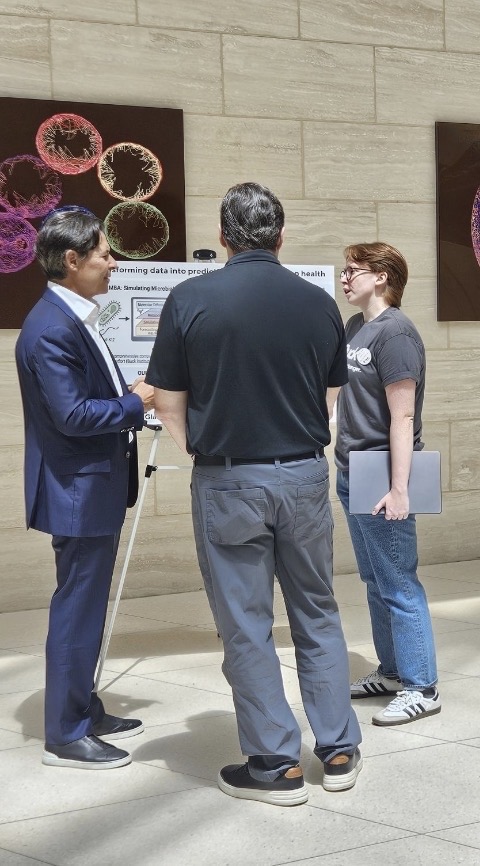
In the Yurkovich Lab, this collaborative framework is structured around two primary pillars of the DARPA project: "Measure and Inform" (the generation of massive empirical datasets) and "Simulate and Predict" (the building and refining of computational models). Glass’s daily work does not happen in an isolated silo; rather, it requires active partnerships with faculty members across the Buck Institute who specialize in experimental biology to produce the high-volume datasets required to ground digital models in biological reality.
Furthermore, the team works alongside external industry partners who provide specialized technological infrastructure necessary to scale these heavy computational processes. Because the Buck Institute has deliberately fostered an environment centered on applying artificial intelligence and machine learning to healthspan research, scientists like Glass are positioned at the confluence of big data and cellular biology. This synergy enables a continuous feedback loop where computational models inform physical experiments, and new experimental data immediately refines the digital simulations.
A New Paradigm for Medicine: Moving Away from One-Size-Fits-All
To understand the long-term societal implications of whole-cell modeling, it is helpful to contrast it with historical scientific methods. Traditionally, if researchers or pharmaceutical developers want to observe how a cell reacts to a novel therapeutic compound, they must conduct exhaustive physical experiments. These processes are bound by physical constraints, consuming valuable time, laboratory resources, and financial capital.
Digital cell simulation changes this paradigm entirely. By inputting the comprehensive biological properties of a cell into a software architecture, scientists can run thousands of iterative tests digitally. For everyday people, the eventual downstream effects of this research could be revolutionary.
In the near term, predictive bacterial simulations will streamline infection treatments, ensuring patients receive the exact pharmaceutical agent best suited to eradicate their specific pathogen. Over the next decade, however, the expansion of this technology promises to usher in an era of personalized longevity simulations. Medical professionals could theoretically leverage digital twins of a patient’s cells to test how specific lifestyle adjustments, dietary modifications, or preventative medications would impact their personal cellular aging trajectory. This shifts modern healthcare away from reactive, generalized treatments toward a proactive model of healthspan management.
The Horizon: A Decade of Cellular Systems Modeling
Looking toward the next five to ten years, the field of computational longevity is poised for exponential growth. Programs like DARPA’s Systems, Synthetic, and Specialized (SMS) initiatives are pushing researchers to increase the complexity of their models by orders of magnitude.

For Glass and her colleagues at the Buck Institute, the upcoming decade represents a transition from conceptual modeling to empirical validation on a massive scale. As computational power and artificial intelligence algorithms continue to advance, the scientific community moves closer to realizing the first high-fidelity digital models of human cells.
What once sounded like science fiction—probing the innermost mechanisms of human biological aging on a computer screen and engineering interventions to reverse or halt cellular damage—is rapidly becoming an achievable reality. By transforming how humanity understands cellular life, researchers at the Buck Institute are shifting the medical paradigm from merely observing the physical toll of aging to actively predicting, preventing, and ultimately extending the human healthspan.
Related posts: