Beyond the Surface: How Caffeine Secretly Undermines the Biological Architecture of Sleep


For years, the public debate surrounding evening coffee consumption has centered on a simple, binary question: does a late-afternoon espresso prevent you from falling asleep? While anecdotal evidence suggests that some individuals can consume caffeine at midnight and drift off effortlessly, others report hours of restlessness. However, recent advancements in neurophysiological research indicate that this traditional inquiry is fundamentally narrow. Sleep scientists are increasingly shifting their focus away from the superficial metrics of sleep onset and total duration, moving instead toward a more critical investigation: what exactly is caffeine doing to the brain after the eyes have closed?
The Evolution of Sleep Science: Moving Beyond Duration
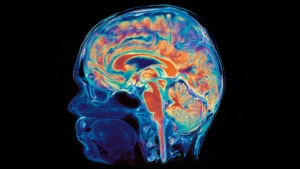
The classical approach to sleep assessment, which has been the standard in clinical settings for decades, relies heavily on polysomnography to measure sleep duration, the number of awakenings, and the time taken to fall asleep. While these metrics provide a baseline, they fail to capture the nuances of neural recovery. To bridge this gap, researchers are now utilizing electroencephalography (EEG) to record the brain’s electrical activity with unprecedented precision.
EEG measurements allow clinicians to move beyond the "how long" of sleep to the "how well." By analyzing the frequency and amplitude of brain waves, quantitative EEG analysis reveals subtle physiological shifts that remain invisible to conventional monitoring. Prof. Donata Kurpas of the Department of Nursing at Wroclaw Medical University notes that these tools allow for the identification of reduced slow-wave activity—a critical marker of sleep depth and restorative quality. "Classical sleep assessment evaluates sleep duration and its stages, whereas quantitative EEG analysis reveals more subtle changes, such as reduced slow-wave activity, which is an important marker of sleep depth and its restorative character," she explains.
The Mechanism of Restorative Sleep
To understand why caffeine is problematic even for "good sleepers," one must understand the biological necessity of slow-wave sleep (SWS). Also known as deep sleep, SWS is the period during which the brain undergoes essential maintenance. It is characterized by high-amplitude, low-frequency oscillations. During this phase, the body focuses on physical recovery, the replenishment of ATP (adenosine triphosphate) energy reserves, and the consolidation of memories.
When caffeine remains in the system, it acts as an adenosine receptor antagonist. Adenosine is a chemical that builds up in the brain throughout the day, creating "sleep pressure." By blocking these receptors, caffeine masks the feeling of fatigue. However, even if the body reaches a state where it can bypass that inhibition to initiate sleep, the caffeine continues to exert an influence on the brain’s architecture. It shifts the EEG pattern toward a more "wakeful" state, effectively diluting the intensity of slow-wave activity. The result is a paradox: an individual may enjoy eight hours of uninterrupted unconsciousness, yet wake up feeling unrefreshed because their brain was prevented from entering the deepest, most restorative stages of the sleep cycle.
The Hidden Impact of Metabolic Variability
The physiological response to caffeine is far from uniform. Research indicates that individual sensitivity is dictated by a complex interplay of genetics, age, and metabolism. The liver enzyme CYP1A2 is primarily responsible for the metabolism of caffeine. Variations in the gene that codes for this enzyme can result in "fast metabolizers," who clear caffeine quickly, and "slow metabolizers," who may experience the stimulant effects for ten to twelve hours after a single cup of coffee.
Furthermore, factors such as chronic stress and existing fatigue can exacerbate the impact of caffeine on the nervous system. Prof. Kurpas emphasizes that the timing of consumption is only part of the equation. "It is not only about coffee consumed just before bedtime. For some people, the total amount of caffeine consumed during the day and whether the body has enough time to metabolize it before nightfall may also be important," she says. For a slow metabolizer, a morning cup of coffee can still be circulating in the bloodstream at a concentration sufficient to disrupt the architecture of sleep later that night.
The Fatigue Cycle: A Modern Public Health Challenge
The implications of this discovery are significant for a workforce increasingly reliant on stimulants. Athletes, medical professionals, emergency responders, and individuals in high-pressure corporate environments often use caffeine to bridge the gap between their actual energy levels and the demands of their schedules. This creates a feedback loop: caffeine provides a temporary spike in alertness, allowing the individual to push through a period of exhaustion. However, because this caffeine ingestion impairs the restorative quality of the following night’s sleep, the individual wakes up with a larger "sleep debt" than they had the previous morning.
This leads to a self-perpetuating cycle of stimulants and sedation. The user experiences a greater need for stimulation during the day, which necessitates higher doses of caffeine, which in turn further degrades the quality of their nightly recovery. This "borrowed energy" model is not sustainable, yet it is often ignored because the disruption to sleep quality is not always perceptible to the sleeper. "A person may fall asleep without major difficulty and not remember awakenings, while the brain may display fewer features of deep sleep," Prof. Kurpas adds.
Implications for Clinical Practice and Public Health
The shifting focus in sleep research has broader implications for how health professionals advise the public. If sleep duration is not an accurate proxy for sleep health, then millions of people may be suffering from chronic sleep deprivation without knowing it. This realization has sparked a push for more comprehensive sleep hygiene guidelines that account for total daily intake rather than just "cut-off times."
Recent data from the American Academy of Sleep Medicine and similar international bodies suggest that even modest amounts of caffeine, when consumed in the late afternoon, can result in significant architectural changes in sleep patterns. As the scientific community continues to refine these findings, the conversation is moving away from the "good or bad" dichotomy. Instead, experts are framing caffeine as a potent, biologically active substance that requires a sophisticated understanding of individual pharmacokinetics.
Conclusion: A Measured Approach to Stimulation
Ultimately, the research underscores that sleep is not a passive state, but an active, complex physiological process. When that process is interrupted by stimulants, the consequences manifest in cognitive performance, mood regulation, and long-term metabolic health. The findings from EEG research provide a stark reminder that the brain’s recovery is not negotiable.
As Prof. Kurpas concludes, "Caffeine is neither ‘good’ nor ‘bad’. It is a biologically active substance whose effects depend on dose, time of day, age, lifestyle, sleep quality, stress burden, and individual sensitivity." For the average consumer, the path forward involves a move toward mindful consumption—recognizing that the impact of a morning latte can, for many, echo well into the quiet hours of the night, silently rewriting the quality of the rest they receive. Future research will likely focus on developing personalized caffeine-consumption strategies based on genetic testing, ensuring that the benefits of alertness do not come at the cost of the biological necessity of deep, restorative sleep.
Related posts: