Global Health Ministers Rally Behind WHO Investment Round at Rio de Janeiro G20 Meeting to Secure Sustainable Funding for Future Crises


Health ministers gathered in Rio de Janeiro for a pivotal G20 meeting under the presidency of Brazil to voice strong, unified support for the World Health Organization (WHO) Investment Round. The high-level gathering focused on securing long-term, predictable, and flexible financial streams necessary for the global health body to execute its Fourteenth General Programme of Work (GPW 14). With the overarching mission to improve billions of lives and safeguard public health on a global scale, international health leaders issued a collective plea to member states and philanthropic partners to step forward with substantive financial commitments ahead of the upcoming G20 Leaders Summit.
The urgency of the meeting stems from an evolving global health landscape marked by lingering post-pandemic vulnerabilities, the accelerating impacts of climate change on human health, geopolitical instability, and chronic shortages of medical infrastructure in the developing world. By focusing on the WHO Investment Round, member states are attempting to shift the funding paradigm away from tightly earmarked, volatile voluntary contributions toward more sustainable and flexible resources. This transition is viewed by public health economists as fundamental to ensuring that the WHO can act swiftly, impartially, and effectively when the next major health emergency strikes.
Background Context of the WHO Investment Round
For decades, the WHO has operated under a financial model heavily reliant on voluntary contributions, the majority of which are earmarked for specific diseases or regions by donor countries. While this funding has historically driven vital disease eradication campaigns—such as those against polio and smallpox—it has constrained the organization’s ability to allocate resources rapidly to emerging crises or maintain foundational health systems strengthening.
Recognizing these structural vulnerabilities, the WHO member states endorsed the concept of an Investment Round in recent years, designing it as a mechanism to mobilize resources in a predictable, multi-year cycle. The ongoing campaign represents the first-ever formal Investment Round structured by the organization. It is deliberately timed to coincide with the rollout of the GPW 14 strategy, which sets the strategic roadmap for global public health initiatives through the end of the decade. The ultimate ambition of this strategic cycle is staggering in its scope: to save an estimated 40 million lives globally through coordinated interventions, expanded access to essential medicines, strengthened health workforces, and enhanced pandemic preparedness.
Chronology of the Rio de Janeiro Ministerial Meeting
The discussions in Rio de Janeiro represented a culmination of months of diplomatic engagement, technical briefings, and regional consultations led by the WHO secretariat in collaboration with the Brazilian G20 presidency.
In the weeks leading up to the ministerial meeting, regional committees across Africa, the Americas, Europe, the Eastern Mediterranean, South-East Asia, and the Western Pacific reviewed the draft budget and assessed the equity dimensions of global health financing. During the Rio session, health ministers reviewed the current tally of pledges and mapped out strategies to engage heads of state ahead of the G20 Leaders Summit, scheduled for November 18–19, 2024.
The chronology of financial mobilization will reach its next critical milestone in mid-November, when President Luiz Inácio Lula da Silva of Brazil hosts the Leaders Summit. At that high-profile gathering, heads of state are expected to finalize political declarations that codify financial pledges and reinforce institutional support for multilateralism in health. Furthermore, the ministerial meeting established a clear procedural handover: following the conclusion of Brazil’s G20 presidency, South Africa is slated to assume the presidency, ensuring that sustainable financing for the WHO remains a central pillar of the G20 agenda well into the future.
Supporting Data and Financial Milestones
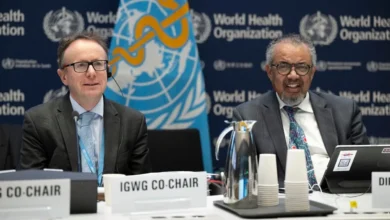
During the Rio de Janeiro meeting, WHO Director-General Dr. Tedros Adhanom Ghebreyesus provided a comprehensive update on the financial state of the Investment Round. To date, the campaign has successfully secured 63 distinct pledges amounting to a total exceeding one billion US dollars.
A notable trend highlighted by the Director-General is the democratization of donor participation. More than half of the current pledges originate from first-time voluntary contributors, reflecting a broadening base of international solidarity. Significantly, numerous low- and middle-income nations across the African, Western Pacific, and South-East Asian regions have committed financial resources, however modest relative to major industrialized economies. Public health analysts note that these contributions from economically constrained countries carry profound symbolic and practical weight, demonstrating firsthand appreciation for the tangible impact of WHO technical assistance, disease surveillance, and emergency response on the ground.
Among the prominent contributors recognized during the meeting were Germany, Norway, Singapore, South Africa, Türkiye, the European Union, and the Wellcome Trust. These early commitments have served as a financial anchor, encouraging other nations to review their budgetary allocations for international development and global public health.
Official Responses and Ministerial Statements
The consensus in Rio was underscored by robust statements from key health ministers and international leaders, emphasizing that funding the WHO is not an act of charity, but a strategic investment in global security.
Brazilian Minister of Health Nísia Trindade articulated the philosophical core of the host nation’s agenda, stating, "We need a strong WHO to accomplish its mandate and we call on everyone to contribute to the financial sustainability of the WHO, including by pledging at the G20 Leaders Summit." Trindade emphasized that fragmenting global health governance undermines collective security, making robust multilateral institutions more critical than ever.
Echoing these sentiments, German Minister of Health Dr. Karl Lauterbach delivered a direct challenge to fellow G20 economies to match their political rhetoric with budgetary realities. "A strong WHO is essential for the world. Resilient sustainable financing is essential for WHO. Financing WHO means investing in a healthier future," Dr. Lauterbach declared. "We call on all G20 partners to stand by their political commitments for WHO. To walk the talk and to increase their predictable and flexible financial support to WHO."
In a display of enduring regional leadership and continuity, South African Health Minister Dr. Pakishe Aaron Motsoaledi announced that his country is prepared to champion the sustainable financing agenda through its upcoming G20 presidency. The ministers warmly welcomed this commitment. Dr. Motsoaledi affirmed that South Africa "is dedicated to carry forward the sustainable financing journey of the World Health Organization into our presidency of the G20 in the coming year," noting that his administration is fully prepared to "carry forward the baton from Brazil."
Broader Impact and Implications for Global Health Architecture
The success or failure of the WHO Investment Round carries profound implications for the architecture of global health governance. In an era marked by rising geopolitical tensions, protectionist impulses, and competing demands on national treasuries, the WHO remains the singular normative and operational body capable of coordinating a truly global response to cross-border health threats.
Without predictable and flexible financing, the organization risks operational delays during public health emergencies, compromised disease surveillance networks, and diminished capacity to support fragile health systems in developing nations. Conversely, achieving the targets of the Investment Round will enable the WHO to retain specialized technical staff, pre-position medical supplies, invest in research and development for neglected tropical diseases, and assist member states in achieving Universal Health Coverage (UHC).
As attention now shifts toward the G20 Leaders Summit in November 2024, the diplomatic momentum generated in Rio de Janeiro will be put to the test. The ability of the world’s largest economies to translate ministerial consensus into binding budgetary commitments will serve as a definitive litmus test for the future of international cooperation in public health.
Related posts: