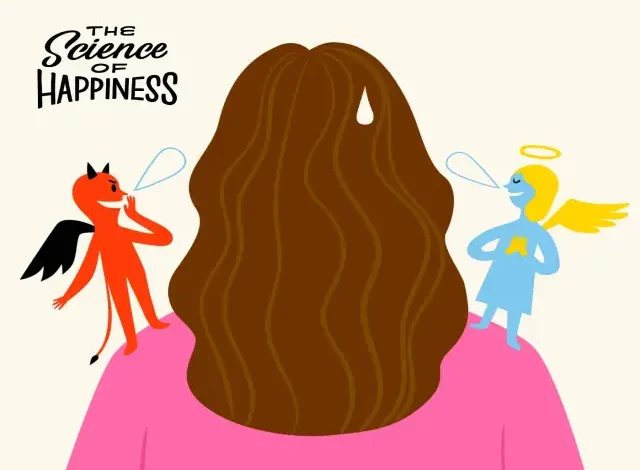
A profound new understanding is emerging from the field of neuroscience, revealing that the deeply ingrained human impulse for revenge operates strikingly similar to an addiction, capable of compelling individuals into destructive cycles. Simultaneously, groundbreaking research indicates that forgiveness, long considered a spiritual or moral virtue, is a potent neurophysiological process, offering one of the most effective pathways to interrupt these cycles, alleviate emotional suffering, and fortify self-control. This paradigm shift, championed by figures like James Kimmel Jr., an assistant clinical professor at the Yale School of Medicine, is not merely theoretical but rooted in personal experience and rigorous scientific inquiry, promising new strategies for individual healing and fostering a less violent global society.
The Genesis of a Lifelong Inquiry: A Personal Ordeal
James Kimmel Jr.’s compelling journey into the neurobiology of revenge and forgiveness began not in a laboratory, but amidst the visceral realities of his own adolescence. Raised on a farm in rural Central Pennsylvania, Kimmel endured years of relentless bullying. What commenced as verbal abuse escalated over time, becoming increasingly physical and menacing, perpetrated by neighboring farm children. This sustained psychological and physical torment reached a critical point when Kimmel was approximately 16 or 17 years old. One night, his family was abruptly awakened by the chilling sound of a gunshot. Peering out, Kimmel witnessed a pickup truck, known to be driven by one of his tormentors, speeding away. Although initial inspections revealed no damage to their home, a grim discovery awaited him the following morning: his beloved beagle hunting dog, Paula, lay dead in her pen, a bullet wound to her head.
The local police were called and a report was filed, but authorities made it unequivocally clear that the case would not be pursued. This official inaction left Kimmel and his family without recourse, a common scenario that often fuels a victim’s desire for personal retribution when formal justice systems fail. Weeks later, the simmering trauma was re-ignited when Kimmel, alone at home, heard a vehicle stop outside, followed by a flash and a deafening explosion. Their mailbox had been deliberately destroyed. This final act of aggression proved to be the catalyst that shattered Kimmel’s remaining self-control. Consumed by an incandescent rage, he retrieved his father’s loaded handgun, jumped into his mother’s car, and set off in pursuit, driving recklessly down a dark, narrow country road.
Catching up to his tormentors, Kimmel cornered their truck against a barn on their property. As they slowly emerged, squinting into his high beams, two crucial realizations struck him: they were unarmed, and they had no knowledge that he possessed a weapon. It was, as he described, the "perfect setup to get the perfect payback" he had fantasized about for years. Yet, as he reached for the gun, a sudden, profound flash of insight pierced through his rage. He saw two potential futures: one, if he proceeded, involved killing at least one person and facing immediate arrest and incarceration, fundamentally altering the trajectory of his life. The other, an alternative path, represented a future where he could pursue a different purpose. This momentary clarity, realizing the immense cost of his desired revenge was "far more than he was willing to pay," prompted him to withdraw his leg from the car door, put the gun back on the seat, and drive home. This harrowing personal experience laid the groundwork for his later scientific investigations, highlighting the raw, visceral power of the revenge impulse and the critical role of self-control.
From Vengeance to "Justice": A Lawyer’s Dilemma
Kimmel’s initial desire after that night was not for forgiveness, but for revenge—a cheaper, more accessible form of it. This led him to a career in law, specifically as a litigator, which he later characterized as entering the "professional revenge business." In his view, the legal system, particularly litigation, often "sells revenge to the masses" under the guise of "Justice." While acknowledging that legal action is preferable to street violence and vendettas, Kimmel observed that the underlying process remained similar: finding individuals with grievances and facilitating a legal form of retaliation or infliction of pain.
During his years as a lawyer, Kimmel noticed a disturbing pattern within himself. Each small victory, every instance where he could "make a bad day for the other side" or "inflict pain," provided a momentary burst of pleasure. Not only did his clients revel vicariously in these reports, but Kimmel himself experienced intense, rewarding sensations. This professional avenging began to seep into his personal life. He found himself seeking grievances at home, becoming an "avenger with his wife and kids," using opportunities for retaliation as a form of self-medication. This insidious cycle led him to a critical self-assessment: "Am I hooked on something?" he questioned. Despite attempts to distance himself, the allure of the intense pleasure and financial rewards drew him back, culminating in a period of suicidal ideation. The fundamental question became: Was he an addict? This profound personal crisis propelled him to leave the legal profession and seek scientific answers in the laboratory.
Unveiling the "Brain on Revenge": Neuroscience Explains Addiction
Kimmel’s shift from the courtroom to the lab, despite his legal background, was facilitated by a series of unusual coincidences that led him to the Yale School of Medicine’s Department of Psychiatry. Here, he collaborated with neuroscientists to explore the neural underpinnings of revenge. His timing was fortuitous, coinciding with the advent of the very first neuroscience studies examining the "brain on revenge." The findings were nothing short of revelatory.
"Your brain on revenge looks like your brain on drugs," Kimmel asserts, emphasizing that this is not a metaphor. Studies using fMRI (functional magnetic resonance imaging) and PET (positron emission tomography) scanners have provided compelling evidence. Participants, placed in these scanners, are presented with a grievance – a situation designed to make them feel victimized – and then given an opportunity to retaliate. What researchers observe is a consistent pattern of neural activation strikingly similar to that seen in individuals engaging in addictive behaviors.
Specifically, two critical areas of the brain, the nucleus accumbens and the dorsal striatum, which constitute the "go circuitry" of addiction responsible for motivation, craving, and pleasure, become highly active during revenge-seeking. The initial pain of the grievance itself activates a different region, the anterior insula, part of the brain’s pain network. This activation then appears to cue the desire for revenge within the brain’s reward circuitry. Crucially, the prefrontal cortex—the "stop circuitry" responsible for cost-benefit analysis, decision-making, and self-control—appears to be significantly suppressed or "shut down" during this process. The combined effect of activated reward pathways and inhibited executive function results in what Kimmel terms "compulsive revenge seeking." This neurological profile perfectly mirrors the classic definition of addiction: an inability to resist an urge or desire despite knowing the negative consequences, leading to harm to oneself or others.
According to the National Institute on Drug Abuse (NIDA), addiction is characterized by a compulsive seeking and use of a substance or engagement in a behavior despite harmful consequences. Kimmel’s research positions revenge within this clinical framework, providing a neurobiological basis for its pervasive and often destructive nature.
The Societal Scourge: Revenge as a Root of Violence
Beyond individual brain activity, criminologists and behavioral scientists have been investigating the primary motivations behind various forms of violence across the spectrum. Their findings consistently point to revenge-seeking as a universal underlying factor. From intimate partner violence, youth bullying, and street gang conflicts to violent extremism, police brutality, genocide, and even international warfare, the perception of being wronged serves as a powerful catalyst for the desire to inflict harm. This observation lends empirical weight to the adage, "hurt people hurt people."
Kimmel’s claim that revenge is "the world’s deadliest addiction" is underscored by these findings. The gratification of this addictive impulse frequently leads to acts of extreme violence, including shootings, killings, and widespread conflict. Data from organizations like the World Health Organization (WHO) and the United Nations Office on Drugs and Crime (UNODC) consistently highlight violence as a major public health and societal issue globally, with countless lives lost and communities destabilized by conflicts often fueled by cycles of retribution. Understanding revenge as an addiction provides a critical lens through which to analyze and address these pervasive societal problems, suggesting that interventions traditionally applied to addiction might be relevant to reducing violence.
Forgiveness: The Neurobiological Antidote
If revenge is indeed an addiction with a discernible neurobiological signature, then the logical next step is to identify its antidote. Neuroscience, in parallel with studies on revenge, has begun to illuminate the profound effects of forgiveness on the brain. Kimmel posits that forgiveness acts as a "detox," capable of neurobiologically reversing the very circuitry activated during a grievance and the subsequent pursuit of revenge.
Initial studies involving fMRI brain scanners have shown that when individuals are presented with a grievance and choose to forgive rather than retaliate, specific changes occur in their brain activity. Firstly, the brain’s pain network, the anterior insula, which is activated by the pain of the grievance, is observed to shut down. This suggests that forgiveness directly alleviates emotional pain, a finding with immense implications for mental health. Secondly, the pleasure and reward circuitry associated with addiction (the nucleus accumbens and dorsal striatum), the "go circuitry" for revenge, also appears to deactivate. This deactivation effectively interrupts the compulsive craving for retribution.
Perhaps most significantly, forgiveness is shown to activate or reactivate the prefrontal cortex—the brain region responsible for executive function, decision-making, and self-control. This means that forgiveness not only reduces pain and cravings but also restores and strengthens an individual’s capacity for rational thought and self-regulation. Kimmel eloquently describes these three neurobiological benefits as making forgiveness "almost a human superpower or a wonder drug," a free and potent internal pharmacy available 24/7. This shift in understanding elevates forgiveness from a purely spiritual or moral concept to a tangible, scientifically verifiable process with profound medical and psychological benefits.
The Practice of Forgiveness: A Path to Self-Healing
A common misconception is that forgiveness is an arduous process, a gift to the wrongdoer, a sign of weakness, or an act that absolves the perpetrator. Kimmel clarifies that neurobiological forgiveness, often referred to by psychologists as "decisional forgiveness," does not entail pardoning the offense or reconciling with the person who caused harm. Instead, it is an internal decision, a powerful act of self-healing that does not require communication with the individual who inflicted the wrong.
The profound impact of this internal decision can be almost instantaneous. Kimmel illustrates this with a simple exercise: by merely imagining what it would feel like to forgive a long-held grievance, individuals often report an immediate sense of relief, a dissipation of tension, and a profound easing of emotional pain. From a neuroscience perspective, even this imaginative exercise momentarily stops the pain signals in the anterior insula, quiets revenge fantasies and rumination, and activates the prefrontal cortex, delivering immediate neurobiological benefits.
Kimmel himself incorporates forgiveness into his daily life, viewing it as a continuous practice for healing and maintaining productivity. He emphasizes that while forgiveness holds immense spiritual value for many, its "medicinal value" alone is monumental. Revenge, he notes, is perpetually focused on punishing the past, dragging historical pain into the present, contaminating life, and hindering productivity through obsessive rumination and fantasies. Forgiveness, conversely, allows individuals to discharge these grievances, leave the past where it belongs, and move forward into a fulfilling present and future. This is not a trite platitude but a neurobiologically grounded strategy for actively stopping pain and restoring one’s life.
The research underpinning this perspective is supported by institutions such as the Yale Collaborative for Motive Control Studies, co-founded and co-directed by Kimmel, and further bolstered by generous grants from organizations like the Templeton World Charity Foundation, as part of the Greater Good Science Center’s initiative on "Putting the Science of Forgiveness into Practice." These collaborations highlight a growing scientific and philanthropic interest in understanding and disseminating the practical applications of forgiveness research.
Beyond Personal Healing: Forgiveness for a Less Violent World
The implications of understanding revenge as an addiction and forgiveness as its neurobiological antidote extend far beyond individual well-being. Kimmel challenges society to imagine a world where the words "I forgive" are not just uttered but truly embraced, particularly in an era marked by intense polarization, global conflicts, and pervasive violence. The current punitive approach prevalent in many justice systems, particularly evident in the United States with its high incarceration rates, often fails to address recidivism effectively. This suggests that a system focused solely on retribution may perpetuate cycles of harm rather than heal them.
The emerging scientific consensus on forgiveness offers a powerful argument for shifting towards restorative justice models, which prioritize repairing harm and fostering reconciliation over purely punitive measures. By understanding the neurobiological underpinnings of violent impulses, societies can develop more effective interventions that address the root causes of aggression rather than simply managing its symptoms. Promoting forgiveness education, particularly "decisional forgiveness," could equip individuals with a powerful tool for emotional regulation and conflict resolution, potentially de-escalating personal and communal disputes before they erupt into violence.
Ultimately, Kimmel’s work and the broader scientific community’s exploration of forgiveness offer a transformative vision. By reframing forgiveness from a "soft spiritual practice" to a vital, accessible neurobiological process, we unlock its potential to not only heal individual trauma but also to dismantle the deep-seated cycles of revenge that fuel much of the world’s suffering. It presents a compelling pathway towards a future characterized by greater empathy, stronger self-control, and ultimately, a less violent and more compassionate global community. The "medicinal value" of forgiveness, freely available within each individual, stands as a beacon of hope for personal and collective transformation.