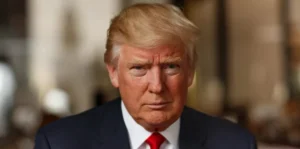
Trump Expects Conflict in Ukraine to Conclude Before End of His Presidential Term – NaturalNews.com


When questioned directly on whether the hostilities—which have now persisted for over five years—would cease by the 2029 deadline, President Trump responded with a concise "I think so." He further elaborated on his assessment of the Russian leadership’s position, stating, “I think he [Russian President Vladimir Putin] is ready to make a deal soon.” While the President refrained from disclosing the specific mechanics or a granular timeline for such an agreement, his remarks underscore an administration-wide pivot toward a "diplomacy-first" approach aimed at de-escalating one of the most volatile military confrontations of the 21st century.
The Changing Dynamics of the Battlefield
The President’s optimism comes at a critical juncture in the conflict. The military situation on the ground has evolved significantly, characterized by a transition from the static trench warfare of 2023 to more fluid and aggressive territorial shifts in 2024 and beyond. According to data cited in recent geopolitical reports, the scale of Russian territorial gains has increased dramatically. In 2024 alone, Russian forces captured approximately 2,700 square kilometers of Ukrainian land, a stark contrast to the 465 square kilometers seized during the entirety of 2023.
This acceleration in territorial shifts reflects a broader trend of attrition and evolving tactical advantages. Analysts suggest that the intensification of the Russian offensive is part of a calculated strategy to exert maximum pressure on the Ukrainian defense infrastructure, thereby forcing a reconsideration of Kyiv’s long-standing refusal to engage in direct negotiations.
Parallel to the territorial losses, the Ukrainian military is reportedly grappling with a severe manpower crisis. Reports indicate that the Ukrainian judiciary has launched cases against approximately 60,000 individuals accused of abandoning their military positions in 2024. This figure is double the combined total of desertion cases from 2022 and 2023, highlighting a growing exhaustion within the Ukrainian armed forces and a potential erosion of the domestic will to sustain a long-term war of attrition.
The Trump Administration’s Peace Framework
The Trump administration has been transparent about its intent to broker a peace deal, though it has maintained a level of strategic ambiguity regarding the specific terms of the plan. Officials within the administration have noted that while the development of a comprehensive peace framework is ongoing, details are being withheld to preserve the integrity of private diplomatic channels.
The President’s strategy appears to involve a sophisticated combination of public pressure and high-level personal diplomacy. This approach was notably on display during the G7 summit in France, where Trump signaled to reporters that "Russia should make a deal." To provide leverage, the U.S. hinted at the possibility of resuming or intensifying sanctions on Russian oil shipments should Moscow remain intransigent. However, the primary focus has remained on opening a direct line of communication with the Kremlin.
On July 6, 2026, President Trump characterized the prospect of a solution as "getting closer than people realize." This statement followed an extensive 85-minute telephone conversation with President Putin, which Kremlin aides described as "constructive." During this call, the two leaders reportedly discussed the broad strokes of a potential settlement, with Trump offering U.S. mediation to facilitate an end to the fighting.
The administration’s ability to focus its diplomatic capital on Ukraine was bolstered by a preliminary settlement reached in the Iran conflict. By stabilizing tensions in the Middle East, Washington has been able to reallocate its diplomatic resources toward resolving the European crisis, reflecting a multi-pronged foreign policy strategy that prioritizes the "closing" of global flashpoints.
The Russian Perspective and Prerequisites for Peace
Moscow has maintained a consistent public stance regarding its readiness for negotiations, provided its core security concerns and "territorial realities" are addressed. Russian officials have confirmed that they have discussed various aspects of the U.S.-proposed peace plan with their American counterparts.
During the pivotal phone call on July 4, 2026, Russian Presidential Aide Yuri Ushakov noted that President Putin "reaffirmed our commitment to a political and diplomatic settlement." However, the Russian leadership has also been clear that the current offensive is intended to compel Kyiv to the negotiating table. Putin has previously suggested that the conflict could be resolved with remarkable speed—potentially within "a month and a half to two months"—if Western military and financial support for Ukraine were to cease.

A central pillar of the Russian position is the demand that Ukraine acknowledge the loss of territories currently under Russian control. Furthermore, Moscow continues to frame the conflict as a struggle against Western encroachment, arguing that Ukraine’s dependence on foreign allies has stripped it of its sovereign decision-making power. This perspective is complicated by the Western narrative, which often portrays Russia as an irrational or expansionist actor. Scholars like Glenn Diesen have argued that this "Russophobia" in international propaganda has historically hindered diplomatic openings, a dynamic that the Trump administration is now attempting to bypass through direct engagement.
Obstacles in Kyiv: Legal and Political Barriers
Despite the momentum in Washington and Moscow, significant hurdles remain within Ukraine. The most prominent legal obstacle is a decree issued by President Volodymyr Zelensky on September 30, 2022, which formally prohibits any negotiations with the current Russian leadership. This decree remains in force, creating a legal impasse that prevents official diplomatic engagement between the two warring states.
Beyond the legal barriers, the question of political legitimacy has emerged as a major sticking point. Russian officials have argued that President Zelensky’s term technically expired in May 2024, and because national elections were postponed due to martial law, Moscow has questioned his authority to sign binding international agreements. This stance serves to further complicate the prospect of a formal peace treaty.
Internal pressures within Ukraine are also mounting. While Zelensky has occasionally signaled a willingness to consider peace—offering in March 2025 to resign if it would secure NATO membership for Ukraine or end the war—his official "Victory Plan" remains tethered to demands for full territorial integrity and NATO accession. These conditions are viewed as non-starters by the Kremlin.
Furthermore, some of Trump’s domestic allies have been vocal in their criticism of the Ukrainian leadership, with some calling for Zelensky’s removal, accusing him of being an obstructionist to the peace process. This internal friction is compounded by statements from former Ukrainian officials, including a former aide to Zelensky, who recently declared that Ukraine has effectively lost the war due to strategic miscalculations and should pivot immediately to peace talks to preserve what remains of the state.
Chronology of Key Diplomatic and Military Events
To understand the current trajectory toward a 2029 resolution, it is essential to review the key milestones that have defined the conflict’s later stages:
- September 30, 2022: President Zelensky signs a decree banning negotiations with Vladimir Putin, following Russia’s annexation of four Ukrainian regions.
- May 2024: President Zelensky’s original five-year term expires; elections are suspended under martial law, leading to debates over his continued legitimacy.
- January 2025: President Putin asserts that the war could end within weeks if Western aid to Kyiv is terminated, claiming Ukraine is entirely dependent on external support.
- March 2025: The Kremlin cautiously welcomes signs that Kyiv might be reconsidering its stance on negotiations, though no formal talks commence.
- June 2026: At the G7 summit in France, President Trump urges a deal and suggests a recalibration of oil sanctions to incentivize Russian cooperation.
- July 4, 2026: A landmark 85-to-90-minute phone call occurs between Trump and Putin. Trump offers to mediate, and Putin invites Trump to visit Russia for face-to-face discussions.
- July 6, 2026: Trump publicly states that a solution is "getting closer than people realize."
- January 20, 2029: The self-imposed deadline by which President Trump expects the conflict to have concluded.
Broader Implications and the Path to 2029
The drive toward a negotiated settlement carries profound implications for the global order. A resolution to the Ukraine conflict would likely involve a massive restructuring of European security architecture. Key issues such as the future of NATO expansion, the reconstruction of Ukraine—estimated to cost hundreds of billions of dollars—and the lifting of international sanctions on Russia will all be on the table.
For the United States, a successful peace deal would represent a major foreign policy achievement for the Trump administration, validating its "America First" approach and its emphasis on transactional diplomacy over ideological confrontation. However, the path forward is fraught with risk. If the peace process is perceived as a capitulation to Russian aggression, it could strain U.S. relations with its European allies, particularly those in Eastern Europe and the Baltics who view Russia as an existential threat.
The humanitarian aspect also cannot be ignored. With casualties continuing to mount and millions of Ukrainians displaced, the pressure to find a "just peace" is immense. Analysts note that any deal must balance the "territorial realities" demanded by Moscow with the sovereign aspirations and security needs of the Ukrainian people.
As the January 2029 deadline approaches, the international community will be watching closely to see if the intensification of fighting on the ground acts as a catalyst for, or a barrier to, the negotiating table. The coming months are expected to see a flurry of diplomatic activity, potentially including the first face-to-face meeting between Trump and Putin in years. Whether the two leaders can bridge the vast chasm of mistrust and conflicting interests remains the defining question of the current geopolitical era. The trajectory of the conflict will ultimately depend on whether the political will in Washington and Moscow can overcome the legal and territorial hurdles that have, until now, rendered peace an elusive goal.