
The Neuroscience of Revenge and Forgiveness: Unveiling Addiction and Pathways to Healing

Neuroscience is increasingly revealing that the primal human urge for revenge can manifest with characteristics akin to addiction, a compelling drive that, while offering momentary satisfaction, can trap individuals in cycles of pain and violence. Simultaneously, cutting-edge research indicates that forgiveness is not merely a moral or spiritual ideal but a potent neurobiological process capable of interrupting these destructive patterns, easing emotional suffering, and strengthening self-control. This groundbreaking understanding is largely championed by figures like James Kimmel Jr., an assistant clinical professor at the Yale School of Medicine and co-founder of the Yale Collaborative for Motive Control Studies, whose personal journey from the precipice of violence to the forefront of neuroscientific inquiry underscores the profound implications of these findings for individual healing and societal peace.
The Genesis of a Quest: A Personal Odyssey Through Bullying and Near-Violence
James Kimmel Jr.’s profound engagement with the dynamics of revenge and forgiveness stems from a deeply personal and harrowing adolescent experience. Growing up on a farm in Central Pennsylvania, Kimmel endured years of escalating bullying. What began as verbal taunts and psychological abuse progressively intensified into physical assaults, including pushing, shoving, kicking, and punching, perpetrated by neighboring farm kids. This sustained torment created an environment of constant menace and humiliation, leaving deep psychological scars.
The escalating violence reached a terrifying crescendo when Kimmel was 16 or 17. One night, his family was awakened by a gunshot. Looking out, Kimmel saw a pickup truck, known to belong to his tormentors, speeding away. Miraculously, no bullet holes were found in the house. However, the next morning, a devastating discovery awaited him: his beloved beagle hunting dog, Paula, lay dead in her pen, killed by a gunshot to the head. The local police, despite taking a report, declined to pursue the case, leaving Kimmel and his family with a profound sense of injustice and helplessness.
A few weeks later, another incident shattered any semblance of peace. While Kimmel was home alone late one night, a vehicle stopped outside their house, followed by a flash and an explosion. His family’s mailbox had been deliberately blown up. This act of blatant aggression, following the unpunished killing of his dog, proved to be the final straw, detonating what little self-control Kimmel had left. Overwhelmed by a torrent of rage and a burning desire for retribution, he seized his father’s loaded handgun, jumped into his mother’s car, and sped off into the night, determined to confront his tormentors.
In a dramatic pursuit, Kimmel eventually cornered the bullies’ truck against a barn on their property. As they slowly exited their vehicle, squinting into his high beams, two critical realizations struck him: they were unarmed, and they had no knowledge he possessed a gun. This was, in his mind, the "perfect setup" for the "perfect payback" he had fantasized about for years. As he reached for the gun and began to step out of the car, a sudden, powerful flash of insight stopped him. He envisioned two potential futures: one where he committed the act, leading to severe consequences including incarceration and the destruction of his own identity; another where he pulled back, preserving his future. The perceived cost of revenge, in that fleeting moment, far outweighed the desire for retribution. He pulled his leg back, shut the door, and drove home, forever altered by the encounter. This pivotal event marked the beginning of his lifelong quest to understand the potent allure of revenge and the transformative power of forgiveness.
From Vengeance in Law to Addiction in Life: The Legal System as a Purveyor of "Justice"
Kimmel’s initial response to his trauma was not forgiveness, but a pragmatic search for "revenge on discount" – a way to exact retribution without incurring a prohibitive personal cost. This search led him to the legal profession, where he became a litigator. He came to view aspects of the legal system, particularly litigation, as a "professional revenge business," cloaked under the brand name of "justice." While acknowledging that legal recourse is preferable to street violence, Kimmel observed that the underlying psychological mechanism often remained the same: inflicting pain or bending others to one’s will through legal means.
In his practice, Kimmel found that every small victory, every maneuver that caused a "bad day" for the opposing party, brought a momentary burst of pleasure not just to his clients, who vicariously reveled in the reports, but also to himself as the "dealer" of this process. This repeated experience began to seep into his personal life. He noticed himself becoming an "avenger" at home, actively seeking grievances, feeling aggravated, and looking for opportunities to retaliate against his wife and children. He realized he was using these small acts of retribution to self-medicate, to feel better, much like an addict seeking a fix. The fundamental question arose in his mind: "Am I hooked on something?"
Kimmel’s experience mirrors broader critiques of punitive justice systems, particularly in countries like the United States, which has one of the highest incarceration rates globally, with over two million people currently imprisoned. Despite lengthy sentences and a focus on punishment, data from the Bureau of Justice Statistics indicates high recidivism rates—approximately 68% of released prisoners are rearrested within three years. This suggests that punitive measures, while satisfying a societal demand for "justice," often fail to address the underlying psychological drivers of conflict and crime, potentially perpetuating cycles of aggression rather than truly deterring them. Kimmel’s observation that the severity of a sentence often doesn’t affect recidivism further underscores the limitations of a purely retaliatory legal framework. His personal descent into an addictive pattern of revenge-seeking illuminated the need for a deeper, scientific understanding of the phenomenon.
The Neuroscience of Retribution: The Brain on Revenge
Driven by his personal and professional insights, Kimmel transitioned from law to academia, eventually joining the Yale School of Medicine’s Department of Psychiatry. Here, he collaborated with neuroscientists to explore the biological underpinnings of revenge. His timing coincided with the emergence of the very first neuroscience studies examining the "brain on revenge," a field that has since provided startling revelations.
The research, utilizing advanced imaging techniques like functional magnetic resonance imaging (fMRI) and positron emission tomography (PET) scans, has demonstrated that the neural activity associated with revenge-seeking bears striking similarities to the brain activity observed in individuals engaged in addictive behaviors. When subjects are given a grievance—a reason to feel victimized—and then presented with an opportunity to retaliate, specific brain regions become highly active.
Crucially, two areas strongly linked to the "go circuitry" of addiction—the nucleus accumbens and the dorsal striatum—activate when a person contemplates or executes revenge. These regions are central to the brain’s reward system, mediating motivation, craving, and the experience of pleasure. This suggests that the "satisfaction" derived from revenge is not merely psychological but is hardwired into the brain’s most primitive reward pathways. Furthermore, the brain’s pain network, specifically the anterior insula, activates in response to the initial grievance, seemingly cueing the desire for revenge in the reward circuitry.
Perhaps most critically, the prefrontal cortex—the "stop circuitry" responsible for executive functions, self-control, and cost-benefit analysis—appears to be significantly deactivated during revenge-seeking. This impairment of rational decision-making explains why individuals, like Kimmel in his youth, can become overwhelmingly driven by retaliatory urges, overriding logical considerations of negative consequences. This neurobiological cascade—pain triggering reward pathways, coupled with impaired self-control—creates what Kimmel describes as "compulsive revenge seeking," a pattern that closely aligns with clinical definitions of addiction.
Revenge as the "World’s Deadliest Addiction"
Beyond individual brain activity, criminological and behavioral science studies further illuminate the pervasive and destructive role of revenge. Researchers have identified revenge-seeking as a primary motivation across nearly all forms of interpersonal and intergroup violence. This ranges from intimate partner violence, youth bullying, and street gang conflicts to violent extremism, police brutality, genocide, and even international warfare. The perception of being wronged, whether real or imagined, often acts as the catalyst that motivates individuals and groups to inflict harm on others.
This fundamental insight gives profound meaning to the adage, "hurt people hurt people." When individuals or communities feel victimized, the neurobiological mechanisms driving revenge can propel them into cycles of violence. Kimmel argues that if revenge is indeed the "world’s deadliest addiction," its gratification often leads to extreme acts, including shootings, killings, and widespread societal disruption. The societal cost of violence fueled by revenge is immense, encompassing not only direct casualties and injuries but also the long-term psychological trauma, economic burden of healthcare and criminal justice systems, and the erosion of social cohesion.
Globally, many conflicts, from localized skirmishes to protracted wars, are rooted in historical grievances and a relentless pursuit of retribution. The inability of factions to "let go" of past wrongs often fuels cycles of reciprocal violence, making peace elusive. Understanding revenge as an addiction provides a novel framework for addressing these deeply entrenched conflicts, shifting the focus from purely punitive measures to interventions that address the underlying neurobiological and psychological drivers.
Forgiveness: The Neurobiological Antidote
If revenge is an addiction, then forgiveness, according to Kimmel’s research and the broader scientific community, is its neurobiological detox. Emerging studies on forgiveness, often conducted under similar fMRI conditions, reveal a powerful reversal of the neurological processes observed during revenge-seeking.
When an individual chooses to forgive, even in a decisional rather than emotional sense, significant changes occur in the brain. The anterior insula, the brain’s pain network activated by the initial grievance, shows reduced activity. This suggests that forgiveness directly contributes to alleviating emotional and psychological pain. Furthermore, the "go circuitry" of addiction—the nucleus accumbens and dorsal striatum—which are highly active during revenge, appear to quiet down. This shutdown of the pleasure and reward circuitry associated with retribution effectively helps to break the addictive cycle.
Perhaps most critically, forgiveness activates or reactivates the prefrontal cortex, restoring and enhancing executive function, decision-making, and self-control. This allows individuals to move beyond impulsive, retaliatory urges and engage in more reasoned, beneficial responses. Kimmel likens these three neurobiological benefits—pain reduction, addiction circuitry deactivation, and self-control enhancement—to a "human superpower" or a "wonder drug," available freely and manufactured within one’s own brain.
This neurophysiological understanding elevates forgiveness beyond a "soft spiritual practice" to a vital tool for mental and physical well-being. Research from institutions like Stanford and Duke has corroborated these benefits, showing that forgiveness can lead to reduced stress hormones like cortisol, lower blood pressure, improved immune function, and a decreased risk of heart disease. The ability to forgive, therefore, is not just about moral rectitude; it’s a profound act of self-care and self-healing.
The Practice of Forgiveness: A Path to Healing and Self-Liberation
Kimmel emphasizes that neurobiological forgiveness, or "decisional forgiveness," does not equate to condoning the harm, pardoning the aggressor, or signing oneself up to be a perpetual victim. Instead, it is an internal decision made solely for one’s own healing, a conscious choice to release the grip of past wrongs. This internal act does not require confrontation with the person who caused the harm; it is a private process of self-liberation.
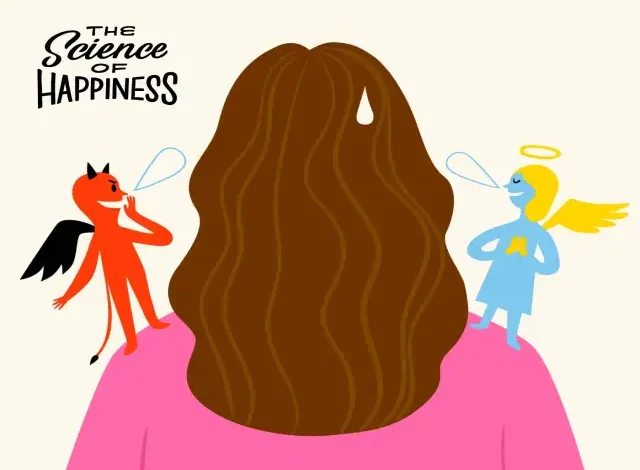
The speed and power of this internal shift are remarkable. As demonstrated in a thought experiment on The Science of Happiness podcast, simply imagining what it would feel like to forgive a long-held grievance can induce immediate relief. When Dacher Keltner, the host, performed this exercise, he reported feeling a palpable sense of relief, a dissipation of tension, and a dissolving of the emotional weight surrounding a specific concrete situation. This suggests that even the cognitive rehearsal of forgiveness can momentarily, at least, activate the beneficial neurobiological changes: stopping pain, quieting revenge fantasies, and engaging the prefrontal cortex.
For Kimmel, forgiveness is not a one-time event but a daily practice, a "medicinal" routine he undertakes to discharge grievances and remain productive. He argues that revenge-seeking inherently binds individuals to the past, forcing them to constantly drag painful memories and feelings of victimization into their present, contaminating their lives and hindering productivity. Revenge rumination and fantasies can consume one’s thoughts, preventing engagement with the present moment and future possibilities. Forgiveness, in contrast, offers a mechanism to "let that go," to leave the past in the past, where it belongs, and to move forward into a fulfilling and joyful present and future.
Broader Implications: Towards a Less Violent World
The findings from Kimmel’s research and the broader scientific community carry profound implications for various societal domains, extending far beyond individual mental health.
Criminal Justice Reform: Understanding revenge as an addiction could fundamentally shift approaches to criminal justice. Instead of solely focusing on punitive measures that often perpetuate cycles of violence and high recidivism, systems could integrate restorative justice practices, therapeutic interventions for victims and offenders, and programs designed to foster forgiveness and empathy. This could lead to more effective rehabilitation, reduced re-offending rates, and a more humane justice system.
Conflict Resolution: At local, national, and international levels, recognizing the addictive nature of revenge could inform strategies for conflict resolution. Interventions could focus on helping communities and nations to address historical grievances through dialogue, truth and reconciliation commissions, and educational programs that promote empathy and the "medicinal value" of forgiveness. This reframing could help break cycles of intergenerational conflict fueled by a relentless pursuit of retribution.
Mental Health and Education: Integrating the science of forgiveness into mental health interventions could provide powerful new tools for therapists treating trauma, anxiety, and depression. Educational curricula could also benefit by teaching children and adolescents about the neurobiology of emotions, the dangers of revenge, and the empowering practice of forgiveness as a core life skill. This proactive approach could cultivate more resilient individuals and more compassionate communities.
Public Policy: Policymakers could explore initiatives that support research into forgiveness, develop public awareness campaigns, and fund programs that apply these scientific insights in real-world settings. Promoting a culture of forgiveness, informed by neuroscience, could be a cornerstone of efforts to reduce violence and foster social cohesion.
Conclusion
James Kimmel Jr.’s journey from personal trauma to pioneering research has illuminated a critical intersection of neuroscience, psychology, and human behavior. His work, supported by the Yale Collaborative for Motive Control Studies and organizations like the Templeton World Charity Foundation, offers a compelling argument that revenge is not just a destructive impulse but a behavioral addiction with clear neurobiological underpinnings. The "brain on revenge" indeed mirrors the "brain on drugs," demonstrating how deeply ingrained the pursuit of retribution can become.
However, the equally powerful revelation is that forgiveness is not merely an abstract virtue but a tangible, neurobiological antidote. It actively heals pain, disarms addictive reward pathways, and restores self-control, offering a free, accessible, and potent "wonder drug" for human well-being. By understanding these scientific realities, individuals and societies can begin to break free from the costly and destructive cycles of vengeance. Embracing forgiveness, not as a sign of weakness but as an act of profound self-care and strength, holds the potential to heal individual wounds, strengthen communities, and pave the way for a less violent, more compassionate world.