Oil plunges below $90 as Iran opens the vital Strait of Hormuz, boosting global markets

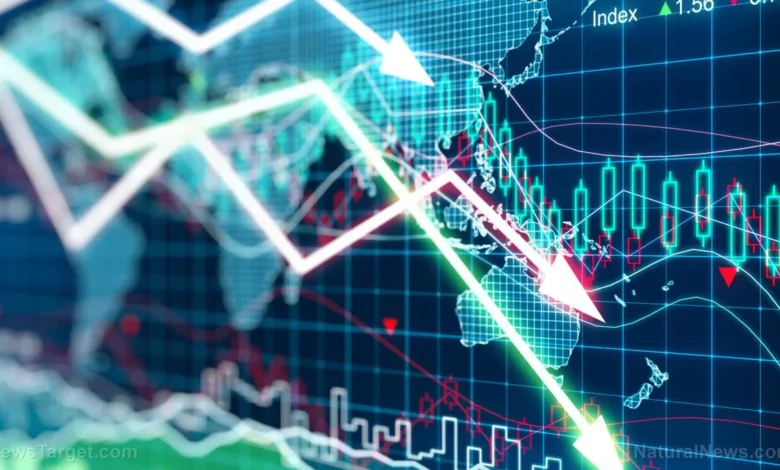
The global energy landscape underwent a seismic shift this week as international oil prices experienced one of their most significant single-day retreats in recent months. The catalyst for this sudden correction was the announcement from Tehran that the Strait of Hormuz, a critical maritime artery for the world’s energy supply, has been reopened for commercial shipping. This development, which follows months of heightened regional tensions and restricted maritime access, triggered an immediate 13% drop in the price of Brent crude, bringing the international benchmark down to approximately $86 per barrel. This marks a dramatic reversal from the peak of nearly $120 per barrel recorded just last month, offering a substantial reprieve to a global economy that has been grappling with persistent inflationary pressures and energy security concerns.
The reopening of the waterway is inextricably linked to a fragile ten-day ceasefire agreement brokered between Israel and the Lebanon-based, Iran-backed group Hezbollah. Iranian officials characterized the decision to allow the resumption of normal shipping traffic as a conditional gesture, dependent upon the continued adherence to the cessation of hostilities in the Levant. For global financial markets, the news acted as a powerful catalyst for a broad-based rally, as the specter of a catastrophic supply disruption in the Middle East began to recede, at least in the short term.
The Strategic Importance of the Strait of Hormuz
To understand the magnitude of the market’s reaction, one must consider the unparalleled strategic importance of the Strait of Hormuz. Located between Oman and Iran, the strait connects the Persian Gulf with the Gulf of Oman and the Arabian Sea. At its narrowest point, the shipping lanes are only two miles wide in either direction, yet through this narrow passage flows approximately 20% to 21% of the world’s total petroleum liquids consumption.
According to data from the U.S. Energy Information Administration (EIA), the volume of oil moving through the strait averages over 20 million barrels per day (bpd). This includes crude oil, condensate, and refined petroleum products from major producers such as Saudi Arabia, the United Arab Emirates, Kuwait, Iraq, and Iran itself. Furthermore, the strait is the primary exit point for nearly all of Qatar’s liquefied natural gas (LNG) exports, making it a "chokepoint" of global significance.
The effective closure of the strait since February, precipitated by the expansion of regional hostilities, had introduced a massive "risk premium" into global oil prices. Analysts had long warned that a prolonged blockage could lead to a historic supply shock, potentially driving oil prices toward $150 per barrel and triggering a deep global recession. The reopening, therefore, represents the removal of a primary systemic risk that has overshadowed global trade for much of the year.
A Chronology of Escalation and De-escalation
The path to the current reopening has been marked by a series of volatile escalations. The regional crisis intensified significantly in February, when maritime security in the Persian Gulf deteriorated following a series of kinetic engagements and threats to commercial vessels. Iran’s subsequent restriction of the Strait of Hormuz was framed as a defensive measure and a response to Western sanctions and regional military positioning.
Between February and early June, the "tanker war" dynamics saw insurance premiums for shipping in the region skyrocket, with many global shipping giants opting to reroute vessels around the Cape of Good Hope, adding weeks to delivery times and millions to operational costs. The price of Brent crude climbed steadily during this period, fueled by fears that a direct confrontation between major regional powers would permanently damage energy infrastructure.
The turning point arrived with the announcement of a ten-day ceasefire between Israel and Hezbollah. While the ceasefire is localized to the border regions of Israel and Lebanon, the diplomatic ripple effects reached Tehran. Iran’s declaration that the strait is "completely open" is seen by geopolitical analysts as a strategic move to de-escalate tensions and perhaps signal a willingness to engage in broader diplomatic negotiations, which have reportedly been occurring in the background under U.S. and Qatari mediation.
Global Market Reactions and Financial Data
The financial response to the reopening of the strait was immediate and emphatic. On Wall Street, the S&P 500 and the Nasdaq Composite both surged to record highs, rising by more than 1%. Investors pivoted away from "safe-haven" assets and back into equities, buoyed by the prospect of lower input costs for corporations.
In London, the FTSE 100 saw a significant jump, closing at its highest level since February. The index, which is heavily weighted toward energy and mining stocks, benefited from the general improvement in investor sentiment, even as the share prices of major oil companies like Shell and BP adjusted to the lower crude environment.
The bond markets also reflected this shift. The yield on the U.K. ten-year government bond (gilt) fell notably, mirroring a similar decline in U.S. Treasury yields. Falling yields suggest that investors are lowering their expectations for future inflation, as energy costs are a primary driver of the Consumer Price Index (CPI). If oil remains below the $90 threshold, central banks—including the Federal Reserve and the Bank of England—may find more room to maneuver regarding interest rate cuts, as the pressure on headline inflation eases.
Economic Implications for Consumers and Industry
The plunge in oil prices to $86 a barrel provides a vital "safety valve" for the global economy. For the average consumer, lower crude prices typically translate to lower prices at the pump within two to three weeks, providing a direct boost to household discretionary spending. In the United States, where gasoline prices are a significant political and economic metric, a sustained drop could see national averages fall toward the $3.00 per gallon mark, down from recent peaks.
For the industrial and transportation sectors, the benefits are even more pronounced. Airlines, which are highly sensitive to the price of jet fuel, saw their stock prices climb as the cost of their primary overhead decreased. Similarly, the logistics and shipping industries, already burdened by the costs of rerouting around conflict zones, stand to benefit from both lower fuel costs and the restoration of more direct maritime routes.
Economists note that every $10 drop in the price of a barrel of oil acts as a de facto tax cut for oil-importing nations. For major economies like China, India, and much of the European Union, the current price correction could add several tenths of a percentage point to annual GDP growth if sustained through the next quarter.
Diplomatic Context and Official Responses
While the reopening of the Strait of Hormuz is a commercial and economic milestone, its foundations are purely diplomatic. U.S. State Department officials have cautiously welcomed the move, noting that a deal to end the wider regional conflict could be "near." However, the U.S. has maintained a posture of "strategic skepticism," emphasizing that the reopening is currently tied to a temporary ceasefire.
Iranian officials have stated that the waterway’s status remains "contingent on the stability of the region," a phrase interpreted as a warning that any resumption of hostilities between Israel and Iranian proxies could result in the "shutter" being closed once again. This conditional nature of the reopening suggests that while the immediate threat has diminished, the underlying geopolitical architecture remains unstable.
Regional analysts, including those from organizations like the International Crisis Group, suggest that Tehran is using the Strait of Hormuz as a diplomatic lever. By demonstrating the ability to both choke and release the world’s energy supply, Iran is asserting its influence over global markets to gain leverage in negotiations regarding sanctions relief and its nuclear program.
Fragility and Future Risks
Despite the current optimism, market strategists and energy experts warn that the reprieve may be short-lived. The "ten-day" window of the ceasefire is exceptionally narrow. If hostilities between Israel and Hezbollah resume after this period, the legal and security justification for keeping the strait open may vanish in the eyes of the Iranian leadership.
Furthermore, the physical security of the strait remains a concern. Months of tension have left the region highly militarized, with a significant presence of Western naval task forces alongside Iranian Revolutionary Guard Corps (IRGC) vessels. The risk of a miscalculation or an accidental engagement remains high, which could instantly reverse the current downward trend in oil prices.
Analysts also point out that the global oil market remains fundamentally tight. While the reopening of the strait eases the movement of oil, it does not necessarily increase the production of oil. With OPEC+ continuing its policy of production restraints to support prices, the floor for Brent crude may still be relatively high compared to historical averages.
Conclusion: A Momentary Sigh of Relief
The reopening of the Strait of Hormuz and the subsequent plunge in oil prices represent a rare moment of de-escalation in what has been a year of intense geopolitical strife. For a global economy that has felt the sting of high energy costs and the uncertainty of war, the move to $86 oil is a "massive shot in the arm" that could stabilize markets and dampen inflation.
However, the international community remains acutely aware that the fundamental issues driving the conflict—regional proxy wars, territorial disputes, and the struggle for hegemony in the Middle East—remain unresolved. For now, the world’s tankers are moving again, and the financial screens are green, but the long-term stability of the global energy supply depends on whether this ten-day pause can be transformed into a lasting diplomatic resolution. Until then, the markets will remain on high alert, cognizant that in the volatile waters of the Middle East, the tide can turn with remarkable speed.