The Sun Cannot Be Taxed: Why Energy Freedom Is the Ultimate Form of Personal Liberty – NaturalNews.com

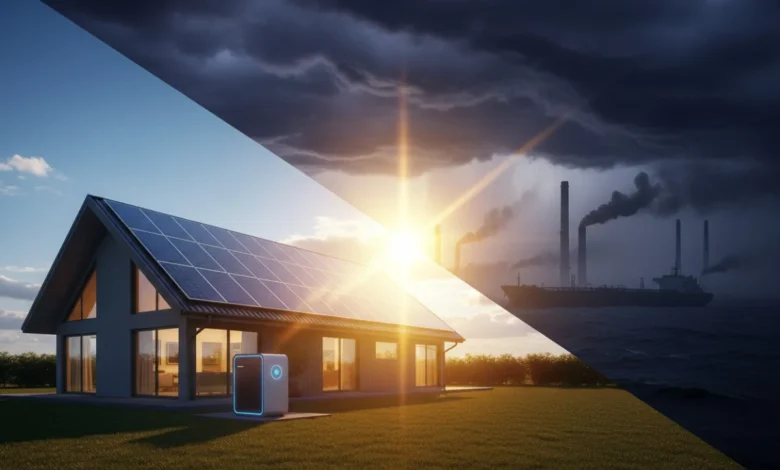
The Geopolitical Context of the Energy Crisis
The current crisis did not emerge in a vacuum but is the culmination of decades of reliance on a globalized, "just-in-time" energy delivery system. For years, geopolitical analysts have warned that the concentration of energy resources in volatile regions creates a single point of failure for modern civilization. The Strait of Hormuz, which connects the Persian Gulf with the Gulf of Oman and the Arabian Sea, is the world’s most important oil transit chokepoint. According to data from the U.S. Energy Information Administration (EIA), more than 20 million barrels of oil pass through the strait daily.
The closure has triggered a "bullwhip effect" across global markets. In Australia, diesel shortages have threatened the logistics and transport sectors, while in the Philippines, the government has been forced to implement emergency fuel subsidies and strict conservation measures. The crisis has laid bare the reality that centralized energy systems—whether based on fossil fuels or grid-tied utilities—are inherently vulnerable to blockages, sabotage, and political maneuvering. Consequently, a growing movement of "energy dissidents" is advocating for a transition to decentralized, home-based energy production as a means of insulating individuals from global instability.
A Chronology of Vulnerability: The Path to the Current Chokepoint
The timeline of the current energy emergency reveals a pattern of escalating risks that were largely ignored by centralized planners.
- Phase 1: Initial Disruptions (T-Minus 6 Months): Minor maritime incidents and escalating diplomatic tensions in the Persian Gulf led to a 15% increase in shipping insurance premiums. Analysts warned of a potential blockade, but global markets remained optimistic, relying on strategic reserves.
- Phase 2: The Kinetic Shift (T-Minus 30 Days): Explosions targeting tankers and the subsequent deployment of naval blockades effectively halted commercial transit through the Strait of Hormuz. Global oil prices spiked by 40% in a single trading session.
- Phase 3: Systemic Contagion (T-Minus 14 Days): The closure of the Ras Laffan LNG facility in Qatar, which relies on the Strait for export, triggered a natural gas shortage in Europe and Asia. Power grids, heavily reliant on gas-to-power generation, began implementing rolling blackouts.
- Phase 4: The Domestic Impact (Present Day): Gas stations in Sydney, Manila, and Los Angeles report supply exhaustion. Governments have begun discussing "energy lockdowns" and mandatory rationing, prompting a surge in consumer interest in off-grid solar and battery storage solutions.
The Technological Counter-Movement: Decentralization as Defense
In response to this systemic failure, the argument for "energy sovereignty" has moved from the fringes of the survivalist community into the mainstream. The core premise is that while governments can tax fuel, regulate utilities, and blockade shipping lanes, they cannot—at least with current technology—effectively tax or intercept the photons emitted by the sun.
Solar energy collection represents a shift from a "permission-based" energy model to a "possession-based" model. In a centralized system, a consumer is a dependent end-user of a vast, fragile network. In a decentralized system, the individual becomes a "prosumer"—both a producer and a consumer—who owns the means of production. This transition is being accelerated by rapid advancements in battery technology, which have historically been the "Achilles’ heel" of renewable energy.
Breaking the Storage Stranglehold: Battery Innovations
For decades, the primary criticism of solar energy was its intermittency; the sun does not shine at night, and battery storage was prohibitively expensive or inefficient. However, the current crisis has coincided with a period of unprecedented innovation in energy storage.
China’s CATL, the world’s largest battery manufacturer, recently announced the mass production of "5C" charging batteries. These units are capable of reaching an 80% charge in under ten minutes, a breakthrough that significantly enhances the utility of electric vehicles (EVs) and home storage systems. Simultaneously, European startups like Finland’s Donut Lab are exploring solid-state battery chemistries that promise higher energy density and improved safety profiles compared to traditional lithium-ion cells.
The adoption of Lithium Iron Phosphate (LFP) chemistry has also been a game-changer. Unlike nickel-cobalt chemistries, LFP batteries are cheaper to produce, have longer lifespans, and do not rely on minerals often sourced from conflict zones. These technological leaps are dismantling the "storage stranglehold" that once kept households tethered to the traditional power grid.
Data Analysis: The Economics of Energy Independence
The shift toward solar is driven by more than just ideological concerns; it is increasingly an economic necessity. Data from BloombergNEF indicates that the levelized cost of energy (LCOE) for solar has dropped by nearly 90% over the last decade. In contrast, the cost of maintaining and securing centralized fossil fuel infrastructure continues to rise due to geopolitical risk and aging equipment.
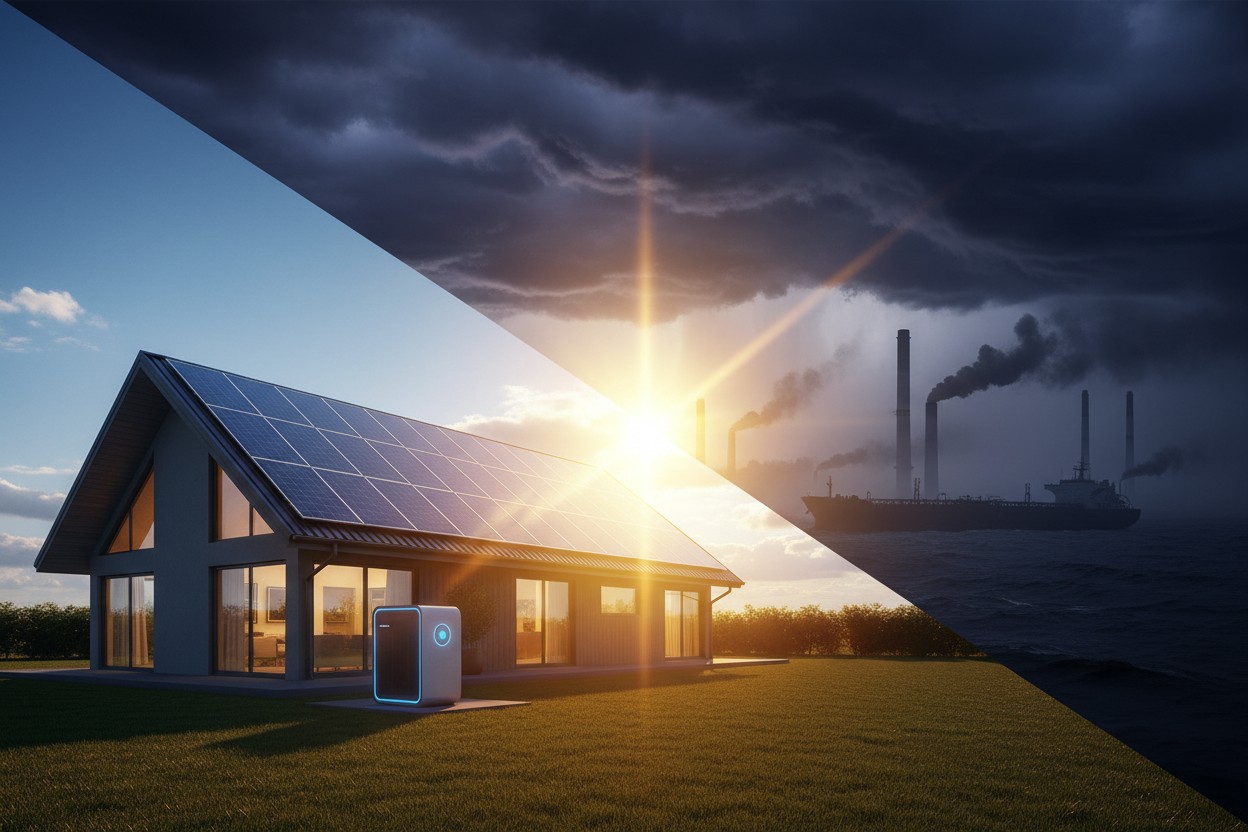
Current market data shows a 300% increase in search queries for "off-grid solar kits" and "home battery backup" since the closure of the Strait of Hormuz. In regions where gasoline prices have exceeded $8 per gallon, the return on investment (ROI) for a residential solar-plus-storage system has shrunk from 10 years to less than 4 years.
Furthermore, the "un-taxable" nature of solar energy provides a unique form of economic protection. While traditional utility companies frequently implement "delivery fees" and "infrastructure surcharges" that can account for up to 40% of a consumer’s bill, a self-contained, off-grid system bypasses these recurring costs. This financial autonomy is being framed by proponents as the ultimate form of personal liberty in an era of high inflation and fiscal instability.
Official Responses and Regulatory Friction
The rapid move toward energy decentralization has not gone unnoticed by regulatory bodies. Governments, accustomed to the tax revenue and control afforded by centralized utilities, have responded with a mixture of support and skepticism.
In some jurisdictions, "grid-tie" requirements mandate that all solar-equipped homes remain connected to the utility company, often allowing the utility to throttle or shut down the system during "emergencies." Critics argue these regulations are designed to prevent true energy independence. Conversely, some forward-thinking municipalities are offering tax credits for home storage, recognizing that a decentralized "mesh" of battery-equipped homes can actually stabilize the broader grid by reducing peak demand.
Industry analysts suggest that we are entering a period of "regulatory friction," where the interests of the centralized state clash with the individual’s pursuit of autonomy. The outcome of this friction will likely define the social and economic landscape of the mid-21st century.
Implications for the Future: Sovereignty and Resilience
The implications of the "Hormuz Shock" extend far beyond the gas pump. They point to a broader societal realization: centralization is a vulnerability. This lesson is being applied to various sectors, from finance (the rise of decentralized assets) to healthcare (the focus on self-reliance and preventative care) and information (the move to decentralized platforms).
Energy sovereignty is the foundation of this broader resilience. A household that can generate its own power is a household that can maintain communications, preserve food, and power medical devices regardless of whether a maritime chokepoint 5,000 miles away is open or closed.
As the world navigates the fallout of the current crisis, the path forward appears increasingly clear. The era of cheap, obedient energy from a centralized tap is being replaced by a more rugged, independent model. This new era is powered by the democratization of technology and the recognition that personal liberty is inextricably linked to the ability to provide for one’s own basic needs.
In conclusion, the sun shines with an indifference to human borders, blockades, and tax codes. By harnessing it, individuals are not merely adopting a new technology; they are reclaiming a fundamental aspect of human autonomy. The current global crisis may be remembered as the moment the world stopped asking for permission to power its future and started capturing that power for itself. The sun, indeed, cannot be taxed, and in that simple physical reality lies the blueprint for a more resilient and free civilization.